


Is Merv 6 Filter Good
In the field of industrial air handling and fluid management, selecting the appropriate filtration level is a critical engineering decision that impacts both system longevity and operational efficiency. One of the most frequent questions encountered by facility managers and HVAC engineers is: is merv 6 filter good? To answer this, one must look beyond a simple yes or no and evaluate the technical parameters of the Minimum Efficiency Reporting Value (MERV) scale, the specific requirements of the application, and the long-term maintenance implications.
At its core, a MERV 6 filter is a mid-to-low range efficiency component designed primarily for basic protection of mechanical equipment. While it serves a vital role in certain environments, its suitability depends heavily on the particle size distribution of the contaminants involved and the sensitivity of the downstream processes. For industrial applications requiring higher precision, durability, or resistance to extreme conditions, engineers often transition from standard synthetic media to specialized Filter Discs & Packs made from stainless steel or other alloys.
Understanding the MERV 6 Technical Specification
The MERV rating system, established by ASHRAE Standard 52.2, provides a standardized method for evaluating the effectiveness of air filters. A MERV 6 filter is tested for its ability to capture particles in the 3.0 to 10.0-micron range. According to the standard, a filter must achieve an average arrestance of 35% to 49.9% for these larger particles to earn a MERV 6 designation.
Common contaminants captured by MERV 6 media include:
* Pollen
* Dust mites
* Sanding dust
* Textile fibers
* Large carpet fibers
From a technical perspective, is merv 6 filter good for your specific system? If the primary goal is to prevent large debris from fouling heat exchanger coils or accumulating on blower motors, then a MERV 6 filter is often sufficient. However, it provides negligible protection against fine dust, bacteria, or smoke, which typically fall below the 3.0-micron threshold.
The Engineering Trade-off: Efficiency vs. Pressure Drop
One of the primary reasons engineers specify MERV 6 filters over higher-rated alternatives (such as MERV 11 or 13) is the relationship between filtration efficiency and static pressure. As the MERV rating increases, the density of the filter media typically increases, which creates higher resistance to airflow. This resistance is measured as "pressure drop."
A high pressure drop requires the system’s fans or pumps to work harder to maintain the required flow rate, leading to increased energy consumption and potential mechanical wear. In many older industrial HVAC systems, the blowers are not designed to handle the high static pressure associated with high-efficiency pleated filters. In these scenarios, a MERV 6 filter is "good" because it maintains adequate airflow while providing a baseline level of protection that prevents the system from overheating or failing.
Industrial Applications: Where MERV 6 Excels
In industrial settings, MERV 6 filters are frequently used as pre-filters. Their role is to capture the "heavy lifting" contaminants before the air or fluid reaches more expensive, high-precision secondary filters. By utilizing a MERV 6 pre-filter, facilities can significantly extend the service life of HEPA filters or fine-mesh Filter Discs & Packs, thereby reducing the total cost of ownership.
Typical environments where MERV 6 is appropriate include:
1. General Warehousing: Where the primary concern is large dust particles and debris.
2. Basic Manufacturing: Facilities involved in woodworking or textile production where large fibers are prevalent.
3. Pre-filtration Stages: Protecting high-efficiency systems in chemical processing or cleanroom air intakes.
When asking is merv 6 filter good, engineers must evaluate the "dust holding capacity" (DHC). MERV 6 filters often have a high DHC for large particles, meaning they can operate for longer periods in high-load environments without reaching their terminal pressure drop compared to more restrictive media.
Limitations of MERV 6 in Precision Environments
While MERV 6 is effective for basic mechanical protection, it falls short in several critical industrial areas. If your process involves volatile organic compounds (VOCs), fine metallic dust, or pharmaceutical-grade air quality, a MERV 6 filter is inadequate.
Furthermore, standard MERV 6 filters are usually constructed from synthetic fibers or fiberglass housed in cardboard frames. These materials are unsuitable for:
* High-Temperature Processes: Where synthetic fibers may melt or off-gas.
* Corrosive Environments: Where chemical vapors can degrade the filter media or frame.
* High-Pressure Fluid Systems: Where the structural integrity of a disposable filter would fail under the force of the flow.
In these demanding conditions, the industry shifts toward metal filtration solutions. For example, stainless steel Filter Discs & Packs provide the precision of high-MERV filtration with the structural robustness required for hydraulic systems, polymer melt filtration, and chemical processing.
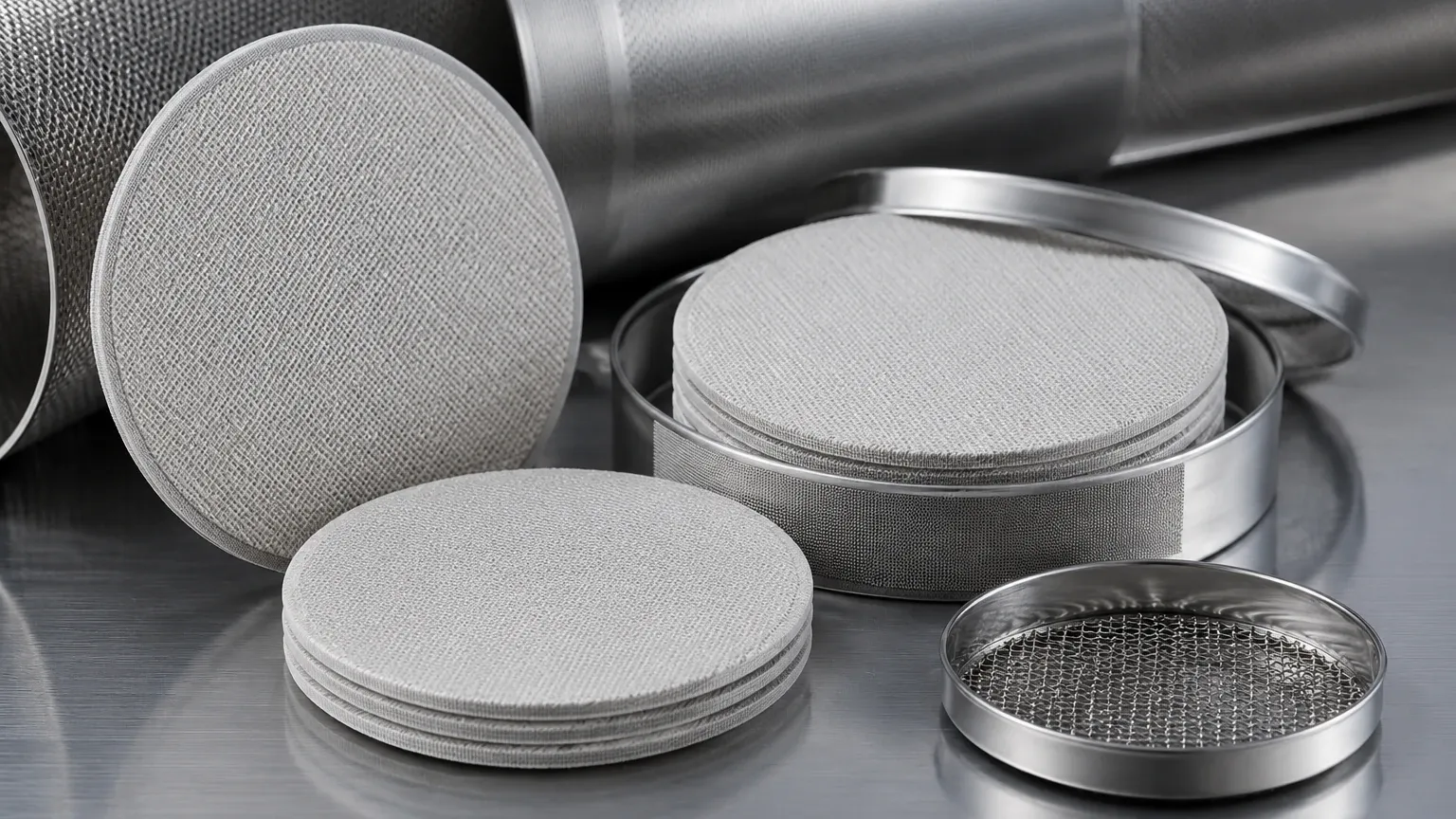
Comparing Disposable Media to Stainless Steel Filter Discs & Packs
When evaluating whether a MERV 6 filter is "good," it is helpful to compare it to the performance and durability of stainless steel filtration components. While MERV ratings are specific to air filtration, the principles of particle capture and flow resistance apply across all media types.
Durability and Reusability
A standard MERV 6 filter is a consumable item. Once it reaches its terminal pressure drop, it must be discarded and replaced. In contrast, stainless steel filter components are designed for longevity. They can be cleaned—via ultrasonic cleaning, backwashing, or chemical solvents—and returned to service. For high-volume industrial lines, the transition from disposable MERV-rated filters to permanent metal filters can result in substantial waste reduction and lower long-term procurement costs.
Structural Integrity
In applications involving high-viscosity fluids or high-pressure air streams, a MERV 6 synthetic filter would likely collapse. Precision-engineered Filter Discs & Packs are manufactured to withstand significant differential pressures. They are often composed of multiple layers of wire mesh, sintered together to provide both fine filtration and mechanical strength.
Chemical and Thermal Resistance
Stainless steel filters (typically 304 or 316L grade) can operate in temperatures exceeding 500°F and resist a wide range of corrosive agents. If your application involves acidic or alkaline environments, a standard MERV 6 filter would fail almost immediately, whereas a custom-designed metal filter would maintain its performance characteristics.
How to Determine if MERV 6 is Right for Your System
To determine if a MERV 6 filter is the correct choice, engineers should conduct a thorough system audit. Consider the following factors:
1. Target Particle Size: Use a particle counter to determine the size of the contaminants in your environment. If more than 50% of the particles are smaller than 3.0 microns, a MERV 6 filter will not provide sufficient air quality.
2. System Airflow Requirements: Check the manufacturer’s specifications for your air handling unit (AHU). If the system is sensitive to static pressure, a lower MERV rating like MERV 6 may be necessary to prevent motor burnout.
3. Operating Environment: Is the filter exposed to moisture, chemicals, or extreme heat? If so, disposable MERV 6 filters are likely unsuitable, and you should investigate metal Filter Discs & Packs.
4. Maintenance Frequency: Calculate the cost of labor and replacement filters. If you are replacing MERV 6 filters every two weeks due to high loading, it may be more cost-effective to install a robust pre-filtration system or a cleanable metal filter solution.
The Role of Customization in Industrial Filtration
Often, the standard MERV scale does not perfectly align with the needs of specialized industrial equipment. This is where customization becomes essential. Manufacturers like Kaifil specialize in creating filtration components that bridge the gap between standard HVAC ratings and high-performance industrial requirements.
Whether you need a specific micron rating for hydraulic oil or a multi-layered mesh pack for plastic extrusion, customized solutions allow for optimized flow rates and precise particle retention. While a MERV 6 filter might be "good" for a general office area, a custom-engineered Filter Discs & Packs solution is often required for the rigorous demands of the factory floor.
Conclusion: Making an Informed Decision
So, is merv 6 filter good? The answer is situational. It is an excellent, cost-effective choice for basic dust collection and protecting mechanical components from large debris in low-pressure environments. It excels as a sacrificial pre-filter in multi-stage systems, helping to preserve the life of more expensive downstream components.
However, for engineers managing critical processes, high-temperature environments, or systems where contamination could lead to expensive downtime, a MERV 6 filter is rarely enough. In these cases, the focus shifts to the durability, precision, and cleanability of stainless steel filtration. By understanding the technical limitations of standard ratings and the advantages of specialized components like Filter Discs & Packs, purchasing teams can ensure they select the filtration solution that offers the best balance of performance and total cost of ownership.
