


Filters 6
In high-precision industrial environments, the efficiency of a filtration system often hinges on the specific geometry and material composition of its components. Among the various configurations used in fluid and gas processing, the 6-inch diameter filter disc and the 6-layer filter pack represent industry standards for many pressurized systems. These components, collectively categorized under Filter Discs & Packs, are critical for ensuring the purity of polymers, hydraulic fluids, and chemical reagents.
For engineers and procurement specialists, selecting the correct "filters 6" specification—whether referring to a 6-inch diameter, a 6-mesh support screen, or a 6-layer composite—requires a deep understanding of metallurgy, fluid dynamics, and mechanical stress. This article examines the technical nuances of these filtration components, focusing on their engineering requirements, material selection, and application-specific performance.
Understanding the Technical Specifications of Filter Discs & Packs
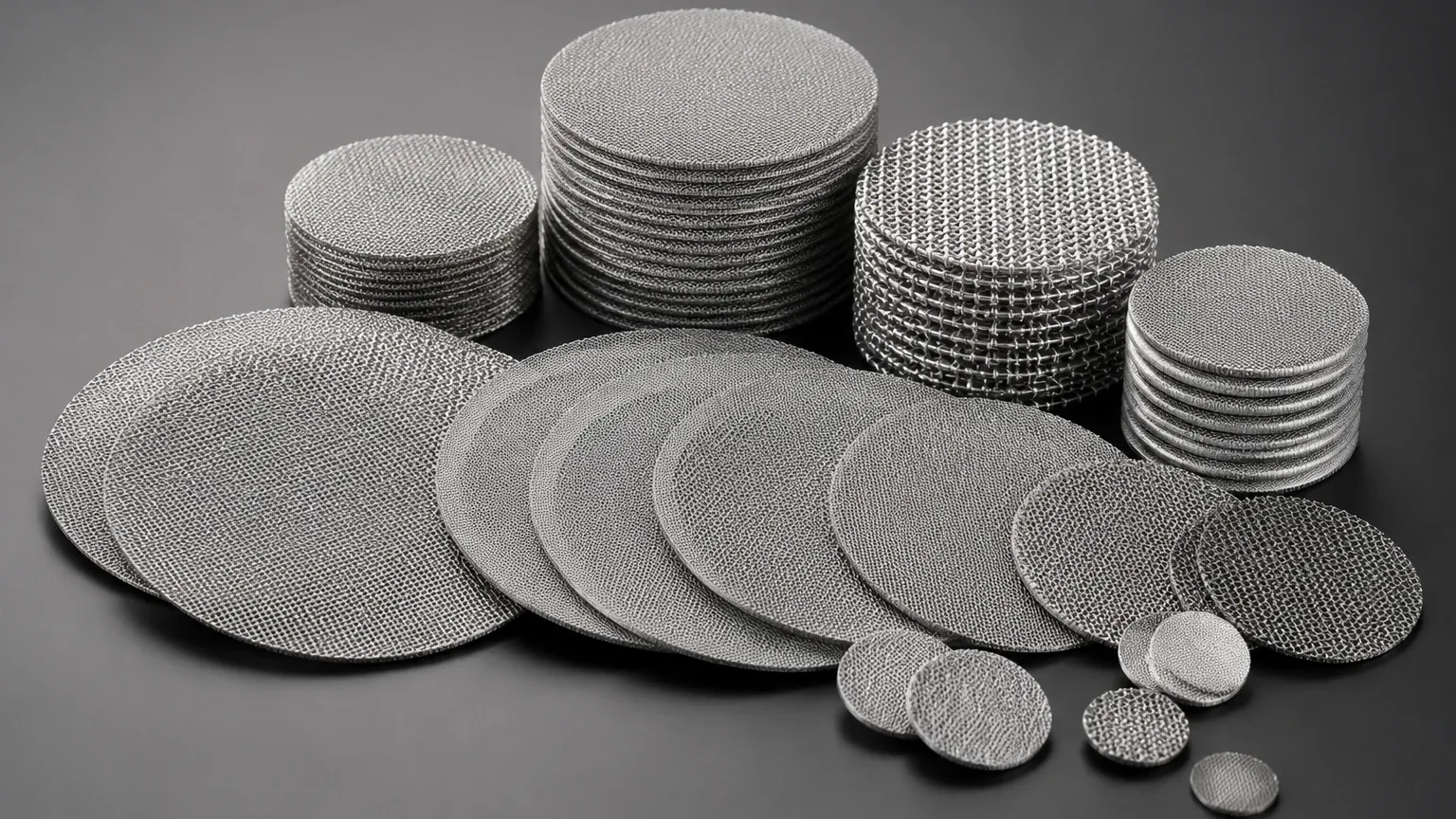
Industrial filter discs are thin, flat filtration elements typically manufactured from woven wire mesh or sintered metal fibers. When these discs are stacked or bound together, they form filter packs. The term "filters 6" frequently appears in technical datasheets to denote a 6-inch (152.4 mm) outer diameter, which is a common sizing standard for extruder screens used in the plastics and rubber industries.
Dimensional Precision and Tolerances
In high-pressure applications, such as polymer extrusion, the fit of the filter disc within the breaker plate is paramount. A 6-inch filter disc must be manufactured with tight tolerances—often within ±0.05mm—to prevent "bypass." Bypass occurs when the process fluid flows around the edges of the filter rather than through the mesh, leading to contamination of the final product. Kaifil utilizes advanced laser cutting and precision stamping to ensure that every disc meets these exacting dimensional requirements.
Single-Layer vs. Multi-Layer Construction
Filter components are generally classified by their layer count:
1. Single-Layer Discs: Used primarily for coarse filtration or as a primary screen where high flow rates are prioritized over fine particle retention.
2. Multi-Layer Packs: These consist of several layers of wire mesh with varying micron ratings. A common configuration is the 6-layer pack, which balances structural rigidity with high-precision filtration.
Material Engineering for High-Performance Filtration
The choice of material determines the filter's resistance to corrosion, temperature, and mechanical deformation. For most industrial applications, stainless steel is the preferred medium due to its durability and cleanability.
Stainless Steel Grades
* AISI 304: The standard grade for general industrial use. It offers good corrosion resistance and is cost-effective for applications involving water, oils, and mild chemicals.
* AISI 316L: The "L" denotes low carbon, which improves weldability and resistance to intergranular corrosion. This grade is essential for pharmaceutical, food and beverage, and marine environments where acidic or saline conditions are present.
* Specialty Alloys: For extreme environments, materials like Hastelloy, Monel, or Inconel may be used. These are typically reserved for high-temperature chemical processing where standard stainless steel would succumb to pitting or oxidation.
Weave Types and Their Impact
The performance of a filter disc is also dictated by the weave of the wire mesh. Plain weave is common for coarser filtration, while Dutch weave (Plain or Twill) allows for much finer micron ratings by packing more wires into a given area. When specifying filters 6, engineers must consider the "open area" percentage, which directly influences the pressure drop across the filter.
The Role of 6-Layer Construction in Industrial Packs
A 6-layer filter pack is an engineered stack designed to optimize the filtration cycle. Unlike a single mesh screen, a multi-layer pack distributes the mechanical load and provides graduated filtration levels.
Layer Stratification
In a typical 6-layer configuration, the layers are arranged as follows:
1. Support Layer (Coarse): Provides the primary structural integrity to resist high differential pressures.
2. Drainage Layer: Facilitates the smooth flow of the filtrate toward the support layer.
3. Buffer Layer: Protects the fine filtration mesh from mechanical abrasion.
4. Fine Filtration Layer: The core layer that determines the micron rating of the pack.
5. Secondary Fine Layer: Often used for redundancy or to capture any particles that might bypass the first fine layer.
6. Outer Protection Layer: Prevents damage during installation and handling.
This stratified approach ensures that the fine mesh—which is often fragile—is not crushed under the weight of the process fluid. By spreading the pressure across multiple layers, the pack maintains its shape and performance even in demanding hydraulic or extrusion environments.
Key Performance Metrics: Micron Rating and Flow Rate
When evaluating Filter Discs & Packs, two metrics are of primary importance: the micron rating and the flow rate (flux).
Nominal vs. Absolute Micron Ratings
* Nominal Rating: Indicates the ability of the filter to retain a majority of particles of a certain size (e.g., 90% of 20-micron particles).
* Absolute Rating: Refers to the diameter of the largest hard spherical particle that will pass through the filter under specified test conditions. In critical applications like pharmaceutical manufacturing, absolute ratings are mandatory to ensure process safety.
Pressure Drop ($ΔP$)
The pressure drop is the difference in pressure between the upstream and downstream sides of the filter. A high initial $ΔP$ suggests that the filter is too restrictive for the pump capacity, while a rapid increase in $ΔP$ during operation indicates that the filter is reaching its dirt-holding capacity. For a 6-inch filter disc, the surface area is approximately 28.27 square inches. Engineers must calculate the expected flow velocity to ensure that the filter does not cause cavitation or system failure.
Application Scenarios for 6-Inch Filter Components
The versatility of the 6-inch (filters 6) specification makes it a staple in several heavy industries.
Polymer and Plastic Extrusion
In the production of plastic films, fibers, and resins, molten polymer is forced through a breaker plate containing filter packs. These packs remove "gels" (unmelted polymer) and foreign contaminants. The 6-inch disc is a standard size for many medium-to-large scale extruders, providing a balance between throughput and ease of replacement.
Hydraulic and Lubrication Systems
High-pressure hydraulic systems require clean fluid to prevent wear on valves and actuators. Filter discs are often used in "last-chance" filtration roles, placed just before sensitive components to catch any debris generated within the system itself.
Chemical and Petrochemical Processing
In chemical reactors, filter discs are used for catalyst recovery or to remove particulates from aggressive solvents. The use of 316L stainless steel or exotic alloys ensures that the filter does not degrade when exposed to corrosive reagents at elevated temperatures.
Engineering Considerations for Customization and OEM
Standard off-the-shelf filters rarely meet the specific needs of specialized machinery. Kaifil specializes in customized filtration solutions, where the "filters 6" specification can be tailored to unique operational parameters.
Edge Binding and Welding
To prevent the fraying of wire mesh and to ensure a seal, filter packs often require edge treatment.
* Spot Welding: Ideal for keeping multiple layers together during installation without adding significant thickness.
* Rimmed Edges: The pack is encased in a metal U-shaped rim (usually aluminum, copper, or stainless steel). This provides a superior seal and makes the pack easier to handle in automated machinery.
Custom Shapes and Configurations
While the 6-inch circular disc is common, applications may require oval, rectangular, or kidney-shaped filters. Furthermore, the thickness of the pack can be adjusted by changing the wire diameter or the number of layers to fit specific housing depths.
Maintenance, Replacement Cycles, and Total Cost of Ownership
For B2B buyers, the total cost of ownership (TCO) is often more important than the initial purchase price. Stainless steel filter discs and packs offer a significant advantage over disposable synthetic filters due to their cleanability.
Cleaning Protocols
Depending on the contaminant, stainless steel filters can be cleaned using several methods:
* Ultrasonic Cleaning: Uses high-frequency sound waves to dislodge particles from deep within the mesh.
* Burn-off/Pyrolysis: Used for polymer extrusion filters to melt away residual plastic.
* Chemical Cleaning: Involves soaking the filters in solvents or acids to dissolve contaminants.
Determining Replacement Cycles
While cleanable, metal filters eventually suffer from "blinding" (permanent clogging) or mechanical fatigue. Monitoring the pressure drop is the most reliable way to determine when a filter should be cleaned or replaced. In high-volume production, scheduled replacements are often more cost-effective than waiting for a system-wide pressure spike that could damage pumps or seals.
Conclusion: Selecting the Right Filtration Partner
Selecting the appropriate "filters 6" components involves more than just matching a diameter. It requires a holistic look at the material compatibility, the required micron rating, and the structural demands of the application. By choosing high-quality Filter Discs & Packs, industrial operators can ensure product purity, protect downstream equipment, and minimize downtime.
As a professional manufacturer, Kaifil provides the technical expertise necessary to navigate these choices. Whether you require a standard 6-inch extruder screen or a complex 6-layer custom-engineered pack, focusing on precision manufacturing and material integrity is the key to optimized filtration performance. Engineers should confirm their specific pressure, temperature, and chemical exposure requirements before finalizing a filter design to ensure the long-term reliability of their industrial processes.
