


Brita Carafe Filter Discs
In the realm of fluid purification, disc-based filtration represents one of the most efficient geometries for achieving high clarity in a compact footprint. While many consumers are familiar with the convenience of brita carafe filter discs for domestic water softening and chlorine removal, the engineering principles behind disc filtration extend far into the industrial sector. For engineers and procurement specialists in the chemical, pharmaceutical, and food processing industries, the transition from consumer-grade filtration to industrial-grade Filter Discs & Packs involves a shift from simple carbon-based media to precision-engineered stainless steel components.
Industrial filtration demands a level of durability, chemical resistance, and micron-level accuracy that standard household filters cannot provide. Understanding the mechanics of how these discs function, the materials involved, and the selection criteria for high-performance applications is essential for optimizing process efficiency and ensuring product purity.
The Engineering Mechanics of Disc Filtration
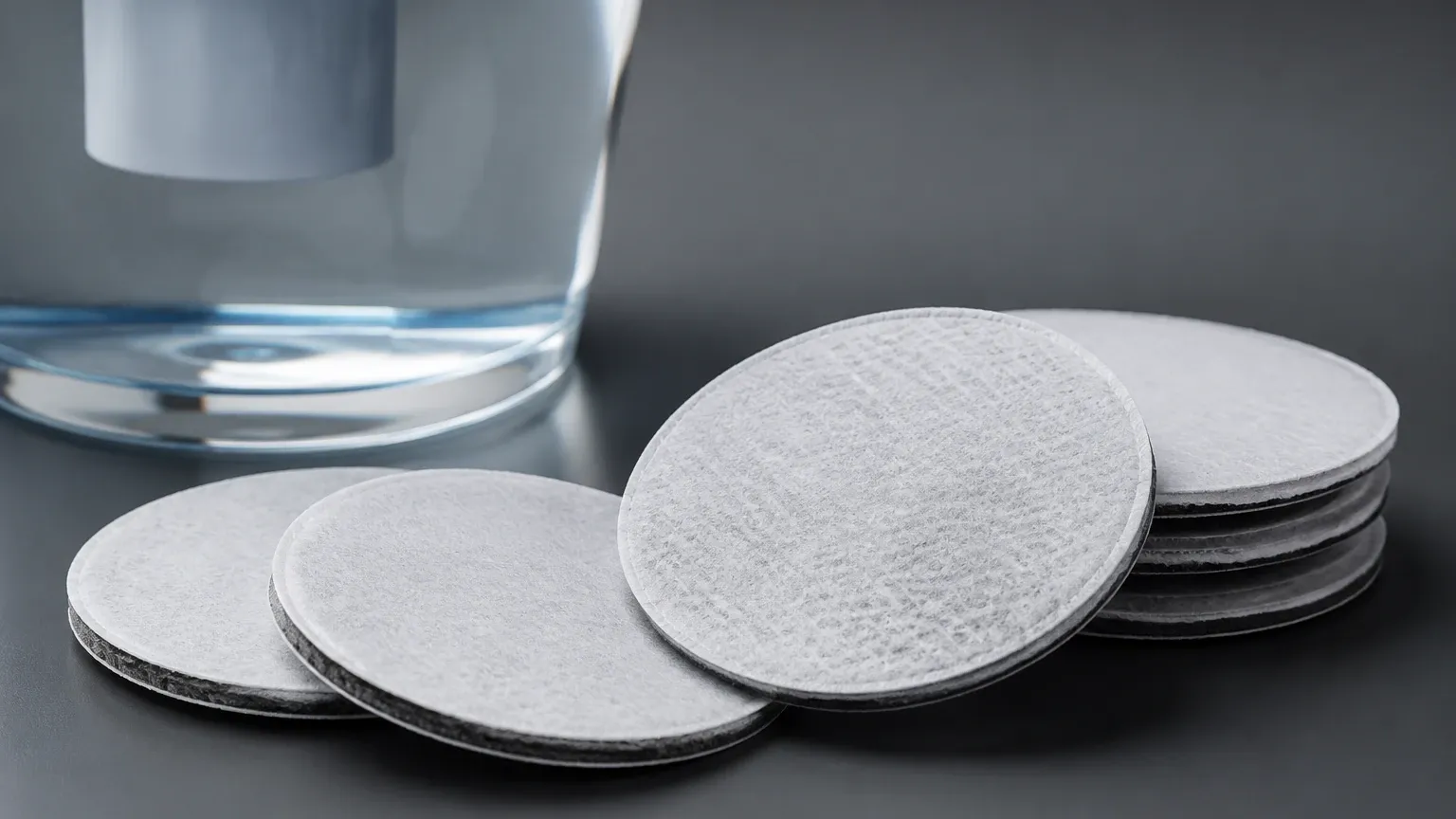
Disc filtration operates primarily on the principle of surface filtration or thin-depth filtration. In a typical configuration, the fluid passes through a circular medium where particles larger than the pore size are intercepted. In consumer applications, such as brita carafe filter discs, the medium often consists of activated carbon and ion-exchange resins compressed into a disc shape to maximize contact time within a small gravity-fed system.
In industrial environments, however, gravity is rarely the driving force. Systems operate under significant pressure, and the media must withstand high flow rates without deforming. Industrial filter discs are often constructed from multiple layers of stainless steel wire mesh. These layers are meticulously stacked and often sintered or rimmed together to create a "pack." This multi-layer approach allows for graduated filtration—where coarser outer layers protect the fine inner filtration layer—extending the service life of the component and preventing premature blinding.
Material Selection: Moving Beyond Polymers and Carbon
While consumer filters like brita carafe filter discs utilize polymers and activated carbon for taste and odor improvement, industrial applications require materials that can survive aggressive chemical cleaning, high temperatures, and mechanical stress.
Stainless Steel (304 and 316L)
Stainless steel is the gold standard for industrial filter discs. Grade 304 offers excellent general corrosion resistance, while Grade 316L (low carbon) is preferred for pharmaceutical and marine environments due to its superior resistance to pitting and chloride-induced stress corrosion cracking. Unlike plastic-housed carbon discs, stainless steel discs are fully compatible with Steam-in-Place (SIP) and Clean-in-Place (CIP) protocols.
Specialized Alloys
For extreme environments, such as those found in petrochemical processing or high-temperature gas filtration, alloys like Hastelloy, Monel, or Inconel may be used. These materials provide the necessary oxidation resistance and mechanical strength at temperatures where standard stainless steel or consumer-grade materials would fail.
Design Configurations: Single Layer vs. Multi-Layer Packs
The performance of Filter Discs & Packs is largely determined by their structural configuration. Depending on the specific solids loading and the desired filtrate clarity, engineers can choose from several designs:
1. Single-Layer Discs: Best suited for simple straining applications where the particle size distribution is narrow and the pressure drop must be kept to an absolute minimum.
2. Multi-Layer Spot-Welded Packs: These consist of several layers of mesh welded at specific points. They provide better structural integrity than single layers and allow for a combination of different mesh counts to achieve depth-loading characteristics.
3. Rimmed Filter Discs: The edges of the mesh layers are encased in a metal rim (often aluminum, copper, or stainless steel). This not only prevents fraying but also acts as a gasket, ensuring a tight seal within the filter housing to prevent bypass.
4. Sintered Mesh Discs: By bonding multiple layers of wire mesh through a high-temperature vacuum sintering process, a monolithic porous structure is created. These are the most robust discs available, capable of withstanding extreme backpressure and repeated cleaning cycles.
Performance Evaluation and Micron Ratings
When selecting industrial alternatives to basic filtration components like brita carafe filter discs, understanding the distinction between nominal and absolute micron ratings is critical.
* Nominal Rating: This refers to the ability of the filter to retain a majority (typically 60% to 90%) of particles of a specific size. Many consumer filters operate on nominal ratings.
* Absolute Rating: This is the diameter of the largest hard spherical particle that will pass through the filter under specified test conditions. In critical B2B applications, such as hydraulic fluid filtration or pharmaceutical ingredient processing, absolute ratings are mandatory to ensure process consistency.
Engineers must also calculate the Clean Pressure Drop (ΔP). A disc with a very fine micron rating may offer excellent filtration but could restrict flow to the point of system inefficiency. Balancing the filtration area with the mesh opening size is a key part of the design phase for any customized filtration solution.
Industrial Applications for Precision Filter Discs
The versatility of metal filter discs allows them to be used in sectors far removed from simple potable water carafes.
Chemical and Petrochemical Processing
In these industries, filter discs are used to protect sensitive downstream equipment like pumps and valves from particulate contamination. They are also used in catalyst recovery, where the ability to withstand high temperatures and acidic environments is paramount.
Food and Beverage Production
Unlike the brita carafe filter discs used in homes, industrial food-grade discs must comply with stringent FDA and EU regulations. Stainless steel discs are used to filter syrups, oils, and beverages, providing a hygienic solution that does not leach chemicals or fibers into the product.
Pharmaceutical and Biotechnology
Precision is non-negotiable in pharmaceutical manufacturing. Sintered filter discs are used for solvent filtration, active pharmaceutical ingredient (API) recovery, and gas sparging. The smooth surface of stainless steel mesh allows for easy sterilization, reducing the risk of batch cross-contamination.
Maintenance, Cleaning, and Total Cost of Ownership
One of the primary differences between consumer-grade and industrial-grade filtration is the lifecycle of the product. A brita carafe filter disc is a consumable item designed to be discarded after a set volume of water has passed through it. In contrast, industrial stainless steel Filter Discs & Packs are often designed to be permanent or semi-permanent components.
Cleaning Methods
Industrial discs can be cleaned using several methods, depending on the nature of the contaminant:
* Ultrasonic Cleaning: High-frequency sound waves create cavitation bubbles that dislodge fine particles from deep within the mesh layers.
* Backwashing: Reversing the flow of the fluid to push contaminants out of the filter media.
* Chemical Cleaning: Using solvents or acids to dissolve accumulated organic or inorganic scale.
Total Cost Considerations
While the initial purchase price of a precision metal filter disc is significantly higher than a disposable plastic or carbon disc, the Total Cost of Ownership (TCO) is often lower in industrial settings. By eliminating the need for frequent replacements, reducing waste disposal costs, and preventing downtime associated with filter changes, stainless steel solutions provide a superior return on investment over the long term.
Critical Questions for Procurement and Engineering
Before finalizing a purchase for industrial filtration components, technical teams should confirm several key parameters with their manufacturer:
* Chemical Compatibility: Does the disc material (including the rimming material) react with the process fluid or the cleaning agents?
* Differential Pressure Limits: What is the maximum pressure the disc can withstand before structural failure or bypass occurs?
* Customization Options: Can the disc diameter, thickness, and mesh configuration be tailored to fit existing proprietary housings?
* Certification Requirements: Does the application require material mill certificates, FDA compliance, or ISO 9001 quality documentation?
Conclusion
While the concept of disc filtration is popularized by consumer products like brita carafe filter discs, the industrial reality is far more complex. For technical professionals, selecting the right Filter Discs & Packs is a matter of balancing material science, fluid dynamics, and mechanical design. By moving toward high-quality stainless steel and customized filtration structures, industrial operations can achieve the precision and reliability required for modern manufacturing, ensuring that their processes remain efficient, compliant, and cost-effective.
