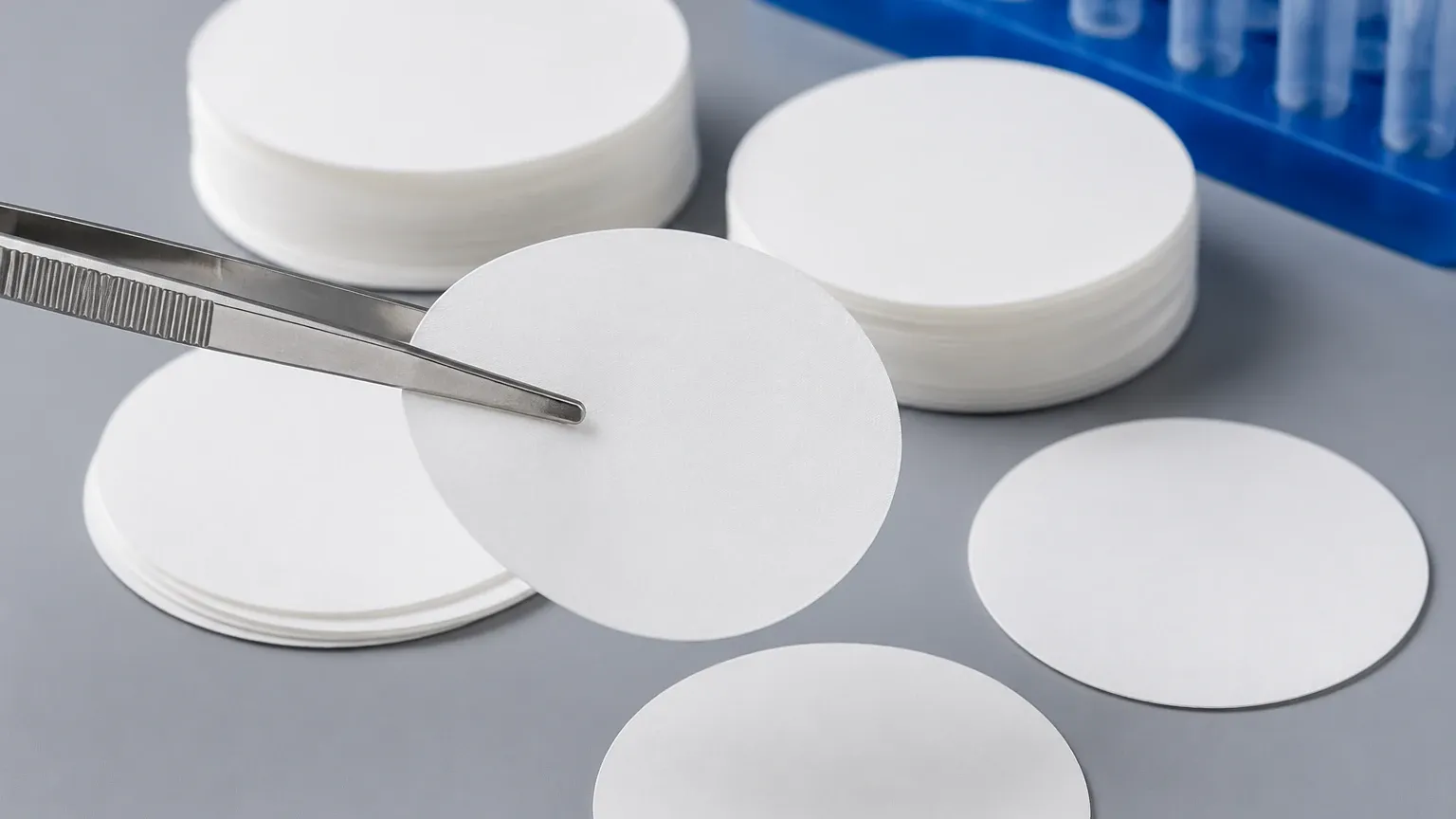
What Are Filter Paper Disks Used for
In the realm of industrial filtration and laboratory analysis, the question of what are filter paper disks used for is foundational to understanding separation processes. While often associated with simple laboratory experiments, these components serve as the critical interface in complex chemical processing, pharmaceutical manufacturing, and quality control workflows. For engineers and procurement specialists, selecting the right filtration medium—whether it be traditional cellulose paper or advanced Filter Discs & Packs—requires a deep understanding of material compatibility, particle retention, and mechanical durability.
The Fundamental Role of Filter Paper Disks
At its core, a filter paper disk is a semi-permeable barrier used to separate fine solids from liquids or gases. The specific application determines the grade of paper required, which is typically categorized by its porosity, thickness, and chemical treatment. In industrial settings, these disks are utilized to achieve high-purity results where even microscopic contaminants can compromise the integrity of a final product.
When investigating what are filter paper disks used for, it is essential to distinguish between qualitative and quantitative applications. Qualitative filter paper is used for general separation when the primary goal is to clarify a liquid or remove large particulates. In contrast, quantitative filter paper (often referred to as ashless paper) is used in gravimetric analysis, where the filter is burned away after the process to allow for the precise weighing of the remaining precipitate.
Primary Industrial Applications
Beyond the laboratory bench, filter paper disks and their more durable counterparts, such as stainless steel Filter Discs & Packs, are integral to several high-stakes industries:
1. Chemical and Petrochemical Processing
In chemical manufacturing, filtration disks are used to recover catalysts, remove impurities from solvents, and clarify chemical reagents. The choice of material is critical here; while cellulose paper may suffice for non-corrosive fluids, aggressive chemicals often require the transition to stainless steel mesh disks that can withstand extreme pH levels and high temperatures without degrading.
2. Pharmaceutical and Biotechnology
Sterility and precision are the benchmarks of the pharmaceutical industry. Filter disks are used in the production of active pharmaceutical ingredients (APIs), where they ensure that particulate matter is removed to meet strict regulatory standards. In these environments, the disks must be biocompatible and capable of being sterilized via autoclaving or chemical agents.
3. Food and Beverage Production
From clarifying fruit juices to filtering frying oils, filter disks play a vital role in maintaining the sensory qualities and safety of food products. They are used to remove yeast, proteins, and other suspended solids that could affect the clarity or shelf-life of the product. In large-scale operations, these disks are often integrated into multi-layer packs to increase the filtration surface area and extend the time between replacement cycles.
4. Hydraulic and Lubrication Systems
In heavy machinery, maintaining the purity of hydraulic fluids is essential to prevent component wear. While paper-based elements are common for light-duty filtration, industrial systems often utilize multi-layered Filter Discs & Packs made from stainless steel wire mesh. These provide the mechanical strength necessary to handle high-pressure surges and prevent the migration of filter media into the system.
Engineering Considerations: Selection Criteria
When determining what are filter paper disks used for in a specific engineering context, several technical parameters must be evaluated to ensure optimal performance and cost-efficiency.
Pore Size and Retention Efficiency
The pore size (measured in microns) dictates the smallest particle the disk can reliably trap. Engineers must balance the need for fine filtration with the required flow rate. A disk with excessively small pores may provide high purity but will result in a significant pressure drop and frequent clogging, leading to increased downtime.
Flow Rate and Permeability
The permeability of the filter medium determines how quickly a fluid can pass through the disk under a given pressure. In industrial scale-up, maintaining a consistent flow rate is critical for throughput. Multi-layer packs are often engineered with graduated density—using a coarse outer layer for large particles and a fine inner layer for polishing—to optimize flow and dirt-holding capacity.
Chemical and Thermal Compatibility
Standard cellulose filter paper has limitations regarding temperature and chemical resistance. If the process involves hot oils, steam, or caustic cleaners, engineers must specify materials like borosilicate glass fiber or, more commonly, 304 or 316L stainless steel. Stainless steel filter disks offer the advantage of being cleanable and reusable, which significantly reduces the total cost of ownership in high-volume applications.
The Transition from Paper to Metal Filter Discs
While the question "what are filter paper disks used for" often starts with cellulose, many industrial applications eventually migrate to metal mesh filtration. This shift is driven by the need for durability and precision. Unlike paper, which can tear or shed fibers under high pressure, stainless steel wire mesh provides a fixed pore structure that remains stable throughout the filtration cycle.
Customized Filter Discs & Packs can be engineered to include various edge treatments, such as aluminum or stainless steel rims, which ensure a leak-proof seal within the filter housing. This level of customization is essential for OEM (Original Equipment Manufacturer) applications where the filter must fit into a proprietary assembly with tight tolerances.
Common Risks and Performance Expectations
Failure to select the appropriate filter disk can lead to several operational risks:
* Media Migration: In lower-quality paper filters, fibers may detach and contaminate the filtrate. This is unacceptable in pharmaceutical or microelectronics applications.
* Pressure Spikes: If a filter disk is not rated for the system's operating pressure, it may rupture, leading to a total loss of filtration and potential downstream damage.
* Chemical Degradation: Using a disk material that is incompatible with the process fluid can lead to leaching or structural failure.
To mitigate these risks, engineers should confirm the maximum operating temperature, the chemical composition of the fluid, and the expected particulate load before selecting a filtration solution. Performance expectations should be based on validated data regarding the "Beta Ratio" (the ratio of particles upstream vs. downstream) and the dirt-holding capacity of the media.
Customization and OEM Solutions
For many industrial designers, off-the-shelf filter disks do not meet the specific requirements of their equipment. This is where custom manufacturing becomes vital. Manufacturers like Kaifil specialize in developing tailored filtration components that go beyond standard paper disks. This includes:
* Multi-layered Sintered Mesh: Combining multiple layers of wire mesh for superior strength and filtration accuracy.
* Custom Geometric Shapes: Producing disks in specific diameters, thicknesses, and shapes to fit unique housing designs.
* Edge Binding: Adding metal or polymer borders to improve structural integrity and sealing performance.
Conclusion: Making Informed Purchasing Decisions
Understanding what are filter paper disks used for is the first step in optimizing an industrial filtration process. Whether the application requires the simple clarity of a qualitative paper disk or the robust, high-precision performance of stainless steel Filter Discs & Packs, the choice must be guided by technical data and application-specific requirements.
For engineers and purchasing teams, the focus should be on the total lifecycle of the filter. While paper disks offer a low initial cost, the durability, reusability, and precision of metal filter components often provide better long-term value in demanding industrial environments. By carefully evaluating pore size, material compatibility, and mechanical constraints, organizations can achieve efficient, reliable, and cost-effective filtration that protects their equipment and ensures the quality of their final products.