


Ahlstrom Filter Discs
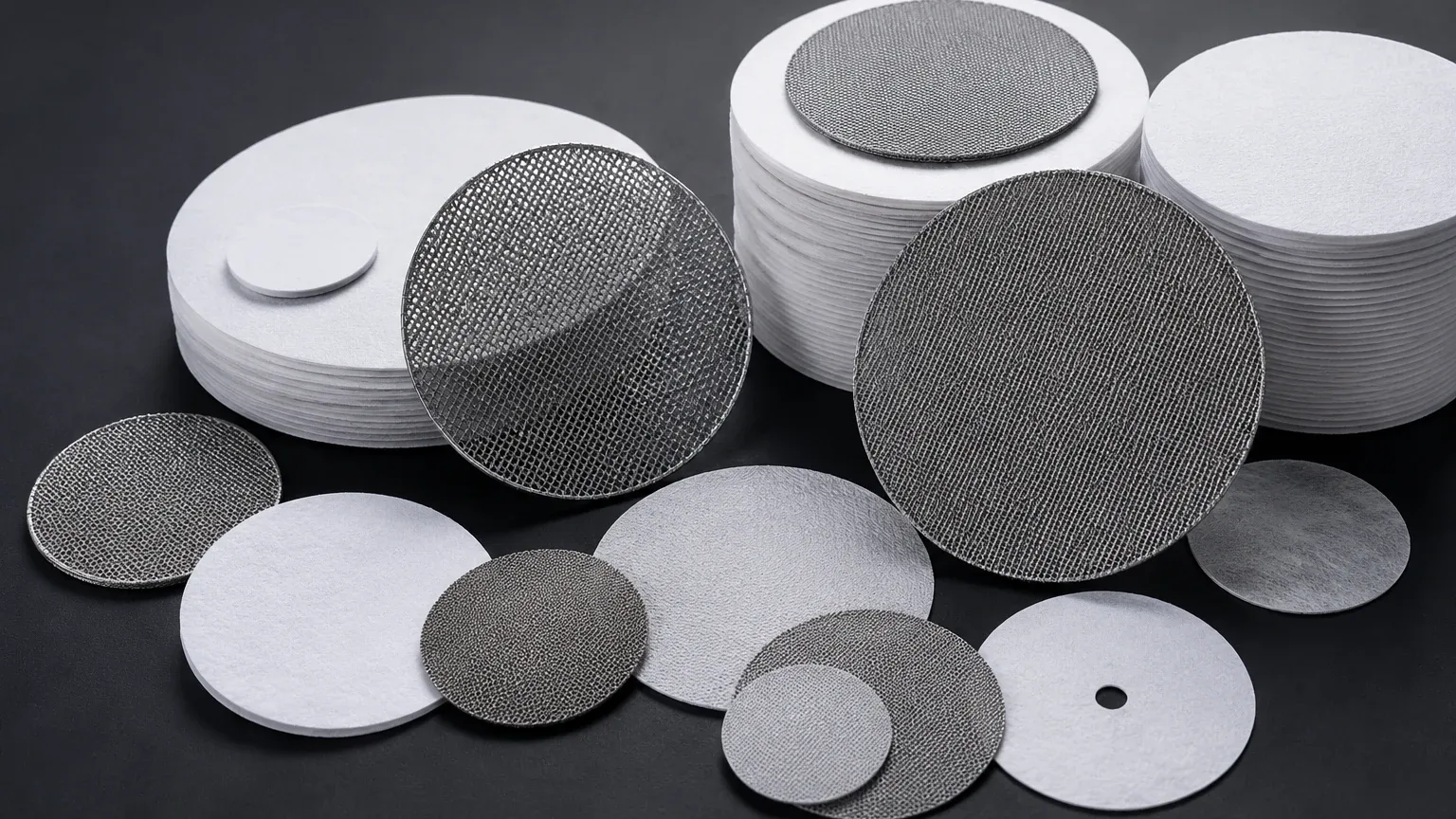
In the landscape of industrial filtration, selecting the appropriate media is a critical decision that impacts process efficiency, product purity, and equipment longevity. Ahlstrom filter discs represent a specialized category of fiber-based filtration media widely recognized for their consistency and high-performance characteristics. For engineers and procurement teams, understanding how these discs function—and how they integrate into broader Filter Discs & Packs systems—is essential for optimizing fluid and gas processing applications.
While industrial filtration often relies on stainless steel wire mesh for its mechanical strength, fiber-based discs like those produced by Ahlstrom provide unique depth filtration capabilities. These components are frequently used in laboratory analysis, pharmaceutical processing, and as high-precision layers within multi-stage industrial filter assemblies. This guide explores the technical specifications, application logic, and engineering considerations surrounding these filtration components.
Understanding the Role of Ahlstrom Filter Discs in Industrial Applications
Ahlstrom filter discs are primarily composed of cellulose, glass fiber, or synthetic polymers, depending on the specific grade and intended use. Unlike surface filtration media, which trap particles on a single plane, these fiber discs utilize depth filtration principles. This allows for a higher dirt-holding capacity by trapping contaminants throughout the thickness of the material.
In industrial settings, these discs are rarely used in isolation for heavy-duty tasks. Instead, they serve as the high-precision "working layer" within a structured filter pack. For example, in the chemical processing industry, a fiber disc may be sandwiched between layers of stainless steel wire mesh to provide fine particle retention while the mesh provides the necessary structural support to withstand high differential pressures.
Key industrial roles include:
* Clarification: Removing trace solids from liquids to achieve high clarity.
* Pre-filtration: Protecting expensive downstream membranes by removing larger particulate loads.
* Analytical Testing: Providing a standardized medium for gravimetric analysis and air monitoring.
* Polymer Melt Filtration: Acting as a sacrificial or fine-tuning layer in complex filter packs used in plastic extrusion.
Material Composition and Performance Characteristics
The performance of an Ahlstrom filter disc is dictated by its material composition. Engineers must match the material properties to the chemical and thermal demands of their specific process.
Cellulose Filter Discs
Standard cellulose discs are manufactured from high-quality alpha-cellulose. They are generally used for general-purpose filtration where chemical compatibility with organic solvents is required. However, they are limited by their temperature tolerance and sensitivity to strong acids or bases.
Glass Microfiber Discs
For applications requiring higher temperature resistance (up to 500°C) and finer particle retention, glass microfiber discs are preferred. These discs offer high flow rates and an extremely high dirt-holding capacity. They are chemically inert to most reagents, making them suitable for pharmaceutical and environmental monitoring applications.
Synthetic and Composite Media
In demanding industrial environments, composite discs that combine synthetic fibers with traditional materials are often used. These provide enhanced mechanical strength and specific hydrophobic or hydrophilic properties, allowing for better separation of oil-water emulsions or gas-liquid streams.
Integrating High-Performance Media into Filter Discs & Packs
In high-pressure industrial systems, such as hydraulic circuits or polymer extrusion lines, a single fiber disc lacks the structural integrity to remain intact under flow. This is where the concept of Filter Discs & Packs becomes vital. Manufacturing experts like Kaifil specialize in taking high-performance media and integrating them into robust, multi-layer assemblies.
The Anatomy of a Filter Pack
A typical industrial filter pack might consist of:
1. Support Layer: A coarse stainless steel wire mesh that provides rigidity.
2. Drainage Layer: A medium-mesh layer that ensures even flow distribution across the filter surface.
3. Filtration Layer: The Ahlstrom filter disc or a fine metal mesh that determines the actual micron rating.
4. Protection Layer: A final mesh layer to prevent the migration of fibers into the filtrate.
Edging and Rimming
To prevent bypass and ensure a secure fit within the filter housing, these packs are often "rimmed." This involves binding the edges of the multi-layer stack with a metal U-clip, usually made of aluminum, stainless steel, or copper. This rimming process ensures that the fluid is forced through the media rather than around it, maintaining the integrity of the filtration process even under fluctuating pressures.
Technical Selection Criteria for Engineers
Selecting the right disc requires a quantitative evaluation of the process parameters. Engineers should focus on the following technical metrics:
Micron Rating and Efficiency
It is important to distinguish between "nominal" and "absolute" micron ratings. Fiber-based discs often provide a nominal rating, meaning they trap a high percentage of particles at a certain size but may allow some through. If absolute retention is required, the disc must be validated under specific flow conditions.
Flow Rate and Pressure Drop (Delta P)
The initial pressure drop across a clean filter disc is a function of the media's porosity and the fluid's viscosity. A disc with a very fine pore structure will necessarily result in a higher Delta P. Engineers must ensure the system's pump capacity can handle the pressure drop as the disc begins to load with contaminants.
Chemical and Thermal Compatibility
Before specification, the pH, solvent concentration, and operating temperature must be confirmed. For instance, while cellulose is excellent for many organic solvents, it will degrade in the presence of concentrated nitric acid or at temperatures exceeding 120°C. In such cases, a transition to stainless steel mesh or glass fiber is necessary.
Comparing Fiber-Based Discs with Stainless Steel Mesh Alternatives
One of the most common questions in filter selection is whether to use a fiber-based disc (like Ahlstrom) or a permanent stainless steel wire mesh disc. The choice depends on the "disposable vs. cleanable" logic of the operation.
| Feature | Fiber-Based Discs (Ahlstrom) | Stainless Steel Wire Mesh |
| :— | :— | :— |
| Filtration Type | Depth Filtration | Surface Filtration |
| Dirt Holding | Very High | Moderate |
| Cleanability | Disposable (Single Use) | Cleanable/Reusable |
| Mechanical Strength | Low (Requires Support) | High (Self-Supporting) |
| Precision | Excellent for sub-micron tasks | Excellent for defined apertures |
| Cost | Lower initial cost per unit | Higher initial cost; lower long-term |
For processes where the contaminant is gelatinous or deformable, depth filtration via fiber discs is often superior because the particles can be trapped within the matrix. For processes involving hard, abrasive particles where the filter must be cleaned via backwashing or ultrasonic baths, stainless steel mesh is the industry standard.
Customization and Manufacturing Considerations for Industrial Packs
Standard off-the-shelf sizes are often insufficient for specialized industrial machinery. Customization is a core requirement for most OEM applications. When ordering Filter Discs & Packs, several manufacturing variables must be specified:
* Diameter and Geometry: While circular discs are standard, many applications require oval, rectangular, or complex polygonal shapes.
* Layer Sequencing: The order of layers (e.g., coarse-fine-coarse) can be customized to extend the life of the fine filtration layer.
* Spot Welding: For packs that do not require a metal rim, spot welding the layers together ensures they remain aligned during installation and operation.
* Material Certification: In the pharmaceutical and food industries, materials must often comply with FDA or USP Class VI standards. Ensuring the filter manufacturer can provide these certifications is a critical procurement step.
Kaifil’s manufacturing capabilities allow for the precision cutting and assembly of these components, ensuring that the high-performance characteristics of the media are preserved during the fabrication process.
Maintenance, Replacement, and Total Cost of Ownership
The "Total Cost of Ownership" (TCO) of a filtration system is not just the purchase price of the discs. It includes the cost of downtime, labor for replacement, and the potential cost of product loss due to filtration failure.
Monitoring Performance
Industrial systems should be equipped with differential pressure gauges. A sudden spike in Delta P indicates that the disc has reached its dirt-holding capacity and requires replacement. Conversely, a sudden drop in pressure might indicate a "blow-through" or media rupture, which can lead to catastrophic downstream contamination.
Storage and Handling
Fiber-based discs are sensitive to environmental conditions. They should be stored in a dry, temperature-controlled environment to prevent moisture absorption, which can affect flow rates and structural integrity. Handling should be done with clean gloves to avoid transferring oils or skin cells to the high-purity media.
Conclusion for Procurement
When sourcing Ahlstrom filter discs or integrated filter packs, engineers should provide the manufacturer with full process details: fluid type, temperature, flow rate, target particle size, and maximum allowable pressure drop. By collaborating with a manufacturer that understands both the media properties and the mechanical requirements of industrial housings, facilities can achieve a filtration solution that balances precision with durability. For those looking to explore specific configurations or request technical support for custom designs, reviewing available Filter Discs & Packs options is the recommended next step in the specification process.
