


Brita Water Filter Discs How to Use
Filtration technology spans a wide spectrum, from simple household applications to high-precision industrial processes. Understanding the fundamental mechanics of how filter discs operate is essential for both consumers seeking clean drinking water and engineers designing complex fluid systems. While the consumer market often focuses on ease of use, the industrial sector prioritizes material durability, chemical compatibility, and precise micron ratings. This guide explores the practical application of disc-based filtration, starting with common consumer questions like brita water filter discs how to use, and transitioning into the technical requirements of industrial Filter Discs & Packs.
Understanding the Basics: Brita Water Filter Discs How to Use
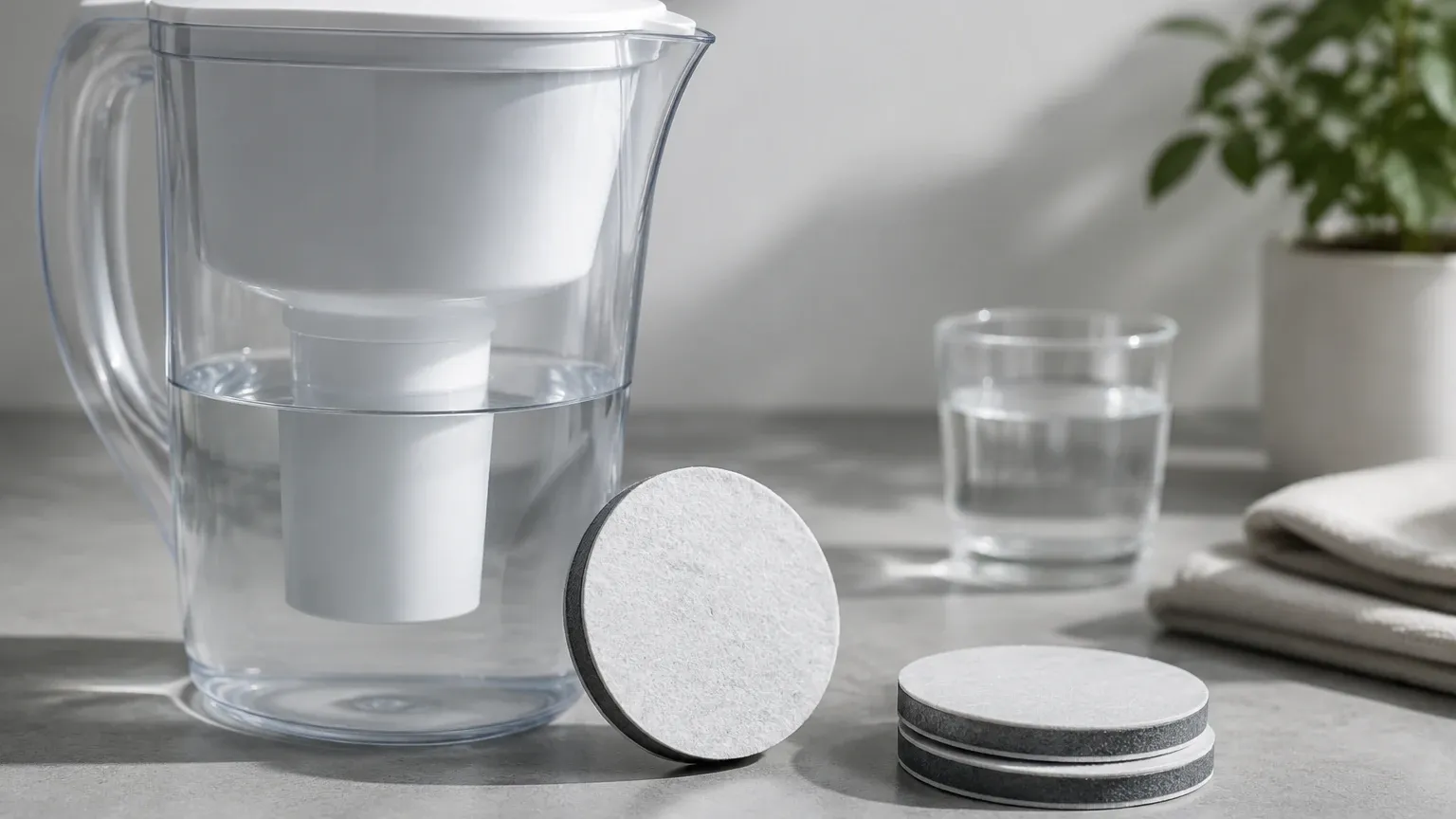
For many users, their first encounter with disc filtration is through consumer products designed for water carafes or bottles. These discs typically utilize activated carbon technology to reduce chlorine and improve the taste of tap water.
To ensure the performance of these consumer-grade filters, the following steps are standard:
1. Preparation: Before the first use, the filter disc should be held under cold running water for approximately 15 seconds. This ensures that any loose carbon dust is rinsed away and the filter media is fully saturated.
2. Installation: The disc is placed into the designated slot within the filter housing or the bottle lid. It is crucial to ensure the disc sits flat and secure to prevent bypass, where water flows around the filter rather than through it.
3. Maintenance: Consumer discs are generally designed for short-term use, typically filtering about 150 liters (or lasting approximately four weeks). Regular replacement is necessary because the activated carbon pores eventually become saturated and lose their adsorption capacity.
While these steps address the query of brita water filter discs how to use, they represent only the simplest form of disc filtration. In industrial environments, the stakes are significantly higher, and the materials used are far more robust than the compressed carbon found in household products.
Transitioning to Industrial Filter Discs & Packs
In industrial settings, filter discs serve as critical components in hydraulic systems, chemical processing plants, and food production lines. Unlike consumer discs made of plastic and carbon, industrial Filter Discs & Packs are primarily manufactured from stainless steel wire mesh or sintered metal fibers. These materials are chosen for their ability to withstand high pressures, extreme temperatures, and corrosive fluids.
Industrial filter discs are often used in "packs"—multiple layers of wire mesh stacked and sometimes sintered together to provide graduated filtration. This multi-layer approach allows for high dirt-holding capacity and precise control over the filtration fineness, ranging from several millimeters down to 2 microns.
Material Selection and Engineering Considerations
When moving beyond the consumer level, engineers must evaluate material science to ensure the longevity of the filtration system. Kaifil specializes in utilizing high-grade alloys to meet these demanding requirements.
Stainless Steel (304, 316, 316L)
Stainless steel is the standard for most industrial filter discs. Grade 304 offers excellent general-purpose corrosion resistance, while 316 and 316L (low carbon) provide superior resistance to chlorides and acids, making them ideal for pharmaceutical and marine applications.
Specialized Alloys
For environments involving highly corrosive chemicals or extreme heat, materials such as Monel, Inconel, or Hastelloy may be used. These alloys maintain their structural integrity where standard stainless steel might fail due to pitting or oxidation.
Wire Mesh Weave Types
The performance of a filter disc is largely determined by the weave of the wire mesh.
* Plain Weave: The most common type, where wires cross over and under each other. It provides a simple, effective barrier for general filtration.
* Dutch Weave: This weave uses heavier warp wires and finer shute wires, resulting in a dense, strong mesh with very fine openings. It is the preferred choice for high-pressure applications.
* Twilled Weave: Allows for thicker wires in a given mesh count, increasing the strength of the disc.
Structural Design of Filter Discs & Packs
Industrial filter discs are not merely circles of mesh; they are engineered components with specific structural features designed to integrate into larger machinery.
Single-Layer vs. Multi-Layer
Single-layer discs are often used in low-pressure applications or as a primary screen to catch large debris. Multi-layer Filter Discs & Packs are more complex. By combining different mesh counts, the pack can perform "depth filtration," where larger particles are caught by the outer layers and finer particles are trapped by the inner layers. This prevents the filter from clogging prematurely and extends the service life.
Edging and Framing
To prevent fraying and to ensure a leak-proof seal within the filter housing, discs are often finished with a border. Common methods include:
* Spot Welding: Multiple layers are welded at the edges to maintain alignment.
* Aluminum or Stainless Steel Rims: A metal U-shaped channel is pressed around the circumference of the disc. This provides structural rigidity and a flat surface for gaskets to seat against.
* Resin Bonding: In some chemical applications, the edges are sealed with specialized resins that are compatible with the process fluid.
Performance Evaluation: Beyond the Household Standard
When considering brita water filter discs how to use, the primary metric is taste. In B2B industrial applications, the metrics are far more technical. Engineers must consider the following:
Micron Rating (Nominal vs. Absolute)
* Nominal Rating: Refers to the ability of the filter to retain a certain percentage (usually 60% to 90%) of particles of a specific size.
* Absolute Rating: Refers to the diameter of the largest hard spherical particle that will pass through the filter under specified test conditions. For critical applications like hydraulic fluid filtration, absolute ratings are often required to protect sensitive valves.
Pressure Drop (Delta P)
The pressure drop is the difference in pressure between the upstream and downstream sides of the filter. A high initial pressure drop indicates that the filter disc may be too restrictive for the pump's capacity, leading to inefficiency or cavitation. Industrial discs are designed to balance high filtration efficiency with a low pressure drop to optimize energy consumption.
Dirt Holding Capacity
This defines how much contaminant the disc can hold before the pressure drop reaches a critical limit, necessitating cleaning or replacement. Sintered multi-layer packs excel in this area compared to single-layer screens.
Customization and OEM Solutions
One of the primary advantages of working with a professional manufacturer like Kaifil is the ability to customize filtration components. Unlike consumer products that come in standard sizes, industrial Filter Discs & Packs are often custom-engineered for specific equipment.
Customization options include:
* Variable Shapes: While circular discs are common, filtration packs can be manufactured in oval, rectangular, or ring shapes (with a center hole) to fit specific manifold designs.
* Sintering Technology: Sintering involves heating the mesh layers in a vacuum furnace until they bond at the molecular level. This creates a filter disc that is incredibly strong, easy to clean (backwashable), and cannot migrate or shed wires into the fluid stream.
* Pleating: For applications requiring a massive surface area in a small footprint, the disc material can be pleated before being cut into shape, significantly increasing the filtration area.
Maintenance and Replacement Cycles
In a household context, a filter disc is discarded after a set period. In industrial B2B operations, the decision to clean or replace a filter disc is driven by data. Differential pressure gauges monitor the state of the filter in real-time.
Many stainless steel filter discs are designed to be reusable. They can be cleaned using ultrasonic baths, chemical solvents, or high-pressure backwashing. This is a critical factor in the total cost of ownership (TCO) for industrial plants. While the initial investment in a high-quality stainless steel disc is higher than a disposable alternative, the ability to clean and reuse the component over hundreds of cycles provides significant long-term savings.
Conclusion: Selecting the Right Filtration Solution
Whether you are researching brita water filter discs how to use for personal hydration or specifying heavy-duty Filter Discs & Packs for a chemical refinery, the core principles of filtration remain the same: capturing contaminants while allowing the fluid to flow efficiently.
For engineers and purchasing teams, the focus must remain on the technical specifications—material grade, micron rating, and structural integrity. Choosing a reliable manufacturing partner ensures that these components meet the rigorous demands of industrial environments, providing consistent performance and protecting downstream equipment from damage. By understanding the engineering behind the mesh, businesses can achieve optimized filtration performance and reduced operational downtime.
