


Filtration Discs
In the landscape of industrial separation technology, filtration discs represent a fundamental component for ensuring fluid purity and protecting downstream equipment. These precision-engineered components are utilized across a vast spectrum of industries, from polymer extrusion and chemical processing to pharmaceutical manufacturing and hydraulic systems. For engineers and technical procurement teams, selecting the appropriate filtration discs involves more than just matching a diameter; it requires a deep understanding of material science, mesh geometry, and the mechanical stresses of the specific application environment.
As industrial processes become more demanding, the reliance on high-quality stainless steel Filter Discs & Packs has increased. These components must withstand high pressures, corrosive chemicals, and extreme temperatures while maintaining precise micron ratings. This guide examines the technical considerations, manufacturing standards, and selection criteria essential for optimizing filtration performance.
Engineering Fundamentals of Filtration Discs
Filtration discs are typically fabricated from woven wire mesh, though expanded metal or perforated plate may be used for specialized support roles. The primary material of choice is stainless steel—most commonly AISI 304, 316, or 316L—due to its inherent durability and resistance to oxidation.
Material Selection and Alloy Properties
The choice of alloy is the first critical decision in the engineering process. While SS304 is suitable for general industrial applications where moisture and mild contaminants are present, SS316L is preferred for environments involving high salinity, acids, or pharmaceutical-grade requirements. The "L" in 316L denotes low carbon content, which enhances weldability and minimizes the risk of intergranular corrosion in welded filter packs.
Mesh Weave Types
The performance of filtration discs is largely dictated by the weave of the wire mesh. Common weaves include:
- Plain Weave: The most straightforward pattern where wires cross over and under each other. It offers high flow rates and is easy to clean, making it ideal for simple straining tasks.
- Twilled Weave: Allows for a heavier wire diameter in a given mesh count, providing increased strength for high-pressure applications.
- Dutch Weave (Plain and Twilled): These weaves utilize a higher density of smaller diameter wires in one direction, creating a "tortuous path" for particles. This results in superior filtration accuracy and high mechanical stability, often used in fine-micron liquid and gas filtration.
Structural Configurations: Single Layer vs. Multi-Layer Packs
Depending on the pressure drop requirements and the nature of the particulate matter, filtration discs are configured as either single-layer components or multi-layer packs.
Single-Layer Discs
Single-layer discs are typically used in low-pressure systems or as preliminary strainers. They are cost-effective and provide a clear surface filtration mechanism. However, they lack the structural integrity required for high-viscosity fluids or high-differential pressure scenarios.
Multi-Layer Filter Packs
Multi-layer Filter Discs & Packs are engineered to provide both fine filtration and structural support. A typical configuration might include:
1. Filtration Layer: The middle layer(s) featuring the specific micron rating required for the process.
2. Support Layers: Coarser mesh layers on either side of the filtration layer that prevent the fine mesh from deforming under pressure.
3. Drainage Layers: Outermost layers that facilitate the even distribution of fluid across the entire surface area of the disc.
These layers can be held together through spot welding or by binding the edges with a metal rim (edging). Aluminum, stainless steel, and copper are common edging materials, selected based on the operating temperature and chemical compatibility with the process fluid.
Key Performance Evaluation Criteria
When evaluating filtration discs for a new or existing system, engineers must prioritize several technical parameters to ensure long-term reliability and process efficiency.
Micron Rating and Capture Efficiency
The micron rating defines the size of particles the disc is intended to remove. It is vital to distinguish between "nominal" and "absolute" ratings. A nominal rating refers to the ability of the mesh to retain a majority of particles of a certain size, while an absolute rating indicates the size of the largest spherical particle that can pass through the mesh under laboratory conditions. For critical pharmaceutical or chemical processes, absolute ratings are generally required.
Permeability and Pressure Drop (ΔP)
Every filter introduces a resistance to flow. High-quality filtration discs are designed to maximize the open area while maintaining the required filtration fineness. An excessive initial pressure drop can lead to premature pump wear or reduced throughput. Engineers must calculate the clean pressure drop based on fluid viscosity, flow rate, and the effective filtration area (EFA) of the disc.
Mechanical Strength and Burst Pressure
In applications like polymer melt filtration, discs are subjected to immense pressures. If a disc deforms or "blows out," it can lead to catastrophic downstream contamination. Multi-layer packs with reinforced edging are specifically designed to withstand these mechanical stresses without losing their geometric integrity.
Applications Across Industrial Sectors
The versatility of stainless steel filtration components allows them to serve diverse roles across multiple sectors. Understanding the specific challenges of each industry helps in selecting the right disc configuration.
Polymer and Plastic Extrusion
In the plastics industry, filtration discs are used in screen changers to remove "black specks," un-melted resin, and other contaminants from the polymer melt. These discs must operate at high temperatures (often exceeding 300°C) and withstand pressures up to several hundred bar. Multi-layer sintered or spot-welded packs are standard here to ensure the purity of the final extruded product.
Chemical and Petrochemical Processing
Corrosion resistance is the primary concern in chemical processing. Filtration discs are used to protect catalysts, clean process water, and filter aggressive solvents. Using SS316L or even exotic alloys like Hastelloy (in extreme cases) ensures that the filter does not degrade and introduce metallic contaminants into the chemical stream.
Food and Beverage Industry
Filtration in the food and beverage sector requires materials that are non-toxic and easy to sanitize. Stainless steel discs are ideal because they do not shed fibers (unlike paper or fabric filters) and can withstand Clean-in-Place (CIP) procedures involving high-temperature steam and caustic cleaning agents.
Hydraulic and Lubrication Systems
Precision hydraulic systems rely on filtration discs to remove fine metallic wear particles that could damage sensitive valves and actuators. These discs are often integrated into inline filters or breather caps to maintain the ISO 4406 cleanliness codes required for high-performance machinery.
Customization and OEM Considerations
Off-the-shelf filtration solutions rarely meet the exact needs of specialized industrial equipment. Customization is often necessary to optimize the balance between filtration fineness and service life.
Geometric Customization
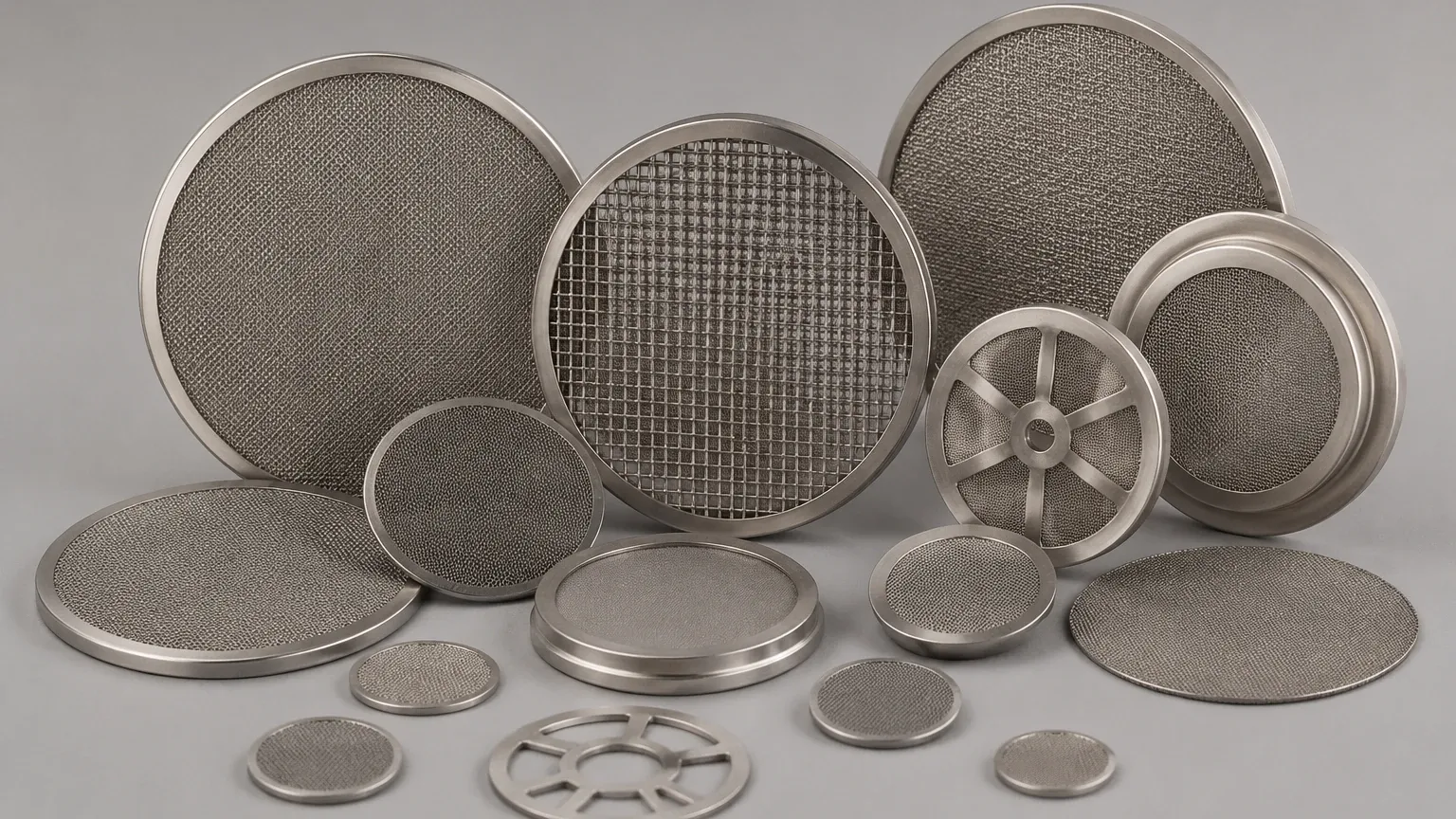
While circular discs are the most common, filtration discs can be manufactured in various shapes, including oval, rectangular, or ring-shaped (donut) configurations. Precision die-cutting and laser cutting ensure that the dimensions remain within tight tolerances, which is critical for preventing bypass—where fluid flows around the filter rather than through it.
Layer Sequencing
Engineers can specify the exact sequence of mesh counts in a multi-layer pack. For example, a "graded density" approach might use progressively finer layers to capture larger particles on the outer surface and smaller particles in the interior, significantly extending the time between filter changes.
Edging and Binding Options
The method used to secure the edges of a filter pack impacts its sealing capability. Aluminum edging is soft and provides a good seal in slightly irregular housings, while stainless steel edging offers maximum temperature resistance. For applications where no frame is desired, spot welding provides a low-profile solution that maintains the stack integrity.
Maintenance, Cleaning, and Replacement Cycles
Understanding the lifecycle of filtration discs is essential for calculating the Total Cost of Ownership (TCO). Unlike disposable synthetic filters, stainless steel discs are often cleanable and reusable.
Cleaning Methodologies
Depending on the contaminant, discs can be cleaned using several methods:
- Ultrasonic Cleaning: High-frequency sound waves create cavitation bubbles that dislodge particles from deep within the mesh pores.
- Chemical Cleaning: Soaking in solvents or acids to dissolve organic or mineral deposits.
- Burn-off/Pyrolysis: Used primarily in the plastics industry to remove hardened polymer residues.
- Backwashing: Reversing the flow of fluid to push trapped particles out of the mesh.
When to Replace
Despite their durability, filtration discs will eventually reach a point of "permanent fouling" where the baseline pressure drop remains high even after cleaning. Additionally, repeated cleaning cycles or high-pressure stresses can lead to wire fatigue or mesh displacement. Regular inspection under magnification is recommended to check for broken wires or enlarged pore sizes.
Avoiding Common Risks in Procurement
When sourcing Filter Discs & Packs, purchasing teams should be aware of common pitfalls that can compromise process integrity:
1. Material Substitution: Lower-grade stainless steel may look identical to SS316 but will fail prematurely in corrosive environments. Always request material test reports (MTRs).
2. Inconsistent Mesh Quality: Variations in wire diameter or weaving tension can lead to inconsistent micron ratings across a single disc.
3. Poor Edge Sealing: If the edging or welding is not precise, fluid bypass can occur, rendering the filtration process ineffective.
By partnering with a manufacturer that emphasizes technical precision and quality control, engineers can ensure that their filtration components perform reliably under the most demanding conditions.
Conclusion
Filtration discs are a critical line of defense in industrial manufacturing. From protecting sensitive hydraulic components to ensuring the clarity of pharmaceutical products, these stainless steel components provide the necessary balance of precision, strength, and chemical resistance. By carefully considering material grades, weave types, and structural configurations, engineering teams can implement filtration solutions that not only meet strict purity standards but also contribute to operational efficiency and reduced downtime. Whether utilizing a single-layer disc for simple straining or a complex multi-layer pack for high-pressure extrusion, the focus must remain on technical accuracy and application-specific design.
