


Disc Filter Element
In industrial filtration, the disc filter element serves as a fundamental component for ensuring fluid purity and protecting downstream equipment. These precision-engineered components are designed to remove solid contaminants from liquid or gaseous streams under varying pressures and temperatures. For engineers and procurement specialists, selecting the appropriate disc filter element requires a deep understanding of material science, weave patterns, and mechanical structural integrity to ensure optimal performance in demanding environments.
As a specialized manufacturer, Kaifil provides customized stainless steel filtration solutions, including high-performance Filter Discs & Packs tailored to specific industrial requirements. This guide examines the technical specifications, engineering considerations, and application criteria essential for integrating disc filter elements into industrial systems.
Understanding the Disc Filter Element Architecture
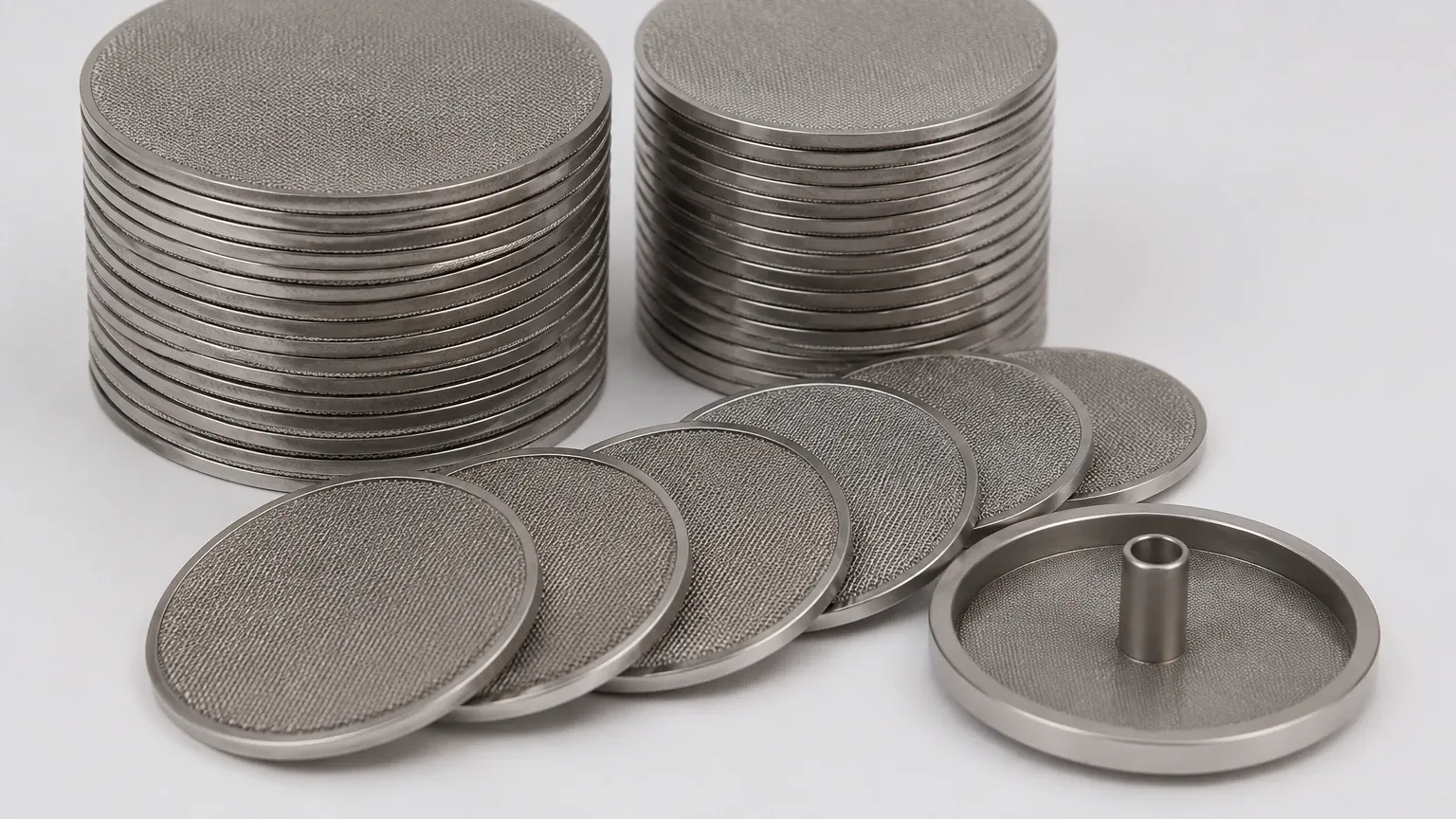
A disc filter element is typically constructed from one or more layers of wire mesh, often made from stainless steel or other corrosion-resistant alloys. The architecture of these elements is determined by the required filtration accuracy, the nature of the fluid being processed, and the mechanical stresses of the application.
Single-Layer vs. Multi-Layer Construction
Single-layer filter discs are often used in low-pressure applications where high flow rates are prioritized over extreme filtration precision. However, in most industrial B2B contexts, multi-layer configurations are preferred. Multi-layer packs can be spot-welded or rimmed together to form a robust unit. The combination of different mesh counts allows for graduated filtration—where coarser outer layers provide structural support and pre-filtration, while the finer inner layers achieve the target micron rating.
Sintered vs. Mesh Discs
While traditional mesh discs are flexible and cost-effective, sintered disc filter elements undergo a thermal diffusion bonding process. Sintering fuses the contact points of the wire mesh without the need for binders or filler metals. This results in a rigid, permanent structure that eliminates wire migration and provides superior resistance to high pressure and back-pulsing cleaning cycles.
Material Selection for Demanding Industrial Environments
The performance and longevity of a disc filter element are heavily dependent on the metallurgy of the wire mesh. Industrial applications often involve corrosive chemicals, high temperatures, or strict hygienic requirements, making material selection a critical engineering decision.
1. Stainless Steel 304: The standard choice for general industrial use, offering good corrosion resistance and mechanical strength at a competitive cost. It is suitable for water treatment and basic chemical processing.
2. Stainless Steel 316L: Containing molybdenum and a lower carbon content, 316L provides enhanced resistance to pitting and crevice corrosion, particularly in chloride-rich environments. This is the preferred material for pharmaceutical and food and beverage applications.
3. High-Nickel Alloys: For extreme environments involving highly acidic or alkaline media, materials such as Hastelloy, Monel, or Inconel may be specified. These alloys maintain their structural integrity at temperatures where standard stainless steels would fail or oxidize.
Kaifil’s manufacturing process ensures that all materials are sourced to meet international standards, providing the reliability required for critical filtration stages.
Key Engineering Parameters for Filter Discs & Packs
When specifying a disc filter element, engineers must define several performance parameters to ensure the component meets the system's operational goals.
Micron Rating and Filtration Efficiency
The micron rating defines the size of particles the disc is designed to intercept. It is important to distinguish between "nominal" and "absolute" ratings. A nominal rating indicates the ability to retain a majority of particles of a certain size, while an absolute rating refers to the diameter of the largest spherical particle that can pass through the mesh under specific test conditions. For high-precision applications like hydraulic systems or polymer melt filtration, absolute ratings are generally required.
Pressure Drop and Permeability
Every filter element introduces a resistance to flow, resulting in a pressure drop (ΔP). An ideal disc filter element provides the required filtration efficiency with the lowest possible pressure drop to minimize energy consumption and prevent pump strain. Permeability is influenced by the open area of the mesh; a higher mesh count generally reduces the open area, increasing the pressure drop.
Mechanical Strength and Burst Pressure
In high-viscosity applications, such as plastic extrusion, the disc filter element must withstand significant differential pressure without deforming or rupturing. The use of support layers and reinforced rims (edging) is essential to maintain the geometric stability of the disc under load.
Customization and Design Options
Industrial filtration systems are rarely standardized, necessitating customized designs for disc filter elements. Customization allows for the optimization of the filtration surface area and the integration of the element into existing housing units.
Shape and Dimensional Precision
While circular discs are the most common, disc filter elements can be manufactured in various shapes, including rectangular, oval, kidney-shaped, or ring-shaped (donuts). Precision laser cutting or die-stamping ensures that dimensions remain within tight tolerances, which is vital for preventing bypass—a condition where fluid bypasses the filter medium due to poor fitment.
Edging and Rimming Materials
To prevent fraying and to provide a secure sealing surface, many filter packs are finished with a rim. Common rimming materials include:
* Aluminum: Lightweight and cost-effective.
* Stainless Steel: Provides the highest durability and chemical compatibility.
* Copper/Brass: Often used in specific polymer processing applications for their sealing properties.
By offering customized Filter Discs & Packs, Kaifil enables engineers to specify the exact layering sequence and edging material required for their unique equipment configurations.
Critical Applications in Industrial Processing
The versatility of the disc filter element makes it indispensable across a wide range of sectors. Its ability to provide precise surface filtration is utilized in several key areas:
Chemical and Petrochemical Processing
In these industries, filters must handle aggressive solvents and high-temperature catalysts. Stainless steel discs are used to recover expensive catalysts from process streams and to protect sensitive instrumentation from particulate contamination.
Polymer and Plastic Extrusion
In the production of films, fibers, and resins, melt filtration is a critical step. Disc filter elements (often referred to as screen packs) remove unmelts and contaminants from the polymer melt, ensuring the quality of the final product and preventing defects in thin-gauge materials.
Pharmaceutical and Biotechnology
Filtration in these sectors requires high levels of cleanliness and the ability to withstand sterilization processes like autoclaving or SIP (Steam-In-Place). Sintered stainless steel discs are frequently used due to their smooth surfaces and lack of fiber shedding.
Hydraulic and Lubrication Systems
Precision hydraulic components are highly sensitive to particulate wear. Disc filter elements are integrated into hydraulic circuits to maintain fluid cleanliness levels (ISO 4406), thereby extending the service life of valves, pumps, and actuators.
Selection Criteria and Procurement Considerations
For purchasing teams and engineers, selecting a disc filter element involves more than just matching dimensions. A comprehensive evaluation of the total cost of ownership (TCO) is necessary.
Compatibility and Performance Validation
Before full-scale procurement, it is essential to confirm the chemical compatibility of the filter media with the process fluid. Additionally, engineers should request performance data regarding the dirt-holding capacity, which determines how much contaminant a filter can retain before reaching its terminal pressure drop. A higher dirt-holding capacity leads to longer service intervals.
Replacement Cycles and Cleanability
One of the primary advantages of stainless steel disc filter elements is their cleanability. Unlike disposable synthetic filters, metal discs can often be cleaned using ultrasonic baths, chemical cleaning, or backwashing. This reduces the frequency of replacement and lowers the environmental impact of the filtration process. However, the labor costs associated with cleaning must be balanced against the cost of new elements.
OEM vs. Custom Solutions
While many systems are designed around standard OEM filters, working with a custom manufacturer like Kaifil can provide significant advantages. Custom-engineered discs can be optimized for specific process changes—such as increased flow rates or finer filtration requirements—that standard off-the-shelf components may not accommodate.
Conclusion
The disc filter element is a critical technical component that directly impacts the efficiency and reliability of industrial processes. By focusing on material integrity, precise weave selection, and robust mechanical design, engineers can ensure their filtration systems operate at peak performance. Whether for high-pressure polymer extrusion or sterile pharmaceutical processing, the right filter disc configuration provides the necessary balance of flow, strength, and particle retention.
For technical assistance in selecting or designing the optimal filtration component for your application, exploring specialized Filter Discs & Packs is the first step toward achieving long-term operational success. Understanding the nuances of the disc filter element ensures that your system remains protected, efficient, and cost-effective throughout its service life.
