


In industrial engineering, the integrity of lubrication and hydraulic systems depends heavily on the efficiency of filtration components. A metal mesh oil filter serves as a critical barrier against particulate contamination, which is the leading cause of component wear and system failure in high-performance machinery. Unlike disposable cellulose or synthetic fiber elements, stainless steel wire mesh provides a robust, cleanable, and heat-resistant solution suitable for demanding environments such as chemical processing, power generation, and heavy manufacturing.
Selecting the appropriate filtration media requires a deep understanding of fluid dynamics, material science, and the specific mechanical constraints of the application. This guide examines the technical specifications, design considerations, and maintenance protocols for Wire Mesh Filter Cylinders & Tubes used in industrial oil filtration systems.
The Mechanics of Wire Mesh Oil Filtration
Industrial oil filtration primarily utilizes surface filtration mechanics. In a metal mesh oil filter, the woven structure of the wire creates precise geometric openings that intercept particles larger than the pore size. This mechanism is distinct from depth filtration, where particles are trapped within a thick matrix of fibers.
Surface vs. Depth Filtration
The primary advantage of surface filtration in oil systems is the predictability of the pressure drop and the ease of cleaning. Because the contaminants are captured on the upstream surface of the mesh, they can be removed through backwashing or ultrasonic cleaning. In contrast, depth filters often harbor trapped contaminants that cannot be fully purged, leading to permanent fouling. For high-viscosity oils or systems with high contaminant loading, the structural rigidity of wire mesh ensures that the pore geometry remains stable even under fluctuating pressures.
Weave Types and Performance
The performance of a metal mesh oil filter is largely determined by its weave pattern. Common configurations include:
* Plain Weave: A simple over-and-under pattern providing high flow rates and straightforward cleaning, typically used for coarse filtration.
* Twill Weave: Allows for heavier wire diameters in a given mesh count, increasing the physical strength of the filter element.
* Dutch Weave (Plain and Twill): Utilizes different wire diameters for the warp and weft to create a dense, layered structure. This is the standard for precision oil filtration, offering high mechanical strength and fine micron ratings (down to 5-10 microns).
Material Selection and Chemical Compatibility
In industrial oil applications, the choice of metal is dictated by the operating temperature and the chemical composition of the fluid. Kaifil specializes in stainless steel alloys because they offer the best balance of corrosion resistance and mechanical durability.
Stainless Steel 304 vs. 316L
* Type 304: The standard grade for most general industrial oils and hydraulic fluids. It provides excellent strength and good corrosion resistance at a cost-effective price point.
* Type 316L: Contains molybdenum, which significantly enhances resistance to pitting and crevice corrosion. This is the preferred material for synthetic oils, fluids containing acidic additives, or applications in coastal and marine environments where chloride exposure is a risk.
Temperature Stability
One of the most significant advantages of using a metal mesh oil filter over polymer-based media is thermal stability. Industrial oils can reach temperatures exceeding 200°C in certain hydraulic or heat-transfer applications. Stainless steel maintains its structural integrity and filtration accuracy at these temperatures, whereas synthetic fibers may soften, migrate, or fail entirely.
Structural Design: Wire Mesh Filter Cylinders & Tubes
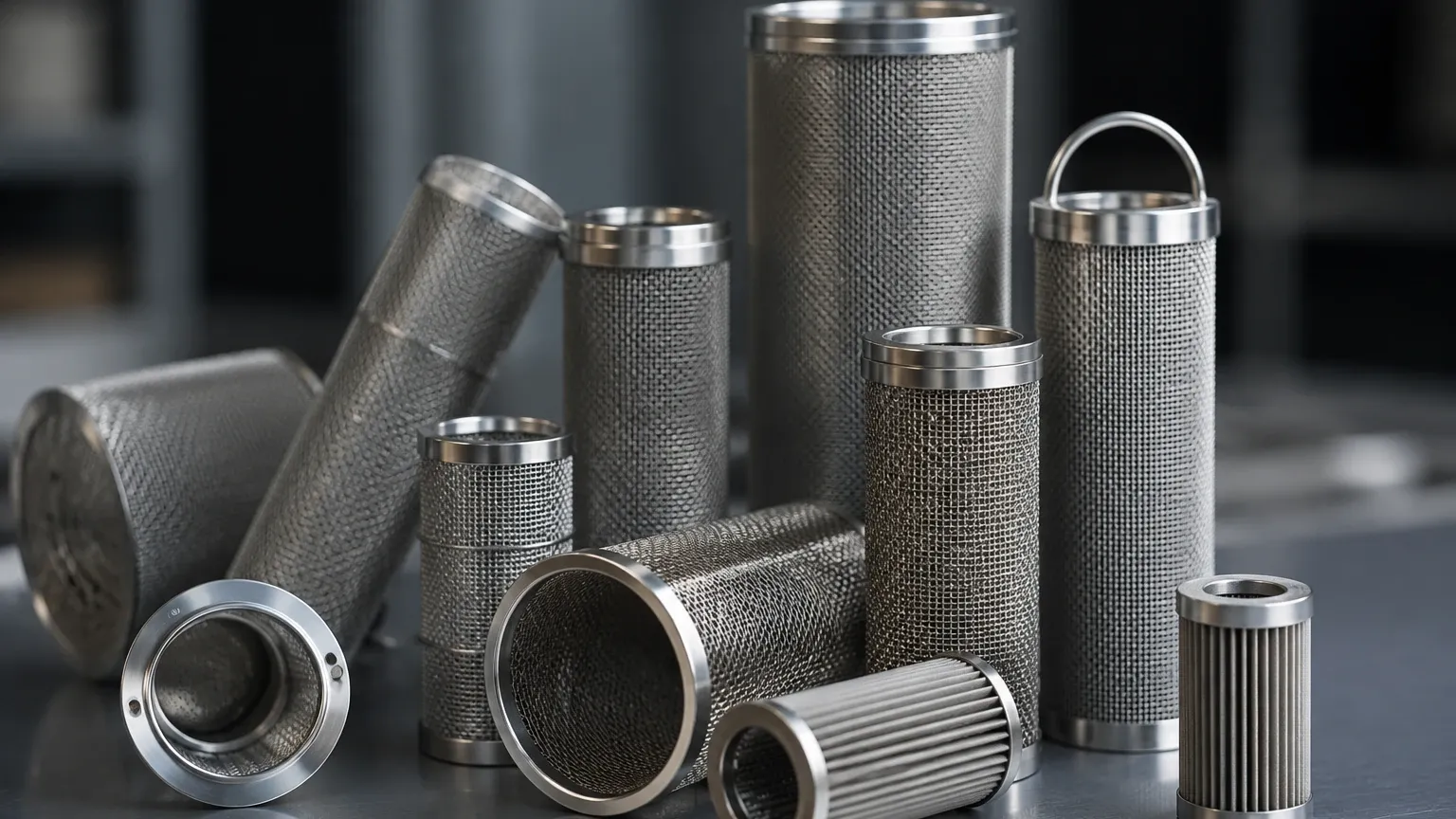
The physical configuration of the filter element is as important as the mesh itself. In most industrial housings, Wire Mesh Filter Cylinders & Tubes are the standard geometry. These components must be engineered to withstand the differential pressure (ΔP) generated as the filter accumulates debris.
Support Cores and Reinforcement
For high-pressure applications, a single layer of wire mesh is rarely sufficient. Engineers typically specify a multi-layer construction:
1. Filtration Layer: The precision-woven mesh that determines the micron rating.
2. Support Layer: A coarser mesh or perforated metal cylinder that provides internal or external rigidity.
3. Protective Shroud: An outer layer used in high-flow environments to prevent the incoming fluid from damaging the delicate filtration mesh.
Customization for OEM Integration
Customization is a core requirement for B2B procurement. Filter cylinders must be manufactured to exact tolerances to ensure a bypass-free fit within the filter housing. This includes custom length, diameter, and end-cap configurations (such as threaded fittings, NPT, or flanged ends). Precision welding techniques, such as TIG or plasma welding, are used to join the mesh seams and end caps, ensuring that the assembly remains leak-proof under thermal cycling.
Performance Metrics: Micron Rating and Pressure Drop
When evaluating a metal mesh oil filter, engineers must distinguish between nominal and absolute micron ratings.
* Nominal Rating: An approximate value indicating the ability of the filter to retain the majority of particles of a specific size. It is often used for non-critical lubrication circuits.
* Absolute Rating: The diameter of the largest hard spherical particle that will pass through the filter under specified test conditions. For critical hydraulic components like servo valves, an absolute rating is mandatory to prevent catastrophic failure.
Managing Pressure Drop (ΔP)
The pressure drop across a filter is a function of the oil's viscosity, flow rate, and the effective filtration area. As the mesh captures particles, the open area decreases, and ΔP increases. If the ΔP exceeds the design limit, it can trigger a bypass valve (allowing unfiltered oil to circulate) or cause the filter element to collapse. To optimize service life, engineers often specify pleated wire mesh cylinders, which significantly increase the surface area within the same footprint, thereby lowering the initial ΔP and increasing the dirt-holding capacity.
Installation Constraints and Sealing Mechanisms
Even the highest quality metal mesh oil filter will fail if the installation allows for fluid bypass. Proper sealing is the most overlooked aspect of filter selection.
Seal Materials
The interface between the filter tube and the housing must be sealed using materials compatible with the oil chemistry. Common options include:
* Buna-N (Nitrile): Standard for petroleum-based oils.
* Viton (FKM): Required for high temperatures and aggressive synthetic fluids.
* PTFE: Used in extreme chemical environments, though it lacks the elasticity of elastomers and requires precise mechanical compression.
Installation Orientation
Wire mesh cylinders can be designed for outside-to-inside or inside-to-outside flow. Outside-to-inside is more common, as it allows the pressure to press the mesh against a central support core. Inside-to-outside flow is often used when the goal is to trap contaminants inside the tube for easier removal during maintenance.
Maintenance and Cleaning Protocols
The total cost of ownership (TCO) for a metal mesh oil filter is often lower than disposable options because the elements are reusable. However, the cleaning process must be handled correctly to avoid damaging the mesh.
1. Initial Inspection: Check for signs of mechanical damage or "blinding" (permanent plugging of pores).
2. Solvent Pre-wash: Soak the element in a compatible solvent to break down oxidized oil and varnishes.
3. Ultrasonic Cleaning: This is the most effective method for wire mesh. High-frequency sound waves create cavitation bubbles that dislodge microscopic particles from deep within the weave.
4. Drying and Verification: After cleaning, the element must be dried and, in critical applications, subjected to a bubble point test to verify that the filtration integrity has not been compromised.
Strategic Procurement for Industrial Buyers
For international buyers and procurement managers, sourcing Wire Mesh Filter Cylinders & Tubes involves more than comparing unit prices. To ensure long-term system reliability, the following factors should be confirmed with the manufacturer:
* Material Certification: Request mill test reports (MTRs) to verify the grade of stainless steel.
* Manufacturing Standards: Confirm that the welding and assembly processes meet industrial standards for the specific application (e.g., ISO or ASME).
* Customization Capabilities: Ensure the supplier can provide the specific end-cap geometries and support structures required for your existing housings.
* Testing Procedures: Inquire about the manufacturer’s methods for verifying micron ratings and structural integrity, such as pressure testing or microscopic mesh inspection.
By focusing on these technical parameters, engineering teams can implement a filtration strategy that maximizes machinery uptime and minimizes the environmental impact associated with disposable filter waste. Metal mesh filtration remains the gold standard for high-reliability industrial oil systems where precision and durability are non-negotiable.
