


Engineering Guide to Wire Screen Oil Filters: Selection, Performance, and Industrial Application
In the realm of industrial fluid management, the efficiency and longevity of machinery are directly proportional to the cleanliness of the lubricating and hydraulic oils circulating through the system. Contamination—whether from metallic wear particles, environmental dust, or chemical by-products—acts as a catalyst for component failure. To mitigate these risks, engineers rely on robust filtration solutions. Among the most durable and technically versatile options is the wire screen oil filter.
Unlike disposable cellulose or synthetic fiber elements, a wire screen oil filter utilizes a precision-woven metallic mesh to capture contaminants. This guide explores the technical parameters, material considerations, and engineering advantages of using stainless steel wire mesh in oil filtration systems, particularly focusing on the structural implementation of Wire Mesh Filter Cylinders & Tubes in demanding B2B environments.
1. The Mechanics of Wire Mesh Filtration in Oil Systems
Wire mesh filtration operates primarily on the principle of surface filtration. In an industrial oil system, the fluid is forced through the apertures of the mesh. Particles larger than the pore size are mechanically strained at the surface, while the fluid passes through with minimal resistance.
Surface vs. Depth Filtration
While depth filters (like fiberglass) trap particles within a thick matrix of fibers, wire screen filters provide a precise, two-dimensional barrier. This characteristic is critical for oil applications where predictable flow rates and cleanability are prioritized. In a wire screen oil filter, the "absolute" micron rating is more easily defined and maintained under pressure, as the metallic wires do not shift or compress like soft media.
Viscosity and Flow Dynamics
Oil presents unique challenges due to its viscosity, which fluctuates significantly with temperature changes. During a cold start, oil viscosity is high, leading to increased differential pressure ($ΔP$) across the filter. Stainless steel wire mesh is uniquely suited for this because of its high mechanical strength. It can withstand the initial pressure surges of cold, thick oil without the risk of media migration or structural collapse, a common failure mode in paper-based filters.
2. Material Engineering: Why Stainless Steel?
Kaifil specializes in the manufacture of stainless steel filtration components because of the material's inherent resistance to the harsh conditions found in chemical processing and hydraulic systems. When selecting a wire screen oil filter, the choice of alloy is the first critical engineering decision.
* 304 Stainless Steel: The standard choice for most industrial oil applications. It provides excellent strength and good corrosion resistance for general lubricants and hydraulic fluids.
* 316L Stainless Steel: Specified for environments involving corrosive additives, high moisture content, or acidic by-products. The addition of molybdenum enhances resistance to pitting and crevice corrosion.
* High-Temperature Resilience: Unlike polymer-based filters that degrade at elevated temperatures, stainless steel wire mesh maintains its structural integrity in high-heat oil loops, such as those found in turbine lubrication or heat transfer systems.
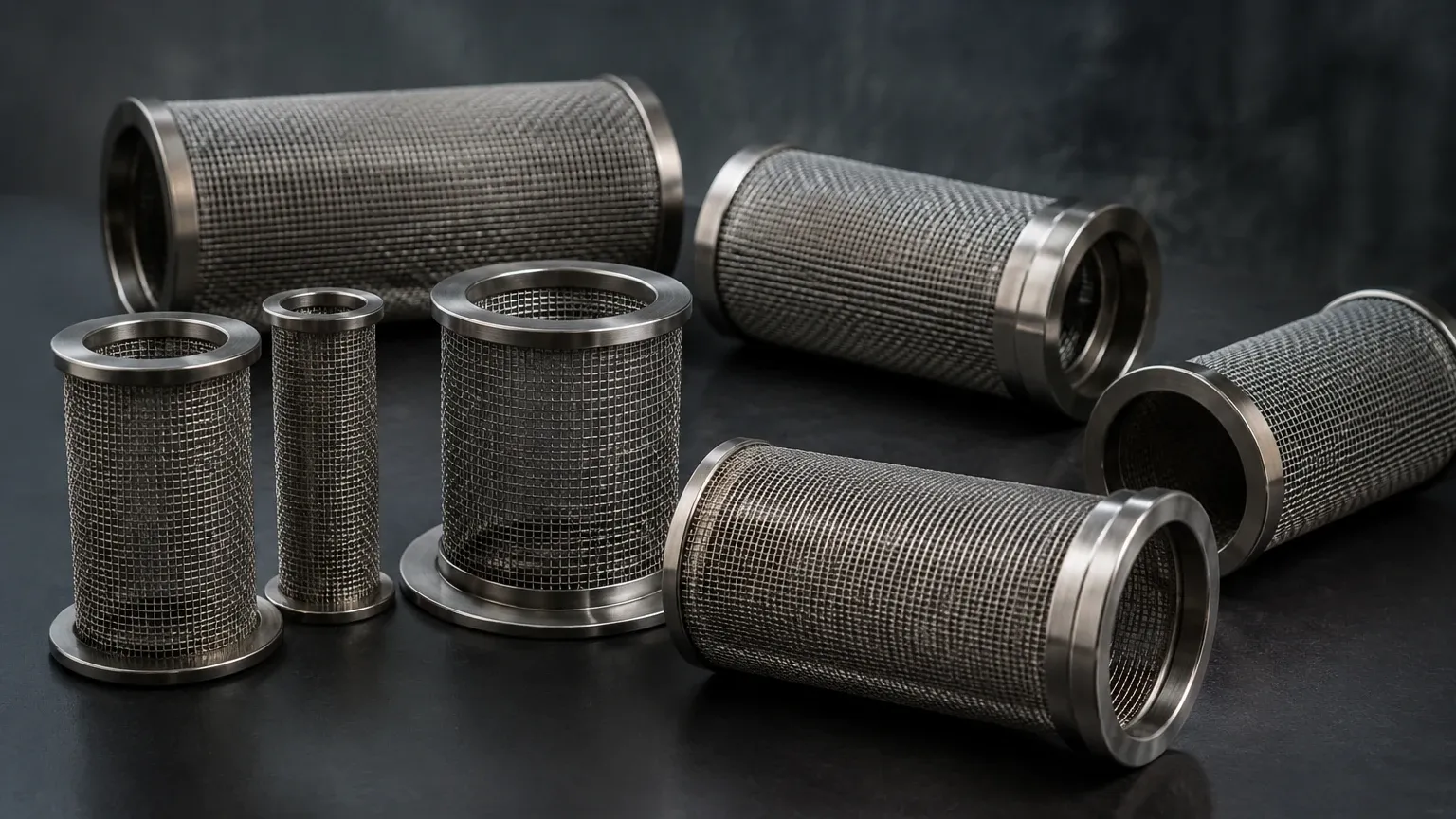
3. Structural Design: Wire Mesh Filter Cylinders & Tubes
The geometry of the filter element is as important as the mesh itself. In most industrial housings, Wire Mesh Filter Cylinders & Tubes are the preferred configuration. This cylindrical shape offers several engineering advantages:
Pressure Distribution
A cylinder is naturally resistant to internal and external pressures. In an outside-to-inside flow pattern, the cylindrical shape distributes the compressive force evenly across the circumference. For high-pressure hydraulic applications, these tubes are often reinforced with internal perforated cores or external shrouds to prevent deformation.
Maximizing Surface Area
To increase the dirt-holding capacity without increasing the footprint of the filter housing, the wire mesh can be pleated before being formed into a cylinder. Pleated wire screen oil filters provide significantly more surface area than plain cylindrical designs, which lowers the flux (flow per unit area) and extends the service interval between cleanings.
Seamless Integration
Precision manufacturing ensures that the longitudinal seams of the cylinders are joined via TIG welding or plasma welding. This creates a bond as strong as the parent material, ensuring that no bypass occurs at the seam—a critical requirement for maintaining ISO 4406 fluid cleanliness codes.
4. Key Selection Criteria for Engineers
When specifying a wire screen oil filter for a new project or as an OEM replacement, several technical variables must be balanced.
Micron Rating and Pore Size
Industrial wire mesh is categorized by its "mesh count" (wires per inch) or its micron rating. For oil filtration, common ratings range from 10 microns for fine hydraulic control to 250+ microns for heavy lube oil suction strainers. Engineers must determine the sensitivity of downstream components (such as servo valves or bearings) to select the appropriate aperture size.
Open Area Percentage
The ratio of the area of the openings to the total area of the mesh determines the flow capacity. A higher open area results in a lower initial pressure drop but may require thicker wires to maintain structural stability. Balancing wire diameter with aperture size is a core part of the customization process at Kaifil.
Compatibility with Additives
Modern industrial oils contain complex additive packages, including detergents, anti-wear agents, and friction modifiers. Stainless steel is chemically inert to these additives, ensuring that the filter does not catalyze oil oxidation or suffer from chemical degradation over time.
5. Applications Across Industrial Sectors
The versatility of the wire screen oil filter makes it a staple in various heavy industries where reliability is non-negotiable.
Hydraulic Power Units (HPUs)
In hydraulic systems, contamination is the leading cause of pump wear. Wire mesh cylinders are used as suction strainers to protect the pump from large debris and as high-pressure return line filters to capture wear particles before the oil returns to the reservoir.
Marine and Power Generation
Large-scale diesel engines and turbines require massive volumes of lubricating oil. In these environments, the reusability of a wire screen oil filter is a significant economic advantage. Instead of disposing of large, expensive cartridges, the stainless steel mesh elements are cleaned and returned to service.
Food and Beverage Processing
For machinery used in food production, the oil filters must meet stringent hygiene standards. Stainless steel wire mesh is non-shedding and can be passivated to ensure it does not contaminate the process environment, even in the event of a minor seal leak.
6. Maintenance, Cleaning, and Total Cost of Ownership (TCO)
One of the primary B2B drivers for choosing stainless steel wire mesh over disposable media is the Total Cost of Ownership. While the initial capital expenditure for a stainless steel wire screen oil filter is higher, the long-term savings are substantial.
Cleaning Protocols
Unlike synthetic media that traps particles deep within fibers, the surface-loading nature of wire mesh allows for effective cleaning. Common methods include:
* Ultrasonic Cleaning: Using high-frequency sound waves in a solvent bath to dislodge fine particles from the mesh intersections.
* Backwashing: Reversing the flow of fluid to flush contaminants off the surface of the cylinder.
* Chemical Cleaning: Using compatible solvents to dissolve varnishes or oxidized oil residues without damaging the stainless steel.
Sustainability and Waste Reduction
In an era of increasing environmental regulation, reducing the waste stream is a corporate priority. By utilizing cleanable Wire Mesh Filter Cylinders & Tubes, facilities can eliminate the recurring cost of purchasing, storing, and disposing of used oil-soaked filter cartridges.
7. Customization and OEM Capabilities
No two industrial systems are identical, and off-the-shelf filtration products often fall short of specific engineering requirements. Kaifil provides extensive OEM support to develop customized filtration components.
Engineering Specifications for Custom Orders
When requesting a custom wire screen oil filter, purchasing teams should provide the following data points to ensure optimal performance:
1. Fluid Type and Viscosity: Specify the oil grade and operating temperature range.
2. Flow Rate: The maximum and nominal liters per minute (LPM).
3. Maximum Allowable $ΔP$: The threshold at which the system will trigger a bypass or alarm.
4. Mechanical Interface: Dimensions for end caps, flange types (e.g., NPT, BSP, or custom O-ring grooves), and support requirements.
5. Environment: Exposure to vibration, external corrosive agents, or extreme pressure pulses.
Conclusion
The selection of a wire screen oil filter is a strategic decision that impacts the reliability and operational cost of industrial machinery. By leveraging the durability of stainless steel and the precision of woven mesh, engineers can achieve consistent fluid cleanliness even in the most demanding environments. Whether the application requires a simple suction strainer or a complex multi-layered Wire Mesh Filter Cylinders & Tubes assembly, understanding the technical boundaries of the material and design is essential for optimized filtration performance.
As a dedicated manufacturer, Kaifil remains committed to providing the engineering expertise and manufacturing precision necessary to meet these industrial challenges, ensuring that every filter component contributes to the seamless operation of global industrial infrastructure.
