


Disc Filter Irrigation
In modern agricultural and industrial irrigation, the reliability of water delivery systems is directly tied to the quality of filtration. Disc filter irrigation has emerged as a preferred technology for protecting sensitive components like drip emitters, micro-sprinklers, and valves from clogging. By combining the surface filtration characteristics of screen filters with the depth filtration capabilities of media filters, disc systems offer a versatile solution for varying water qualities. For engineers and procurement specialists, understanding the technical nuances of these systems is essential for optimizing system longevity and reducing operational overhead.
Understanding the Fundamentals of Disc Filtration
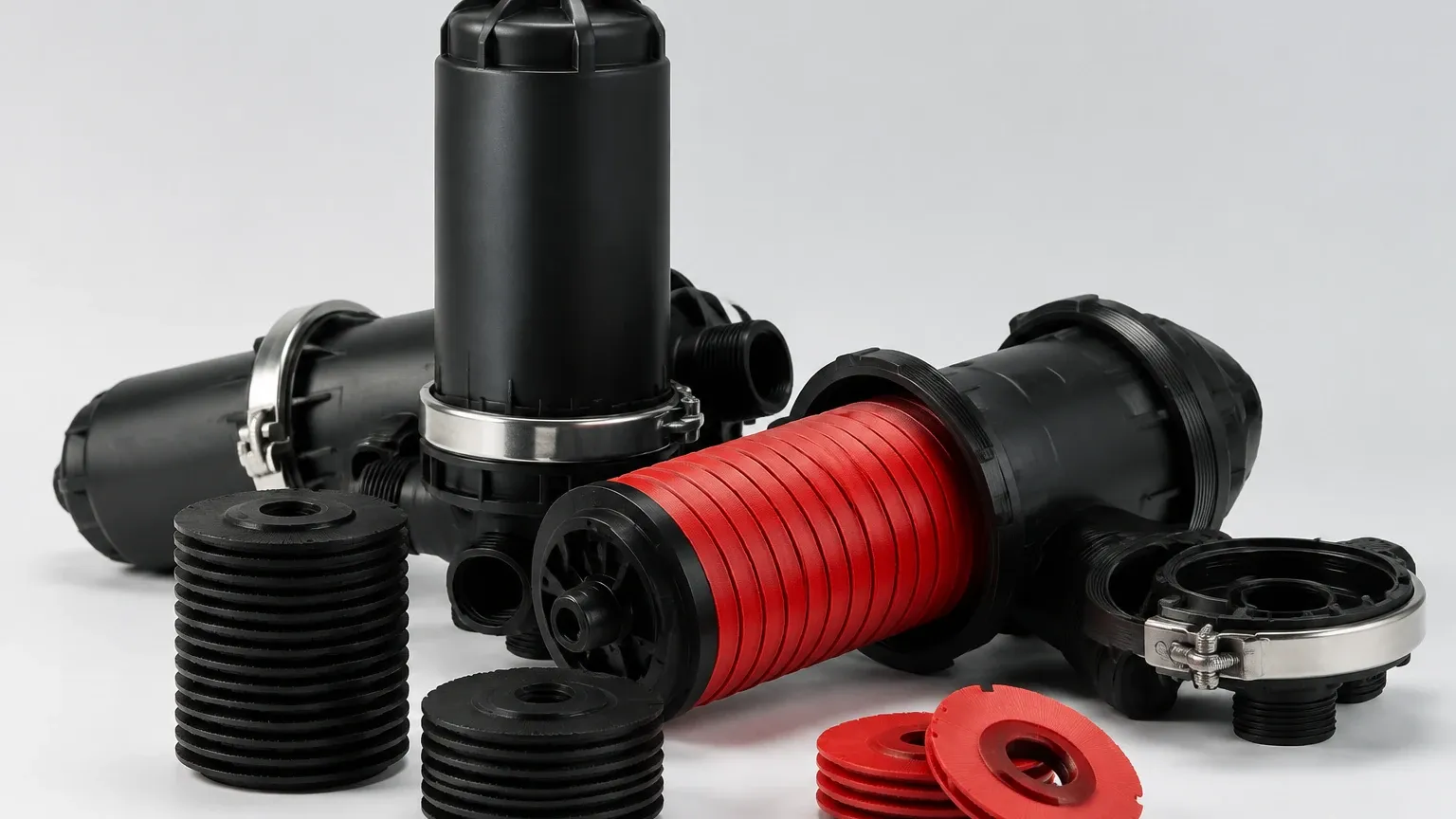
A disc filter consists of a stack of individual circular discs compressed together on a central spine. Each disc is manufactured with microscopic grooves on both sides, which are etched to a specific micron size. When the discs are stacked and compressed, the grooves on the top of one disc intersect with the grooves on the bottom of the adjacent disc. This intersection creates a complex, three-dimensional matrix of channels that trap particles as water is forced from the outside of the stack toward the center.
This design allows for "depth filtration," meaning the filter does not just stop particles on the surface but traps them within the internal passages of the disc stack. This is particularly effective for removing organic matter, such as algae or soft biological debris, which can often squeeze through the flat openings of a standard mesh screen. In the context of disc filter irrigation, this multi-layered approach ensures that even if the outer surface becomes partially obscured, the internal channels continue to function until a backwash cycle is triggered.
Comparing Disc Filters with Screen and Media Filtration
When selecting a filtration method, engineers typically compare disc filters against screen filters and sand media filters. Each has specific performance boundaries:
* Screen Filters: These provide surface filtration and are excellent for removing inorganic particles like sand. However, they are prone to "blinding" when faced with organic loads, as the slime or algae forms a film over the mesh that is difficult to remove without high-pressure cleaning.
* Media (Sand) Filters: These offer excellent depth filtration for high-volume organic loads but require a large physical footprint and significant volumes of water for backwashing. They are often overkill for moderately dirty water sources.
* Disc Filters: These represent a middle ground. They handle organic and inorganic loads more effectively than screens while being more compact and water-efficient than sand media filters. The use of high-quality Filter Discs & Packs allows for precise control over the filtration grade, ranging from 20 to 400 microns, making them adaptable to diverse water sources including wells, rivers, and reclaimed wastewater.
Technical Specifications: Micron Ratings and Flow Rates
The performance of a disc filter irrigation system is defined by its micron rating and its ability to maintain flow under varying pressure conditions. The "micron rating" refers to the size of the smallest particle the filter can reliably trap. In irrigation, the required rating is usually determined by the orifice size of the downstream emitters. A common engineering rule of thumb is to filter particles to at least 1/7th to 1/10th the size of the emitter opening.
Flow rate capacity is another critical metric. As the disc stack accumulates debris, the pressure differential (ΔP) between the inlet and outlet increases. If the flow rate exceeds the manufacturer's recommended velocity for a given surface area, the pressure drop will accelerate, leading to frequent cleaning cycles and potential "breakthrough," where particles are forced through the discs under high pressure. For industrial-scale irrigation, calculating the effective filtration area (EFA) is necessary to ensure the system can handle peak demand without compromising water quality.
The Role of Material Selection in Industrial Irrigation
While many agricultural disc filters utilize polymer-based discs, industrial and high-pressure irrigation applications often require the durability of metal components. Stainless steel (Grade 304 or 316) is frequently used in the construction of the housing and, in specialized cases, the filtration elements themselves.
Stainless steel offers several advantages in disc filter irrigation:
1. Chemical Resistance: Industrial irrigation often involves fertigation (the injection of fertilizers) or acidulation to prevent mineral scaling. Stainless steel components resist corrosion from these chemicals far better than standard plastics.
2. Pressure Tolerance: In large-scale landscapes or high-elevation agricultural projects, operating pressures can exceed the limits of polymer housings. Metal components provide the structural integrity required for high-pressure environments.
3. Thermal Stability: For systems utilizing warm process water or operating in extreme climates, metal filtration packs maintain their dimensional stability, ensuring the micron rating remains consistent regardless of temperature fluctuations.
Maintenance Protocols and Backwashing Efficiency
The longevity of a disc filter irrigation system depends on the efficiency of its cleaning cycle. Most modern systems utilize an automatic backwash mechanism triggered by a pressure differential switch (usually set between 0.5 and 0.7 bar).
During a backwash cycle, the compression on the disc stack is released. High-pressure jets of clean water are directed at the discs from the inside out, causing them to spin freely. This centrifugal action, combined with the reverse flow, flushes the trapped debris out of the grooves and through a drain manifold. Because the discs are separated during this process, the cleaning is much more thorough than the simple back-flushing of a static screen.
For manual systems, maintenance involves physically removing the disc stack and rinsing it. It is vital for operators to inspect the discs for mineral scaling (calcium carbonate) or iron deposits, which may require a chemical soak in a mild acid solution to restore the original groove depth.
Addressing Common Challenges in Disc Filter Irrigation
Despite their robustness, disc filters can face challenges if not specified correctly for the environment.
* Biological Fouling: In surface water applications, biofilm can grow within the disc grooves. If the backwash frequency is too low, this biofilm can harden, effectively gluing the discs together. Engineers should consider pre-treatment with UV or chlorination if biological loads are exceptionally high.
* Abrasive Solids: While disc filters handle sand well, extremely sharp or abrasive volcanic sand can wear down the edges of the grooves over time, gradually increasing the micron rating. In these cases, a hydrocyclone pre-filter is recommended to remove the bulk of the heavy solids before they reach the disc stack.
* Incorrect Sizing: Under-sizing a filter to save on initial capital expenditure is a common error. This leads to "short-cycling," where the filter spends more time in backwash mode than in filtration mode, wasting water and increasing wear on the moving parts of the valves.
Engineering Considerations for Custom Filtration Solutions
For specialized industrial applications, off-the-shelf disc filters may not meet specific site requirements. Customization often involves adjusting the housing configuration, the material of the internal seals (such as EPDM or Viton for chemical compatibility), and the specific geometry of the Filter Discs & Packs.
When collaborating with a manufacturer like Kaifil, engineers should provide a comprehensive water analysis report. This includes the Total Suspended Solids (TSS), particle size distribution (PSD), and the chemical composition of the water. With this data, manufacturers can recommend the ideal disc configuration and housing material to ensure the system operates at peak efficiency with minimal downtime.
Furthermore, the integration of PLC (Programmable Logic Controller) systems allows for sophisticated monitoring of the disc filter irrigation setup. These systems can track the frequency of backwash cycles over time, providing predictive maintenance alerts that signify when the discs may need manual inspection or replacement due to wear.
Conclusion
Disc filter irrigation represents a sophisticated balance between filtration precision and operational durability. By leveraging the three-dimensional trapping capabilities of grooved discs, these systems protect downstream infrastructure from a wide array of contaminants. For B2B buyers and engineers, the focus should remain on material quality, accurate micron sizing, and the selection of a filtration area that accommodates the specific flow dynamics of the project. Whether utilizing standard polymer stacks or high-performance stainless steel components, a well-engineered disc filtration system is a foundational element of any efficient water management strategy.
