


Disc Filter Images
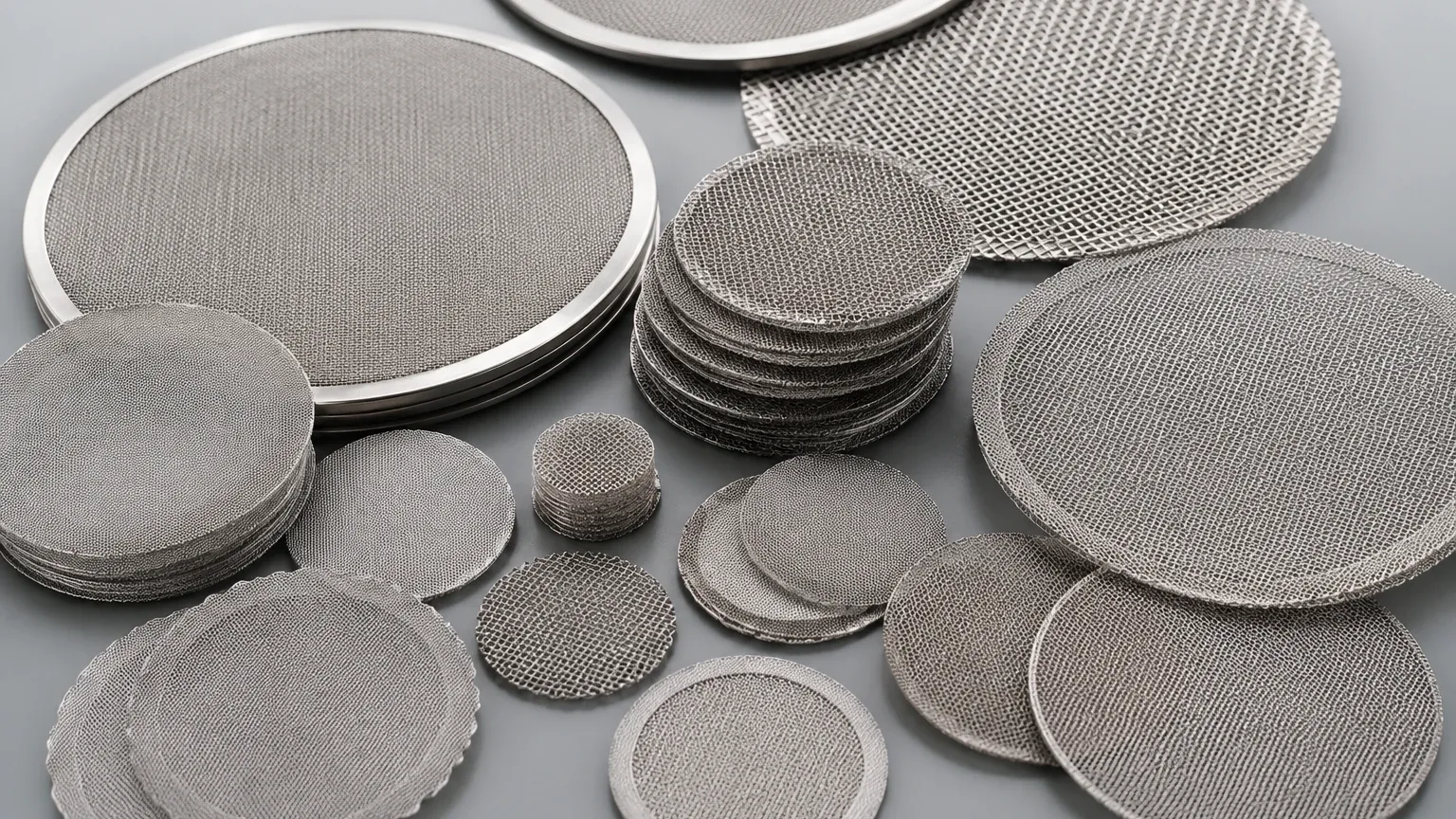
In the industrial filtration sector, visual documentation serves as a critical first step in the technical evaluation of components. For engineers and procurement specialists, analyzing high-resolution disc filter images is more than a matter of aesthetic review; it is a primary method for assessing weave precision, edge integrity, and structural consistency. When sourcing Filter Discs & Packs, understanding how to interpret these visual cues can significantly reduce the risk of selecting components that may fail under high-pressure or corrosive conditions.
Industrial filter discs are precision-engineered components used in a variety of applications, from plastic extrusion and chemical processing to pharmaceutical manufacturing. Because these components often operate within closed systems, their initial physical quality—as captured in technical photography—provides essential data regarding the manufacturer's capabilities and the product's likely performance.
The Technical Significance of Visual Inspection in Filtration
When reviewing disc filter images, technical professionals look for specific indicators of manufacturing quality. Filtration is a science of precision, and even minor deviations in the mesh alignment or the welding of the rim can lead to bypass, pressure drops, or premature failure.
Mesh Uniformity and Weave Accuracy
High-quality images allow engineers to inspect the uniformity of the wire mesh. In a plain weave or twill weave disc, the apertures must be consistent across the entire surface. Any distortion in the wire spacing, often visible as "shading" or irregular patterns in a photograph, suggests uneven tensioning during the weaving process. This inconsistency leads to unpredictable filtration ratings, where particles larger than the specified micron size may pass through the wider gaps.
Edge Treatment and Structural Integrity
The perimeter of a filter disc is its most vulnerable point. Visual inspection helps determine if the edges are cleanly cut, ultrasonic-welded, or bound with a metal rim. In multi-layer packs, the alignment of the layers is paramount. Disc filter images should clearly show how the layers are joined—whether by spot welding or a continuous aluminum or stainless steel rim. A well-constructed rim prevents the fraying of individual wires, which could otherwise migrate into the downstream fluid, causing contamination.
Analyzing Different Types of Filter Discs & Packs
Filter discs are rarely one-size-fits-all. They are categorized by their construction, material, and layering, all of which can be identified through detailed visual analysis. Understanding these variations is essential for matching the filter to the specific demands of the industrial application.
Single-Layer vs. Multi-Layer Discs
Single-layer discs are typically used in low-pressure applications or as pre-filters. They are characterized by a simple, clean appearance. Multi-layer packs, however, are engineered for high-pressure environments like hydraulic systems or polymer melt filtration. In images of these packs, one should look for a graduated density—a coarse mesh on the outside for structural support and a fine micron mesh in the center for precision filtration. This "sandwich" construction extends the service life by preventing the fine mesh from deforming under pressure.
Sintered Mesh Discs
Sintered discs represent the pinnacle of durability. Unlike standard mesh packs, sintered layers are fused together through a high-temperature heat treatment process without the use of binders. In disc filter images, sintered mesh appears as a single, rigid plate rather than a collection of loose wires. This construction is ideal for high-temperature and high-viscosity applications where mechanical strength is non-negotiable.
Material Selection and Surface Finish
The material of construction is perhaps the most critical factor in filter longevity. Most industrial filters utilize stainless steel due to its balance of strength and chemical resistance. Visual evidence of the material grade and finish can provide insights into the filter's suitability for specific environments.
Stainless Steel Grades: 304 vs. 316L
While it is difficult to distinguish between SS304 and SS316L by sight alone, the surface finish shown in disc filter images can indicate the quality of the raw material. High-grade stainless steel should exhibit a consistent metallic luster without signs of oxidation, pitting, or discoloration. For pharmaceutical and food-grade applications, the mesh must be free of oil residues and manufacturing lubricants, often appearing "bright-annealed" or ultrasonically cleaned.
Specialized Coatings and Rims
In some cases, disc filters may feature specialized coatings or rim materials like aluminum, copper, or nickel-plated steel. These are often used to ensure a better seal within the filter housing. Images help verify that these rims are compressed uniformly around the mesh, ensuring a leak-proof fit that maintains the integrity of the filtration system.
Engineering Considerations for Custom Filtration Solutions
Standard sizes often do not meet the unique requirements of specialized machinery. Customization is a core aspect of industrial filtration procurement. When viewing Filter Discs & Packs for custom projects, several engineering parameters must be confirmed beyond the visual representation.
Geometric Precision
Filter discs can be manufactured in circles, rings, squares, or complex kidney shapes. High-resolution images confirm the precision of the die-cutting or laser-cutting process. Burrs or jagged edges are signs of poor tooling, which can interfere with the installation and sealing of the filter within the equipment.
Micron Rating and Flow Rates
The "micron rating" refers to the size of the particles the filter is designed to trap. While an image cannot precisely measure microns, the density of the weave shown in a macro photograph gives a relative indication of the filtration level. Engineers must balance the micron rating with the required flow rate; a mesh that is too fine may cause an excessive pressure drop (delta P), leading to system inefficiency or pump damage.
Common Applications and Industry Standards
The choice of filter disc construction is heavily influenced by the industry it serves. Visual characteristics often align with these specific application requirements.
* Chemical Processing: Requires high corrosion resistance. Images should show robust welding and thick-gauge wire to withstand aggressive chemical reactions.
* Food and Beverage: Demands high cleanliness. Discs must show no signs of wire migration and should have smooth, easy-to-clean surfaces that meet FDA standards.
* Plastics and Rubber Extrusion: These filters deal with high-viscosity melts. The images should highlight multi-layer packs with heavy-duty support meshes to prevent "ballooning" or bursting under extreme pressure.
* Water Treatment: Often uses large-diameter discs. Visuals should confirm the structural reinforcement used to prevent the mesh from sagging over large spans.
Evaluating Manufacturing Quality Through Visual Evidence
Before committing to a bulk order, technical teams often request detailed disc filter images or physical samples to conduct a quality audit. There are several "red flags" that can be spotted visually during this stage:
1. Irregular Spot Welds: In multi-layer packs, spot welds should be spaced evenly. Over-welding can damage the mesh structure, while under-welding leads to layer separation.
2. Wire Fraying: Loose wires at the edges are a major contamination risk, especially in sensitive industries like pharmaceuticals.
3. Mesh Distortion: If the mesh looks "wavy" in the image, it indicates improper tensioning, which will result in inconsistent filtration performance.
4. Discoloration at Weld Points: Excessive heat during welding can cause carbon precipitation in stainless steel, reducing its corrosion resistance. This appears as dark or rainbow-colored spots around the welds.
Practical Steps for Engineers and Purchasing Teams
When using disc filter images as a tool for selection, it is important to follow a structured evaluation process. This ensures that the final product meets the operational demands of the facility.
Step 1: Verify Technical Specifications
Always cross-reference the image with a technical data sheet. The image confirms the construction style, but the data sheet provides the necessary specifics on wire diameter, aperture size, and open area percentage.
Step 2: Assess Compatibility
Consider the chemical compatibility of the mesh and the rim material with the fluid being filtered. Ensure that the edge treatment (e.g., aluminum rim) will not react with the process media.
Step 3: Evaluate Total Cost of Ownership
While a lower-quality filter may look acceptable in a low-resolution image, the total cost of ownership includes the frequency of replacement and the risk of downstream equipment damage. Investing in high-quality Filter Discs & Packs with verified structural integrity reduces long-term operational costs.
Step 4: Request Custom Prototypes
For specialized applications, visual confirmation of a prototype is invaluable. This allows for a physical check of the fit and finish before moving to full-scale production.
Conclusion
Disc filter images are an indispensable resource in the B2B procurement process, providing a window into the manufacturing precision and material quality of filtration components. By understanding what to look for—from weave uniformity and edge finishing to material integrity—engineers can make more informed decisions that enhance system reliability and performance. Whether sourcing standard single-layer discs or complex multi-layer packs, the visual evidence of quality is the first step toward a successful filtration solution.
