


J Discs
In the complex landscape of industrial filtration, the precision and reliability of filter components are paramount to operational efficiency. Among the specialized components used in high-pressure and high-temperature environments, j discs represent a critical solution for fine filtration and particle separation. These components, often categorized under the broader umbrella of Filter Discs & Packs, are engineered to meet the rigorous demands of industries ranging from polymer processing and chemical manufacturing to pharmaceutical production.
Selecting the right filtration media requires a deep understanding of material properties, structural integrity, and the specific dynamics of the fluid or gas being processed. This guide explores the technical specifications, engineering considerations, and application-specific advantages of j discs, providing technical professionals and purchasing teams with the information necessary to optimize their filtration systems.
Understanding J Discs in Industrial Filtration
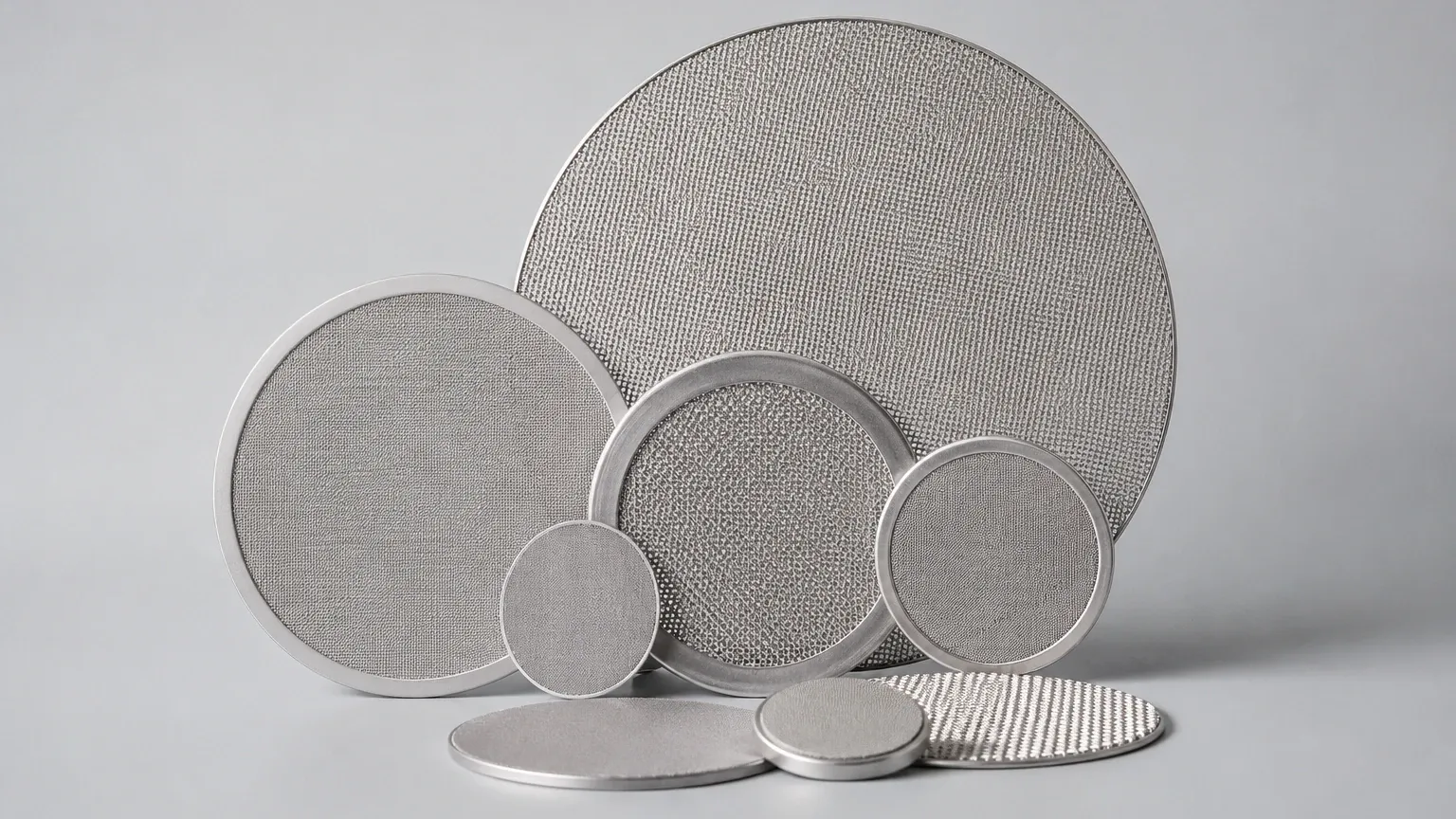
J discs are essentially high-precision filter discs typically constructed from multiple layers of stainless steel wire mesh. The term often refers to specific configurations used in screen changers or specialized filtration housings where a precise fit and high mechanical strength are required. Unlike standard circular filters, these components are designed to withstand significant differential pressures while maintaining a consistent micron rating.
At their core, these discs function as a barrier that captures contaminants while allowing the processed medium to pass through with minimal resistance. In industrial settings, the "J" designation often correlates with specific manufacturer standards or geometric configurations tailored for rapid replacement and high-load capacity. For engineers, the primary focus when evaluating these discs is the balance between filtration fineness and the physical durability of the mesh structure.
Material Engineering: The Foundation of Performance
The performance of j discs is fundamentally tied to the materials used in their construction. Because these components are frequently exposed to corrosive chemicals, high temperatures, and abrasive particles, stainless steel is the industry standard. Kaifil utilizes various grades of stainless steel to ensure compatibility with diverse industrial environments.
Stainless Steel 304
SS304 is the most common material for general-purpose filtration. It offers excellent strength and good corrosion resistance for applications involving water treatment, food processing, and standard industrial fluids. It is cost-effective but may not be suitable for highly acidic or chloride-rich environments.
Stainless Steel 316 and 316L
For more demanding applications, SS316 and its low-carbon variant, SS316L, are preferred. The addition of molybdenum enhances resistance to pitting and crevice corrosion, particularly in the presence of chlorides. SS316L is specifically chosen for applications involving welding, as it minimizes the risk of intergranular corrosion. This makes it the ideal choice for pharmaceutical and chemical processing where purity and equipment longevity are critical.
Specialized Alloys
In extreme cases involving highly aggressive media or temperatures exceeding the limits of standard stainless steel, alloys such as Monel, Inconel, or Hastelloy may be employed. These materials provide the necessary thermal stability and chemical inertness required for specialized petrochemical or aerospace applications.
Structural Variations: Multi-layer vs. Single-layer Packs
The architecture of j discs determines their dirt-holding capacity and mechanical stability. Depending on the application, these filters can be supplied as single layers or complex multi-layer packs.
Single-Layer Discs
Single-layer discs are typically used in low-pressure applications or as a final polishing stage in a multi-stage filtration system. They are valued for their simplicity and ease of cleaning, though they lack the structural support required for high-viscosity fluids.
Multi-Layer Filter Packs
Most industrial j discs are configured as multi-layer packs. These packs consist of several layers of wire mesh bonded together, often through spot welding or rimming. The typical structure includes:
* Filtration Layer: The central layer(s) with the finest mesh, determining the micron rating of the disc.
* Support Layers: Coarser mesh layers placed on either side of the filtration layer to provide mechanical strength and prevent the fine mesh from deforming under pressure.
* Drainage Layers: These layers facilitate the flow of the filtrate away from the filtration zone, reducing the overall pressure drop across the disc.
By combining different mesh counts, manufacturers can create a depth-filtration effect within a relatively thin disc, significantly increasing the service life of the component compared to single-layer alternatives.
Key Performance Metrics: Micron Rating and Mesh Weave
When specifying j discs, engineers must define the required filtration accuracy, commonly expressed as the micron rating. This rating is dictated by the type of weave used in the wire mesh.
Plain Weave
In a plain weave, each warp wire passes alternately over and under each weft wire. This results in a stable structure with square openings, suitable for general filtration tasks. However, it is limited in how fine the openings can be while maintaining wire diameter.
Dutch Weave (Plain and Twilled)
Dutch weaves utilize a higher density of thinner wires in one direction, creating a "zero-aperture" mesh where the openings are not straight through but follow a tortuous path. This allows for extremely fine filtration (down to 1-5 microns) and high mechanical strength, making it the preferred choice for high-pressure polymer extrusion and hydraulic systems.
Twill Weave
Twill weaves allow for thicker wires to be used for a given mesh count, as each wire passes over and under two wires. This increases the durability of the mesh, which is vital for j discs that must endure frequent cleaning cycles or high-velocity flows.
Application-Specific Selection Criteria
The successful implementation of j discs depends on matching the disc specifications to the operational environment. Several factors must be confirmed before procurement:
1. Operating Temperature: High temperatures can affect the tensile strength of the stainless steel and may lead to thermal expansion issues if the disc is housed in a different material.
2. Differential Pressure ($ΔP$): The maximum allowable pressure drop across the filter before it requires cleaning or replacement. Multi-layer packs are essential for high $ΔP$ environments to prevent mesh rupture.
3. Flow Rate and Viscosity: High-viscosity fluids, such as molten polymers, require discs with high mechanical integrity and specific drainage layers to maintain throughput.
4. Chemical Compatibility: The pH level and chemical composition of the filtrate must be compatible with the chosen alloy to prevent premature failure due to corrosion.
In the polymer industry, for example, j discs are often used in screen changers to remove gels and carbonized particles from the melt. In this context, the discs must be able to withstand temperatures up to 300°C and pressures exceeding 200 bar.
Manufacturing and Customization: The Kaifil Advantage
As a professional manufacturer, Kaifil specializes in the customization of Filter Discs & Packs to meet precise engineering drawings. The manufacturing process involves several critical steps to ensure quality:
* Precision Cutting: Using advanced CNC or laser cutting technology to ensure the outer diameter of the j discs meets tight tolerances for a perfect fit in the filter housing.
* Rimming and Edging: To prevent fraying and ensure a bypass-free seal, discs can be provided with aluminum, stainless steel, or copper rims. Rimming also provides additional structural rigidity.
* Spot Welding: For multi-layer packs, precision spot welding ensures that the layers remain perfectly aligned during installation and operation.
* Cleaning and Degreasing: Industrial filters must be free of oil, grease, and metallic dust. Kaifil employs ultrasonic cleaning processes to ensure that the filters are ready for use in sensitive applications like food and beverage or pharmaceuticals.
Customization options extend beyond dimensions. Engineers can specify the exact sequence of mesh layers to achieve a specific dirt-holding capacity or to target specific particle size distributions.
Maintenance, Cleaning, and Replacement Cycles
One of the primary advantages of stainless steel j discs is their cleanability. Unlike disposable synthetic filters, metal mesh discs can often be cleaned and reused, reducing the total cost of ownership.
Cleaning Methods
* Ultrasonic Cleaning: High-frequency sound waves create cavitation bubbles that dislodge particles from deep within the mesh pores. This is highly effective for Dutch weave meshes.
* Chemical Cleaning: Soaking the discs in compatible solvents or acids can dissolve organic or inorganic deposits.
* Burn-off/Pyrolysis: In polymer applications, controlled heating in a vacuum oven can remove residual plastics without damaging the stainless steel structure.
Determining Replacement
Despite their durability, j discs eventually reach the end of their service life. Signs that replacement is necessary include:
* Permanent Pressure Drop: If the baseline pressure drop remains high even after cleaning, it indicates that the mesh pores are permanently blinded.
* Physical Deformation: Visible warping or "doming" of the disc suggests that the operational pressure exceeded the structural limits of the pack.
* Mesh Damage: Any signs of wire breakage or separation of the rim can lead to bypass, allowing contaminants to pass through the system.
Conclusion
J discs are essential components for achieving high-purity filtration in demanding industrial sectors. By selecting the appropriate material, weave type, and layer configuration, engineers can significantly improve the reliability and efficiency of their processes. Whether used in the extrusion of high-performance plastics or the purification of chemical reagents, these precision-engineered discs provide the necessary balance of filtration accuracy and mechanical strength.
For purchasing teams and engineers, partnering with an experienced manufacturer like Kaifil ensures access to high-quality materials and technical expertise. By focusing on customized solutions and rigorous quality control, Kaifil helps organizations optimize their filtration performance while minimizing downtime and maintenance costs. When evaluating your next filtration requirement, consider the technical advantages of expertly manufactured j discs to ensure your system operates at its peak potential.
