


Disc Filter Kya Hai
In the landscape of industrial filtration, technical professionals often encounter the question, "disc filter kya hai?" Translated from Hindi, this inquiry seeks to understand the fundamental nature, construction, and application of disc filters within a manufacturing or processing environment. At its core, a disc filter is a precision-engineered filtration component, typically circular in shape, designed to remove impurities from liquid or gaseous streams. These components are essential in industries ranging from plastic extrusion and chemical processing to pharmaceutical manufacturing and food production.
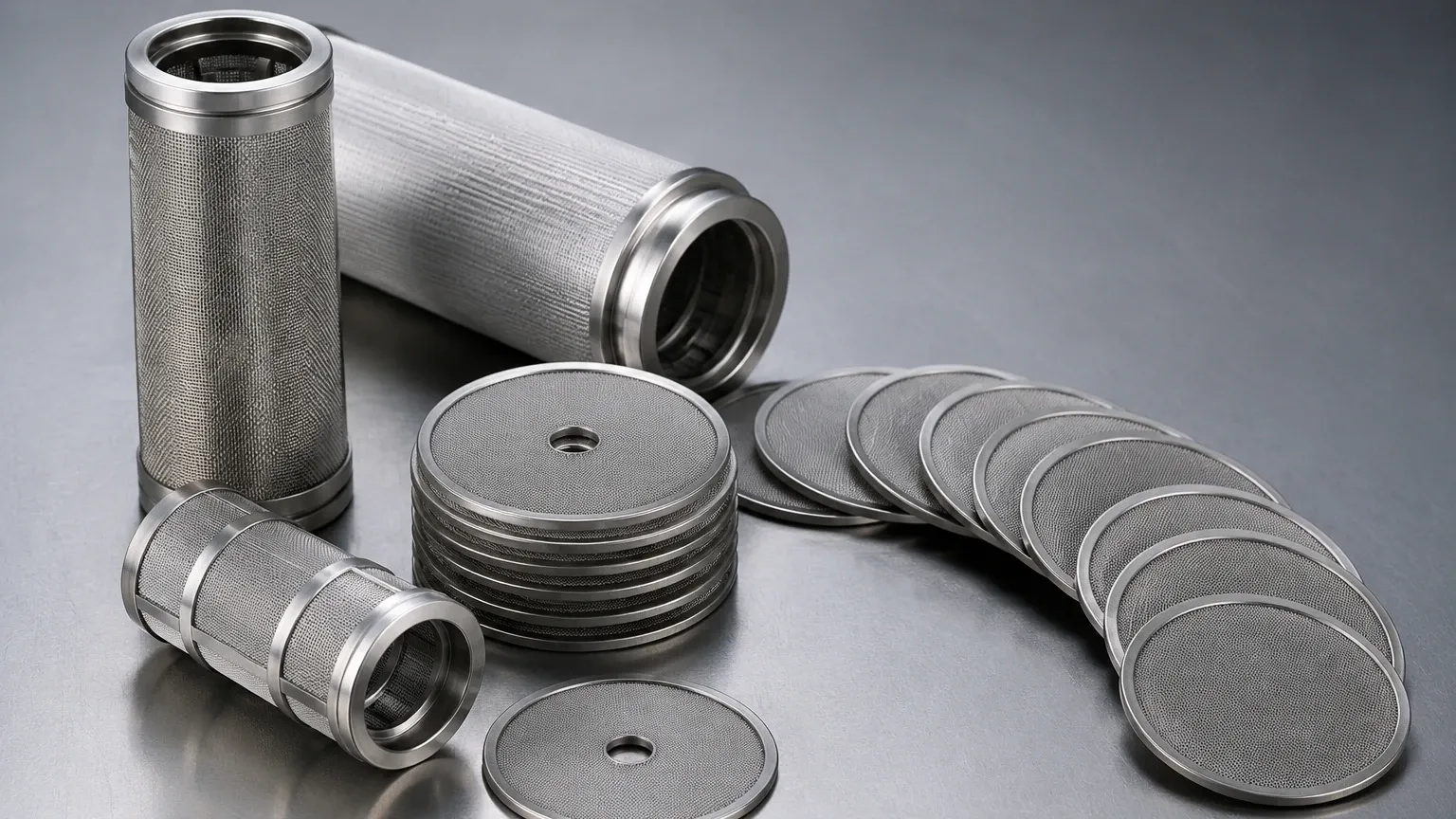
Understanding the technical specifications and mechanical properties of Filter Discs & Packs is critical for engineers who must ensure process continuity and product purity. Unlike disposable cartridge filters, industrial disc filters—particularly those manufactured from stainless steel—offer high durability, thermal stability, and the ability to be cleaned and reused, making them a cornerstone of cost-effective industrial operations.
Technical Composition: What Defines a Disc Filter?
When addressing "disc filter kya hai," one must look at the materials and construction methods that define these components. Most industrial disc filters are fabricated from stainless steel wire mesh, although other materials like brass, copper, or specialized alloys may be used depending on the chemical environment.
Material Selection
Stainless steel (SS304, SS316, and SS316L) is the industry standard due to its exceptional resistance to corrosion and high temperatures. SS316L, in particular, is favored in pharmaceutical and food-grade applications because of its low carbon content and superior resistance to pitting in chloride-rich environments.
Weave Types and Filtration Media
The performance of a disc filter is largely determined by the weave of the wire mesh used. Common weaves include:
- Plain Weave: The most straightforward construction where wires cross over and under each other. It provides high flow rates but is generally used for coarser filtration.
- Twill Weave: Each shute wire passes over and under two warp wires, allowing for a heavier wire diameter and higher strength for finer mesh counts.
- Dutch Weave (Plain and Twill): This weave uses a larger diameter warp wire and a smaller diameter shute wire, creating a dense, strong mesh with very fine filtration ratings. This is ideal for high-pressure applications where precision is paramount.
Types of Filter Discs & Packs
To fully answer "disc filter kya hai," it is necessary to categorize these products based on their structural complexity. Depending on the application requirements, a disc filter can be a simple single-layer component or a sophisticated multi-layer assembly.
Single-Layer Filter Discs
These are cut from a single sheet of wire mesh. They are cost-effective and suitable for applications where the pressure differential is low and the particulate load is minimal. They are often used as primary strainers in simple fluid systems.
Multi-Layer Filter Discs
For more demanding environments, multiple layers of mesh are combined. These layers often include a fine filtration layer protected by coarser support layers on either side. This configuration increases the mechanical strength of the disc and prevents the fine mesh from deforming under high pressure.
Combined Filter Packs
In processes like plastic extrusion or synthetic fiber spinning, multiple discs are stacked together to form "packs." These packs may be spot-welded at the edges or bound with an aluminum or stainless steel rim (rimmed filters). The rim ensures that the layers stay aligned and provides a better seal within the machinery, preventing "bypass" where unfiltered material leaks around the edges of the filter.
Engineering Considerations for Selection
Selecting the right filtration component requires more than just knowing "disc filter kya hai"; it requires a deep dive into the engineering variables that affect performance. When specifying Filter Discs & Packs, technical teams must evaluate several key factors:
1. Filtration Accuracy (Micron Rating)
The micron rating determines the size of particles the filter will retain. Engineers must balance the need for high purity (lower micron rating) with the risk of rapid clogging and high pressure drops. Kaifil provides customized filtration levels to meet specific process requirements, ensuring that the media captures contaminants without unnecessarily restricting flow.
2. Pressure Drop (Delta P)
Every filter introduces a resistance to flow. As the filter captures debris, this resistance—or pressure drop—increases. A well-designed disc filter maximizes the open area of the mesh to keep the initial pressure drop low, thereby extending the service life between cleanings or replacements.
3. Mechanical Strength and Rigidity
In high-viscosity applications, such as polymer melt filtration, the filter disc is subjected to immense pressure. If the disc is not sufficiently rigid, it may collapse or "blow through," allowing contaminants into the final product. Multi-layer sintered or reinforced discs are often used in these scenarios to provide the necessary structural integrity.
4. Chemical and Thermal Compatibility
Industrial processes often involve aggressive solvents or extreme temperatures. Stainless steel Filter Discs & Packs are capable of withstanding temperatures exceeding 400°C (752°F) and are resistant to a wide array of acids and bases, making them far more versatile than polymer-based filtration media.
Key Industrial Applications
The versatility of disc filters allows them to be used across a vast spectrum of industrial sectors. By understanding "disc filter kya hai" in a practical context, we can see how they solve specific engineering challenges.
Plastic and Polymer Extrusion
In the plastics industry, disc filters (often called screen packs) are placed in the extruder to remove un-melted resin, carbon specks, and foreign contaminants. This ensures the quality of the final film, fiber, or molded part. High-pressure resistance is the primary requirement here.
Chemical and Petrochemical Processing
Disc filters are used to protect sensitive downstream equipment, such as pumps and valves, from particulate matter. They are also used in catalyst recovery processes where valuable materials must be separated from a liquid stream.
Food and Beverage Industry
Stainless steel discs are ideal for food processing because they are easy to sterilize and do not shed fibers. They are used in the filtration of cooking oils, syrups, and beverages to ensure clarity and safety.
Pharmaceutical Manufacturing
In the pharmaceutical sector, filtration must be precise and verifiable. Sintered mesh discs are often used for gas sparging, solvent filtration, and active pharmaceutical ingredient (API) recovery, where the highest levels of purity are mandated.
Performance Evaluation and Maintenance
A critical aspect of the "disc filter kya hai" discussion is how these components are maintained. Unlike many other industrial consumables, stainless steel filter discs are often cleanable, which significantly reduces the total cost of ownership (TCO).
Cleaning Methods
- Ultrasonic Cleaning: Uses high-frequency sound waves in a liquid bath to dislodge fine particles trapped within the mesh pores.
- Backwashing: Reversing the flow of fluid through the filter to push out accumulated debris.
- Chemical Cleaning: Using specialized solvents to dissolve organic or inorganic deposits that cannot be removed mechanically.
- Burn-off/Pyrolysis: For filters used in polymer processing, high-heat ovens are used to burn off residual plastic, leaving the stainless steel mesh clean.
Replacement Cycles
While cleanable, filter discs do have a finite lifespan. Repeated cleaning and high-pressure cycles can eventually lead to wire fatigue or pore enlargement. Engineers should monitor the rate of pressure increase after each cleaning cycle; if the "clean" pressure drop begins to rise significantly, it indicates that the media is permanently fouled and the disc should be replaced.
Why Customization Matters in Filtration
No two industrial processes are identical. While standard sizes are available, the most efficient filtration systems often utilize customized Filter Discs & Packs tailored to the specific flow rates, housing dimensions, and contaminant profiles of the operation.
Kaifil specializes in providing these OEM and customized solutions. By working closely with global customers, Kaifil ensures that the material selection, mesh count, and structural design (such as spot-welding or rimming) are optimized for the intended application. This collaborative approach helps engineers avoid common pitfalls like premature filter failure or insufficient filtration accuracy.
Conclusion: Moving Beyond the Basics
Answering "disc filter kya hai" is the first step toward optimizing an industrial filtration system. These components are more than just simple screens; they are precision tools that protect equipment, ensure product quality, and maintain process efficiency. By selecting high-quality Filter Discs & Packs and understanding the engineering principles behind their operation, purchasing teams and technical professionals can achieve reliable, long-term performance in even the most demanding environments.
When evaluating your next filtration requirement, consider the mechanical load, the chemical environment, and the desired micron rating. Choosing a manufacturer like Kaifil, with extensive experience in stainless steel filtration, ensures that you receive a product designed for durability and precision, backed by technical expertise in industrial applications.
