


Wire Mesh Pop Filter
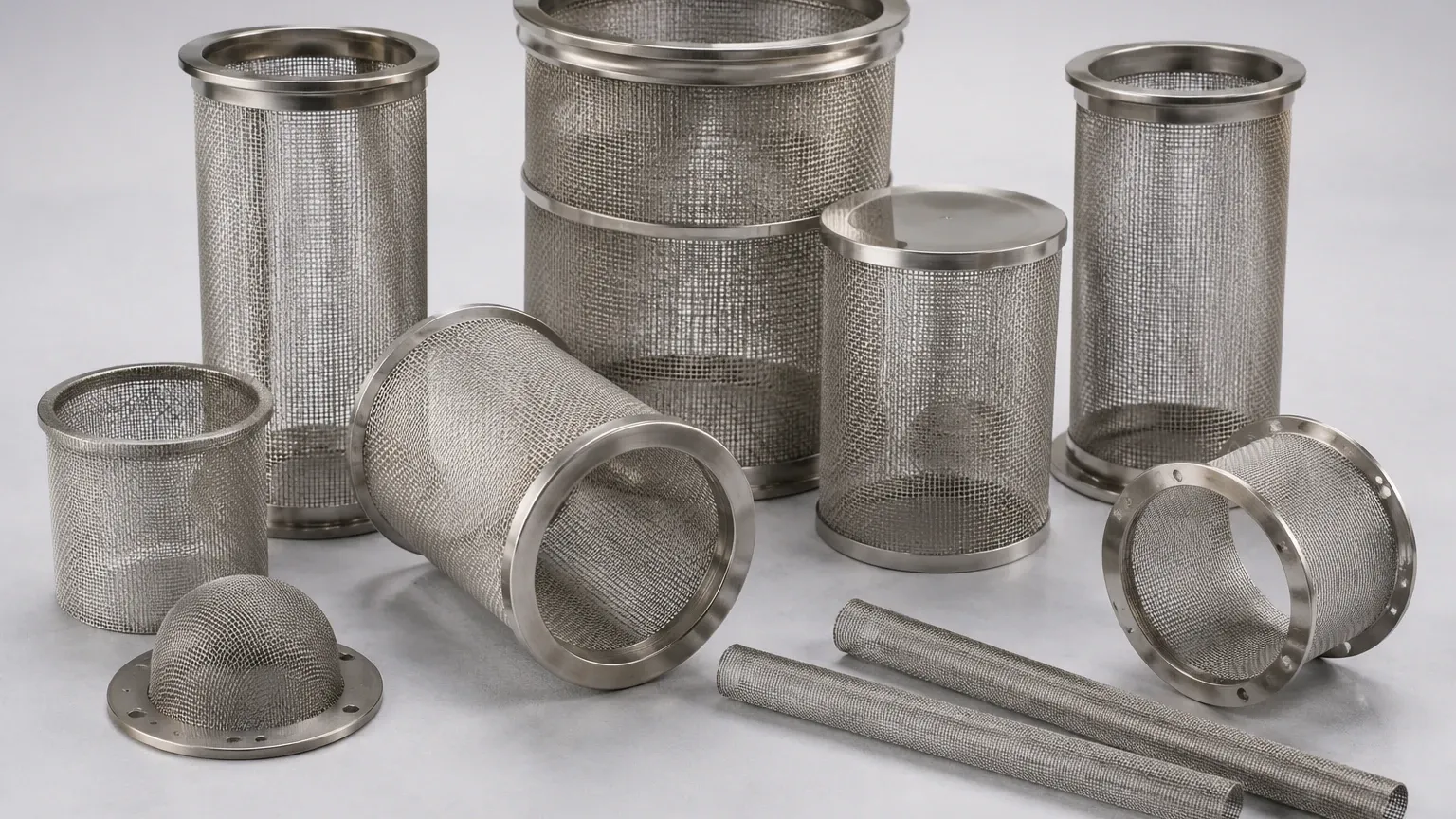
In high-precision industrial environments, the management of fluid dynamics and acoustic energy is as critical as the filtration of physical contaminants. While many engineers associate the term "pop filter" with acoustic recording, the industrial wire mesh pop filter serves a vital role in pneumatic systems, gas analysis, and sensor protection. These components are specialized versions of Wire Mesh Filter Cylinders & Tubes designed to mitigate sudden pressure surges, dampen noise, and prevent particulate ingress in sensitive equipment.
Selecting the correct filtration component requires a deep understanding of material science, weave patterns, and mechanical constraints. This guide examines the technical specifications and engineering considerations for integrating wire mesh filters into demanding industrial workflows.
Understanding the Engineering Behind Wire Mesh Filter Cylinders & Tubes
Industrial filtration relies on the structural integrity and precision of the filter media. Wire mesh cylinders and tubes are manufactured by forming woven wire cloth into a cylindrical shape and joining the edges via advanced welding techniques such as TIG (Tungsten Inert Gas), plasma, or resistance welding. This construction ensures a consistent diameter and high collapse pressure resistance.
Material Selection and Chemical Compatibility
The performance of a filter is primarily dictated by its base material. In B2B industrial engineering, stainless steel is the standard due to its mechanical strength and resistance to corrosion.
* AISI 304 Stainless Steel: Suitable for general industrial applications where cost-effectiveness is a priority and the environment is not excessively corrosive.
* AISI 316L Stainless Steel: The preferred choice for chemical processing, pharmaceutical, and marine environments. The addition of molybdenum and a lower carbon content provides superior resistance to pitting and crevice corrosion, especially in chloride-rich environments.
* Specialty Alloys: For extreme temperatures or highly aggressive chemical media, alloys such as Monel, Inconel, or Hastelloy may be utilized to ensure the longevity of the filter component.
Weave Types and Filtration Ratings
The geometry of the weave determines the filtration accuracy and the flow characteristics. Common weave patterns include:
1. Plain Weave: The simplest pattern where wires cross over and under each other. It offers high flow rates but is limited in fine filtration capabilities.
2. Twill Weave: Each shute wire passes over and under two warp wires, allowing for heavier wire diameters and finer mesh counts.
3. Dutch Weave (Plain and Twill): These weaves use different wire diameters for warp and shute, resulting in a dense, robust mesh with high pressure resistance and precise micron ratings.
The Role of Wire Mesh Pop Filters in Industrial Systems
In an industrial context, a wire mesh pop filter is often employed as a diffusion or attenuation device. Its primary function is to manage the "pop"—a sudden surge of gas or a localized pressure spike—that could otherwise damage sensitive downstream components like mass flow controllers, gas sensors, or delicate membranes.
Acoustic and Kinetic Energy Management
When high-velocity gas is discharged into a lower-pressure environment, it generates significant acoustic noise and kinetic turbulence. A multi-layered wire mesh pop filter breaks up the gas stream into thousands of micro-streams. This process, known as diffusion, converts kinetic energy into low-level heat and significantly reduces the decibel output of pneumatic exhausts.
Protection of Sensitive Instrumentation
In gas chromatography and analytical instrumentation, the ingress of even microscopic particles can lead to sensor drift or total system failure. A wire mesh pop filter acts as a final barrier, ensuring that the gas reaching the sensor is free of particulates while maintaining a laminar flow profile. The use of stainless steel ensures that the filter itself does not outgas or introduce contaminants into the analytical stream.
Technical Selection Criteria: Performance Metrics for Engineers
When specifying a wire mesh filter cylinder or tube for a project, engineers must evaluate several key performance indicators (KPIs) to ensure the component meets the application's demands.
Micron Rating: Absolute vs. Nominal
* Nominal Rating: Indicates the ability of the mesh to retain a majority of particles of a specific size (e.g., 90% of 10-micron particles). This is suitable for non-critical pre-filtration.
* Absolute Rating: Refers to the diameter of the largest hard spherical particle that will pass through the filter under specified test conditions. For critical protection of high-value equipment, an absolute rating is mandatory.
Pressure Drop (ΔP) and Flow Rate
The pressure drop across the filter is a function of the mesh density, the fluid viscosity, and the velocity. Engineers must calculate the clean pressure drop to ensure the system's pump or compressor can maintain the required flow. A wire mesh pop filter with too high a density may cause excessive backpressure, leading to system inefficiency or overheating.
Mechanical Strength and Collapse Pressure
In hydraulic and high-pressure gas applications, the filter must withstand significant differential pressures. This is often achieved through:
* Internal Support Cores: Perforated metal tubes placed inside the mesh cylinder to prevent collapse.
* Sintered Multi-layer Mesh: Multiple layers of wire mesh are diffusion-bonded (sintered) to create a single, rigid plate that combines fine filtration with high mechanical strength.
Installation Constraints and Sealing Considerations
Even the highest quality filter will fail if bypass occurs. Bypass happens when the fluid travels around the filter media rather than through it. Proper installation and sealing are paramount.
End Cap Configurations
Wire mesh filter cylinders are typically finished with end caps to facilitate mounting and sealing. Common configurations include:
* Double Open End (DOE): Requires gaskets at both ends to seal against the housing.
* Single Open End (SOE): One end is permanently closed, often featuring a threaded fitting or a specialized O-ring interface (e.g., 222 or 226 connectors) at the open end.
* Threaded Connections: NPT or BSP threads can be welded directly to the filter tube for secure, leak-proof integration into piping systems.
* Flanged Connections: Used in larger industrial housings where high-pressure stability is required.
1
Sealing Materials
The choice of O-ring or gasket material must match the chemical and thermal profile of the process fluid. Common materials include Viton (FKM) for chemical resistance, EPDM for steam and water, and PTFE for universal chemical compatibility at the cost of lower elasticity.
Application Risks and Mitigation
Engineers must be aware of the risks associated with improper filter selection or maintenance neglect:
1. Media Migration: In low-quality filters, individual wires may break and enter the downstream flow. Specifying high-quality, sintered, or properly welded wire mesh filter cylinders and tubes from reputable manufacturers like Kaifil mitigates this risk.
2. Fatigue Failure: In systems with frequent pressure pulsations, the wire mesh can undergo work hardening and eventual cracking. Multi-layer sintered mesh is significantly more resistant to fatigue than single-layer woven mesh.
3. Blinding/Clogging: If the micron rating is too fine for the particulate load, the filter will clog prematurely. Engineers should consider a staged filtration approach (coarse pre-filter followed by a fine wire mesh pop filter) to extend the service life of the primary component.
Maintenance, Cleaning, and Total Cost of Ownership (TCO)
One of the primary advantages of stainless steel wire mesh filters over disposable synthetic cartridges is their cleanability. This significantly reduces the long-term total cost of ownership.
Cleaning Methodologies
* Ultrasonic Cleaning: The most effective method for removing fine particulates trapped within the mesh pores. High-frequency sound waves create cavitation bubbles that dislodge contaminants.
* Backwashing: Reversing the flow of the fluid through the filter to push out accumulated debris. This is often automated in continuous process industries.
* Chemical Cleaning: Using acids, alkalis, or solvents to dissolve specific types of fouling (e.g., organic buildup or mineral scale), provided the chemicals are compatible with the stainless steel grade.
Determining the Replacement Cycle
While wire mesh filters are durable, they are not infinite. The replacement cycle should be determined by monitoring the pressure differential. Once the "dirty" pressure drop reaches a pre-defined limit (even after cleaning), or if visual inspection reveals mesh deformation or broken wires, the component must be replaced to prevent catastrophic system failure.
Conclusion
Integrating a wire mesh pop filter or a custom-engineered wire mesh cylinder into an industrial system requires a balance of filtration precision, mechanical durability, and flow efficiency. By understanding the nuances of material selection, weave geometry, and structural reinforcement, purchasing teams and engineers can ensure their systems operate with maximum uptime and minimal maintenance.
For specialized applications requiring exact tolerances and high-performance materials, Wire Mesh Filter Cylinders & Tubes provide a reliable, long-term solution. When sourcing these components, confirming technical details such as the absolute micron rating, the specific stainless steel grade, and the welding integrity is essential for achieving optimal filtration performance in demanding B2B industrial environments.
