


Filter Discs Mycology
In the specialized field of mycology, maintaining a sterile environment while facilitating biological respiration is a fundamental engineering challenge. Whether in laboratory research or large-scale industrial mushroom cultivation, the selection of filtration components directly impacts yield, contamination rates, and operational efficiency. Central to this process are precision-engineered filtration components designed to manage gas exchange while excluding microscopic contaminants.
For technical professionals and facility engineers, understanding the nuances of filter discs mycology applications requires a deep dive into material science, pore size dynamics, and the physical demands of repeated sterilization cycles. This guide examines the technical requirements for industrial-grade filtration in mycological applications and how specialized Filter Discs & Packs provide the necessary performance boundaries for successful cultivation.
The Critical Role of Gas Exchange and Sterility
Mycology is unique in the industrial world because it requires a delicate balance between total isolation and constant environmental interaction. Fungi are aerobic organisms; during the colonization of substrates—whether in grain spawn bags, liquid culture vessels, or bulk substrate containers—they consume oxygen (O2) and release carbon dioxide (CO2).
If a container is hermetically sealed, CO2 concentrations rise to toxic levels, inhibiting growth and eventually killing the mycelium. Conversely, if a container is open to the atmosphere, it is immediately vulnerable to airborne contaminants such as mold spores (*Trichoderma*), bacteria (*Bacillus subtilis*), and yeast.
Industrial-grade filter discs serve as the biological gatekeepers. They must provide:
* High Porosity for Gas Diffusion: Allowing O2 to enter and CO2 to escape via passive diffusion without requiring mechanical ventilation in many cases.
* Absolute Contaminant Exclusion: Maintaining a physical barrier against particles as small as 0.2 to 0.5 microns, which is the standard threshold for bacterial and fungal spore exclusion.
* Hydrophobic Properties: Preventing moisture from saturating the filter media, which would otherwise create a "wicking" effect that allows bacteria to swim through the filter into the sterile environment.
Material Selection for Mycology Filtration: Synthetic vs. Stainless Steel
While hobbyist applications often rely on synthetic materials like PTFE (Polytetrafluoroethylene) or synthetic fiber felt, industrial mycology operations increasingly turn to metal filtration solutions for their durability and consistency.
Synthetic Media
PTFE is a common choice due to its inherent hydrophobicity and fine pore structure. However, in an industrial B2B context, synthetic filters are often treated as consumables. They are prone to tearing, can degrade after multiple autoclave cycles, and may lose their structural integrity when exposed to high-pressure cleaning systems.
Stainless Steel Wire Mesh
For high-performance industrial environments, stainless steel Filter Discs & Packs offer significant advantages. Utilizing AISI 304 or 316L stainless steel, these filters provide:
1. Thermal Stability: Stainless steel can withstand the high temperatures (121°C to 134°C) and pressures of steam sterilization (autoclaving) indefinitely without warping or losing filtration accuracy.
2. Mechanical Strength: Unlike synthetic membranes, metal mesh discs do not puncture easily. This is critical when filters are integrated into heavy-duty vessel lids or industrial bioreactors where they may be subjected to physical impact or high-pressure differentials.
3. Cleanability: Metal filters can be ultrasonically cleaned and reused, significantly reducing the total cost of ownership (TCO) compared to single-use synthetic discs.
Technical Parameters: Micron Ratings and Airflow Efficiency
When specifying filter discs mycology solutions, engineers must evaluate the relationship between micron rating and airflow (or gas exchange rate).
The Micron Threshold
In mycology, the primary concern is the exclusion of competitive fungi and bacteria. Most fungal spores range from 2 to 20 microns, while common contaminant bacteria can be as small as 0.3 microns. Therefore, a filter disc with an absolute rating of 0.2 to 0.5 microns is typically required for "axenic" (pure) culture work.
However, in pre-filtration stages or for secondary containment, a coarser mesh might be used to protect the primary fine-filtration layer from dust and debris, extending the life of the more expensive precision components.
Airflow and Pressure Drop
In large-scale bioreactors used for liquid culture or cordyceps production, the "delta P" (pressure drop) across the filter is a critical metric. If the filter is too restrictive, the gas exchange rate will be insufficient to support rapid mycelial expansion. Engineers must calculate the required surface area of the filter disc based on the volume of the vessel and the expected respiration rate of the specific fungal strain. Multi-layer Filter Discs & Packs can be engineered to maximize surface area while maintaining a compact footprint.
Engineering Custom Filter Discs & Packs for Industrial Mycology
Standard off-the-shelf filters rarely meet the precise needs of industrial-scale mycology labs. Customization is often necessary to integrate filtration seamlessly into existing hardware.
Multi-Layer Sintered Construction
One of the most effective designs for industrial mycology is the sintered wire mesh disc. This involves bonding multiple layers of stainless steel mesh together using heat and pressure. A typical configuration might include:
* A Fine Filtration Layer: The middle layer that defines the micron rating.
* Support Layers: Coarser mesh on both sides that provide rigidity and protect the fine layer from mechanical damage.
* Drainage Layers: To ensure even gas distribution across the entire surface of the disc.
Edge Treatment and Framing
To prevent bypass—where air leaks around the edges of the filter rather than passing through it—filter discs can be engineered with specialized edge treatments. This includes spot welding, aluminum or stainless steel binding (rimming), or custom gaskets. For mycology jar lids or vessel ports, a bound edge ensures a tight seal against the housing, maintaining the sterile boundary.
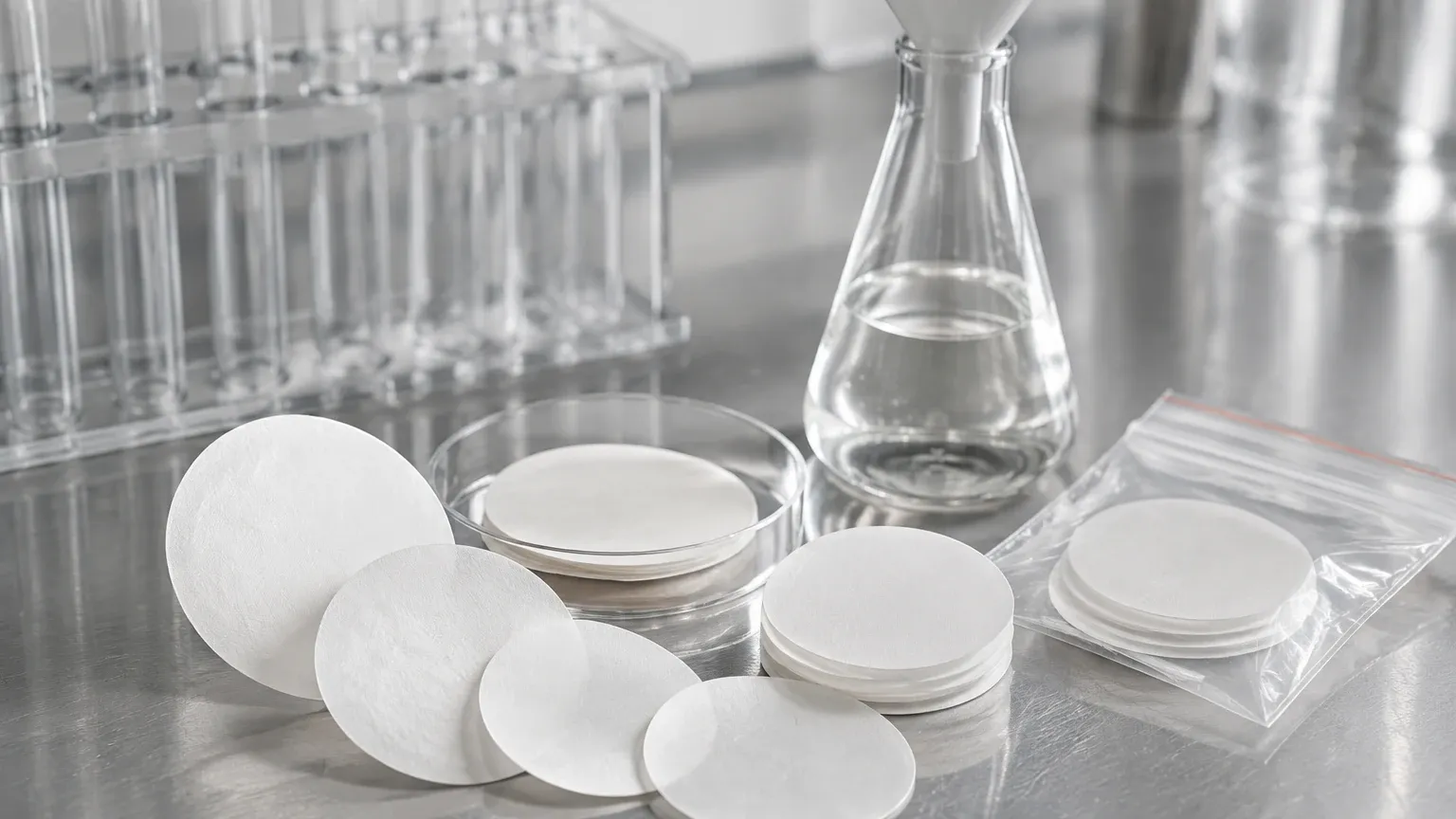
Durability and Sterilization: The Case for Metal Filtration
The most demanding phase for any mycological filter is the sterilization cycle. Autoclaves use saturated steam under pressure to kill all biological life. This environment is highly corrosive and thermally taxing.
Synthetic filters often suffer from "media migration" or pore enlargement after repeated exposure to steam. Stainless steel Filter Discs & Packs are immune to these issues. The fixed pore structure of a woven or sintered metal disc remains constant, ensuring that the 0.5-micron rating specified on day one is the same rating provided after 100 sterilization cycles.
Furthermore, in large-scale operations where automated Clean-In-Place (CIP) or Sterilize-In-Place (SIP) systems are used, metal filters are the only viable option. They can withstand the caustic chemicals and high-velocity steam used to sanitize industrial fermenters without the risk of shedding fibers or chemical leaching into the growth medium.
Procurement Considerations for Large-Scale Mycology Facilities
When transitioning from R&D to full-scale production, purchasing teams and engineers should confirm several factors before selecting a filtration partner for filter discs mycology needs:
1. Material Traceability: Ensure the stainless steel is certified (e.g., MTRs) to prevent contamination from low-quality alloys that might rust in high-humidity environments.
2. Customization Capabilities: Can the manufacturer produce discs in the exact diameter required for your proprietary vessel lids? Can they provide specific mesh counts to balance airflow and filtration?
3. Consistency of Micron Rating: In mycology, a single "hot spot" or oversized pore can lead to the loss of an entire production batch. High-precision manufacturing and quality control are non-negotiable.
4. Total Lifecycle Cost: While the initial investment in stainless steel filter packs is higher than disposable synthetic discs, the longevity and reliability of metal solutions often result in a lower cost per production cycle.
Optimizing Performance with Precision Components
The success of a mycological operation hinges on the integrity of its sterile boundaries. By moving beyond basic materials and adopting engineered Filter Discs & Packs, facilities can achieve higher consistency, lower contamination rates, and better gas exchange dynamics.
For engineers designing the next generation of cultivation hardware, the focus should remain on the technical specifications of the filter media—pore size, airflow resistance, and material durability. Choosing a filtration solution that can withstand the rigors of industrial processing while providing absolute biological exclusion is not just a matter of convenience; it is a fundamental requirement for scalable, high-yield mycology.
