


K Discs
In the landscape of industrial filtration, precision and durability are the primary metrics by which performance is measured. Among the various geometries used to facilitate fluid and gas purification, k discs—specialized circular filter elements—play a critical role in high-pressure and high-temperature environments. These components are essential for maintaining the integrity of production lines in industries ranging from polymer extrusion to chemical processing.
As a specialized manufacturer, Kaifil provides high-performance Filter Discs & Packs designed to meet the rigorous standards of modern engineering. Understanding the technical nuances of these discs, from material composition to weave geometry, is vital for engineers and procurement teams looking to optimize their filtration systems.
Understanding the Role of K Discs in Industrial Filtration
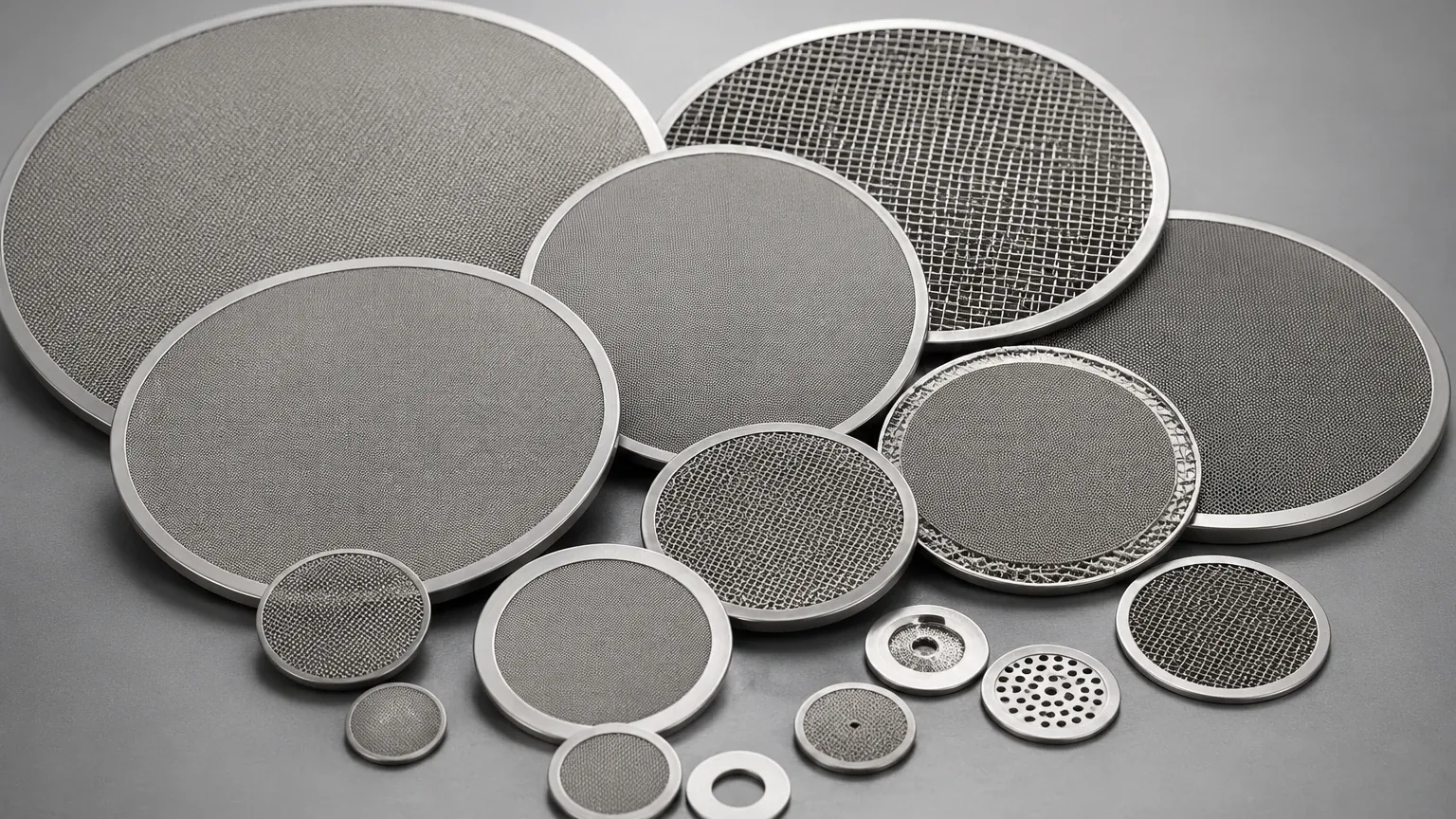
K discs are essentially circular filtration units fabricated from woven wire mesh or sintered metal fibers. The term often refers to specific configurations used in heavy-duty industrial machinery where a high degree of structural stability is required. Unlike standard mesh cutouts, these discs are often engineered as multi-layer assemblies to handle significant differential pressures without deforming.
In B2B applications, the primary function of these discs is the removal of particulate matter from liquid or gaseous streams. This process is not merely about blocking large debris; it involves precise particle size control to protect downstream equipment, such as extrusion dies, spray nozzles, or sensitive valves. The efficiency of a k disc is determined by its ability to maintain a consistent pore size under mechanical stress, a factor that depends heavily on the manufacturing process and the quality of the raw materials used.
Technical Specifications and Material Selection
The performance of any filtration component begins with the alloy. In industrial environments, exposure to corrosive chemicals, extreme heat, and mechanical wear necessitates the use of high-grade stainless steel.
Stainless Steel 304 vs. 316L
Most k discs are manufactured using Stainless Steel 304 or 316L. While SS 304 offers excellent strength and basic corrosion resistance suitable for many food and beverage applications, SS 316L is the preferred choice for more demanding environments. The addition of molybdenum in 316L enhances its resistance to pitting and crevice corrosion, particularly in chloride-rich environments or acidic chemical processing. For engineers, selecting the correct alloy is the first step in ensuring a long service life and preventing premature failure due to chemical degradation.
Wire Mesh Weave Types
The weave pattern of the mesh determines the filtration characteristics of the disc:
1. Plain Weave: The most common and cost-effective pattern, where each warp wire crosses over and under each shute wire. It provides a stable structure with high flow rates but is generally limited to coarser filtration levels.
2. Twill Weave: This pattern allows for a heavier wire diameter to be used for a given mesh count, as each wire passes over and under two successive wires. This results in a stronger mesh capable of supporting higher loads.
3. Dutch Weave (Plain and Twill): These weaves utilize different diameters for warp and shute wires, creating a dense, compact mesh. Dutch weave is the standard for fine filtration, offering superior mechanical strength and the ability to capture very small particles while maintaining a reasonable pressure drop.
Construction Methods: Single Layer vs. Multi-Layer Packs
Depending on the application requirements, k discs can be supplied as individual layers or integrated into sophisticated packs. The choice between these configurations depends on the required filtration depth and the mechanical pressure the disc must withstand.
Single Layer Discs
Single layer discs are typically used in applications where the pressure differential is low and the primary goal is simple straining. These are often found in water treatment or as pre-filters in larger systems. They are easy to clean and replace but lack the structural rigidity required for high-viscosity fluids like molten polymers.
Multi-Layer Filter Packs
For more demanding processes, multi-layer Filter Discs & Packs are the industry standard. These assemblies consist of several layers of wire mesh with varying micron ratings. A typical configuration might include:
* Support Layer: A coarse, heavy-duty mesh that provides structural integrity to the pack.
* Drainage Layer: A medium mesh that facilitates even flow distribution across the filtration surface.
* Filtration Layer: The fine mesh layer that determines the actual micron rating of the disc.
These layers are often spot-welded together or bound by a metal rim (usually aluminum, stainless steel, or copper). Rimming ensures that the edges of the mesh do not fray and provides a secure sealing surface, preventing "bypass"—a common failure mode where unfiltered fluid escapes around the edges of the filter element.
Performance Metrics: Filtration Accuracy and Flow Dynamics
When evaluating k discs, engineers must balance filtration accuracy with flow dynamics. A filter that is too fine will clog rapidly, leading to frequent downtime, while a filter that is too coarse will allow contaminants to pass through, potentially damaging expensive machinery.
Micron Rating: Absolute vs. Nominal
It is critical to distinguish between nominal and absolute micron ratings. A nominal rating refers to the ability of the mesh to retain a certain percentage (usually 60% to 90%) of particles of a specific size. An absolute rating, common in precision Dutch weaves, indicates the pore size at which no particle larger than the specified micron can pass through. In high-stakes applications like pharmaceutical manufacturing or fine chemical production, absolute ratings are mandatory for process validation.
Pressure Drop and Permeability
The "clean pressure drop" is the initial resistance the filter offers to the flow. As the k discs accumulate debris, the pressure drop increases. Engineers must calculate the maximum allowable pressure drop before the disc must be cleaned or replaced. High-quality k discs are designed with optimized open areas to maximize permeability, ensuring that the system operates efficiently for as long as possible before reaching the terminal pressure threshold.
Application-Specific Engineering for K Discs
Kaifil’s expertise in custom filtration allows for the adaptation of k discs to a wide variety of industrial sectors. Each application presents unique challenges that dictate the design of the filter.
Polymer and Plastic Extrusion
In the plastics industry, k discs are used in screen changers to remove impurities from molten resin. This process involves extremely high temperatures and pressures. The discs must be able to withstand the viscosity of the polymer without collapsing. Multi-layer spot-welded packs are almost always used here, often featuring a combination of Dutch weave for fine filtration and plain weave for support.
Chemical and Petrochemical Processing
Chemical plants deal with aggressive fluids that can quickly degrade inferior metals. Here, the focus is on chemical compatibility and the ability of the k discs to be cleaned and reused. Sintered mesh discs are often preferred in these environments because the diffusion-bonding process locks the wires in place, preventing any wire migration into the process stream.
Food and Beverage Industry
For food-grade applications, the primary concerns are hygiene and compliance with safety standards. K discs used in these settings must be made from certified stainless steel and manufactured using processes that eliminate the risk of contamination. Smooth surfaces and burr-free edges are essential to prevent the buildup of organic matter and to facilitate thorough cleaning (CIP – Clean-In-Place).
Quality Assurance and Selection Guidelines for Procurement
Selecting the right k discs involves more than just matching dimensions. Procurement teams should work closely with engineering to confirm several key factors before finalizing an order:
1. Filtration Goal: Define the specific particle size that must be removed. Is a nominal rating sufficient, or is an absolute rating required?
2. Operating Conditions: Confirm the maximum operating temperature and pressure. This will determine the need for multi-layer construction or specialized alloys.
3. Chemical Environment: Identify all chemicals the disc will encounter, including cleaning agents. This ensures the selection of a corrosion-resistant material like SS 316L or Hastelloy if necessary.
4. Cleaning and Reusability: Determine if the discs will be disposable or if they need to withstand ultrasonic cleaning or chemical stripping for reuse. This impacts the total cost of ownership.
At Kaifil, quality control is integrated into every stage of production. From the inspection of incoming wire mesh to the final dimensional check of the finished Filter Discs & Packs, we ensure that every component meets the exact specifications required by the client. Our OEM capabilities allow us to produce custom shapes, sizes, and layer configurations, providing tailored solutions for the most demanding filtration challenges.
Conclusion
K discs are small but vital components in the industrial world. Their ability to provide precise filtration under harsh conditions makes them indispensable for maintaining product quality and protecting industrial assets. By focusing on material integrity, advanced weave patterns, and robust construction methods, Kaifil delivers filtration solutions that help engineers achieve optimal performance and cost-effectiveness. Whether for a standard extrusion line or a complex chemical reactor, choosing the right k disc is a critical step in process optimization.
