


Filter Discs Lab
In laboratory and research environments, the precision of filtration components directly impacts the reliability of experimental data and the success of pilot-scale processes. While disposable paper or polymer filters are common in general chemistry, industrial R&D and specialized laboratory applications often require the durability and chemical resistance of stainless steel. Utilizing a filter discs lab setup allows engineers to simulate industrial conditions, test material compatibility, and refine filtration parameters before moving to full-scale production.
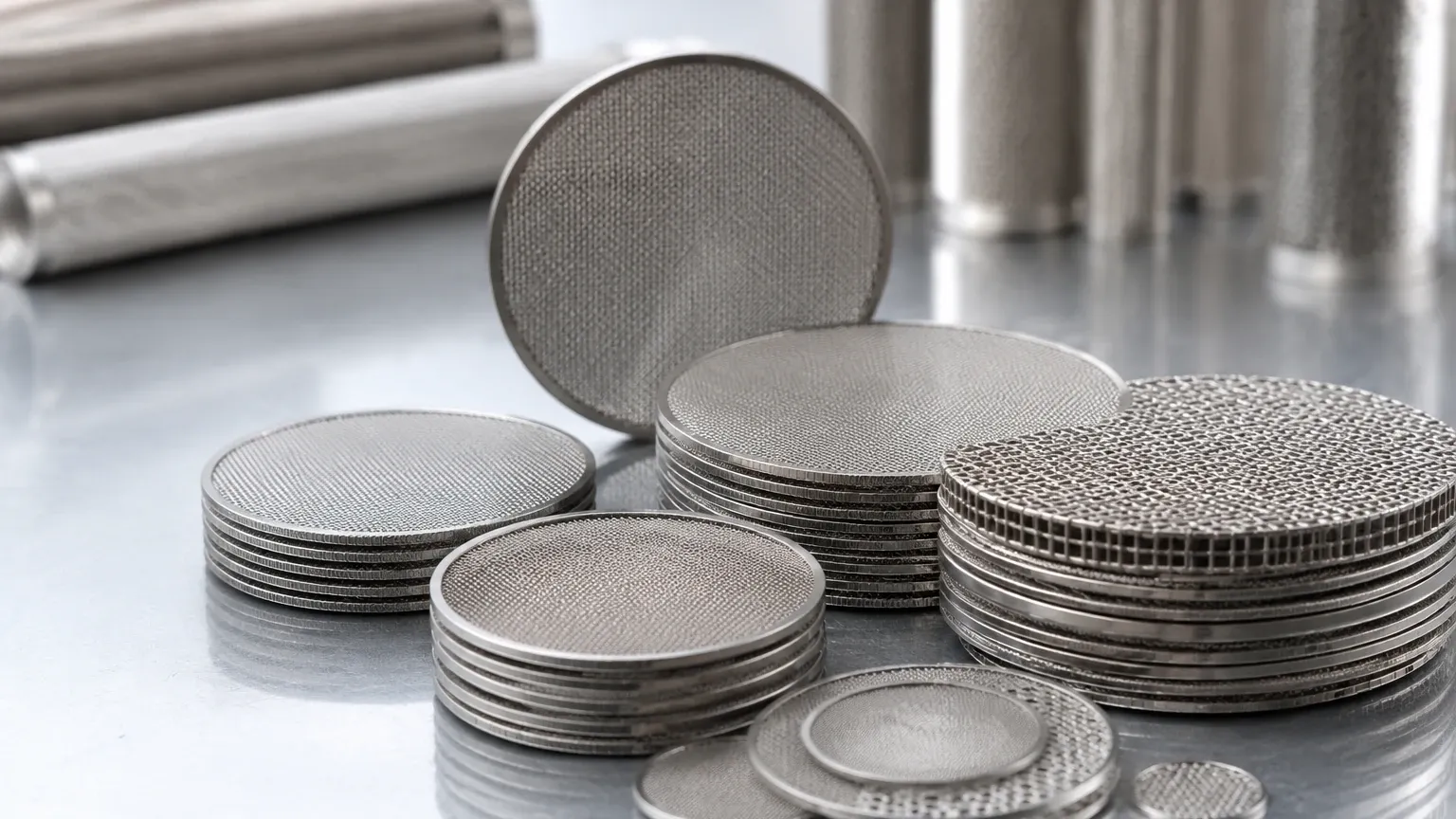
Stainless steel filtration components, specifically Filter Discs & Packs, provide the mechanical strength and thermal stability necessary for demanding laboratory tasks, including high-pressure liquid chromatography (HPLC) pre-filtration, polymer melt testing, and corrosive chemical analysis. Understanding the technical specifications and selection criteria for these components is essential for optimizing laboratory filtration performance.
Understanding the Role of Stainless Steel Filter Discs in Laboratory Environments
Laboratory filtration serves two primary purposes: protecting sensitive analytical equipment and performing small-batch separation or purification. In many industrial R&D settings, the fluids being processed—such as resins, specialized chemicals, or high-temperature oils—would degrade standard laboratory filter media. This is where stainless steel filter discs become indispensable.
Unlike cellulose or synthetic membranes, stainless steel wire mesh discs offer a fixed pore structure that does not deform under pressure. This consistency is critical for repeatable lab results. In a filter discs lab context, these components are often used to determine the optimal micron rating for a larger industrial process. By testing different mesh counts and weave patterns at a small scale, engineers can predict the flow rates and pressure drops they will encounter in a factory setting.
Furthermore, metal filter discs are often preferred in laboratories dealing with high-purity requirements. They do not shed fibers or introduce extractables into the filtrate, which is a common concern with organic filter media. This makes them ideal for pharmaceutical R&D and food-grade product development where purity is a non-negotiable requirement.
Technical Specifications: Material Selection and Mesh Configuration
The performance of a filter disc is primarily determined by the material grade and the type of wire mesh weave used. For laboratory applications, material selection is the first engineering hurdle.
Material Grades
Most industrial-grade filter discs are manufactured from 304 or 316L stainless steel.
- 304 Stainless Steel: Suitable for general-purpose filtration where corrosion resistance is required but the environment is not overly aggressive.
- 316L Stainless Steel: The standard for laboratory use involving acids, salts, or high-moisture environments. The "L" denotes low carbon content, which improves weldability and resistance to intergranular corrosion, making it safer for precision lab components.
- Specialty Alloys: For extreme laboratory conditions involving highly acidic or alkaline solutions, alloys like Hastelloy, Monel, or Inconel may be specified to prevent premature filter failure.
Mesh Weave Types
The weave pattern dictates the filtration accuracy (micron rating) and the mechanical strength of the disc. Common weaves used in a filter discs lab include:
- Plain Weave: The simplest configuration where wires cross over and under each other. It offers high flow rates and is easy to clean, typically used for coarser filtration tasks.
- Twill Weave: Allows for thicker wires and finer mesh counts, providing greater strength and finer filtration than plain weave.
- Dutch Weave (Plain and Twill): Features a higher density of wires in one direction, creating a tortuous path for particles. This is the preferred weave for high-pressure applications and precision filtration down to very low micron levels.
Engineering Considerations for Selecting Filter Discs & Packs
When specifying Filter Discs & Packs for laboratory use, engineers must look beyond simple dimensions. Several technical factors influence how a filter will perform under specific test conditions.
Filtration Accuracy: Absolute vs. Nominal
In a lab setting, the distinction between absolute and nominal micron ratings is vital. A nominal rating indicates the ability of the filter to retain a majority of particles of a certain size, whereas an absolute rating guarantees that no particle larger than the specified micron size will pass through. For critical analytical work, absolute-rated discs are often required to ensure the integrity of the filtrate.
Pressure Drop and Flow Rate
Every filter introduces resistance to the fluid flow, resulting in a pressure drop (ΔP). In a filter discs lab, measuring the clean pressure drop at various flow rates helps in sizing the pumps and housings for larger systems. Factors such as the percentage of open area in the mesh and the viscosity of the fluid must be calculated to prevent excessive backpressure, which could damage lab equipment or compromise the filter media.
Temperature Stability
One of the primary reasons for choosing metal filter discs lab components over plastic alternatives is temperature resistance. Stainless steel discs can operate effectively at temperatures exceeding 500°C (depending on the alloy and environment), which is essential for testing hot-melt polymers or high-temperature chemical reactions.
Customization and Construction: From Single Layer to Multilayer Packs
Laboratory requirements often exceed the capabilities of a single layer of wire mesh. Customization allows for the creation of complex filter packs designed for specific dirt-holding capacities and structural integrity.
Multilayer Filter Packs
In many cases, a single fine mesh is too fragile to withstand high pressures. To solve this, multiple layers are combined into a single pack. A typical configuration includes:
1. Filtration Layer: The fine mesh that determines the micron rating.
2. Support Layers: Coarser mesh layers on either side of the filtration layer to provide mechanical strength and prevent the fine mesh from deforming.
3. Drainage Layers: Layers that help distribute the fluid flow evenly across the filter surface.
These layers can be spot-welded together or bound by a metal rim to ensure they remain a cohesive unit during the filtration process.
Edge Treatments and Rimming
For filter discs lab applications where bypass (fluid leaking around the edges of the filter) must be eliminated, edge treatment is critical. Options include:
- Spot Welding: Keeps multilayer packs together but does not seal the edges.
- Aluminum or Copper Rimming: A metal U-shaped channel is pressed around the circumference of the disc. This provides a clean, compressed edge that acts as a gasket when the disc is installed in a holder, ensuring all fluid passes through the mesh.
- Stainless Steel Binding: Used for high-temperature or highly corrosive environments where aluminum or copper would react with the process fluid.
Performance Validation and Lab Testing Protocols
Before a filter design is approved for industrial use, it must undergo rigorous validation in the lab. These tests ensure that the filter discs lab results are accurate and that the filter will meet the required performance benchmarks.
Bubble Point Test
The bubble point test is a non-destructive method used to determine the maximum pore size of a filter disc. By submerging the disc in a liquid and gradually increasing air pressure until bubbles appear, technicians can verify the integrity of the mesh and the accuracy of the micron rating.
Dirt Holding Capacity (DHC)
In R&D, it is important to know how long a filter will last before it becomes clogged. By introducing a known concentration of test dust or contaminants into a fluid stream and monitoring the pressure rise, engineers can calculate the DHC. This data is essential for determining the replacement cycles and total cost of ownership for the filtration system.
Chemical Compatibility Testing
Even though stainless steel is highly resistant, certain lab chemicals can cause pitting or stress-corrosion cracking over time. Laboratory discs are often subjected to long-term immersion tests in the process fluid at operating temperatures to ensure the material remains passivated and does not contaminate the product.
Maintenance, Cleaning, and Reusability in R&D Settings
One of the significant advantages of using stainless steel Filter Discs & Packs in a laboratory is that they are often reusable. This provides a cost-effective alternative to expensive disposable high-performance membranes.
Cleaning Methods
Depending on the contaminant, several methods can be used to restore the filter’s performance:
- Ultrasonic Cleaning: The most common method for lab-scale filters. High-frequency sound waves create cavitation bubbles that dislodge particles from deep within the mesh pores.
- Chemical Cleaning: Using solvents, acids, or alkalis to dissolve organic or inorganic deposits. This must be done with careful consideration of the filter material’s compatibility with the cleaning agent.
- Burn-off/Pyrolysis: For filters used in polymer or resin testing, heating the disc in a vacuum oven or fluidized bed can carbonize and remove organic build-up.
Assessing Reusability
A filter disc should only be reused if its structural integrity remains intact. In the lab, after cleaning, a repeat bubble point test or a flow-rate check should be performed to ensure the filter has returned to its original performance specifications. If the mesh is distorted or the pores are permanently blinded, the disc must be replaced to avoid skewed experimental results.
Scaling from Lab-Scale to Industrial Production
The ultimate goal of most filter discs lab work is to inform the design of a larger industrial filtration system. The data gathered—micron rating, pressure drop, and cleaning frequency—serves as the engineering foundation for selecting larger pleated cartridges or multi-bag filter housings.
When scaling up, it is important to maintain the same mesh geometry and material. If a specific Dutch weave was successful in the lab disc, using the same weave in a larger pleated element ensures that the filtration characteristics remain consistent. Manufacturers like Kaifil work closely with engineering teams to transition these lab-proven designs into high-volume production components, ensuring that the precision achieved in the laboratory is maintained at the industrial level.
By focusing on technical precision and material integrity, engineers can leverage stainless steel filter discs to solve complex filtration challenges, ensuring that their laboratory processes are both accurate and scalable.
