


Discs Filters
In industrial manufacturing and fluid processing, the precision of filtration components often dictates the quality of the final product and the longevity of downstream equipment. Among the most versatile and critical components in these systems are industrial discs filters. These components, often referred to as Filter Discs & Packs, serve as the primary barrier against contaminants in applications ranging from polymer extrusion to pharmaceutical synthesis.
Understanding the engineering behind these filters is essential for technical professionals tasked with optimizing system performance, reducing downtime, and ensuring compliance with rigorous industry standards. This guide explores the technical specifications, material considerations, and application-specific requirements that define high-performance filtration discs.
Understanding the Role of Filter Discs & Packs in Industrial Systems
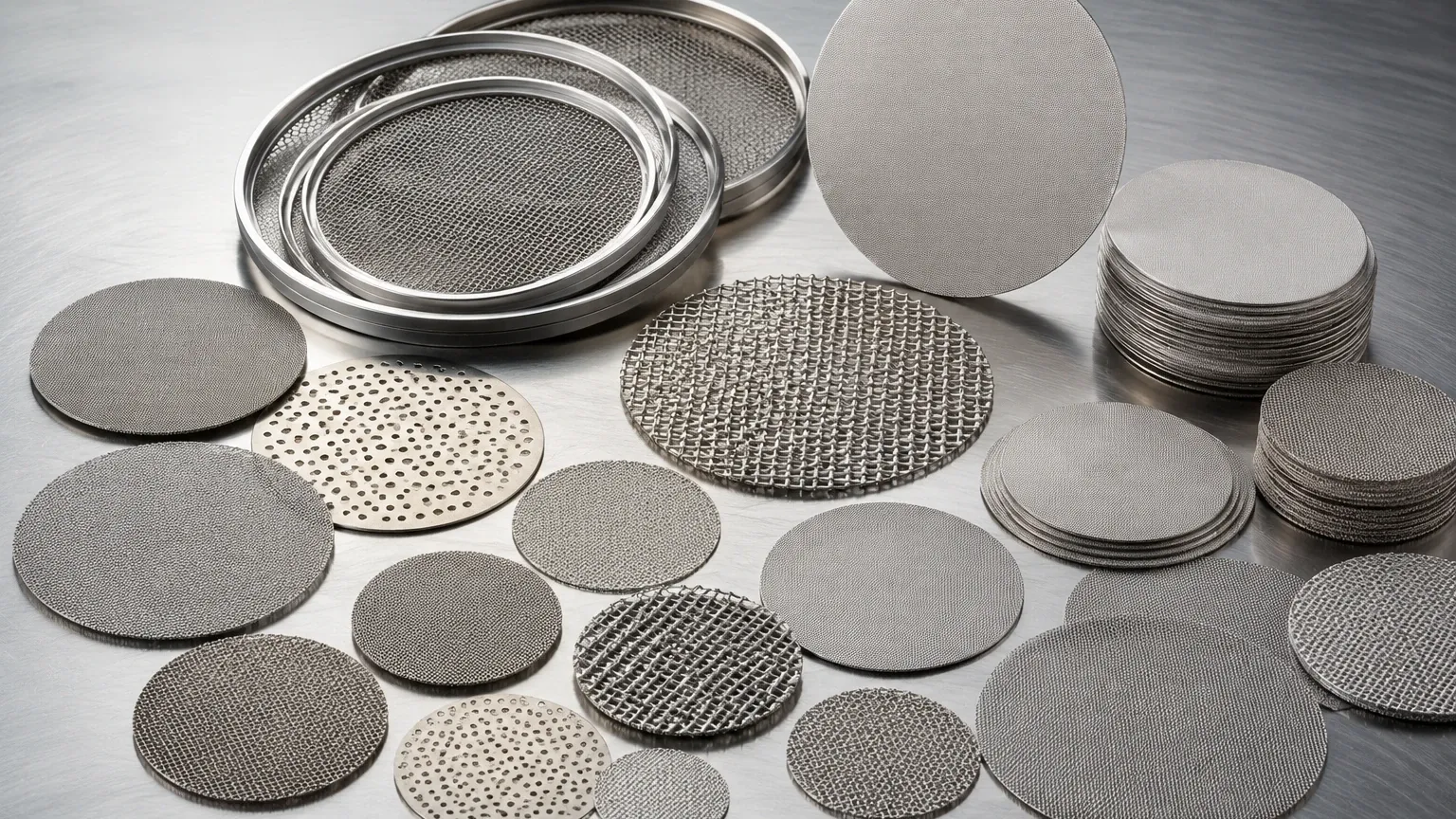
Filter discs are essentially thin, circular filtration elements designed to be integrated into piping systems, valves, or specialized machinery like extruders. Their primary function is to remove solid particles from liquid or gaseous media. While the geometry may seem simple, the internal structure of these filters can be highly complex, involving multiple layers of varying mesh counts to achieve specific filtration goals.
In B2B industrial contexts, the term "discs filters" encompasses a wide range of designs. These can be single-layer mesh discs used for basic straining or sophisticated multi-layer packs designed for graduated filtration. The latter are particularly effective because they combine different micron ratings into a single unit, allowing for high dirt-holding capacity without a significant increase in pressure drop. By capturing larger particles on the outer layers and finer particles in the core, these packs extend the service life of the filtration element.
Material Engineering and Chemical Compatibility
The choice of material is perhaps the most critical decision in specifying a filter disc. Because these components are frequently exposed to corrosive chemicals, high temperatures, and extreme pressures, stainless steel is the industry standard.
Stainless Steel Grades
Most industrial discs filters are manufactured from 304 or 316L stainless steel.
- Grade 304: Offers excellent mechanical strength and basic corrosion resistance, suitable for food and beverage applications or general water treatment.
- Grade 316L: Contains molybdenum, which provides superior resistance to chlorides and acids. This makes it the preferred choice for pharmaceutical manufacturing and chemical processing where the environment is more aggressive.
Specialized Alloys
For environments involving extreme heat or highly reactive chemicals, manufacturers may utilize specialized alloys such as Hastelloy, Monel, or Inconel. These materials maintain their structural integrity at temperatures where standard stainless steel might succumb to oxidation or creep. Engineers must evaluate the pH levels, presence of halides, and operating temperatures of their process fluid before selecting a material to prevent premature failure due to pitting or stress corrosion cracking.
Construction Types: Single-Layer vs. Multi-Layer Filter Packs
The structural configuration of discs filters determines their filtration efficiency and mechanical durability. Depending on the application, engineers may choose between several construction methods.
Single-Layer Discs
These are stamped from a single sheet of woven wire mesh or perforated metal. They are cost-effective and ideal for applications where only coarse filtration is required, or where the filter is used as a support for other media. They are also easier to clean, making them suitable for systems with high turnover rates.
Multi-Layer Packs
Multi-layer packs consist of several layers of wire mesh stacked together. These layers are often spot-welded at the edges to ensure they stay aligned during installation and operation. The layering strategy typically follows a coarse-fine-coarse pattern. The outer coarse layers provide mechanical support and protect the inner fine filtration layer from being deformed by high-pressure flow. This "sandwich" construction is essential in high-viscosity applications like plastic extrusion.
Rimmed and Bound Discs
To prevent fraying and to ensure a tight seal within the filter housing, many discs filters are finished with a metal rim. These rims can be made from aluminum, copper, or stainless steel. The rimming process involves compressing the edges of the mesh layers into a U-shaped metal channel. This not only provides a smooth edge for safe handling but also creates a reliable sealing surface that prevents fluid bypass.
Key Performance Metrics for Precision Filtration
When evaluating Filter Discs & Packs, engineers focus on three primary metrics: micron rating, pressure drop, and mechanical strength.
Micron Rating: Nominal vs. Absolute
- Nominal Rating: Refers to the ability of the filter to retain a majority of particles of a certain size (usually 60% to 90%).
- Absolute Rating: Refers to the diameter of the largest spherical particle that can pass through the filter under specified test conditions. For high-precision industries like pharmaceuticals, absolute ratings are often required to ensure zero bypass of critical contaminants.
Pressure Drop (ΔP)
Every filtration element introduces resistance to flow. A high-quality disc filter is designed to minimize this pressure drop while maintaining high filtration efficiency. A sudden increase in ΔP during operation usually indicates that the filter is reaching its dirt-holding capacity and requires cleaning or replacement. Engineers must calculate the initial ΔP to ensure the system’s pumps or extruders can handle the load.
Mechanical Strength and Burst Pressure
In hydraulic systems or polymer melt filtration, filters are subjected to immense pressure. The mesh must be woven and bonded in a way that prevents "media migration"—the shedding of metal fragments into the process stream—and resists bursting. Sintered wire mesh discs are often used in these high-pressure scenarios because the diffusion-bonding process fuses the wires at every contact point, creating a rigid, monolithic structure.
Industry-Specific Applications for Discs Filters
The versatility of discs filters allows them to be used across a broad spectrum of industrial sectors. Each industry has unique requirements that dictate the design of the filter.
Polymer and Fiber Extrusion
In the plastics industry, "screen packs" are used to remove un-melted resin and contaminants from the polymer melt before it passes through the die. These packs must withstand temperatures exceeding 300°C and pressures up to several hundred bar. The use of multi-layer discs filters prevents the fine mesh from being pushed through the breaker plate.
Pharmaceutical and Biotechnology
In these sectors, the focus is on purity and cleanability. Filters must be manufactured from medical-grade 316L stainless steel and often require a high degree of surface finish (electropolishing) to prevent bacterial growth. These discs are used in the filtration of active pharmaceutical ingredients (APIs) and in sterile air venting.
Food and Beverage
Filtration discs in this industry are used for clarifying liquids, such as juices, oils, and syrups. They must comply with FDA or equivalent food-safety standards. Because these filters are often cleaned in place (CIP), they must be resistant to the caustic cleaning agents used in food processing plants.
Oil and Gas
In upstream and downstream oil and gas operations, discs filters are used for sand control, fuel filtration, and hydraulic fluid conditioning. The ability to withstand corrosive salt environments and high-velocity flows is paramount here.
Engineering Guide: Specifying the Right Filter Disc
To ensure the successful integration of a filter disc into an industrial system, purchasing teams and engineers should confirm several technical parameters before finalizing an order.
1. Dimensions: Specify the exact outer diameter (OD) and, if applicable, the inner diameter (ID) for donut-shaped discs. Tolerances should be clearly defined to ensure a proper fit in the housing.
2. Layer Sequence: For multi-layer packs, define the mesh count and wire diameter for each layer. If the sequence is not known, providing the required micron rating and operating pressure allows the manufacturer to recommend an optimal stack.
3. Edge Treatment: Determine if the disc requires spot welding, a bound rim, or if a raw cut edge is sufficient. Bound rims are generally preferred for high-pressure seals.
4. Flow Characteristics: Provide information on the fluid viscosity and flow rate. This helps in determining if the total open area of the mesh is sufficient to prevent excessive pressure drop.
5. Environmental Factors: Disclose any exposure to vibrating equipment or thermal cycling, as these factors can lead to fatigue failure in the mesh wires.
Maintenance, Cleaning, and Total Cost of Ownership
One of the primary advantages of stainless steel discs filters over disposable paper or synthetic filters is their reusability. While the initial capital expenditure for metal filters is higher, the total cost of ownership (TCO) is often lower due to their long service life.
Cleaning Methods
Stainless steel filters can be cleaned using several methods:
- Ultrasonic Cleaning: Uses high-frequency sound waves to create cavitation bubbles that dislodge particles from deep within the mesh.
- Chemical Cleaning: Involves soaking the discs in solvents or acids to dissolve organic or inorganic deposits.
- Burn-off/Pyrolysis: Used in the plastics industry to remove hardened polymer by heating the filters in a vacuum oven.
Replacement Cycles
Despite their durability, metal filters eventually reach a point of "permanent fouling" where cleaning no longer restores the original pressure drop. Establishing a regular inspection schedule and monitoring the pressure differential across the filter bank are essential practices for preventing system failure. When the ΔP remains high even after cleaning, it is time to replace the discs.
Conclusion
Selecting the right Filter Discs & Packs is a balance of material science, mechanical engineering, and process knowledge. By focusing on the specific needs of the application—whether it is the high-pressure demands of an extruder or the high-purity requirements of a pharmaceutical lab—engineers can ensure they choose a filtration solution that provides reliable, long-term performance. Working with a specialized manufacturer allows for the customization of these components, ensuring that every disc filter is optimized for its specific industrial environment.
