


Mesh Filter Discs
In industrial filtration, the precision and durability of the filter media directly influence the efficiency of the entire production line. Mesh filter discs are fundamental components used across a spectrum of high-stakes industries, from polymer extrusion and chemical processing to pharmaceutical manufacturing and food production. These discs are engineered to remove impurities, ensure product consistency, and protect downstream equipment from damage. For engineering and procurement teams, selecting the right mesh filter discs requires a deep understanding of material science, weave patterns, and structural configurations to meet specific operational demands.
Understanding the Construction of Mesh Filter Discs
Mesh filter discs are typically fabricated from high-quality stainless steel wire cloth, though other alloys such as Monel, Hastelloy, or Inconel may be used for specialized environments involving extreme temperatures or highly corrosive chemicals. The manufacturing process involves precision cutting—often using hydraulic presses or laser cutting technology—to ensure exact dimensions and clean edges, which are critical for maintaining a proper seal within the filter housing.
Material Selection: SS304 vs. SS316L
The choice of material is the first technical hurdle in selection. Stainless steel 304 is the standard for many general industrial applications due to its excellent mechanical properties and cost-effectiveness. However, in environments where chloride stress corrosion or acidic exposure is a risk, SS316L is the preferred choice. The "L" denotes low carbon content, which improves weldability and resistance to intergranular corrosion, making it the industry standard for pharmaceutical and food-grade filtration.
Weave Types and Their Functional Impact
The performance of mesh filter discs is largely determined by the weave of the wire cloth. Common patterns include:
* Plain Weave: The simplest configuration where each warp wire crosses over and under each shute wire. It provides high flow rates and is easy to clean, making it suitable for coarse filtration.
* Twill Weave: Each wire passes over two and under two wires, allowing for a heavier wire diameter in a given mesh count. This increases the strength of the disc and is often used for finer filtration tasks.
* Dutch Weave (Plain and Twill): These weaves use a larger diameter for the warp wires and a smaller diameter for the shute wires. This creates a dense, strong mesh with very small, tortuous openings, ideal for high-pressure applications and fine particle retention.
Engineering Considerations for Optimal Selection
When specifying mesh filter discs, engineers must balance several competing factors to ensure the component performs reliably over its intended service life. Failure to account for these variables often leads to premature blinding, media migration, or mechanical failure.
Filtration Accuracy (Micron Rating)
Filtration accuracy is defined by the size of the particles the mesh is intended to capture. It is important to distinguish between nominal and absolute micron ratings. A nominal rating refers to the ability of the mesh to retain a majority of particles of a certain size, while an absolute rating indicates that no particle larger than the specified size can pass through the mesh. For precision applications like hydraulic systems or polymer melt filtration, absolute ratings are generally required.
Flow Rate and Pressure Drop
The open area of the mesh determines the flow rate and the initial pressure drop across the filter. A higher mesh count (more wires per inch) generally results in finer filtration but a lower open area, which increases the pressure drop. Engineers must calculate the "clean pressure drop" to ensure the system's pump capacity is sufficient to maintain required flow rates as the filter begins to load with contaminants.
Mechanical Strength and Support
Single-layer mesh filter discs may lack the structural integrity required to withstand high differential pressures. In such cases, the disc is often reinforced. This leads to the use of multi-layer Filter Discs & Packs, where a fine filtration mesh is sandwiched between coarser support layers. This configuration prevents the fine mesh from deforming or "ballooning" under pressure, significantly extending the component's lifespan.
Applications in Demanding Industrial Environments
The versatility of stainless steel mesh makes these discs indispensable in various sectors. Each industry presents unique challenges that dictate the disc's design.
Chemical and Petrochemical Processing
In chemical plants, filters must withstand aggressive solvents and high temperatures. Mesh filter discs are used in the filtration of catalysts, the removal of carbon particles, and the processing of various chemical intermediates. The ability of stainless steel to maintain its structural integrity at temperatures exceeding 400°C is a primary reason for its dominance in this sector.
Food and Beverage Industry
For food and beverage applications, hygiene is paramount. Filter discs must be made from FDA-compliant materials and be capable of undergoing Clean-in-Place (CIP) or sterilization processes. They are commonly used in the filtration of cooking oils, syrups, and beverages to remove sediment and ensure clarity without leaching any metallic taste or contaminants into the product.
Pharmaceutical Manufacturing
Precision is the hallmark of pharmaceutical filtration. Mesh filter discs are used in the recovery of expensive active pharmaceutical ingredients (APIs) and the filtration of solvents. These discs must be manufactured with high levels of cleanliness, often requiring ultrasonic cleaning to remove any residual oils or debris from the weaving and cutting processes.
Comparing Single-Layer Discs and Multi-Layer Filter Packs
While a single-layer mesh disc is sufficient for low-pressure, coarse filtration, many industrial processes require the enhanced performance of multi-layer packs. Understanding the difference is vital for procurement teams looking to optimize total cost of ownership.
Structural Integrity and Layering
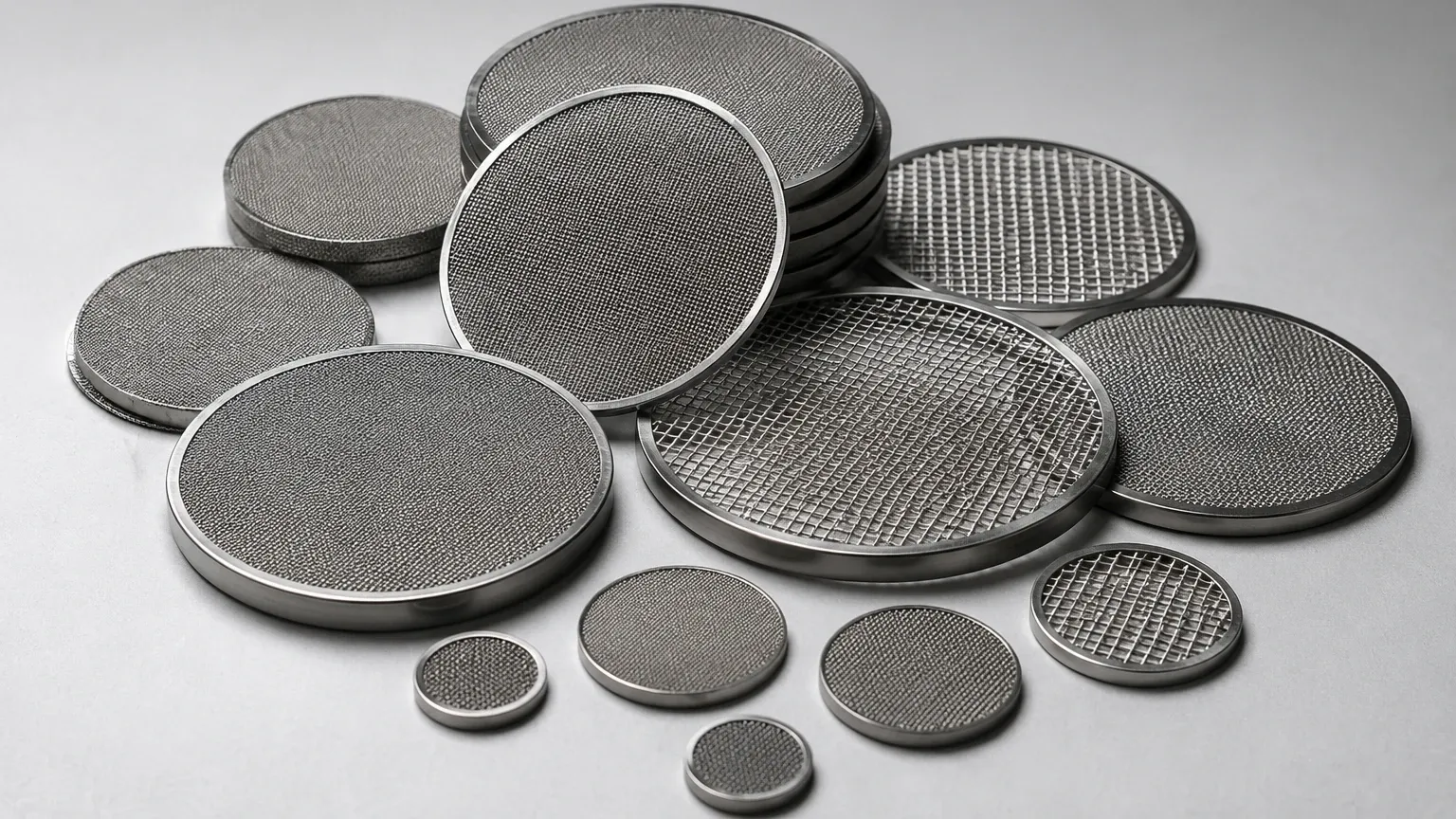
Multi-layer filter packs are engineered by stacking different mesh counts. A typical three-layer pack might consist of a coarse drainage layer, a fine filtration layer, and another coarse support layer. This "sandwich" design provides a rigid structure that can handle much higher differential pressures than a single disc. The layers are often bonded together via spot welding or bound with a metal rim.
Edging and Framing Options
The edges of mesh filter discs can be a point of weakness. In high-pressure environments, loose wires at the edge can migrate into the fluid stream. To prevent this, packs are often finished with:
* Spot Welding: Multiple points of contact are welded to keep the layers aligned.
* Aluminum or Stainless Steel Rimming: A metal U-shaped channel is crimped around the edge of the disc. This not only prevents media migration but also provides a superior sealing surface for the filter housing, reducing the risk of fluid bypass.
Quality Evaluation and Performance Risks
Inconsistent quality in mesh filter discs can lead to significant operational risks. Engineers should evaluate suppliers based on their ability to mitigate the following common issues:
1. Media Migration: If the wires are not properly woven or the edges are not securely finished, small fragments of metal can break off and contaminate the filtrate. This is a critical failure in food and pharmaceutical industries.
2. Bypassing: If the disc is not cut to precise tolerances or if the rimming is uneven, fluid may bypass the filter media entirely, leading to unfiltered product downstream.
3. Premature Blinding: This occurs when the mesh pores become clogged too quickly. It is often a result of incorrect micron selection or poor pore distribution in low-quality mesh cloth.
4. Corrosion and Pitting: Using a lower grade of stainless steel than specified can lead to rapid degradation in corrosive environments, resulting in holes in the filter media.
Customization and Procurement: What to Confirm
Because most industrial filtration systems are proprietary or highly specialized, off-the-shelf mesh filter discs are rarely the optimal solution. Customization is the standard. Before initiating a purchase, technical teams should confirm the following specifications with their manufacturer:
* Exact Dimensions: Diameter tolerances are usually within +/- 0.1mm to 0.5mm depending on the housing.
* Layer Configuration: If a pack is required, specify the mesh count for each layer and the order of assembly.
* Binding Method: Determine if the application requires spot welding, rimming, or if a raw edge is acceptable.
* Cleaning Requirements: Specify if the discs need to be ultrasonically cleaned or degreased prior to shipping.
* Documentation: For regulated industries, request material test reports (MTRs) that verify the alloy composition (e.g., 316L) and compliance with relevant standards.
Conclusion
Mesh filter discs are a critical link in the industrial production chain. While they may appear to be simple components, their engineering involves a complex interplay of material science, mechanical design, and fluid dynamics. By selecting high-quality materials, appropriate weave patterns, and robust structural configurations like multi-layer packs, industrial operators can ensure consistent product quality, protect expensive machinery, and minimize downtime. For engineers and purchasing managers, partnering with a manufacturer that understands these technical nuances is essential for achieving reliable and cost-effective filtration performance.
