


Membrane Filter Discs
In the landscape of industrial separation and purification, membrane filter discs serve as critical components for achieving high-precision results. These thin, circular filtration elements are engineered to remove microscopic contaminants from liquids and gases, ensuring the integrity of downstream processes and final products. For engineers and technical procurement teams, selecting the right membrane filter disc involves a deep understanding of material science, fluid dynamics, and mechanical durability.
While the term "membrane" often evokes images of delicate polymer films, industrial-grade filtration frequently requires the robustness of stainless steel. In high-pressure, high-temperature, or chemically aggressive environments, stainless steel wire mesh serves as a high-performance alternative or a vital support structure for delicate polymer membranes. This guide explores the technical considerations, material properties, and engineering standards essential for selecting and implementing membrane filter discs in industrial applications.
The Fundamentals of Membrane Filtration in Industrial Systems
Membrane filter discs operate on the principle of physical exclusion. The pore size of the filter medium determines which particles are retained and which pass through. In industrial B2B contexts, these discs are rarely used in isolation; they are typically integrated into complex filtration housings, extruders, or chemical reactors.
Surface vs. Depth Filtration
Most membrane filter discs provide surface filtration, where particles larger than the pore size are trapped on the upstream side of the medium. This allows for precise control over the filtration cut-off point, often referred to as the micron rating. For applications requiring the removal of fine particulates from hydraulic oils, polymer melts, or pharmaceutical precursors, the accuracy of this rating is paramount.
The Role of Stainless Steel Mesh
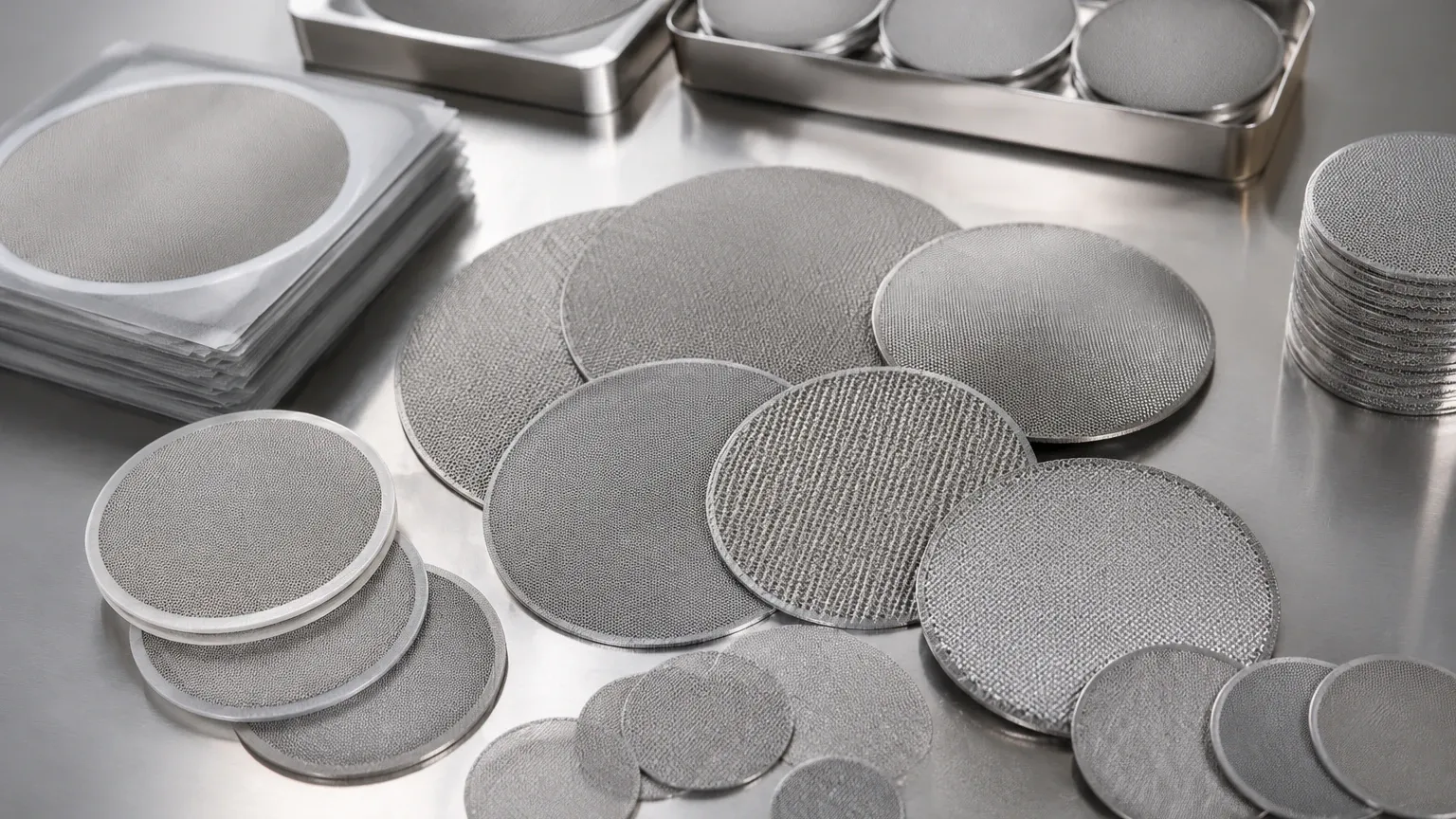
In many demanding sectors, Filter Discs & Packs utilize stainless steel wire mesh to achieve membrane-like precision while maintaining structural integrity. Unlike polymer membranes, which may rupture under high differential pressure, stainless steel mesh discs can withstand significant mechanical stress. They are often used as "pre-filters" to protect finer membranes or as the primary filtration stage in heavy-duty industrial processes.
Material Selection: Stainless Steel vs. Polymer Membranes
Choosing the material for a membrane filter disc is the most critical decision in the engineering process. The choice depends on chemical compatibility, operating temperature, and the required filtration accuracy.
Stainless Steel (304, 316, 316L)
Stainless steel is the standard for industrial filtration due to its exceptional resistance to corrosion and heat.
- 304 Stainless Steel: Suitable for general industrial use where basic corrosion resistance is required.
- 316/316L Stainless Steel: Contains molybdenum, providing superior resistance to chlorides and acids. 316L (low carbon) is preferred for welded components to prevent intergranular corrosion.
Metal membrane filter discs are capable of operating at temperatures exceeding 400°C (750°F) and are resistant to a wide range of solvents, making them indispensable in chemical processing and polymer extrusion.
Polymer Membranes (PTFE, PES, Nylon)
For laboratory-scale or highly specific pharmaceutical applications, polymer membranes offer exceptionally fine pore sizes (down to 0.1 microns). However, these materials are limited by their temperature thresholds and mechanical strength. In many industrial setups, a polymer membrane is sandwiched between layers of stainless steel mesh to provide the necessary support, creating a composite filter pack.
Structural Integrity: The Importance of Multi-Layer Filter Discs & Packs
In high-pressure applications, a single layer of filter media is often insufficient. Engineers frequently specify multi-layer Filter Discs & Packs to balance filtration fineness with mechanical strength.
Layer Configuration
A typical multi-layer pack might consist of:
1. Filtration Layer: The central layer (or layers) with the target micron rating.
2. Support Layers: Coarser mesh layers on both sides of the filtration layer to prevent deformation under pressure.
3. Drainage Layers: Even coarser mesh that facilitates the flow of the filtrate away from the filtration zone.
By combining different mesh counts, manufacturers can create a disc that captures fine particles while maintaining a low pressure drop and high dirt-holding capacity. This multi-layer approach also extends the service life of the filter, as the outer layers can act as a coarse pre-filter for larger contaminants.
Edge Binding and Framing
To ensure the integrity of the filter pack and prevent bypass (where fluid escapes around the edges of the filter), membrane filter discs often feature edge binding. Common methods include:
- Aluminum or Stainless Steel Rim: A metal U-shaped channel is pressed around the circumference of the disc.
- Spot Welding: Multiple layers are fused together at the edges to create a single, unified component.
- Copper or Rubber Gaskets: Used when a high-performance seal is required within the filter housing.
Technical Specifications: Micron Ratings and Flow Dynamics
When evaluating membrane filter discs, engineers must look beyond simple dimensions. The performance of the disc is defined by its interaction with the fluid stream.
Absolute vs. Nominal Micron Ratings
- Nominal Rating: Indicates the ability of the filter to retain a majority of particles of a specific size (e.g., 95% of 10-micron particles). This is often used for general-purpose filtration.
- Absolute Rating: Refers to the diameter of the largest hard spherical particle that will pass through the filter under specified test conditions. In critical applications like pharmaceutical manufacturing or precision hydraulics, absolute ratings are mandatory to ensure process safety.
Pressure Drop (ΔP)
The pressure drop is the difference in pressure between the upstream and downstream sides of the filter. A high initial pressure drop indicates that the filter may be too restrictive for the system's pump capacity, leading to inefficiency. Engineering a disc with high porosity (open area) while maintaining a fine micron rating is a key challenge in filter design.
Bubble Point Testing
For membrane filter discs used in critical applications, the bubble point test is a standard method for verifying pore size and integrity. By submerging the disc in a liquid and measuring the pressure required to force air through the largest pore, manufacturers can confirm that the disc meets its specified filtration accuracy.
Customization Options for Specialized Applications
Industrial filtration is rarely a one-size-fits-all field. Customization is essential for optimizing performance in specific machinery.
Geometry and Dimensions
While circular discs are the most common, membrane filter discs can be manufactured in various shapes, including ovals, rectangles, and complex "kidney" shapes for specialized extruders. Diameters can range from a few millimeters for miniature valves to over a meter for large-scale chemical reactors.
Sintered Mesh Discs
For the most demanding environments, sintered wire mesh discs provide the ultimate in durability. Sintering involves bonding multiple layers of mesh together using heat and pressure without the use of binders. This process creates a porous metal plate that is incredibly strong, permanent, and resistant to delamination, even under extreme backwashing or high-pressure pulses.
OEM and Proprietary Designs
Many equipment manufacturers require proprietary filter designs to ensure the performance of their systems. This may involve specific layer sequences, unique edge treatments, or specialized materials like Monel, Inconel, or Hastelloy for extreme chemical resistance.
Evaluating Reliability and Total Cost of Ownership
For purchasing teams, the initial price of a membrane filter disc is only one part of the economic equation. The total cost of ownership (TCO) includes the cost of downtime, replacement frequency, and cleaning procedures.
Cleanability and Reusability
One of the primary advantages of stainless steel membrane filter discs is their ability to be cleaned and reused. Depending on the contaminant, discs can be cleaned using:
- Ultrasonic Cleaning: High-frequency sound waves dislodge particles from deep within the mesh.
- Backwashing: Reversing the flow of fluid to flush out trapped debris.
- Chemical Cleaning: Using solvents or acids to dissolve organic or mineral deposits.
In contrast, polymer membranes are typically disposable, leading to higher long-term costs and increased waste.
Replacement Cycles
Predicting replacement cycles is essential for maintenance scheduling. In systems with consistent fluid quality, the rate of pressure increase (ΔP) can be used to trigger a filter change. High-quality Filter Discs & Packs are designed to maximize the dirt-holding capacity, thereby extending the intervals between maintenance events.
Risk of Bypass and Media Migration
A common risk in low-quality filters is media migration, where fragments of the filter material break off and enter the filtrate. Stainless steel discs, particularly those with welded or bound edges, minimize this risk. Furthermore, ensuring a precise fit within the housing is critical to preventing bypass, which can lead to catastrophic failure in precision components like hydraulic valves or fuel injectors.
Conclusion: Selecting the Right Solution
Membrane filter discs are small but vital components that protect the efficiency and purity of industrial processes. Whether used in the production of high-performance polymers, the purification of pharmaceutical ingredients, or the protection of hydraulic systems, the choice of filter disc has a direct impact on operational success.
When specifying these components, engineers should prioritize material compatibility, mechanical strength, and verified filtration accuracy. By opting for robust solutions like stainless steel Filter Discs & Packs, industrial operators can achieve a balance of precision and durability that polymer alternatives often cannot match. Collaboration with experienced manufacturers allows for the development of customized filtration solutions that meet the specific demands of any industrial environment, ensuring long-term reliability and optimized total cost of ownership.
