


Q Discs
In the landscape of industrial filtration, precision is the primary metric by which performance is measured. Among the various components used to achieve high-purity results, Q discs—often shorthand for high-quality, quantitative, or specific equipment-compatible filter discs—play a critical role. For engineers and procurement specialists, selecting the right filtration media involves more than just identifying a micron rating; it requires a deep understanding of material science, structural integrity, and the specific demands of the operating environment.
As a specialized manufacturer of stainless steel filtration solutions, Kaifil provides a range of Filter Discs & Packs designed to meet the rigorous standards of modern industrial processing. This guide explores the technical nuances of Q discs and similar precision filtration components, offering actionable insights into their selection, application, and maintenance.
Understanding Q Discs in Industrial Filtration
Q discs are high-precision filtration elements typically utilized in applications where consistency and durability are non-negotiable. While the term "Q disc" can sometimes refer to laboratory-grade quantitative filters, in the context of industrial manufacturing and heavy-duty chemical processing, it generally describes high-specification metal mesh discs designed for repeatable performance. These components are essential in systems where pressure, temperature, and chemical exposure would cause standard polymer or paper filters to fail.
At the core of these discs is stainless steel wire mesh, often woven into specific patterns to achieve targeted filtration characteristics. The "Q" designation often implies a level of quality control and certification that ensures the disc performs exactly to its technical datasheet, providing predictable flow rates and particle retention. For industrial engineers, these discs are the frontline of defense in protecting sensitive downstream equipment or ensuring the purity of a final product.
Engineering Considerations for Filter Discs & Packs
When specifying filter discs, several engineering factors must be evaluated to ensure the component survives the operational stresses of the application. The construction of these discs is rarely a single-layer affair; instead, they are often engineered as multi-layer packs.
Material Selection and Metallurgy
The choice of material is the first line of defense against premature failure. While Stainless Steel 304 is suitable for general applications, Stainless Steel 316L is the industry standard for Q discs used in pharmaceutical and food processing due to its superior resistance to pitting and corrosion. In highly aggressive environments involving chlorides or high-temperature acids, specialty alloys like Hastelloy or Monel may be required. The metallurgy affects not only the chemical compatibility but also the mechanical strength of the mesh under high differential pressures.
Weave Types and Pore Geometry
The geometry of the filtration pores is determined by the weave pattern. Plain weave is common for simple straining, but for precision Q discs, Dutch weave or Twilled Dutch weave is often preferred. These patterns allow for a higher density of wires, resulting in a more robust mesh with finer filtration ratings (down to 1-5 microns) while maintaining a high degree of permeability. Understanding the relationship between wire diameter and open area is crucial for calculating potential pressure drops across the filter.
Structural Integrity: Single vs. Multi-layer
Single-layer discs are cost-effective for low-pressure applications, but multi-layer Filter Discs & Packs are necessary for demanding industrial roles. A typical multi-layer pack might include a fine filtration layer protected by coarser support meshes on both sides. This "sandwich" construction prevents the fine mesh from deforming under pressure and allows for efficient backwashing and cleaning.
Performance Expectations and Selection Criteria
Selecting a Q disc requires balancing several competing performance metrics. Engineers must look beyond the nominal micron rating and consider how the disc will behave under real-world conditions.
Absolute vs. Nominal Filtration
In critical processes, the distinction between nominal and absolute filtration is vital. A nominal rating indicates the disc can stop a certain percentage of particles of a given size, whereas an absolute rating guarantees that no particles larger than the specified size will pass through. Q discs used in high-precision industries are generally rated for absolute filtration to ensure process integrity.
Flow Rate and Pressure Drop
Every filter introduces a resistance to flow. An oversized mesh may allow for high flow but fail to capture contaminants, while an undersized mesh will lead to a high initial pressure drop, reducing the service life of the filter and increasing energy costs for pumps. Engineers must calculate the "clean pressure drop" and determine the maximum allowable pressure drop before the disc requires cleaning or replacement.
Thermal and Mechanical Stability
Unlike synthetic filters, stainless steel Q discs maintain their structural integrity at extreme temperatures, often up to 500°C or higher depending on the alloy. They must also withstand mechanical vibrations and pressure surges without bypass or media migration—a common risk with lower-quality filtration components.
Customization Options for Precision Applications
One of the primary advantages of working with a dedicated manufacturer like Kaifil is the ability to customize the disc configuration to fit unique housing designs or specific process requirements. Customization goes beyond just the diameter of the disc.
Edge Treatments and Sealing
To prevent bypass, the edges of the filter discs must be properly finished. Common options include:
* Spot Welding: Joining multiple layers at specific points to maintain alignment.
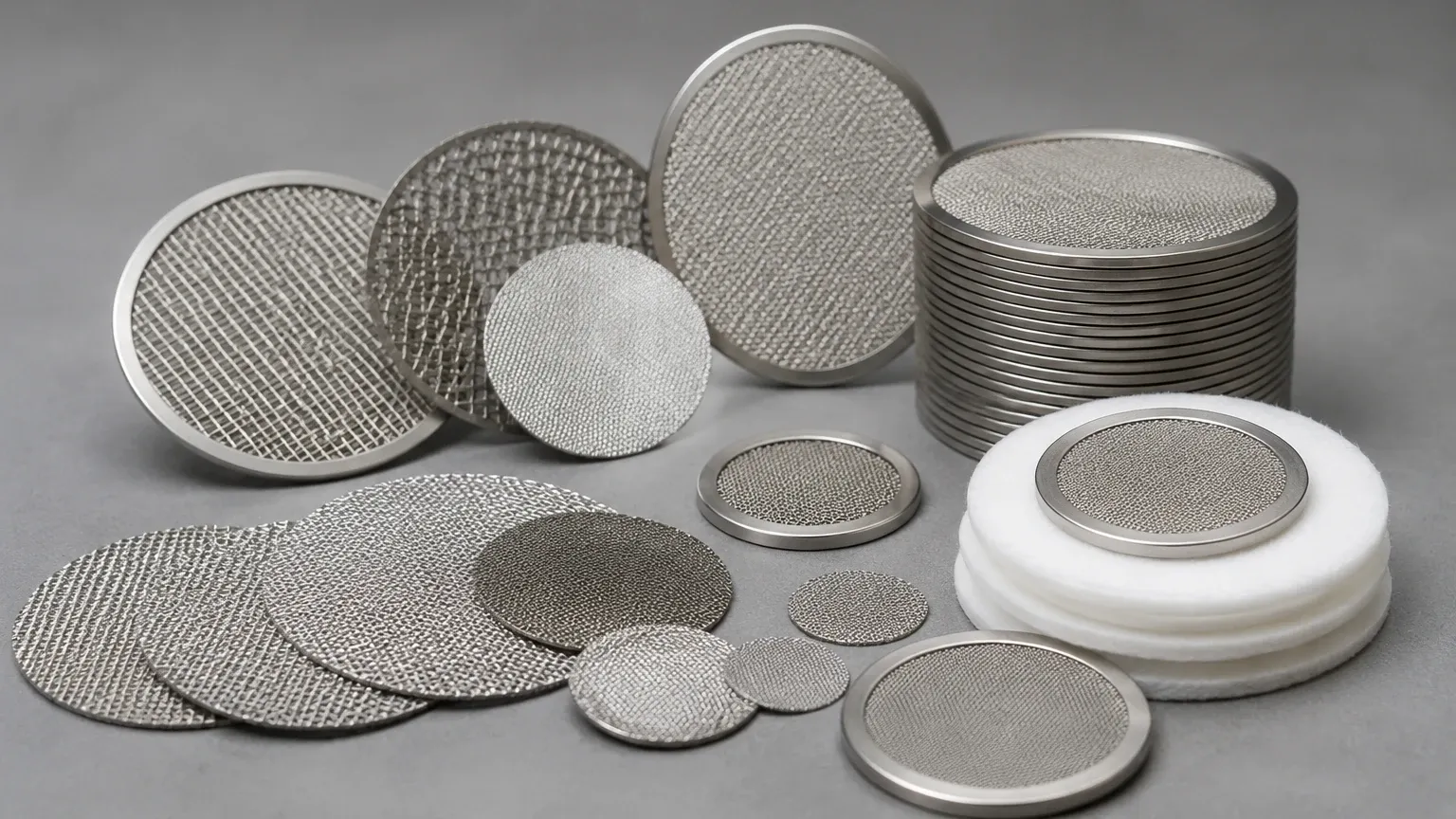
* Binding/Rimmed Edges: Enclosing the edges in a metal U-profile (usually aluminum or stainless steel). This provides a flat sealing surface and prevents the fraying of wire ends.
* Sintering: Bonding the wire contact points through heat and pressure, creating a rigid, non-deformable structure that is ideal for high-pressure environments.
Layer Configuration
Custom packs can be engineered with varying layers of mesh, expanded metal, or perforated plate to provide the necessary mechanical support. For example, a five-layer sintered disc might include a drainage layer, a support layer, a fine filter layer, and two protective outer layers. This configuration is often used in polymer filtration and hydraulic systems where durability is paramount.
Maintenance, Replacement Cycles, and Total Cost of Ownership
While the initial purchase price of a high-quality stainless steel Q disc is higher than that of disposable alternatives, the total cost of ownership (TCO) is often significantly lower due to their cleanability and longevity.
Cleaning Procedures
Stainless steel discs are designed to be cleaned and reused. Depending on the contaminant, cleaning methods include:
* Ultrasonic Cleaning: Using high-frequency sound waves to dislodge fine particles trapped within the mesh pores.
* Chemical Cleaning: Using solvents or acids to dissolve organic or inorganic buildup, provided the chemical is compatible with the disc material.
* Backwashing: Reversing the flow of the process fluid to push contaminants off the surface of the disc.
Determining Replacement Cycles
Even the most durable Q discs eventually reach the end of their service life. Replacement is usually dictated by a permanent increase in the base pressure drop that cannot be resolved through cleaning. Monitoring the pressure differential across the filter housing is the most effective way to establish a predictable maintenance schedule. In critical applications, discs are often replaced on a time-based schedule to prevent the risk of fatigue failure or media blinding.
Industry-Specific Applications
The versatility of Filter Discs & Packs allows them to be used across a broad spectrum of industries, each with its own set of regulatory and technical challenges.
* Chemical Processing: Used for catalyst recovery and the filtration of aggressive solvents where polymer filters would dissolve or degrade.
* Food and Beverage: Essential for ensuring the clarity of oils, syrups, and beverages while adhering to FDA and hygiene standards. Stainless steel's non-leaching properties make it ideal for these applications.
* Pharmaceuticals: Q discs are used in the production of active pharmaceutical ingredients (APIs), where high-purity filtration and the ability to sterilize components are mandatory.
* Hydraulics and Aerospace: High-pressure environments require discs that can withstand significant stress without shedding fibers or failing structurally, protecting sensitive valves and actuators.
Conclusion: Making Informed Procurement Decisions
For engineers and technical buyers, the selection of Q discs is a balance of performance, material science, and economic reality. By focusing on the technical specifications—such as alloy type, weave pattern, and structural reinforcement—organizations can ensure they are using the most efficient filtration media for their specific needs.
When evaluating a supplier for filter discs, it is essential to confirm their manufacturing capabilities, quality control processes, and ability to provide customized solutions. A reliable partner like Kaifil not only manufactures high-performance components but also provides the technical expertise necessary to optimize filtration systems for long-term reliability and cost-effectiveness. Whether you are replacing existing components or designing a new filtration system, understanding the engineering behind these discs is the first step toward achieving superior process results.
