


Filter Discs Quant
In industrial filtration, the term "quant"—short for quantitative analysis or quantity specifications—is fundamental to engineering successful separation processes. When selecting Filter Discs & Packs, engineers must move beyond qualitative descriptions and focus on precise numerical data. Whether determining the required quantity for a large-scale polymer extrusion line or calculating the quantitative performance metrics of a multi-layer mesh pack, technical accuracy is the primary driver of operational efficiency.
Industrial filtration components, particularly stainless steel filter discs, are designed to perform under high pressure, extreme temperatures, and corrosive environments. Understanding the quantitative variables involved in their design and application ensures that the chosen filtration solution meets the specific demands of the process while minimizing downtime and maintenance costs.
Quantitative Specifications in Filter Disc Design
The performance of a filter disc is dictated by its physical and geometric properties. When evaluating filter discs quant, engineers typically focus on three primary quantitative metrics: micron rating, mesh count, and wire diameter. These factors collectively determine the filtration accuracy and the structural integrity of the component.
Micron Rating and Filtration Accuracy
The micron rating is perhaps the most critical quantitative value. It defines the size of the particles that the filter is capable of intercepting.
* Absolute Micron Rating: This refers to the diameter of the largest hard spherical particle that will pass through the filter under specified test conditions. It represents the pore size of the mesh.
* Nominal Micron Rating: This is an indicative value based on the percentage of particles (usually 60% to 90%) of a certain size that the filter can retain.
For high-precision applications, such as pharmaceutical processing or fine chemical filtration, relying on absolute micron ratings is essential to prevent downstream contamination.
Mesh Count and Open Area
Mesh count refers to the number of openings per linear inch. A higher mesh count generally indicates a finer filtration capability but can also lead to a higher pressure drop. The quantitative relationship between wire diameter and mesh count determines the "open area" percentage.
$$Percentage of Open Area = (O / (O + D))^2 \times 100$$
Where:
* O = Size of the opening
* D = Wire diameter
A higher open area percentage allows for greater flow rates but may compromise the mechanical strength of the disc. Balancing these quantitative factors is a core part of the engineering selection process.
Material Selection and Chemical Compatibility
The durability of Filter Discs & Packs is largely dependent on the quantitative properties of the alloys used in their construction. Stainless steel is the industry standard due to its resistance to oxidation and corrosion.
Stainless Steel 304 vs. 316L
* Grade 304: Contains approximately 18% chromium and 8% nickel. It provides excellent corrosion resistance for standard industrial applications, including food and beverage processing.
* Grade 316L: Contains 16-18% chromium, 10-14% nickel, and 2-3% molybdenum. The addition of molybdenum significantly enhances its resistance to chlorides and acidic environments. The "L" denotes low carbon content, which improves weldability and prevents sensitization during the spot-welding process used in multi-layer packs.
Quantitative analysis of the process fluid—specifically its pH level, chloride concentration, and operating temperature—is required to determine which material grade will provide the necessary service life. For specialized applications, other alloys like Monel, Inconel, or Hastelloy may be specified based on their quantitative resistance to specific chemical stressors.
Multi-Layer Construction and Structural Integrity
Single-layer filter discs are often insufficient for high-pressure applications. In these scenarios, multi-layer filter packs are utilized. The quantitative arrangement of these layers is engineered to provide a balance of fine filtration, drainage support, and mechanical strength.
Layer Configuration
A typical multi-layer pack might consist of:
1. Filtration Layer: The fine mesh that determines the micron rating.
2. Support Layer: A coarser mesh that prevents the filtration layer from deforming under pressure.
3. Drainage Layer: A very coarse mesh that facilitates the flow of the filtrate away from the filtration zone.
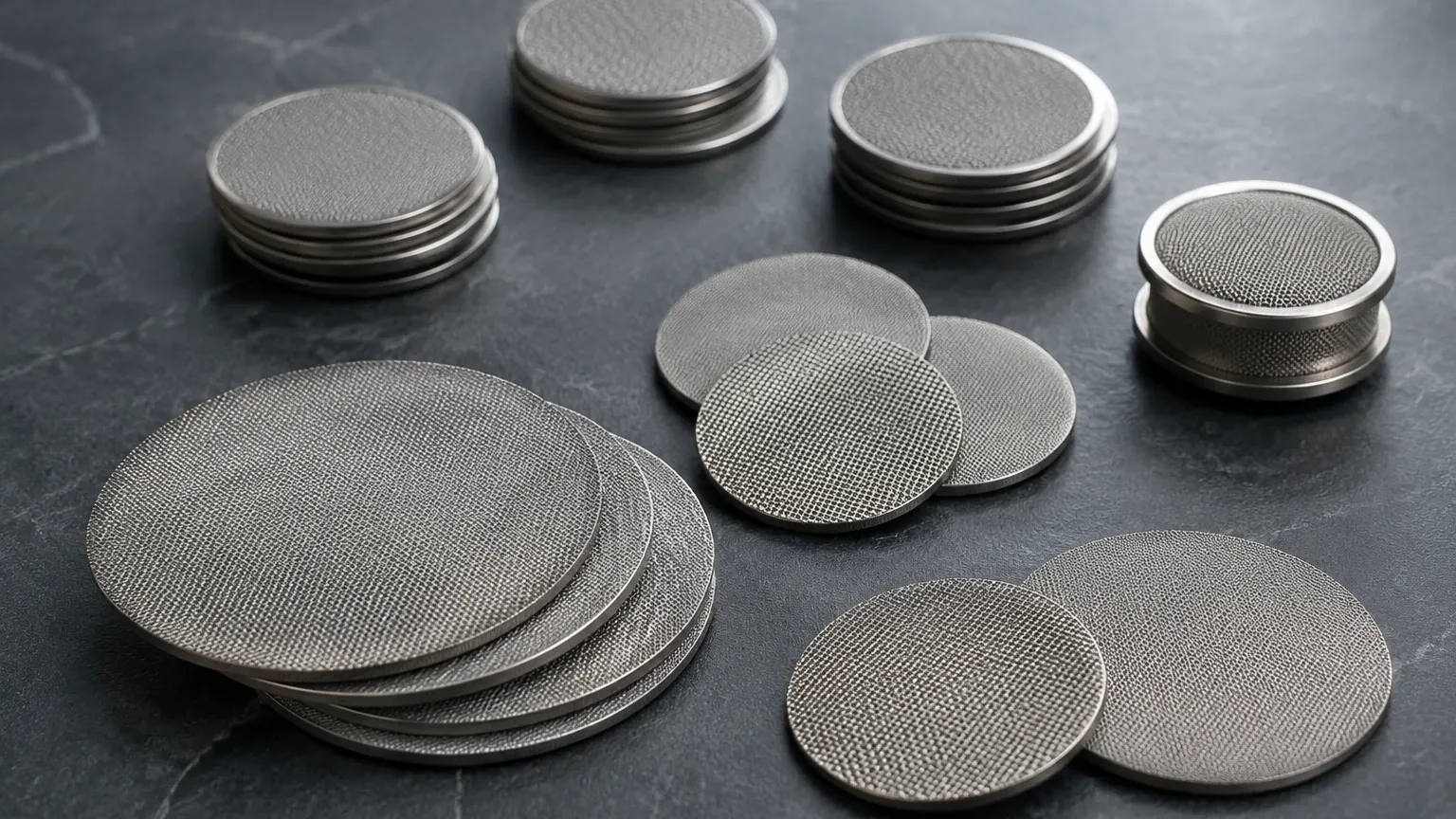
These layers are often bound together using spot welding or by enclosing them within a metal rim (usually aluminum, stainless steel, or copper). The rim provides a quantitative benefit by ensuring a leak-proof seal within the filter housing and preventing the edges of the mesh from fraying.
Pressure Drop and Dirt-Holding Capacity
The quantitative performance of a filter disc is also measured by its pressure drop ($ΔP$) and dirt-holding capacity. As particles accumulate on the surface or within the depth of the mesh, the resistance to flow increases.
Engineers must calculate the maximum allowable pressure drop before the filter requires cleaning or replacement. A disc with a high dirt-holding capacity will have a longer service interval, reducing the total cost of ownership (TCO). This is particularly important in continuous processes like polymer melt filtration, where stopping the line for a filter change is extremely costly.
Quantitative Factors in Procurement and Inventory Management
When managing the supply chain for industrial components, "filter discs quant" refers to the quantitative planning of inventory levels. Because filter discs are often considered consumables in high-intensity processes, maintaining an optimized stock level is vital.
Determining Order Quantities
Several factors influence the quantitative procurement strategy:
* Consumption Rate: How many discs are used per month based on the average replacement cycle?
* Lead Times: The time required for manufacturing and shipping, especially for customized OEM designs.
* Batch Consistency: Ordering in larger quantities can ensure that all discs in a production run share identical quantitative characteristics, which is critical for process validation in regulated industries like pharmaceuticals.
By analyzing these quantitative data points, purchasing teams can avoid stockouts while minimizing the capital tied up in excess inventory.
Customization and OEM Engineering
Standard off-the-shelf filter discs rarely meet the exact needs of specialized industrial machinery. Customization allows for the adjustment of quantitative parameters to fit specific equipment.
Kaifil specializes in providing customized filtration solutions where every dimension and specification is tailored to the application. This includes:
* Specific Diameters: Ranging from a few millimeters to several hundred millimeters.
* Geometric Shapes: Circular, rectangular, oval, or kidney-shaped discs to fit unique housings.
* Variable Layering: Custom combinations of mesh types to achieve specific flow characteristics.
When requesting a quote for customized Filter Discs & Packs, providing precise quantitative data—including technical drawings, material certifications, and required micron ratings—is essential for an accurate engineering assessment.
Performance Evaluation and Quality Control
To ensure that filter discs meet the required quantitative standards, rigorous quality control (QC) measures are implemented during manufacturing. These tests validate that the product will perform as expected in the field.
Bubble Point Testing
One of the most common quantitative tests for filter mesh is the bubble point test. This test measures the pressure required to force air through a liquid-saturated filter. The resulting pressure value is quantitatively linked to the pore size, allowing manufacturers to verify the absolute micron rating of the disc.
Dimensional Inspection
Using precision calipers or automated optical inspection (AOI) systems, the outer diameter, inner diameter (for ring-shaped discs), and thickness of the filter packs are measured. Even a small quantitative deviation in size can lead to bypass—where unfiltered fluid escapes around the edges of the disc—rendering the filtration process ineffective.
Material Verification
Quantitative material analysis, such as Positive Material Identification (PMI) using X-ray fluorescence (XRF), ensures that the stainless steel grade matches the specification. This prevents the accidental use of lower-grade alloys that might fail prematurely in corrosive environments.
Application-Specific Quantitative Requirements
Different industries prioritize different quantitative metrics. Understanding these priorities helps in selecting the right filter disc configuration.
Polymer and Plastic Extrusion
In polymer melt filtration, the primary concern is the ability of the filter pack to withstand extreme pressures (often exceeding 300 bar) and temperatures. The quantitative focus here is on the tensile strength of the mesh and the integrity of the spot welds. Multi-layer packs with heavy-duty support meshes are standard.
Food and Beverage
For food-grade applications, the quantitative focus shifts to surface finish and cleanability. The mesh must be free of contaminants and capable of being sanitized. Stainless steel 304 or 316L is mandatory to meet hygiene standards, and the discs must be manufactured to withstand frequent Clean-in-Place (CIP) cycles.
Hydraulic and Lubrication Systems
In hydraulic systems, protecting sensitive valves and pumps from particulate wear is the goal. The quantitative metric of importance is the Beta Ratio (β), which describes the filtration efficiency for specific particle sizes. A high Beta Ratio indicates a highly efficient filter that will extend the life of the hydraulic components.
Conclusion: The Importance of Technical Precision
Selecting the right Filter Discs & Packs is a task that requires a deep dive into the quantitative realities of the industrial process. From the micron rating and mesh count to the chemical composition of the alloy and the structural design of the pack, every quantitative detail impacts the final performance.
By focusing on "filter discs quant"—the quantitative specifications and quantities required for operation—engineers and purchasing professionals can ensure they are investing in filtration solutions that provide reliability, durability, and cost-effectiveness. Working with an experienced manufacturer like Kaifil allows for the development of customized components that meet these rigorous technical demands, ensuring that your filtration system operates at peak efficiency.
