


Disc Filter Ring
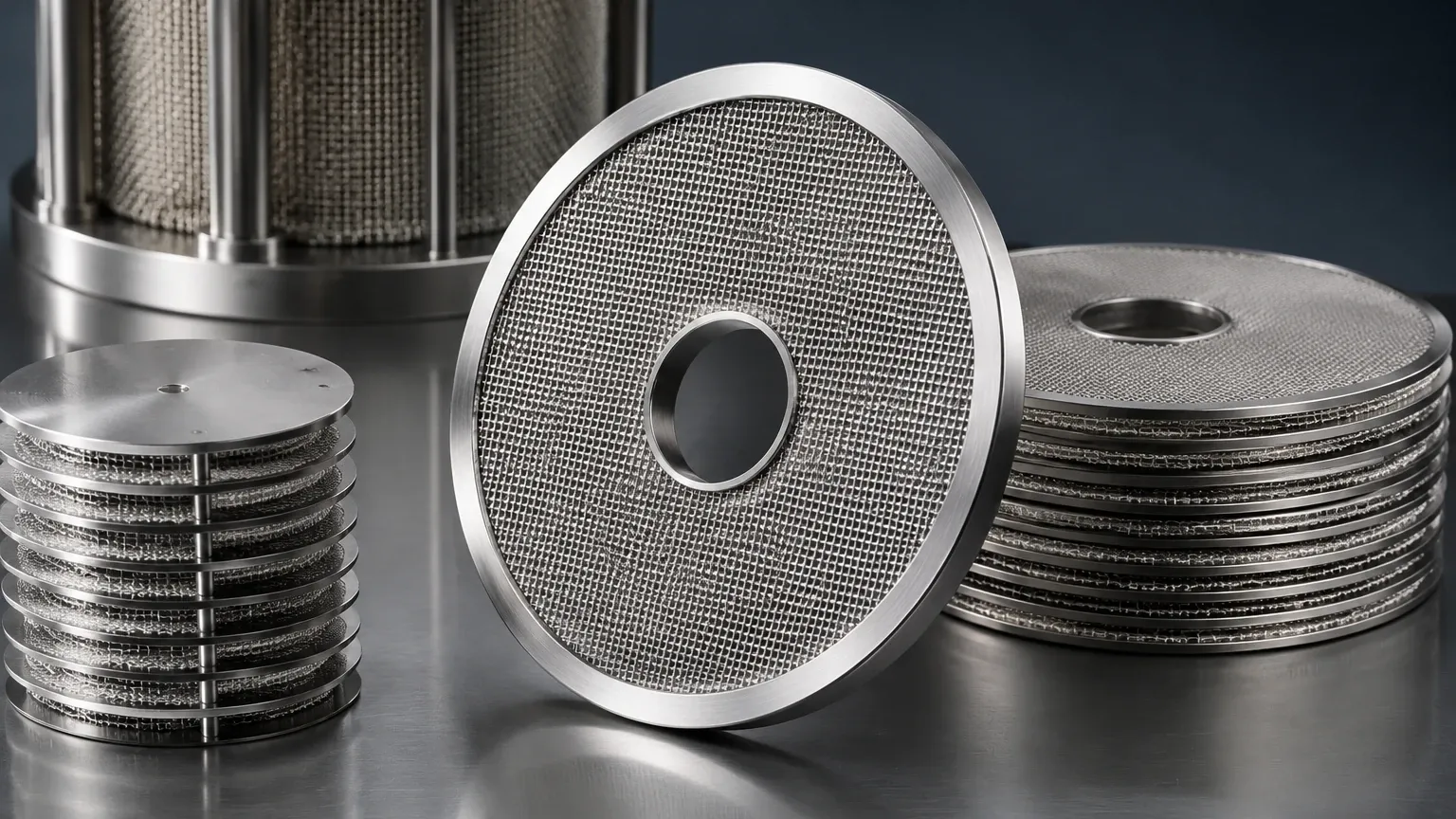
In the landscape of industrial filtration, precision and structural integrity are the primary benchmarks for performance. The disc filter ring, a specialized component within the broader category of Filter Discs & Packs, serves as a critical element in systems requiring high-pressure resistance and fine particle retention. Whether used in polymer extrusion, chemical processing, or hydraulic systems, the design and material composition of these rings determine the efficiency of the entire filtration process.
For engineers and procurement professionals, selecting the correct disc filter ring involves more than matching dimensions. It requires an understanding of fluid dynamics, material compatibility, and the mechanical stresses inherent in industrial environments. This guide examines the technical specifications, construction methods, and selection criteria necessary to optimize filtration performance.
Engineering Fundamentals of the Disc Filter Ring
The fundamental purpose of a disc filter ring is to provide a localized, high-precision filtration barrier within a pressurized flow. Unlike standard mesh sheets, these components are engineered for specific housing geometries and are often reinforced to prevent bypass and mechanical failure.
Material Selection and Alloy Properties
The choice of material is the first decision point in the engineering process. Stainless steel is the industry standard due to its mechanical strength and resistance to oxidation.
* Grade 304 Stainless Steel: Suitable for general industrial applications where basic corrosion resistance is required. It is cost-effective for water treatment and non-corrosive chemical filtering.
* Grade 316/316L Stainless Steel: The preferred choice for pharmaceutical, food and beverage, and marine applications. The addition of molybdenum enhances resistance to pitting and crevice corrosion, particularly in chloride-rich environments. The "L" (low carbon) variant is essential when welding is required to prevent carbide precipitation.
* Specialized Alloys: In extreme environments involving highly acidic or alkaline media, alloys such as Hastelloy, Monel, or Inconel may be utilized. These materials maintain their structural integrity at temperatures and pH levels that would degrade standard stainless steel.
Weave Types and Filtration Characteristics
The filtration medium within the disc filter ring is typically a woven wire cloth. The weave pattern dictates the micron rating and the flow capacity:
* Plain Weave: The most common pattern where wires cross over and under each other. It provides a consistent aperture size but is generally limited to coarser filtration tasks.
* Dutch Weave (Plain and Twilled): This pattern uses a larger diameter warp wire and a smaller diameter weft wire. This creates a dense, strong mesh with very fine openings, making it ideal for high-pressure applications where fine particle retention (down to 5-10 microns) is necessary.
* Five-Heddle Weave: Offers a smooth surface on one side, which facilitates easy cake discharge in automated filtration systems.
Design and Construction of Filter Discs & Packs
A disc filter ring is rarely just a piece of cut mesh. To meet industrial standards, the construction must address the risks of edge fraying, bypass, and structural collapse under differential pressure.
Rimming and Edging Techniques
The "ring" aspect of the component often refers to the metallic border that encapsulates the edge of the mesh. This rimming is crucial for several reasons:
1. Sealing: The rim provides a flat, solid surface that can be compressed against a gasket or the filter housing, ensuring that 100% of the fluid passes through the mesh rather than around it.
2. Safety: It prevents loose wires from breaking off and contaminating the downstream flow—a critical requirement in food and pharmaceutical production.
3. Durability: The rim adds rigidity, allowing the disc to be handled and cleaned without deforming the precision weave.
Common rim materials include aluminum, stainless steel, and occasionally copper or brass, depending on the electrochemical compatibility with the housing.
Multi-Layer Configurations
In many demanding applications, a single layer of mesh is insufficient. Engineers often specify multi-layer Filter Discs & Packs to achieve a balance between fine filtration and mechanical support. A typical three-layer pack might consist of:
* The Filtration Layer: A fine Dutch weave mesh that determines the micron rating.
* The Support Layer: A coarser, high-strength mesh that prevents the filtration layer from deforming under pressure.
* The Drainage Layer: A medium mesh that ensures even distribution of the fluid across the entire surface area of the disc.
These layers can be spot-welded together or sintered. Sintering involves bonding the layers at their contact points through a heat-treatment process, creating a monolithic structure that is exceptionally robust and easy to clean.
Key Performance Metrics for Industrial Evaluation
When evaluating a disc filter ring for a specific application, engineers must look beyond the physical dimensions and focus on performance data.
Filtration Accuracy (Micron Rating)
Filtration accuracy is defined as either nominal or absolute. A nominal rating indicates the ability of the filter to retain a majority of particles of a certain size, while an absolute rating guarantees that no particles larger than the specified micron size will pass through. For precision systems like hydraulic valves or fuel injectors, absolute ratings are mandatory.
Pressure Drop (ΔP)
The pressure drop is the difference in pressure between the upstream and downstream sides of the filter. A high initial pressure drop indicates that the mesh is too restrictive for the flow rate, which can lead to pump strain and increased energy consumption. The goal is to select a disc filter ring that provides the required micron retention with the lowest possible ΔP.
Dirt-Holding Capacity
This refers to the amount of contaminant the filter can collect before the pressure drop reaches a critical limit, necessitating a cleaning or replacement cycle. Multi-layer packs generally offer superior dirt-holding capacity compared to single-layer discs because they provide a depth-filtration effect.
Applications Across Demanding Industries
The versatility of the disc filter ring makes it a staple in various sectors where fluid purity is non-negotiable.
Polymer and Plastic Extrusion
In the production of films, fibers, and resins, molten polymer must be filtered to remove gels and un-melted particles. The disc filter ring must withstand temperatures exceeding 300°C and pressures up to 300 bar. Stainless steel sintered packs are frequently used here due to their ability to maintain pore geometry under extreme thermal and mechanical stress.
Chemical and Petrochemical Processing
Filtration in chemical plants often involves aggressive solvents and high-purity catalysts. The chemical compatibility of the disc filter ring is paramount. By using 316L stainless steel or specialized alloys, facilities can prevent corrosion-induced failures that could lead to costly downtime or environmental hazards.
Pharmaceutical and Biotechnology
In these industries, cleanability and sterilization are the primary concerns. Disc filter rings used in pharmaceutical manufacturing must be compatible with CIP (Clean-in-Place) and SIP (Sterilize-in-Place) protocols. The smooth surface of sintered mesh discs prevents bacterial growth and allows for thorough validation of the cleaning process.
Selection Criteria: What Engineers Should Confirm
To ensure the successful integration of a disc filter ring into an industrial system, the following technical details should be confirmed before procurement:
1. Operating Environment: What is the maximum operating temperature and pressure? Are there pressure spikes or flow surges that could cause mechanical fatigue?
2. Medium Characteristics: What is the viscosity of the fluid? What is the chemical composition? Are there abrasive particles present that could cause wire erosion?
3. Contaminant Profile: What is the expected particle size distribution? Is the contaminant deformable (like gels) or hard (like metal shavings)?
4. Housing Compatibility: What are the exact tolerances for the outer diameter (OD) and inner diameter (ID)? What is the required thickness of the rim to ensure a proper seal?
5. Regulatory Compliance: Does the application require FDA-compliant materials? Is there a need for material traceability (MTRs) for quality assurance?
Maintenance and Total Cost of Ownership
While the initial purchase price of a disc filter ring is an important factor, the total cost of ownership (TCO) is a more accurate measure of value. TCO includes the cost of energy (due to pressure drop), the frequency of replacement, and the labor costs associated with maintenance.
Cleaning vs. Replacement
Stainless steel disc filter rings are often cleanable. Techniques such as ultrasonic cleaning, backflushing, or chemical bath immersion can restore the mesh to near-original performance. However, repeated cleaning cycles can eventually lead to work-hardening of the wires or subtle changes in pore size. Engineers should establish a maximum number of cleaning cycles based on the criticality of the filtration task.
Signs of Failure
Regular inspection should look for:
* Media Migration: Small pieces of wire breaking off.
* Blinding: Permanent clogging of the mesh that cannot be cleaned.
* Deformation: Bowing or cupping of the disc, indicating that the differential pressure has exceeded the structural limits of the support layers.
Custom Solutions for Specialized Requirements
Every industrial process has unique variables, and off-the-shelf components may not always provide the optimal balance of flow and retention. Custom manufacturing of Filter Discs & Packs allows for precise control over the number of layers, the specific mesh combinations, and the rimming materials used.
By collaborating with a manufacturer that understands the nuances of wire mesh engineering, purchasing teams can secure components that not only meet the required micron rating but also extend the service life of the entire filtration system. Whether it is a single disc filter ring for a pilot plant or high-volume production for an OEM application, the focus remains on delivering reliable, repeatable, and cost-effective filtration performance.
