


Disc Filter System
In the landscape of industrial fluid management, the efficiency of a disc filter system is often the determining factor in the longevity of downstream equipment and the purity of the final product. Unlike basic filtration setups, an industrial disc filter system utilizes a series of stacked or individual metal mesh components to achieve high-precision separation in demanding environments. For engineers and procurement specialists, understanding the technical nuances of these systems—from material metallurgy to weave patterns—is essential for optimizing process uptime and reducing the total cost of ownership.
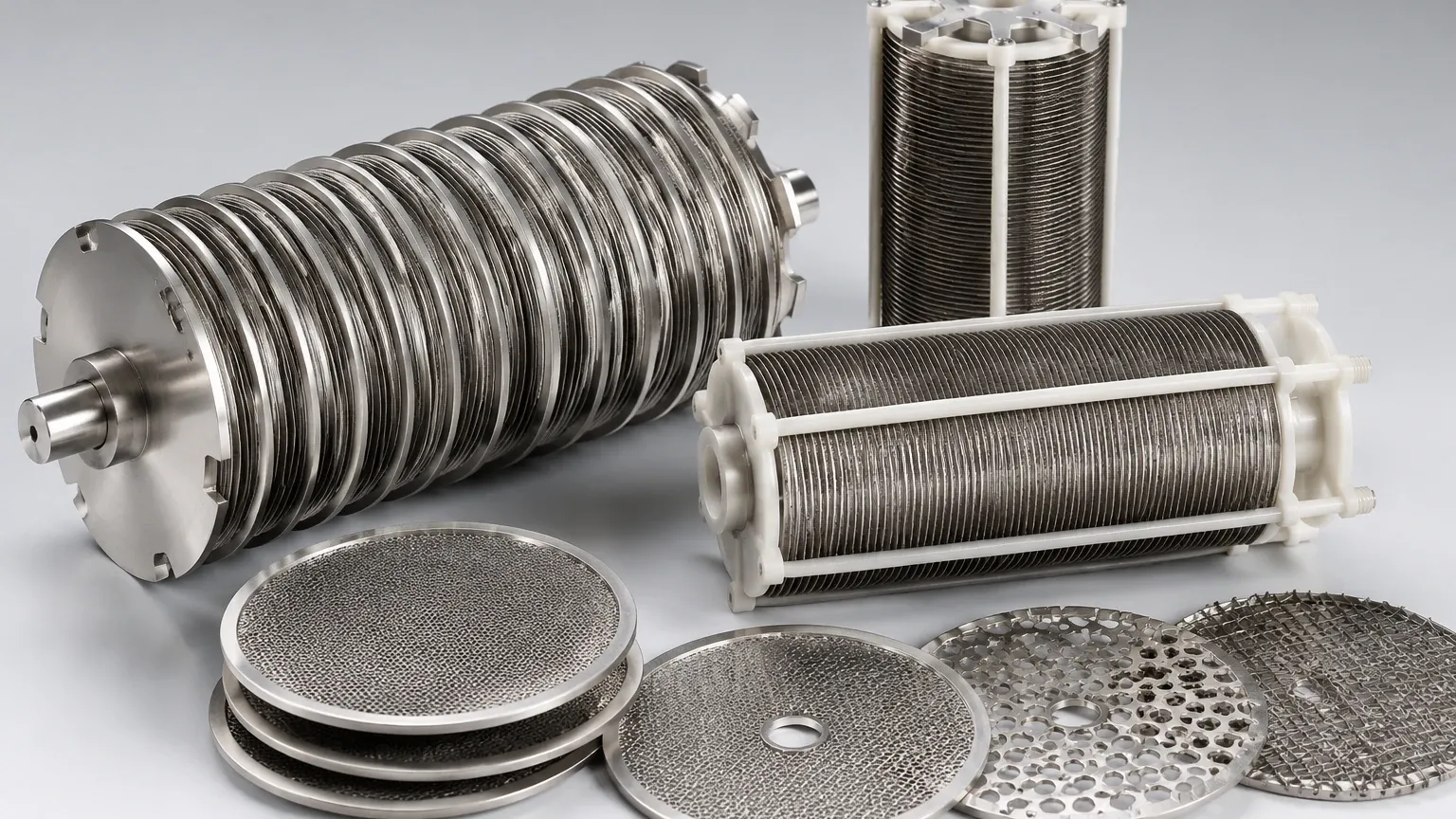
At the core of these systems are Filter Discs & Packs, which serve as the primary barrier against contaminants. These components are engineered to withstand high differential pressures, extreme temperatures, and corrosive chemical interactions that would compromise standard polymer-based filters.
The Engineering Behind a Disc Filter System
A professional-grade disc filter system is designed around the principles of surface and depth filtration. In industrial applications, particularly those involving high-viscosity fluids or high-velocity gas streams, the mechanical integrity of the filter medium is paramount.
Most industrial systems utilize stainless steel wire mesh as the primary filtration medium. This choice is driven by the material’s ability to maintain its pore structure under mechanical stress. When multiple layers of mesh are combined, they form a "pack." These packs can be spot-welded or bound with an aluminum or stainless steel rim to prevent bypass and ensure a secure fit within the filter housing. The configuration of the disc filter system determines its capacity to handle solids loading; a well-designed system balances the need for fine filtration with the requirement for a low initial pressure drop.
Key Components: Filter Discs & Packs
The performance of any disc filter system is inherently tied to the quality of its internal components. Filter Discs & Packs are manufactured in various configurations to meet specific industrial standards:
* Single-Layer Discs: Typically used for simple straining applications or as a support layer for finer media. These are cost-effective but have limited depth for particle entrapment.
* Multi-Layer Mesh Packs: These consist of several layers of wire mesh with varying micron ratings. The outer layers often serve as coarse pre-filters and structural supports, while the inner layers provide the final precision filtration. This graduated density increases the dirt-holding capacity of the system.
* Sintered Mesh Discs: For the most demanding high-pressure environments, layers of mesh are sintered together—a process of heat and pressure that fuses the wires at their contact points. This creates a rigid, non-deformable filter element that is ideal for high-viscosity polymer filtration.
Selecting the right edge treatment is also critical. Rimmed packs (using aluminum, copper, or stainless steel) provide a superior seal against the housing walls, preventing the "leakage" of unfiltered fluid that can occur with raw-edged discs.
Material Selection and Metallurgy
Material compatibility is a primary engineering consideration when specifying a disc filter system. The choice of alloy affects not only the corrosion resistance but also the mechanical fatigue life of the filter.
1. Stainless Steel 304: The standard choice for general industrial applications, offering good corrosion resistance and mechanical strength at a competitive price point.
2. Stainless Steel 316L: Containing molybdenum, 316L provides superior resistance to chlorides and acids. It is the preferred material for pharmaceutical, food and beverage, and marine-grade chemical processing.
3. Specialty Alloys: In cases of extreme temperature or highly aggressive chemical environments, alloys like Hastelloy or Monel may be used to ensure the disc filter system does not fail prematurely due to stress corrosion cracking or oxidation.
Filtration Accuracy and Weave Patterns
The "micron rating" of a disc filter system is determined by the weave of the wire mesh. Engineers must choose between nominal and absolute filtration ratings based on the sensitivity of their process.
* Plain Weave: A simple over-under pattern that provides high flow rates and is easy to clean. It is generally used for coarser filtration (above 50 microns).
* Dutch Weave: This pattern uses heavier warp wires and finer weft wires driven closely together. This creates a tortuous path for the fluid, allowing for much finer filtration (down to 1–5 microns) while maintaining high mechanical strength.
* Twill Weave: Allows for the use of heavier wires in a given mesh count, providing increased durability for high-pressure cycles.
When evaluating a disc filter system, it is vital to confirm that the mesh count and wire diameter are consistent across the entire surface of the disc. Variations in weave density can lead to uneven flow distribution, causing localized clogging and premature pressure spikes.
Applications in Demanding Industrial Sectors
The versatility of the disc filter system makes it a staple in several critical industries. Each application presents unique challenges that dictate the design of the Filter Discs & Packs.
Polymer and Plastic Extrusion
In the production of films, fibers, and resins, a disc filter system (often referred to as a screen changer) is used to remove gels and carbonized particles from the molten polymer. These systems must operate at temperatures exceeding 300°C and pressures up to 300 bar. Multi-layer sintered packs are frequently used here to prevent media migration under the intense flow of viscous melt.
Chemical and Petrochemical Processing
Filtration in chemical plants often involves aggressive solvents and high-temperature catalysts. A stainless steel disc filter system provides the necessary chemical inertness to ensure that the filter media does not leach contaminants into the process stream. These systems are often used for catalyst recovery or the removal of trace impurities from refined products.
Hydraulic and Lubrication Systems
Precision hydraulic components, such as servo valves, are highly sensitive to particulate contamination. Disc filters are integrated into these systems to provide high-pressure protection. Because these systems often face rapid pressure fluctuations, the mechanical fatigue resistance of the metal mesh is a critical performance metric.
Evaluating Total Cost of Ownership (TCO)
When purchasing components for a disc filter system, the initial purchase price is only one part of the equation. Technical professionals should evaluate the Total Cost of Ownership, which includes:
* Service Life: How many cycles can the filter withstand before the pressure drop becomes unacceptable?
* Cleanability: Unlike disposable polymer filters, stainless steel Filter Discs & Packs can often be cleaned and reused. Methods such as ultrasonic cleaning, chemical baths, or burn-off ovens can restore the media, significantly reducing long-term waste and replacement costs.
* Process Uptime: High-quality discs with precise tolerances reduce the risk of bypass or mechanical failure, which can lead to costly unscheduled downtime.
* Energy Consumption: A disc filter system designed with an optimized weave pattern will have a lower clean pressure drop, requiring less pump energy to maintain flow rates.
Selection Criteria for Engineers
Before finalizing the specifications for a disc filter system, engineers should confirm several key data points with their manufacturer:
1. Operating Environment: What are the maximum and minimum operating temperatures and pressures? Is the system subject to pressure surges?
2. Fluid Characteristics: What is the viscosity of the fluid at operating temperature? What is the chemical composition (specifically pH levels and chloride concentration)?
3. Contaminant Profile: What is the expected particle size distribution? Are the contaminants hard/abrasive or soft/deformable?
4. Housing Compatibility: Are the dimensions (OD/ID) and thickness of the discs compatible with existing hardware? Are specific tolerances required for automated screen changers?
The Role of Customization in Filtration Efficiency
Off-the-shelf solutions rarely meet the exact needs of specialized industrial processes. A custom-engineered disc filter system allows for the optimization of every variable, from the specific alloy used in the mesh to the exact number of layers in a spot-welded pack.
Working with a manufacturer that understands the interplay between wire diameter, mesh opening, and structural support ensures that the filtration solution is tailored to the specific flow dynamics of the application. For OEM applications, customization ensures that the filter components integrate seamlessly into larger machinery, maintaining the manufacturer’s performance guarantees.
Conclusion
A robust disc filter system is a critical investment in process reliability. By focusing on high-quality materials, precise weave patterns, and durable construction of Filter Discs & Packs, industrial facilities can achieve superior filtration performance while minimizing maintenance overhead. Whether for polymer extrusion, chemical processing, or hydraulic protection, the right disc filter system provides the technical foundation for efficient, contaminant-free operations.
