


Disc Filter Size
In industrial filtration, the precision of a component’s dimensions is as critical as the material from which it is manufactured. For engineers and procurement specialists, determining the correct disc filter size is not merely a matter of fitting a part into a housing; it is a fundamental engineering decision that impacts flow rates, pressure differentials, and the overall longevity of the filtration system. Whether used in polymer melt filtration, hydraulic systems, or chemical processing, the physical dimensions of Filter Discs & Packs dictate the operational boundaries of the equipment they protect.
Selecting the appropriate disc filter size requires a comprehensive understanding of how geometric variables interact with fluid dynamics and mechanical stresses. This guide examines the technical parameters of sizing, the relationship between surface area and performance, and the engineering considerations necessary for optimizing industrial filtration processes.
Defining the Dimensional Parameters of Filter Discs
When discussing disc filter size, the conversation typically revolves around three primary dimensions: diameter, thickness, and the specific mesh configuration. Each of these factors contributes to the component's ability to handle specific volumes and pressures.
Outer and Inner Diameter (OD/ID)
Most industrial filter discs are circular, though rectangular or oval shapes are common in specific extruder applications. The outer diameter (OD) must be calculated to provide a secure fit within the filter housing or recessed plate. A tolerance that is too loose can lead to bypass, where unfiltered fluid escapes around the edges of the disc. Conversely, an oversized disc may buckle or fail to seat properly, compromising the seal. For hollow or annular discs, the inner diameter (ID) is equally critical, especially in systems where the disc is mounted on a central mandrel or perforated tube.
Thickness and Layering
The thickness of a filter disc is often a function of the number of layers used in its construction. Single-layer discs are typically used for light-duty straining, whereas multi-layer packs are engineered for high-pressure environments. In multi-layer configurations, the overall thickness increases as drainage layers and support meshes are added to protect the fine filtration layer. Engineers must ensure that the total stack height of the Filter Discs & Packs remains within the mechanical limits of the compression hardware used in the assembly.
Mesh Count and Wire Diameter
While not a physical "dimension" in the sense of length or width, the disc filter size is inextricably linked to the mesh count. The wire diameter and the spacing between wires determine the open area of the disc. A larger disc with a very dense mesh may have the same effective flow capacity as a smaller disc with a more open mesh. Therefore, sizing must always be evaluated in conjunction with the required micron rating.
The Relationship Between Size and Flow Dynamics
The primary reason for increasing or decreasing a disc filter size is to manage the flow of the medium. In any filtration system, the goal is to achieve the required level of purity with the lowest possible resistance.
Effective Filtration Area (EFA)
The Effective Filtration Area is the total surface area of the mesh that is actually exposed to the fluid flow. It is important to note that the physical size of the disc is always larger than the EFA because a portion of the disc’s perimeter is usually consumed by the sealing surface or the rim of the filter holder. When calculating the required disc filter size, engineers must use the EFA to determine if the component can handle the system’s flow velocity without exceeding the maximum allowable pressure drop ($ΔP$).
Managing Pressure Drop
As fluid passes through a filter, it loses energy, resulting in a drop in pressure. This pressure drop is inversely proportional to the filtration area. By increasing the disc filter size, you increase the available surface area, which slows down the local fluid velocity (flux) through the mesh. Lowering the flux reduces the initial pressure drop and significantly extends the time it takes for the filter to reach its terminal pressure drop (the point at which it must be cleaned or replaced).
Engineering Considerations for Multi-Layer Packs
In many demanding B2B applications, such as the production of synthetic fibers or resins, a single layer of wire mesh is insufficient. This is where multi-layer Filter Discs & Packs become essential. Sizing these packs involves more than just stacking layers; it requires a strategic approach to mechanical reinforcement.
1. Support Layers: These are coarse meshes placed on the downstream side of the fine filter layer. They provide the structural rigidity necessary to prevent the fine mesh from deforming under high pressure.
2. Drainage Layers: Placed on the upstream side, these layers help distribute the fluid evenly across the entire surface of the filter disc, ensuring that the entire disc filter size is utilized effectively rather than just the center.
3. Binding and Edging: For multi-layer packs, the edges are often bound with a metal rim (aluminum, stainless steel, or copper). This binding adds a few millimeters to the total diameter and thickness, which must be accounted for during the initial design phase to ensure compatibility with the housing.
Material Selection and Its Impact on Sizing
The material used for the filter disc influences how the size is maintained under operational stress. Kaifil specializes in stainless steel solutions, primarily using 304 and 316L grades. These materials are chosen for their high tensile strength and resistance to thermal expansion.
In high-temperature applications, such as steam filtration or hot oil processing, the disc filter size will change slightly due to thermal expansion. Engineers must calculate the expansion coefficient of the stainless steel to ensure that the disc does not expand to the point of warping or contract to the point of leaking when the system reaches its operating temperature. Stainless steel’s ability to maintain dimensional stability under varying temperatures makes it the preferred choice over synthetic or lower-grade metal alternatives.
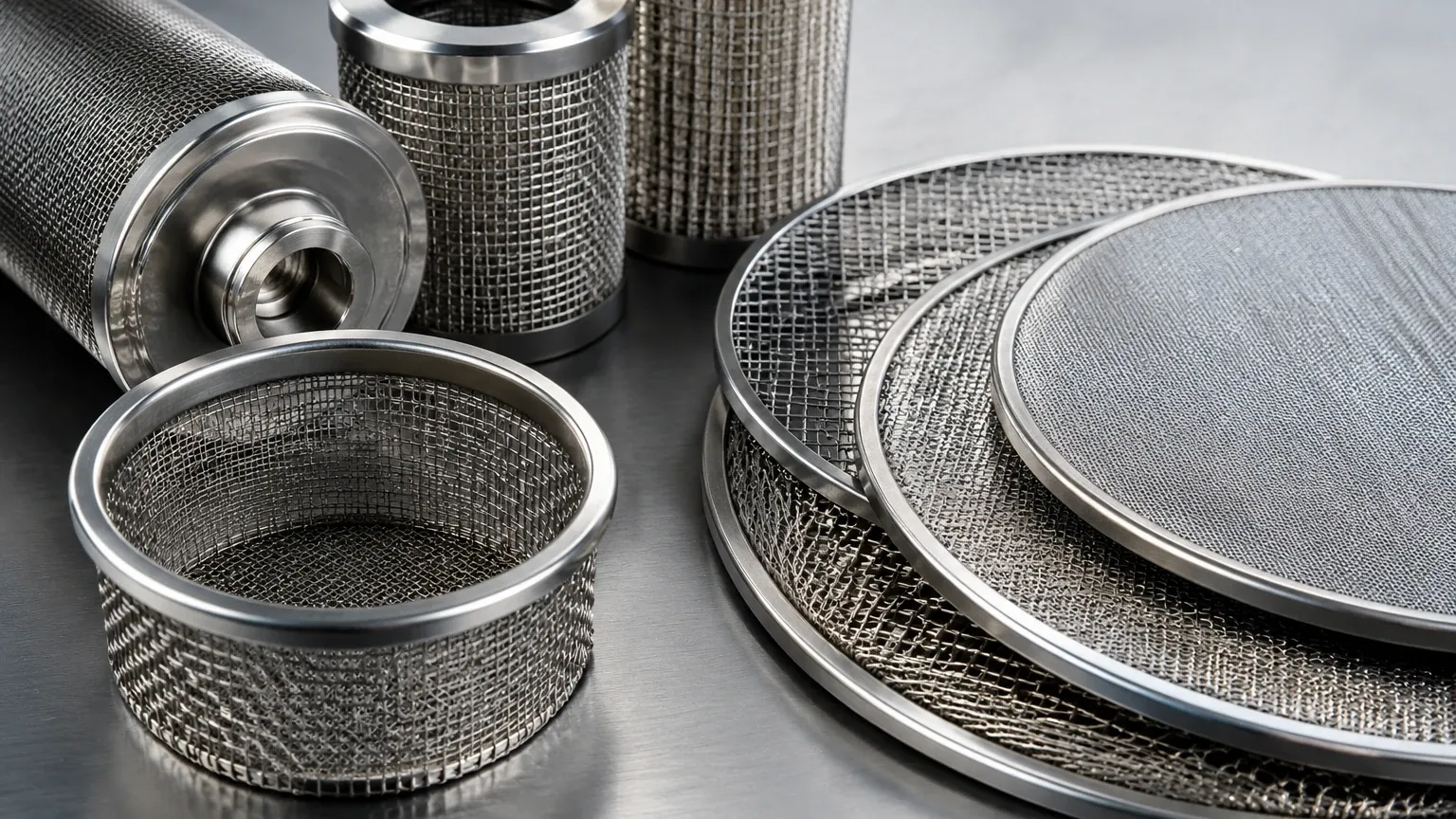
Customization: Beyond Standard Disc Filter Sizes
While there are industry-standard sizes for many extruder screens and hydraulic filters, many specialized industrial processes require custom dimensions. OEM manufacturers like Kaifil provide the flexibility to produce Filter Discs & Packs tailored to specific engineering drawings.
Prototyping and Precision Cutting
Using advanced CNC punching and laser cutting technologies, manufacturers can produce discs with tolerances as tight as +/- 0.05mm. This precision is vital for applications in the pharmaceutical and food and beverage industries, where even a minor gap in the filtration assembly can lead to batch contamination. When requesting a custom disc filter size, it is helpful to provide the following specifications:
* Target Micron Rating: To determine the appropriate mesh weave.
* Operating Pressure: To determine if reinforcement layers are needed.
* Fluid Viscosity: To calculate the necessary surface area for flow.
* Housing Dimensions: To ensure a perfect mechanical fit.
Common Risks of Incorrect Sizing
Selecting the wrong disc filter size can lead to several systemic failures that increase the total cost of ownership for industrial equipment.
* Premature Blinding: If the disc filter size is too small for the particulate load, the mesh will clog (blind) rapidly. This leads to frequent downtime for filter changes and increased labor costs.
* Media Migration: If a disc is undersized and lacks proper support, the pressure may cause the wires to shift or break, allowing metal fragments or unfiltered contaminants to migrate downstream.
* Bypass Leakage: As mentioned previously, an incorrect diameter prevents a proper seal. In high-precision industries like chemical processing, even a 1% bypass can result in a product that does not meet quality standards.
* Structural Collapse: In high-pressure hydraulic systems, an incorrectly sized or inadequately supported disc can collapse entirely, potentially damaging downstream pumps and valves.
Maintenance and Replacement Cycles
The size and configuration of the filter disc directly influence the maintenance schedule. Larger discs with greater dirt-holding capacity naturally require less frequent intervention. However, there is a trade-off: larger filter housings and discs represent a higher initial capital investment.
Engineers should perform a cost-benefit analysis to determine if a larger disc filter size will pay for itself through reduced maintenance hours and longer production runs. In many cases, moving from a single-layer disc to a multi-layer pack of the same diameter can significantly improve the dirt-holding capacity without requiring a change to the existing housing hardware.
Conclusion: Optimizing Your Filtration Strategy
Determining the ideal disc filter size is a balance of physical constraints and performance requirements. By focusing on the Effective Filtration Area and ensuring precise mechanical tolerances, engineers can optimize their systems for maximum efficiency. Whether you are replacing standard extruder screens or designing a new filtration system for a complex chemical process, the dimensions of your Filter Discs & Packs are the foundation of your system's reliability.
When evaluating your next purchase, consider not just the diameter, but the interplay of layering, material strength, and flow requirements. Working with a manufacturer that understands these technical nuances ensures that your filtration components will perform as expected in the most demanding industrial environments. For those seeking to refine their filtration performance, confirming the exact dimensional needs and exploring custom-engineered packs is the most effective path toward reducing operational risks and improving product quality.
