


Sintered Filter Discs
In high-pressure and high-temperature industrial environments, the integrity of filtration media is paramount. Sintered filter discs represent a specialized category of filtration components engineered to provide superior mechanical strength and precise pore size distribution. Unlike traditional wire mesh or cloth filters, these discs undergo a thermal diffusion bonding process that fuses multiple layers of metal mesh or metal powders into a single, robust structure. This article examines the technical specifications, engineering considerations, and application-specific benefits of utilizing these components in industrial systems.
Understanding the Sintering Process and Structure
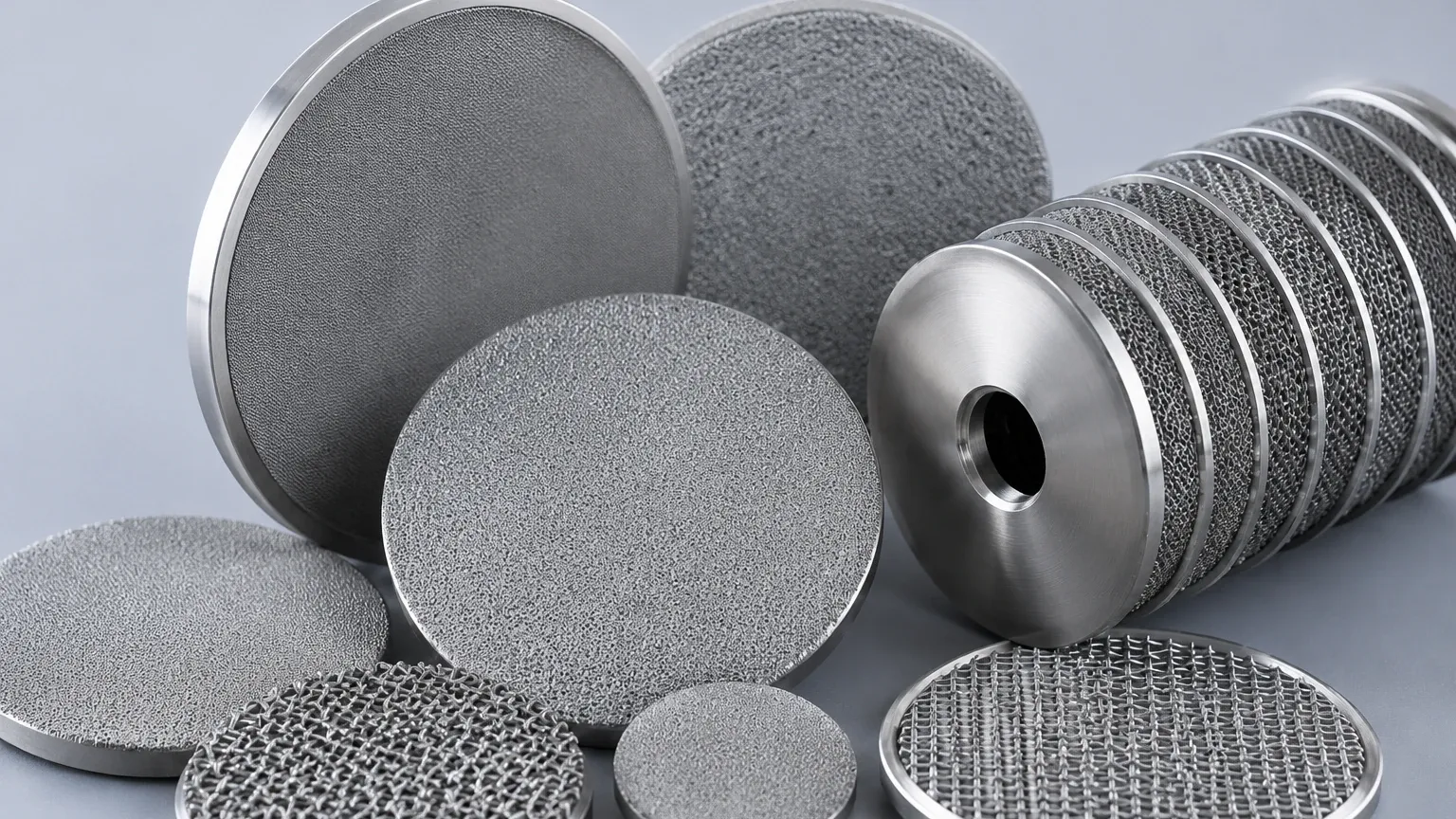
The performance of sintered filter discs is rooted in the manufacturing process known as sintering. This involves placing layers of stainless steel wire mesh or metal powders into a high-temperature vacuum furnace. The temperature is raised to just below the melting point of the metal, while mechanical pressure is applied. This causes the metal molecules to diffuse across the contact points of the wires or particles, creating a permanent bond without the use of binders or adhesives.
In a multi-layer sintered mesh configuration, the structure typically consists of several functional zones:
1. Filtration Layer: A fine-weave mesh that determines the absolute filtration rating.
2. Protective Layer: A slightly coarser mesh that protects the fine filtration layer from mechanical damage during handling and operation.
3. Support Layers: Heavy-duty, large-opening meshes that provide the structural rigidity necessary to withstand high differential pressures.
4. Buffer Layers: Intermediate layers that facilitate the transition between the fine mesh and the coarse support structure, ensuring uniform flow distribution.
This integrated structure prevents "media migration," a common failure mode in non-sintered filters where individual wires or fibers can break loose and contaminate the downstream fluid.
Key Performance Advantages of Sintered Filter Discs
Engineers specify sintered metal discs over alternative media primarily due to their durability and predictable performance under stress. The diffusion bonding process yields several distinct advantages:
Mechanical Stability
The permanent bonding of the mesh layers ensures that the pore geometry remains constant even under high pressure. In applications involving high-viscosity fluids, such as polymer melt filtration, the ability to maintain pore integrity is critical for consistent product quality.
Heat and Corrosion Resistance
By utilizing high-grade alloys like 316L stainless steel, these discs can operate in environments exceeding 450°C (842°F). For specialized chemical processing, exotic alloys such as Hastelloy, Monel, or Inconel can be used to provide resistance to highly acidic or alkaline solutions that would degrade standard filtration materials.
Cleanability and Reusability
Because the structure is entirely metallic and physically robust, sintered discs can be cleaned and reused multiple times. Common cleaning methods include ultrasonic cleaning, backwashing, chemical solvent baths, and even burnout (for organic contaminants). This significantly reduces the total cost of ownership compared to disposable filter elements.
Engineering Criteria for Selecting Filter Discs & Packs
When specifying Filter Discs & Packs for a new or existing system, several engineering parameters must be evaluated to ensure optimal performance and longevity. Selecting the wrong configuration can lead to premature clogging, excessive pressure drop, or insufficient filtration accuracy.
Micron Rating: Absolute vs. Nominal
It is essential to distinguish between nominal and absolute filtration ratings. A nominal rating indicates the ability of the filter to retain a majority of particles of a certain size, whereas an absolute rating (often determined by a bubble point test) specifies the size of the largest particle that can pass through the media. For critical pharmaceutical or hydraulic applications, absolute-rated sintered discs are usually required.
Pressure Drop (Delta P)
The pressure drop across the filter is a function of the fluid's viscosity, flow rate, and the effective filtration area. Sintered discs offer a high porosity (often 30% to 50%), which helps minimize initial pressure drop. However, engineers must calculate the maximum allowable pressure drop before the disc risks deformation or the system's pump efficiency is compromised.
Edge Treatment and Sealing
For a filter disc to function effectively, it must be properly sealed within its housing to prevent bypass. Common edge treatments include:
* Spot Welding: Used for multi-layer packs to keep layers aligned.
* Aluminum or Stainless Steel Rims: A metal binding is crimped around the edge to provide a seating surface for gaskets.
* Sintered Edges: The edges of the disc are compressed and sintered more densely to create a solid metal ring, ensuring no leakage through the periphery.
Material Selection and Chemical Compatibility
The choice of material is the most significant factor in determining the lifespan of sintered filter discs. While 304 stainless steel is suitable for general-purpose applications, industrial environments often demand higher specifications.
* 316L Stainless Steel: The "L" denotes low carbon content, which is crucial for preventing intergranular corrosion after welding or high-temperature exposure. It offers superior resistance to chlorides and organic acids.
* 904L Stainless Steel: Often used in the chemical industry for handling dilute sulfuric acid.
* Nickel-Based Alloys: Materials like Hastelloy C-276 are reserved for the most aggressive environments, such as those involving wet chlorine gas or strong oxidizing salts.
Engineers must also consider the potential for galvanic corrosion if the filter disc material differs significantly from the housing material in an electrolytic fluid.
Common Applications in Demanding Industrial Environments
Sintered metal filtration is utilized across industries where failure is not an option and where the fluids being processed are valuable or hazardous.
Polymer and Chemical Fiber Production
In the production of polyester, nylon, and other synthetic fibers, the polymer melt must be filtered to remove gels and inorganic impurities before being forced through spinnerets. Sintered discs are used in screen changers to handle the extreme pressures and temperatures of the extrusion process.
Pharmaceutical and Food Processing
In these sectors, the focus is on hygiene and the prevention of batch contamination. Sintered discs are ideal because they do not shed fibers and can withstand SIP (Steam-In-Place) and CIP (Clean-In-Place) sterilization cycles. They are frequently found in Nutsche filters for catalyst recovery and active pharmaceutical ingredient (API) filtration.
Hydraulic and Aerospace Systems
High-pressure hydraulic systems require fine filtration to protect sensitive valves and actuators. Sintered discs provide the necessary strength to withstand pressure surges and the precision to remove microscopic wear particles that could cause system failure.
Oil and Gas Filtration
From downhole sand control to refinery process filtration, sintered metal media are used to separate solids from hydrocarbons. Their ability to be backwashed makes them particularly useful in continuous process loops where downtime must be minimized.
Maintenance, Cleaning, and Replacement Cycles
While sintered filter discs are designed for longevity, their performance will eventually degrade as contaminants become deeply embedded in the pore structure. Establishing a maintenance schedule based on pressure drop monitoring is the most effective way to manage these components.
Cleaning Techniques
1. Ultrasonic Cleaning: High-frequency sound waves create cavitation bubbles that dislodge particles from deep within the sintered matrix. This is often the most effective method for fine micron ratings.
2. Chemical Cleaning: Using acids, alkalis, or specialized surfactants to dissolve specific types of fouling, such as scale or organic polymers.
3. Backpulsing: In some automated systems, a brief reverse flow of fluid or gas is used to knock the cake off the surface of the disc during operation.
Determining Replacement
Repeated cleaning cycles can eventually lead to "permanent fouling," where the baseline pressure drop after cleaning is significantly higher than it was when the disc was new. Additionally, engineers should inspect discs for any signs of mechanical fatigue, such as bowing or thinning of the mesh layers. If the bubble point test indicates that the maximum pore size has increased, the disc must be replaced to maintain filtration integrity.
Conclusion: Technical Confirmation for Procurement
Before finalizing a purchase for industrial filtration components, procurement teams and engineers should confirm several technical details with the manufacturer. This includes the required alloy grade, the exact dimensions (including thickness tolerances), the absolute micron rating, and any necessary certifications (such as FDA compliance for food applications or material mill test reports).
By selecting the appropriate configuration of sintered filter discs, industrial facilities can achieve a balance between high filtration efficiency and low operational costs. The transition from disposable media to high-performance sintered metal solutions often results in improved process stability and a reduction in long-term waste, making it a sound engineering and financial decision for modern manufacturing environments.
