


Stainless Steel Sintered Filter Discs
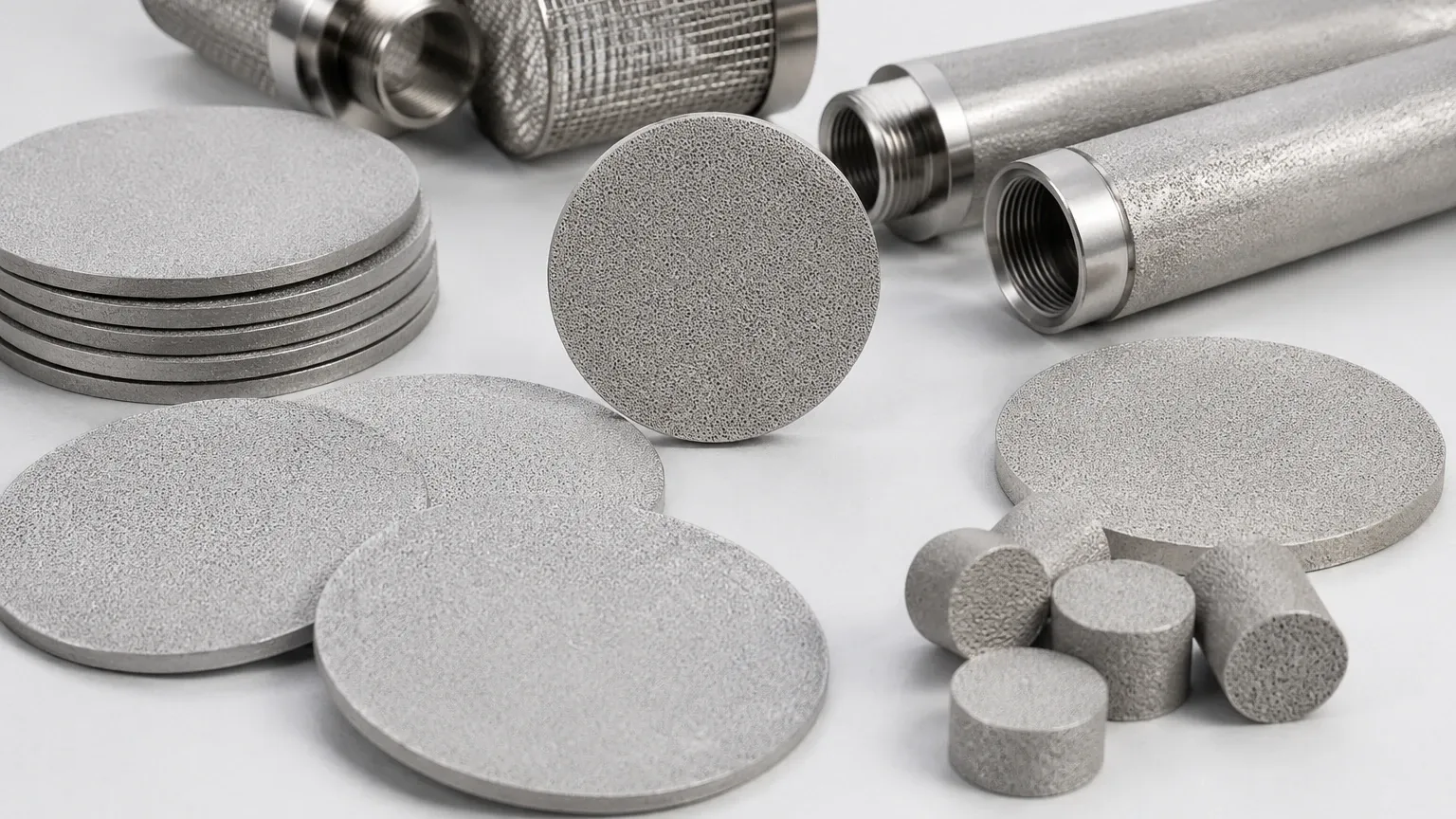
In industrial filtration, the structural integrity and precision of the filter media are paramount to ensuring process consistency and equipment longevity. Stainless steel sintered filter discs represent a pinnacle of porous metal technology, offering a combination of high mechanical strength, thermal stability, and precise filtration accuracy. Unlike traditional wire mesh or paper filters, sintered discs are engineered through a thermal diffusion bonding process that creates a permanent, monolithic structure capable of withstanding extreme operating conditions.
For engineers and procurement specialists in the chemical, pharmaceutical, and polymer industries, selecting the right filtration component requires a deep understanding of material properties and manufacturing techniques. This guide explores the technical nuances of stainless steel sintered filter discs, their performance characteristics, and the engineering considerations necessary for optimal selection.
The Engineering Behind Sintering Technology
Sintering is a metallurgical process where metal powder or multiple layers of wire mesh are subjected to high temperatures (below the melting point) and controlled pressure in a vacuum or protective atmosphere furnace. This process facilitates atomic diffusion across the contact points of the metal particles or wires, effectively "welding" them together without the need for additional binding agents or filler metals.
When applied to the production of Filter Discs & Packs, sintering results in a porous medium with a fixed pore geometry. This is a critical distinction from non-sintered mesh, where individual wires can shift under high pressure, leading to pore enlargement and "media migration"—the shedding of filter particles into the filtrate. Sintered discs maintain their pore size distribution even under significant differential pressure, ensuring consistent filtration efficiency throughout the service life.
Sintered Metal Powder vs. Sintered Wire Mesh
There are two primary forms of stainless steel sintered filter discs used in industrial applications:
1. Sintered Metal Powder Discs: These are formed by compacting high-purity stainless steel powder into a disc shape and then sintering it. This creates a tortuous path for the fluid, making them ideal for depth filtration where high dirt-holding capacity and fine micron ratings (down to 0.5 microns) are required.
2. Sintered Wire Mesh Discs: These consist of multiple layers of woven wire mesh—typically ranging from 2 to 7 layers—sintered together. The multi-layer structure usually includes a fine filtration layer, a protective layer, and several coarse support layers. This configuration provides excellent permeability and is easier to clean via backwashing.
Material Selection and Chemical Compatibility
The performance of stainless steel sintered filter discs is heavily dependent on the alloy used. While several grades are available, 304 and 316L stainless steel are the industry standards due to their balance of mechanical properties and corrosion resistance.
* 304 Stainless Steel: Suitable for general industrial applications where moisture and mild corrosive agents are present. It offers good strength and cost-effectiveness for food and beverage or water treatment sectors.
* 316L Stainless Steel: The "L" denotes low carbon content, which improves weldability and resistance to intergranular corrosion. 316L contains molybdenum, providing superior resistance to chlorides and organic acids. This makes it the preferred choice for pharmaceutical processing, marine environments, and aggressive chemical filtration.
* Specialty Alloys: For environments exceeding the capabilities of 316L, such as highly acidic or high-temperature oxidative atmospheres, alloys like Hastelloy, Inconel, or Monel can be utilized in the sintering process to ensure the filter disc does not succumb to pitting or stress corrosion cracking.
Key Performance Metrics for Filter Discs & Packs
When evaluating filter components for a specific system, engineers must look beyond simple dimensions. The following metrics define the operational limits of stainless steel sintered filter discs:
1. Filtration Accuracy (Micron Rating)
Sintered discs can be engineered with absolute filtration ratings. Unlike nominal ratings, which indicate an approximate pore size, an absolute rating guarantees that a specific percentage of particles larger than the rating will be captured. Sintered media typically ranges from 0.5 to 200 microns.
2. Permeability and Pressure Drop
Permeability refers to the ease with which a fluid passes through the filter medium. A high-quality sintered disc balances fine filtration with low resistance to flow. A high initial pressure drop (ΔP) can reduce the overall efficiency of the pump system and shorten the time between cleaning cycles. Engineers must calculate the flux rate (flow per unit area) to ensure the disc diameter is sufficient for the required throughput.
3. Mechanical Strength and Pressure Resistance
One of the primary advantages of sintered discs is their ability to withstand high differential pressures. In applications like hydraulic oil filtration or high-viscosity polymer extrusion, the filter media may encounter pressures exceeding 20 MPa. The diffusion-bonded structure of sintered discs prevents the media from collapsing or deforming, which is a common failure mode in pleated paper or simple mesh filters.
4. Thermal Stability
Stainless steel sintered filter discs can operate in temperatures ranging from cryogenic levels up to 600°C (1112°F) in continuous service, depending on the alloy and atmospheric conditions. This makes them indispensable for hot gas filtration and steam processing.
Industrial Applications and Operating Conditions
Because of their robust nature, stainless steel sintered filter discs are utilized across a broad spectrum of demanding industries. Their ability to be customized into various shapes and integrated into complex Filter Discs & Packs allows them to meet specific process requirements.
Chemical and Petrochemical Processing
In chemical manufacturing, filters are often exposed to solvents, catalysts, and high-temperature reactants. Sintered discs are used for catalyst recovery, where the filter must capture expensive catalyst particles from a product stream and then be cleaned for reuse. Their resistance to chemical degradation ensures that the filter does not contaminate the process fluid.
Pharmaceutical and Biotechnology
Sterility and cleanliness are non-negotiable in pharmaceutical production. Sintered 316L discs provide a non-shedding filtration surface that can be easily sterilized via autoclaving or Steam-in-Place (SIP) procedures. They are commonly used in the filtration of active pharmaceutical ingredients (APIs) and in gas sparging applications where fine bubbles are required for aerobic fermentation.
Polymer and Plastic Extrusion
The production of high-quality polymers requires the removal of "gels" and impurities from the melt. Sintered wire mesh packs are placed in the extruder head to provide fine filtration under immense pressure and temperature. The structural stability of the sintered media ensures that the pore size remains constant despite the high viscosity of the polymer melt.
Food and Beverage
From steam filtration to the removal of solids in edible oils, sintered discs offer a food-grade solution that complies with stringent safety standards. Their durability allows for frequent Clean-in-Place (CIP) cycles using caustic agents without compromising the filter's integrity.
Customization and Engineering Considerations
Standard filter discs may not always meet the unique constraints of a specialized industrial system. Customization is often required to optimize the filtration surface area and fitment. When ordering custom stainless steel sintered filter discs, the following design elements should be confirmed:
* Layer Configuration: For sintered mesh, the number of layers and the mesh count of each layer can be adjusted. A common 5-layer structure includes a fine mesh filter layer protected by two buffer layers and supported by two coarse mesh layers for maximum rigidity.
* Edge Treatment: To prevent bypass and ensure a secure seal within the housing, discs can be finished with various edge treatments. These include spot welding of multi-layer packs, the addition of an aluminum or stainless steel rim (binding), or precision machining of the edges for a flush fit.
* Geometry: While circular discs are the most common, sintering technology allows for the creation of oval, rectangular, or ring-shaped filters. Furthermore, these discs can be formed into pleated or conical shapes to increase the effective filtration area within a confined space.
* Surface Finish: In some applications, such as those involving high-purity gases, the surface of the sintered disc may require electropolishing to reduce surface roughness and minimize particle entrapment on the exterior of the media.
Maintenance, Cleaning, and Lifecycle Costs
While the initial acquisition cost of stainless steel sintered filter discs is higher than that of disposable media, the total cost of ownership (TCO) is often significantly lower due to their reusability and durability. A well-maintained sintered disc can last for years in applications where a disposable filter would need to be replaced weekly.
Cleaning Methods
The ability to clean and reuse sintered media is a primary driver for its selection. Common cleaning techniques include:
* Backwashing/Backpulsing: Reversing the flow of fluid through the filter to dislodge accumulated cake or particles. This is highly effective for surface-loading sintered mesh discs.
* Ultrasonic Cleaning: Using high-frequency sound waves in a cleaning solvent to remove fine particles trapped deep within the porous structure of a powder-sintered disc.
* Chemical Cleaning: Soaking the discs in acids, bases, or specialized solvents to dissolve organic or inorganic contaminants. The corrosion resistance of 316L allows for aggressive chemical cleaning without damaging the filter.
* Thermal Cleaning (Burn-off): In polymer applications, the discs can be heated in a controlled oven to carbonize and remove residual plastic, followed by ultrasonic cleaning to remove the ash.
When to Replace
Despite their durability, sintered discs have a finite lifespan. Replacement should be considered when the stabilized pressure drop after cleaning (the "clean pressure drop") begins to rise significantly, indicating that internal pores are permanently blinded. Additionally, any signs of physical deformation or breach in the sintered layers necessitate immediate replacement to prevent downstream contamination.
Conclusion
Stainless steel sintered filter discs are an essential component for industrial processes that demand high precision, mechanical strength, and thermal resistance. By utilizing the diffusion bonding process, these filters provide a level of reliability that woven mesh or non-metallic media cannot match. Whether used as standalone components or integrated into complex Filter Discs & Packs, they offer a sustainable and cost-effective solution for modern engineering challenges.
When selecting a sintered filter, engineers must carefully evaluate the micron rating, material compatibility, and the specific demands of their operating environment. By partnering with a manufacturer that understands these technical variables, purchasing teams can ensure they receive filtration solutions that optimize performance, reduce downtime, and maintain the highest standards of product purity.
