


Disc Filter Tertiary Treatment
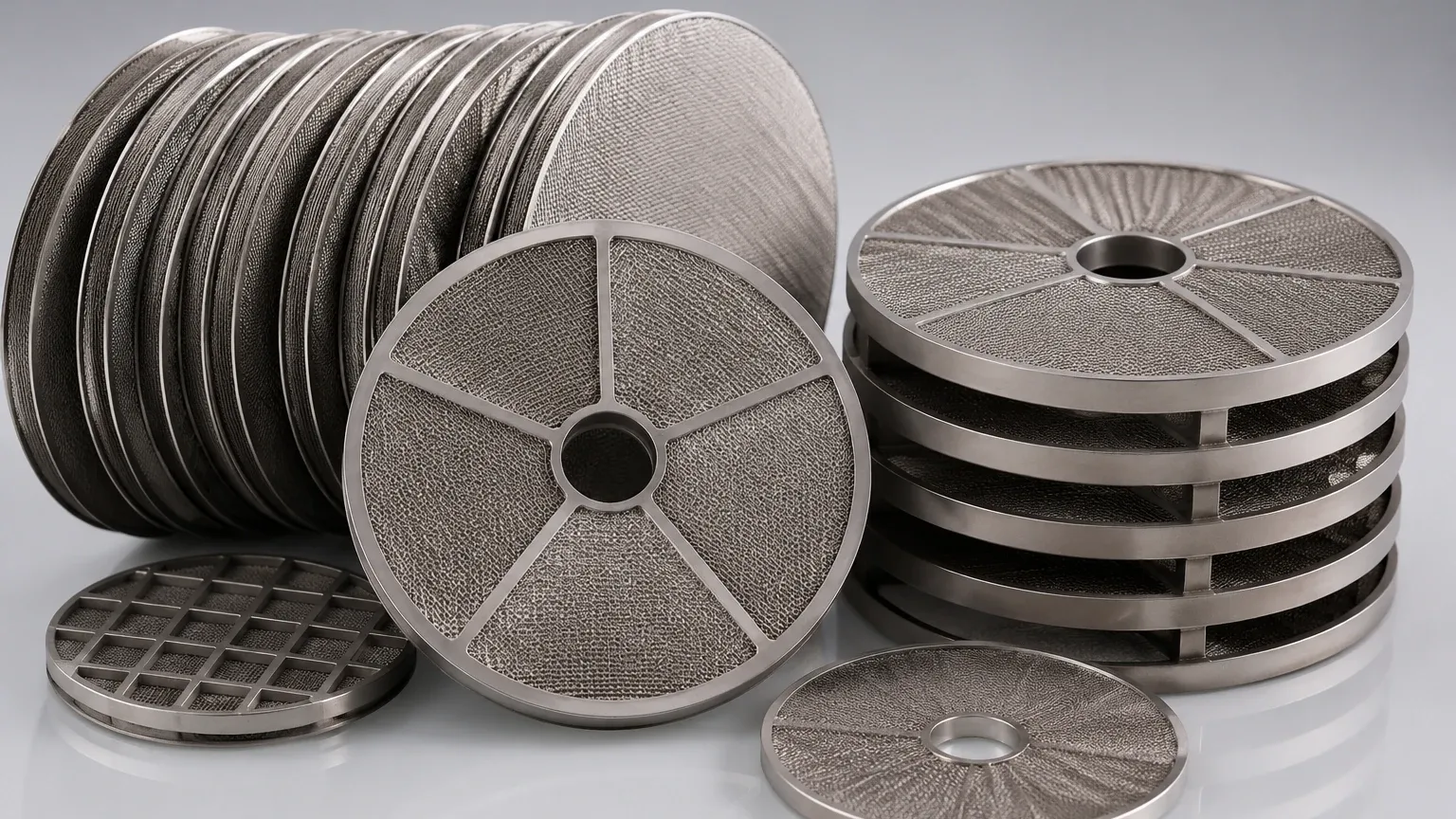
In the hierarchy of wastewater management, tertiary treatment represents the final stage of polishing before effluent is discharged into sensitive environments or reclaimed for industrial reuse. As regulatory standards for Total Suspended Solids (TSS) and phosphorus levels become increasingly stringent, the adoption of disc filter tertiary treatment has transitioned from an innovative alternative to a standard engineering practice. For engineers and facility managers, selecting the right filtration media—specifically the Filter Discs & Packs that drive these systems—is critical to ensuring long-term operational efficiency and compliance.
Disc filters offer a compact, high-surface-area solution for removing fine particulates that secondary clarifiers often miss. By utilizing a series of parallel discs covered with precision-engineered stainless steel wire mesh, these systems provide a robust barrier against contaminants. This guide examines the technical nuances of disc filter tertiary treatment, focusing on material selection, engineering considerations, and the performance criteria necessary for industrial and municipal applications.
The Role of Disc Filters in Tertiary Treatment
Tertiary treatment is designed to remove residual suspended solids and nutrients after primary and secondary biological processes. While traditional sand filters were once the industry standard, disc filter tertiary treatment has gained dominance due to its significantly smaller footprint and lower backwash water requirements.
The fundamental principle of a disc filter involves influent flowing through the filter media (the discs) while solids are retained on the surface. In most industrial configurations, the discs are partially submerged in a tank. As the media clogs, the water level rises, triggering a backwash cycle. The discs rotate, and high-pressure spray nozzles wash the accumulated solids into a collection trough. This continuous or semi-continuous operation ensures that the system maintains a consistent hydraulic throughput.
For engineers, the efficiency of this process depends heavily on the filtration media's ability to withstand frequent backwashing and varying solid loads. Stainless steel wire mesh is often preferred over synthetic fabrics in demanding industrial environments due to its mechanical strength and resistance to chemical cleaning agents.
Material Selection and Engineering for Durability
When specifying components for disc filter tertiary treatment, material science plays a pivotal role. The environment inside a tertiary filter is often corrosive, especially if the effluent contains residual chlorine or if the system undergoes chemical cleaning to remove biofouling.
Stainless Steel Alloys
Kaifil specializes in the manufacture of filtration components using high-grade stainless steel alloys. For most tertiary applications, Type 304 or 316L stainless steel is the baseline. 316L, with its molybdenum content, provides superior resistance to pitting and crevice corrosion in chloride-rich environments. In highly aggressive industrial effluents, such as those found in chemical processing or specialized water treatment, Duplex stainless steels may be utilized to provide even greater structural integrity and corrosion resistance.
Wire Mesh Weave and Micron Ratings
The performance of disc filter tertiary treatment is defined by the micron rating of the wire mesh. In tertiary polishing, micron ratings typically range from 10 to 40 microns.
* Plain Weave: Suitable for higher flow rates but may lack the structural rigidity required for very fine filtration.
* Twilled Weave: Allows for thicker wires and higher strength at finer micron ratings.
* Dutch Weave: Provides a tortuous path for particles, offering excellent surface filtration and easy backwashing characteristics.
For many high-performance systems, multi-layer sintered wire mesh is the preferred choice. Sintering bonds multiple layers of mesh together through a heat-treatment process, creating a composite material that combines fine filtration with a heavy-duty support structure. This prevents the mesh from deforming under the pressure of backwash cycles, which is a common failure point in lower-quality filter packs.
Engineering Considerations for System Integration
Integrating disc filters into a tertiary treatment plant requires a deep understanding of hydraulic dynamics. Engineers must balance the filtration area against the expected peak flow and solids loading.
Hydraulic Loading Rates
The hydraulic loading rate (HLR) determines how much water can pass through a given area of filter media. In disc filter tertiary treatment, the HLR must be calculated based on the "effective" filtration area, accounting for the portions of the discs that are submerged. Over-loading the system can lead to rapid head loss and excessive backwashing, which increases energy consumption and wear on mechanical components.
Head Loss and Backwash Triggers
Head loss—the pressure drop across the filter media—is the primary indicator of filter performance. In gravity-fed systems, the allowable head loss is usually quite low (typically 100mm to 300mm). Precision-manufactured Filter Discs & Packs ensure a uniform pore distribution, which helps maintain a predictable head loss profile. When the differential pressure reaches a set point, the backwash system must effectively clear the mesh without damaging the delicate wire structures.
Mechanical Stability
Unlike static filters, disc filters involve rotating parts. The filter discs must be perfectly flat and securely mounted to the central shaft to prevent bypass. Any warping of the disc frame or the mesh itself can create gaps where unfiltered water can pass through, compromising the effluent quality.
Key Evaluation Criteria for Filter Discs & Packs
When evaluating suppliers for filtration components, technical professionals should focus on several key performance indicators (KPIs) to ensure the longevity of the disc filter tertiary treatment system.
1. Filtration Accuracy: Does the mesh provide a consistent micron rating across the entire surface? Inconsistencies can lead to "hot spots" where solids breakthrough occurs.
2. Structural Rigidity: Can the disc withstand the mechanical stresses of high-pressure backwash nozzles (often operating at 7–10 bar)?
3. Flow Resistance: What is the clean pressure drop? Lower initial resistance allows for longer filtration cycles between backwashes.
4. Ease of Cleaning: Does the mesh geometry facilitate the release of particles during backwash, or do solids become wedged in the weave (blinding)?
5. Customization Options: Can the manufacturer provide custom diameters, center hole configurations, and reinforcement borders to fit specific OEM equipment?
Kaifil’s manufacturing process focuses on these criteria by utilizing advanced welding and cutting technologies to produce filter discs that meet exact engineering tolerances. This precision is vital for maintaining the integrity of the tertiary treatment stage.
Common Risks and Maintenance Strategies
Even the best-designed disc filter tertiary treatment systems face operational challenges. Understanding these risks allows for better proactive maintenance.
Biofouling and Scaling
In municipal wastewater, biofilm can grow on the filter media, effectively reducing the open area and increasing head loss. Similarly, in hard water applications, calcium carbonate scale can build up. Stainless steel filter discs are advantageous here because they can withstand aggressive chemical cleaning (CIP) procedures using acids or oxidizers that would degrade plastic or fabric media.
Mechanical Wear and Tear
The constant rotation and backwashing can lead to fatigue in the wire mesh. Engineers should specify reinforced edges or sintered support layers to distribute mechanical loads. Regular inspection of the spray nozzles is also essential; a clogged nozzle can lead to uneven cleaning, causing a portion of the disc to remain fouled, which places additional stress on the clean sections.
Replacement Cycles
While stainless steel discs have a long service life, they are eventually a consumable item. Establishing a predictable replacement cycle based on the wear patterns observed during annual inspections helps prevent emergency shutdowns. Choosing a reliable OEM partner ensures that replacement Filter Discs & Packs are available with the same specifications as the original components, maintaining system performance.
Customization and OEM Solutions
No two wastewater treatment plants are identical. Variations in flow rate, solids composition, and space constraints often necessitate customized filtration solutions. For manufacturers of disc filter systems, having a partner like Kaifil that can produce custom-engineered metal filter components is a significant advantage.
Customization options include:
* Variable Layering: Combining different mesh counts to optimize for specific particle size distributions.
* Specialized Coatings: Applying surface treatments to reduce adhesion of organic matter.
* Reinforced Frames: Designing heavy-duty outer rings or inner hubs to handle higher torque or pressure differentials.
By working closely with a manufacturer during the design phase, engineers can optimize the disc filter tertiary treatment process for the specific demands of their application, whether it is for a municipal plant or a specialized industrial facility.
Conclusion: Confirming Requirements for Procurement
Before proceeding with the procurement of components for disc filter tertiary treatment, technical teams should confirm several critical data points with their suppliers:
* Effluent Characteristics: Provide detailed data on TSS, particle size distribution, and chemical composition (pH, chlorides, etc.).
* Operational Parameters: Confirm the maximum allowable head loss and the backwash pressure specifications.
* Mechanical Specifications: Ensure the outer diameter, inner diameter, and thickness of the filter packs match the existing or planned equipment housing.
* Certification Needs: Determine if specific material certifications (e.g., 3.1 certificates) are required for compliance.
Selecting the right filtration media is not merely a matter of choosing a micron rating; it is about understanding the synergy between material science and hydraulic engineering. With the right Filter Discs & Packs, disc filter tertiary treatment becomes a reliable, cost-effective, and high-performance solution for modern water management challenges.
