


Z 1 Filter
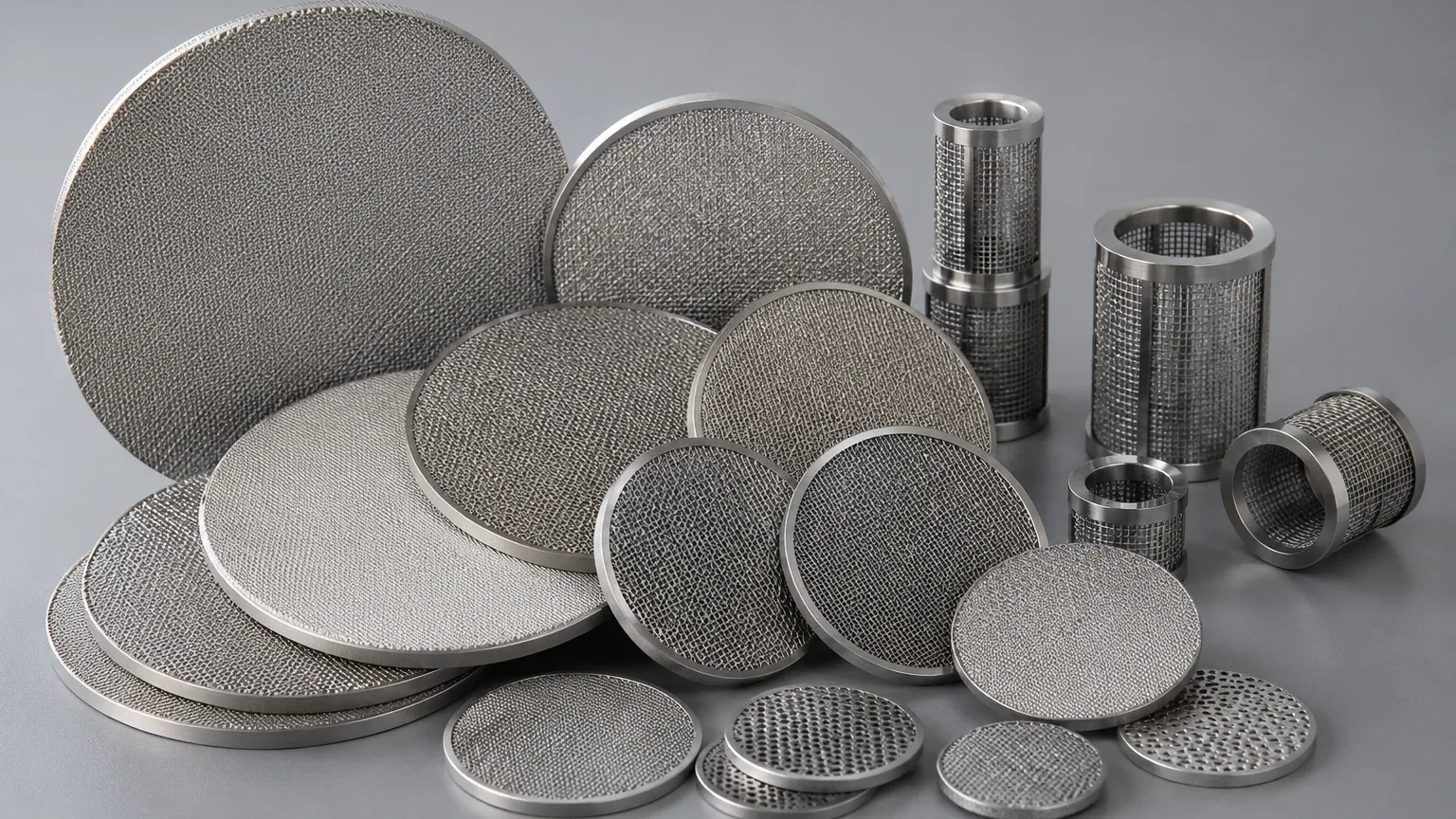
In the landscape of industrial filtration, the term z 1 filter often refers to specific high-precision components designed for critical separation tasks. These components are frequently integrated into complex Filter Discs & Packs to provide the necessary structural integrity and filtration accuracy required in demanding environments such as polymer extrusion, chemical processing, and hydraulic systems. Understanding the technical nuances of these filters is essential for engineers and procurement professionals who must balance performance, durability, and total cost of ownership.
Industrial filtration is rarely a one-size-fits-all solution. The selection of a z 1 filter or a multi-layer pack depends heavily on the fluid dynamics of the application, the nature of the contaminants, and the environmental conditions, including temperature and chemical exposure. This article examines the engineering principles, material considerations, and application-specific requirements that define high-quality metal filtration solutions.
Technical Specifications and Construction
The foundation of any effective z 1 filter lies in its material composition and weave pattern. Most industrial applications demand stainless steel due to its inherent resistance to corrosion and high temperatures. Common alloys include AISI 304 and 316L, with the latter being preferred for environments involving chlorides or acidic solutions.
Wire Mesh Weave Types
The performance of Filter Discs & Packs is largely determined by the weave of the wire mesh. Several standard weaves are utilized in the construction of z 1 filters:
1. Plain Weave: The most common type, where each warp wire crosses over and under each weft wire. This provides a consistent aperture size and is ideal for straightforward particle separation.
2. Twilled Weave: This allows for a heavier wire diameter than plain weave by having the wires pass over and under two wires at a time. This results in a stronger mesh suitable for higher pressure loads.
3. Dutch Weave (Plain and Twilled): These weaves use different diameters for warp and weft wires, resulting in a much denser mesh with smaller, more tortuous paths. This is critical for fine filtration where high mechanical strength is required.
For a z 1 filter configuration, the mesh count—the number of openings per linear inch—must be precisely calculated to achieve the target micron rating while maintaining an acceptable pressure drop across the media.
Engineering Considerations for Filter Selection
When specifying a z 1 filter for an industrial system, engineers must look beyond simple micron ratings. Several interconnected factors influence the efficiency and lifespan of the filter.
Pressure Drop and Flow Rate
The differential pressure (ΔP) across a filter is a critical metric. A high initial pressure drop indicates that the filter may be too restrictive for the pump capacity or that the mesh density is higher than necessary. Conversely, a low pressure drop might suggest insufficient filtration. In the context of Filter Discs & Packs, the goal is to maximize the effective filtration area (EFA) to keep ΔP within operational limits for as long as possible.
Micron Rating: Absolute vs. Nominal
It is vital to distinguish between nominal and absolute filtration ratings. A nominal rating refers to the filter's ability to retain a specific percentage (e.g., 90% or 95%) of particles of a given size. An absolute rating, common in high-precision z 1 filter applications, guarantees that no particle larger than the specified micron size will pass through the mesh. For critical pharmaceutical or aerospace applications, absolute ratings are mandatory.
Dirt Holding Capacity
The longevity of a filter is determined by its dirt holding capacity. This is the amount of contaminant the filter can trap before the pressure drop reaches a terminal level, necessitating cleaning or replacement. Multi-layer Filter Discs & Packs often incorporate a graded density structure—coarser layers on the upstream side and finer layers downstream—to distribute the contaminant load and extend the service interval.
Customization and Multi-Layer Configurations
Single-layer filters often lack the mechanical strength to withstand the high pressures found in industrial extruders or hydraulic lines. This is where the integration of the z 1 filter into multi-layer packs becomes essential.
Sintered vs. Spot-Welded Packs
There are two primary methods for combining multiple mesh layers into a single unit:
* Spot-Welded Packs: Individual layers of wire mesh are cut to size and spot-welded at the edges. This is a cost-effective solution for many standard applications and allows for easy customization of the layer sequence.
* Sintered Mesh: This process involves bonding multiple layers of wire mesh together using heat and pressure in a vacuum furnace. Sintering creates a monolithic structure that is incredibly strong, dimensionally stable, and resistant to wire migration. Sintered Filter Discs & Packs are preferred in high-pressure environments where the risk of media deformation must be eliminated.
Rimming and Edging
To ensure a leak-proof seal within the filter housing, discs and packs are often finished with a metal rim. Common materials for rimming include aluminum, copper, and stainless steel. The choice of rim material depends on the operating temperature and the compatibility with the housing material. A properly rimmed z 1 filter prevents bypass—where unfiltered fluid escapes around the edges of the filter media.
Industry Applications
The versatility of the z 1 filter and associated Filter Discs & Packs makes them indispensable across various sectors.
Polymer and Plastic Extrusion
In the production of films, fibers, and resins, contaminants such as degraded polymer (black specks) or foreign particles can ruin the final product. Extruder screen packs, often utilizing a z 1 filter layer, are placed before the die to ensure melt purity. These packs must withstand extreme pressures and temperatures while providing consistent filtration.
Chemical and Petrochemical Processing
Corrosive fluids and high-temperature reactions require filtration media that will not degrade. Stainless steel filter discs are used to protect catalysts, prevent nozzle clogging in spray systems, and ensure the purity of chemical intermediates. The chemical compatibility of 316L stainless steel makes it the standard for these applications.
Hydraulic and Lubrication Systems
Hydraulic systems rely on clean oil to prevent wear on pumps and valves. A z 1 filter in a hydraulic circuit serves as a critical line of defense against metallic shavings and environmental dust. These filters are often designed for high-flow conditions where maintaining low turbulence is important.
Selection Criteria and Procurement Guidance
For procurement teams and engineers, selecting the right supplier for Filter Discs & Packs involves more than comparing unit prices. The following criteria should be confirmed before finalizing a purchase order:
1. Material Certification: Ensure the supplier provides mill test reports (MTRs) for the stainless steel used. This confirms the alloy composition and ensures the filter will perform as expected in corrosive environments.
2. Dimensional Accuracy: Industrial filter housings often have tight tolerances. Discs must be cut precisely to prevent bypass. CNC laser cutting or precision die-cutting is preferred for maintaining these tolerances.
3. Cleaning and Passivation: For pharmaceutical or food-grade applications, filters must be ultrasonically cleaned to remove manufacturing oils and passivated to enhance corrosion resistance.
4. Customization Capabilities: Does the manufacturer have the capability to produce custom shapes (ovals, rectangles, or kidney shapes) and specific layer combinations? OEM applications often require unique geometries that standard off-the-shelf products cannot meet.
Maintenance and Total Cost of Ownership (TCO)
While the initial cost of a z 1 filter is a factor, the total cost of ownership includes the frequency of replacement, the cost of downtime, and the potential for cleaning and reuse. Stainless steel Filter Discs & Packs are often cleanable via ultrasonic baths, back-flushing, or chemical cleaning, depending on the contaminant.
Developing a standardized replacement cycle based on pressure differential monitoring is the most effective way to optimize TCO. Replacing a filter too early wastes resources, while replacing it too late risks media rupture or equipment damage. By working with a manufacturer that understands the specific demands of the application, companies can secure filtration components that offer the best balance of performance and longevity.
Conclusion
The z 1 filter represents a critical component in the broader category of industrial filtration. Whether used as a standalone disc or integrated into complex, multi-layered Filter Discs & Packs, its role in ensuring process continuity and product quality cannot be overstated. By focusing on technical specifications—such as weave type, material grade, and structural integrity—engineers can select filtration solutions that meet the rigorous demands of modern industrial environments. Precision manufacturing and a deep understanding of fluid dynamics remain the cornerstones of effective filtration, providing the reliability necessary for high-stakes industrial operations.
