


Disc Filter 1 2
In industrial filtration, the precision of small-scale components is often the determining factor in the longevity and efficiency of a larger system. The term "disc filter 1 2" typically refers to a 1/2-inch diameter filter disc, a standard size widely utilized in high-pressure hydraulic systems, laboratory equipment, and precision chemical processing. These components, while small in stature, perform the critical task of removing particulate matter from fluids and gases, ensuring that downstream valves, nozzles, and sensitive instruments remain free from contamination.
As a specialized manufacturer of stainless steel filtration solutions, Kaifil provides a comprehensive range of Filter Discs & Packs designed to meet the rigorous demands of modern industry. Understanding the technical nuances of these filters—from material selection to weave patterns—is essential for engineers and procurement teams looking to optimize their filtration processes.
The Engineering Behind Filter Discs & Packs
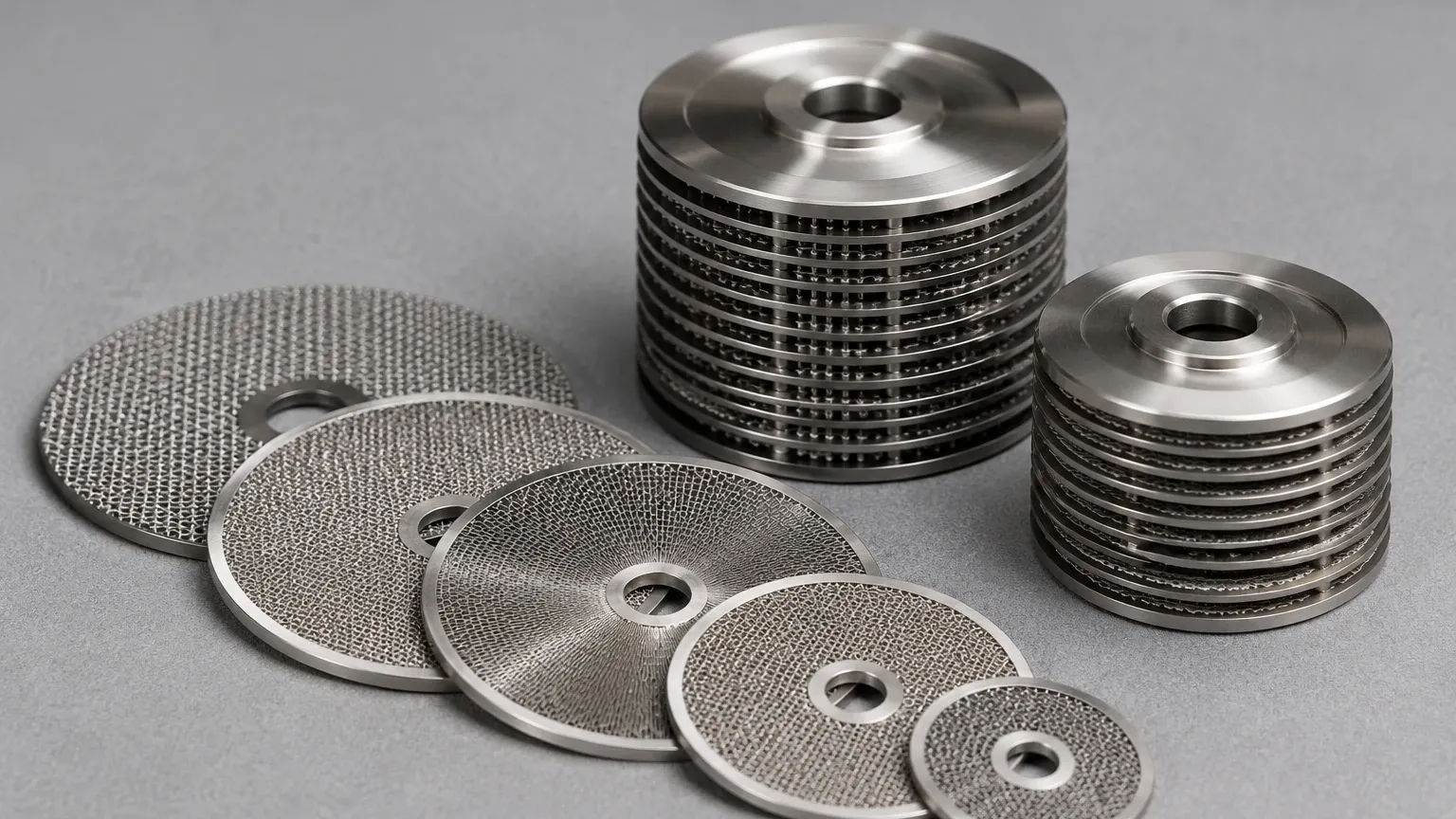
Filter discs are essentially circular pieces of woven wire mesh or sintered metal. When multiple layers are combined, often held together by a metal rim or spot welding, they are referred to as filter packs. The primary function of a disc filter 1 2 is to provide a specific micron rating within a compact footprint.
Material Selection: 304 vs. 316L Stainless Steel
The choice of material is the first and most critical decision in the engineering process. For most industrial applications, stainless steel is the gold standard due to its mechanical strength and resistance to corrosion.
* Grade 304 Stainless Steel: This is the most common material used for general-purpose filtration. It offers excellent durability and is cost-effective for applications where extreme chemical resistance is not required. It is frequently used in food and beverage processing and standard hydraulic systems.
* Grade 316L Stainless Steel: For environments involving high salinity, acids, or pharmaceutical-grade requirements, 316L is preferred. The addition of molybdenum provides superior resistance to pitting and crevice corrosion. The "L" denotes low carbon content, which improves weldability and prevents intergranular corrosion in the heat-affected zones of welded filter packs.
Weave Patterns and Filtration Characteristics
The performance of a disc filter 1 2 is largely dictated by the weave of the wire mesh. Different patterns offer varying levels of flow rate, strength, and filtration accuracy.
1. Plain Weave: The simplest and most common weave, where each warp wire crosses alternately over and under each weft wire. It provides high flow rates and is ideal for coarse filtration.
2. Twill Weave: In this pattern, each weft wire passes over and under two warp wires. This allows for a heavier wire diameter and a more robust mesh, suitable for higher pressure loads.
3. Dutch Weave (Plain and Twill): This weave uses a larger diameter warp wire and a smaller diameter weft wire. This creates a dense, strong mesh with very fine openings. Dutch weave is the preferred choice for precision filtration in the 5 to 100-micron range.
Technical Challenges of Small-Diameter Filtration
When working with a disc filter 1 2 (1/2 inch), engineers must account for the limited Effective Filtration Area (EFA). Because the surface area is small, the risk of rapid pressure drop increase is higher if the fluid contains a high concentration of contaminants.
Managing Pressure Drop
Pressure drop (ΔP) is the difference in pressure between the upstream and downstream sides of the filter. In a 1/2-inch disc, maintaining a low ΔP while achieving high filtration efficiency requires a careful balance. If the mesh is too fine, it may clog prematurely; if it is too coarse, it will not protect the system. Multi-layer filter packs are often the solution here, as they allow for "graduated filtration." By placing a coarser mesh on the upstream side and a finer mesh on the downstream side, the filter can capture larger particles first, preventing the fine mesh from blinding too quickly.
Structural Integrity and Rimming
For a disc filter 1 2 to function correctly, it must be seated perfectly within its housing. To prevent the edges of the wire mesh from fraying or allowing bypass (where fluid escapes around the filter rather than through it), many discs are finished with a metal rim. These rims are typically made of aluminum, copper, or stainless steel and are compressed around the circumference of the disc. This not only provides a better seal but also increases the mechanical strength of the filter, allowing it to withstand higher differential pressures without deforming.
Applications for 1/2-Inch Filter Discs
The versatility of the disc filter 1 2 makes it a staple in several high-stakes industries. Its compact size allows it to be integrated directly into fittings, valves, and manifolds.
Chemical and Petrochemical Processing
In chemical plants, small filter discs are used to protect sensitive instrumentation and sampling systems. They must withstand aggressive solvents and high temperatures. Stainless steel filter discs are ideal here because they maintain their structural integrity at temperatures where polymer-based filters would fail.
Pharmaceutical and Biotechnology
Precision is non-negotiable in pharmaceutical manufacturing. Filter discs are used in the filtration of active pharmaceutical ingredients (APIs) and in laboratory-scale chromatography equipment. The use of 316L stainless steel ensures that the filtration process does not introduce contaminants into the product stream.
Hydraulic and Pneumatic Systems
High-pressure hydraulic systems rely on clean oil to prevent the wear of pumps and actuators. A disc filter 1 2 is often placed at the inlet of sensitive valves to catch any metal shavings or debris that may have entered the system during maintenance or through component wear.
Plastic and Polymer Extrusion
In the extrusion process, molten polymer is forced through a die. To ensure the final product is free of impurities, "screen packs"—which are essentially specialized filter packs—are used. While these are often larger, 1/2-inch discs are used in smaller-scale laboratory extruders and pilot plants to test material purity.
Selection Criteria: What Engineers Need to Confirm
Selecting the right disc filter 1 2 involves more than just picking a diameter. To ensure optimal performance and cost-effectiveness, several factors must be confirmed with the manufacturer.
Micron Rating and Efficiency
Is the requirement for absolute or nominal filtration? Nominal filtration refers to the ability of the filter to retain a certain percentage (usually 60-90%) of particles of a specific size. Absolute filtration implies that 99.9% of particles larger than the micron rating will be captured. For critical applications, an absolute-rated disc is usually necessary.
Operating Environment
* Temperature: What is the maximum operating temperature? Stainless steel can typically handle up to 400°C (752°F) in oxidizing atmospheres, but the rim material or any adhesives used must also be compatible.
* Chemical Compatibility: Will the filter be exposed to caustic cleaning agents or acidic process fluids? This dictates the choice between 304 and 316L.
* Flow Velocity: Higher flow velocities can cause wire displacement in unrimmed or single-layer discs. In these cases, a sintered or reinforced pack may be required.
Customization and OEM Requirements
Many industrial systems require non-standard specifications. Kaifil specializes in providing customized Filter Discs & Packs that meet specific OEM requirements. This includes unique diameters, specialized rim designs, and custom layer configurations. When sourcing these components, it is vital to work with a manufacturer that can provide material certifications and maintain tight tolerances to ensure a proper fit in the assembly.
Maintenance and Total Cost of Ownership
One of the primary advantages of stainless steel filter discs is their cleanability. Unlike disposable paper or polymer filters, stainless steel discs can often be cleaned and reused, which significantly reduces the total cost of ownership over time.
Cleaning Methods
* Ultrasonic Cleaning: This is the most effective method for removing fine particles trapped within the mesh. High-frequency sound waves create cavitation bubbles that dislodge contaminants.
* Backwashing: In some systems, the flow can be reversed to flush particles off the surface of the disc.
* Chemical Cleaning: Soaking the discs in compatible solvents or mild acids can dissolve organic or mineral deposits.
However, it is important to note that cleaning is not infinite. Over time, repeated cleaning and high-pressure cycles can lead to "work hardening" of the wire mesh, making it brittle. Engineers should establish a replacement cycle based on the observed pressure drop after cleaning. If the "clean" pressure drop begins to rise, it is an indication that the mesh is becoming permanently blinded and the disc should be replaced.
Why Precision Manufacturing Matters
In a 1/2-inch filter, there is very little room for error. A slight deviation in diameter can result in bypass, while a minor flaw in the weave can allow oversized particles to pass through. Kaifil utilizes advanced manufacturing techniques, including precision die-cutting and automated spot welding, to ensure that every disc filter 1 2 meets the highest quality standards.
By focusing on the technical requirements of the application—pressure, temperature, and fluid chemistry—engineers can select a filtration solution that not only protects their equipment but also enhances the overall reliability of their industrial processes. Whether it is a single-layer disc for a simple valve or a complex multi-layer pack for a pharmaceutical reactor, the right filtration component is an investment in system integrity.
