


1 Micron Filter Disk
In industrial filtration, the 1-micron threshold represents a critical boundary where mechanical separation transitions into high-precision microfiltration. A 1 micron filter disk is engineered to capture particles that are invisible to the naked eye, such as fine silt, certain bacteria, and suspended solids that can compromise the integrity of downstream equipment or the purity of a final product. For engineers and procurement specialists, selecting the right filtration media at this level requires a deep understanding of material science, pore structure, and fluid dynamics.
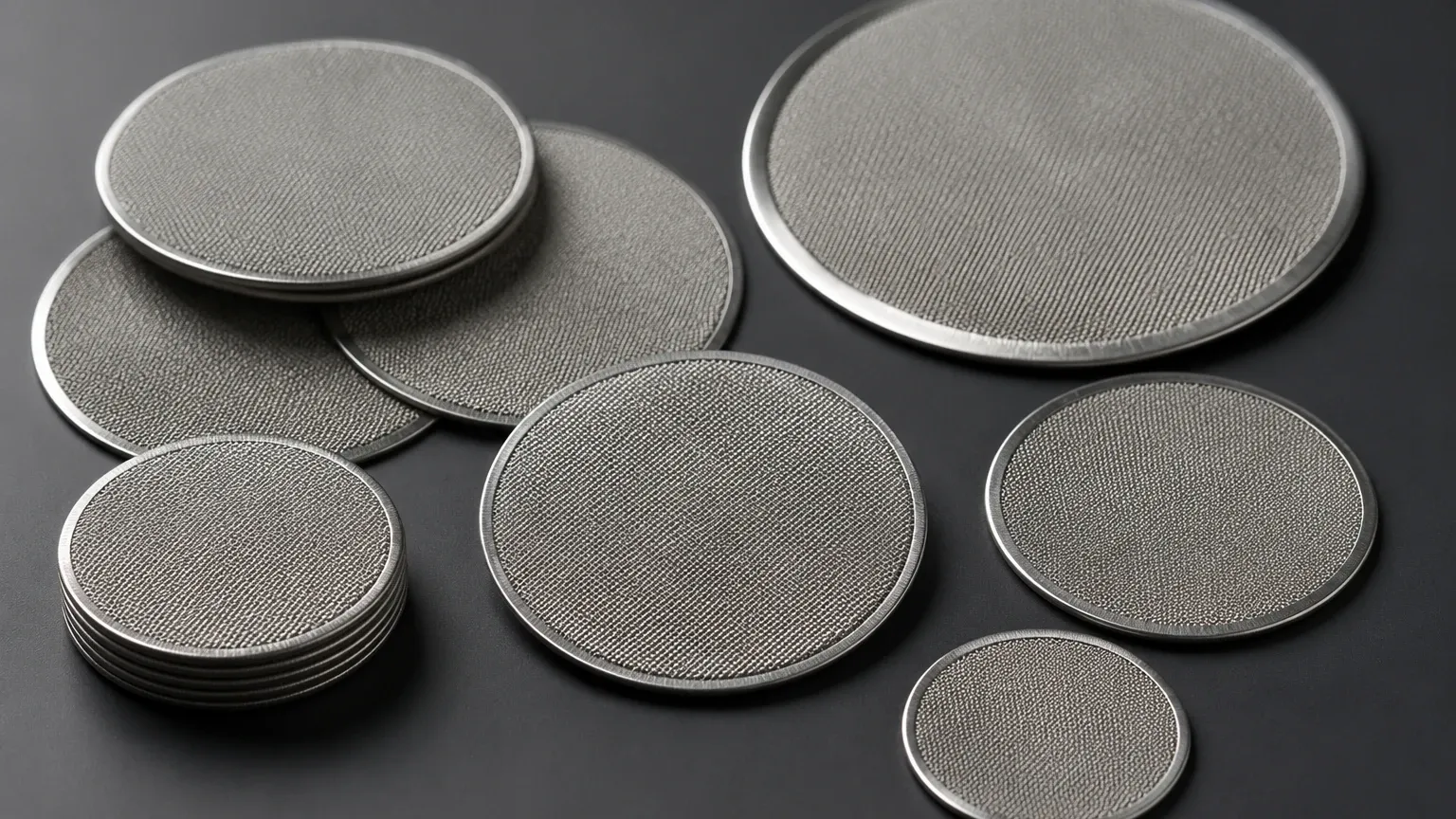
At Kaifil, we specialize in the manufacturing of high-performance Filter Discs & Packs designed to meet these exact specifications. Whether used in pharmaceutical processing, chemical refining, or hydraulic systems, the performance of a 1-micron disk is determined by its ability to maintain high flow rates while ensuring consistent particle retention under varying pressure conditions.
Technical Specifications of 1 Micron Filtration
When discussing a 1 micron filter disk, it is essential to distinguish between nominal and absolute filtration ratings. A nominal rating refers to the ability of the filter to retain a major percentage (usually 60% to 90%) of particles of a specific size. In contrast, an absolute rating implies that 99.9% or more of the particles at that micron level are captured.
For industrial applications involving stainless steel media, achieving a true 1-micron rating typically involves one of two primary technologies:
1. Sintered Metal Fiber Felt: This non-woven medium is composed of stainless steel fibers that are laid randomly and then sintered together. This creates a highly porous, three-dimensional structure that offers exceptional dirt-holding capacity and low pressure drop, making it ideal for 1-micron applications where longevity is a priority.
2. Multi-Layer Sintered Wire Mesh: By bonding multiple layers of fine stainless steel wire mesh through a vacuum sintering process, manufacturers can create a rigid, stable filter medium. The finest layer acts as the filtration control, while the coarser layers provide mechanical support and protection.
Material Selection for Industrial Environments
The choice of material for a 1 micron filter disk is dictated by the chemical environment, temperature, and pressure of the application. While polymer-based filters are common in low-stakes environments, industrial B2B applications almost exclusively demand metallic solutions due to their durability and cleanability.
Stainless Steel 316L
316L is the industry standard for most 1-micron applications. Its low carbon content and the addition of molybdenum provide superior resistance to pitting and crevice corrosion, particularly in chloride-rich environments. It is the preferred choice for pharmaceutical and food-grade applications where hygiene and material stability are paramount.
Stainless Steel 304
For less aggressive chemical environments, 304 stainless steel provides a cost-effective alternative. It maintains excellent mechanical properties and can withstand high temperatures, though it lacks the enhanced corrosion resistance of 316L.
Specialized Alloys
In extreme cases involving highly acidic or alkaline fluids, alloys such as Hastelloy, Inconel, or Monel may be used to manufacture the filter discs. These materials ensure that the 1-micron pore structure remains intact even when exposed to harsh reagents that would degrade standard stainless steel.
Engineering Considerations: Flow Rate and Pressure Drop
One of the primary challenges in implementing a 1 micron filter disk is managing the pressure drop (ΔP). As the pore size decreases, the resistance to fluid flow naturally increases. Engineers must balance the need for fine filtration with the operational costs associated with pumping power and filter replacement cycles.
Porosity and Flux
Sintered fiber felt generally offers higher porosity (up to 80%) compared to woven mesh. This higher void volume allows for a higher flux—the rate of flow per unit area—meaning a smaller filter footprint can achieve the same throughput as a larger woven mesh system.
Structural Integrity
At 1 micron, the filtration media is inherently delicate. To prevent media migration or deformation under high differential pressure, these discs are often integrated into multi-layer Filter Discs & Packs. The assembly might include a 1-micron inner layer protected by 50-micron or 100-micron support meshes on either side. This "sandwich" construction ensures the disk can withstand back-pulsing or high-pressure surges without losing its filtration accuracy.
Key Applications for 1 Micron Filter Disks
Precision filtration at the 1-micron level is a requirement across several high-stakes industries where even trace contamination can lead to system failure or product rejection.
* Pharmaceutical and Biotech: Used in the filtration of Active Pharmaceutical Ingredients (APIs) and the removal of carbon or catalysts after chemical reactions. The 1-micron rating is often a pre-filtration step before sterile membrane filtration.
* Chemical Processing: Protecting high-pressure pumps and nozzles from fine particulates. In the production of specialty chemicals, 1-micron discs ensure that the final fluid meets strict clarity standards.
* Hydraulic and Lubrication Systems: Modern hydraulic components have extremely tight tolerances. A 1 micron filter disk is used to polish hydraulic oils, removing fine wear debris that could otherwise cause component erosion and system downtime.
* Food and Beverage: Employed in the clarification of syrups, oils, and spirits. The stainless steel construction allows for Steam-in-Place (SIP) and Clean-in-Place (CIP) sterilization, which is essential for maintaining food safety standards.
Evaluation Criteria for Purchasing Teams
When sourcing 1-micron filtration components, purchasing teams and engineers should evaluate suppliers based on technical verification rather than just price. Key factors to confirm include:
1. Verification of Micron Rating
How is the 1-micron rating verified? Reliable manufacturers use bubble point testing (per ISO 4003) or multi-pass testing (per ISO 16889) to confirm the absolute or nominal rating of the media. Requesting a test report ensures that the disk will perform as expected in the field.
2. Customization and OEM Capabilities
Industrial systems rarely use "off-the-shelf" sizes. Whether you require a circular disk, an annular ring, or a custom-shaped pack, the manufacturer should be able to provide precise dimensions with tight tolerances. At Kaifil, we provide extensive OEM support to ensure the filter fits perfectly within existing housings or new equipment designs.
3. Edge Treatment and Sealing
For a 1 micron filter disk to be effective, there must be zero bypass. This requires high-quality edge treatments, such as spot welding, aluminum or stainless steel binding, or specialized resin sealing. The edge treatment must be compatible with the process fluid to prevent contamination.
4. Total Cost of Ownership (TCO)
While a stainless steel 1-micron disk has a higher upfront cost than a disposable polymer filter, its ability to be cleaned and reused significantly lowers the TCO. Evaluate the cleaning methods—such as ultrasonic cleaning, chemical bath, or burn-off—to determine the expected lifespan of the component.
Maintenance and Cleaning Protocols
The longevity of a 1 micron filter disk depends heavily on the maintenance regime. Because the pores are so fine, they are susceptible to surface blinding (cake buildup) or internal pore plugging.
* Back-washing: For systems where the disk is permanently installed, back-washing with clean fluid or gas can dislodge surface contaminants.
* Ultrasonic Cleaning: This is the most effective method for deep-cleaning sintered metal media. High-frequency sound waves create cavitation bubbles that scrub the internal pore structure without damaging the fine fibers or wires.
* Chemical Cleaning: Using specific solvents or acids to dissolve organic or inorganic deposits. It is vital to ensure the cleaning agent is compatible with the 316L or 304 stainless steel.
Conclusion
Implementing a 1 micron filter disk is a strategic decision to improve product quality and protect critical industrial assets. By selecting the appropriate material, construction type, and structural support, engineers can achieve a balance between fine filtration and operational efficiency.
As a professional manufacturer, Kaifil provides the technical expertise and manufacturing precision required to produce reliable Filter Discs & Packs for the most demanding environments. Understanding the nuances of 1-micron filtration—from bubble point testing to material compatibility—ensures that your filtration system delivers consistent, long-term performance.
