


Disk Filter 20 Micron Luer
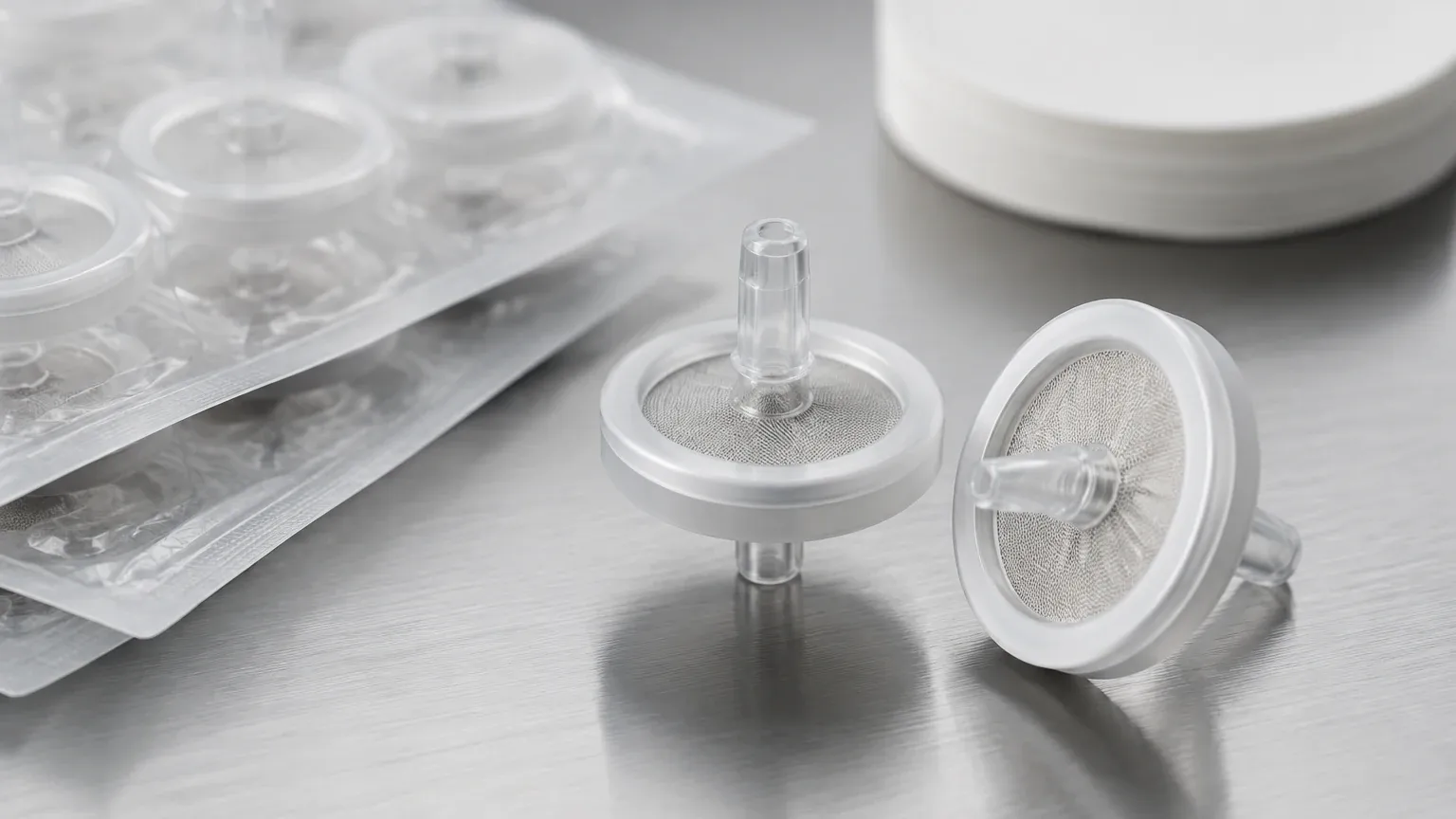
In precision industrial and laboratory environments, the requirement for reliable particulate removal is often met by specialized components that bridge the gap between high-volume filtration and point-of-use accuracy. The disk filter 20 micron luer is a critical component in this category, providing a standardized interface for fluid systems where contamination control is paramount. While often associated with medical or laboratory settings due to the Luer-lock connection, these filters are integral to various industrial applications, including chemical processing, hydraulic fluid sampling, and pharmaceutical manufacturing.
Selecting the right Filter Discs & Packs requires a deep understanding of the mechanical properties of the filter media, the fluid dynamics of the system, and the chemical compatibility of the materials involved. This guide examines the technical specifications, engineering considerations, and selection criteria for 20-micron disk filters equipped with Luer connections.
Understanding the Technical Role of 20 Micron Disk Filters
The 20-micron rating represents a specific threshold in filtration science. It is generally classified as fine filtration, capable of removing most visible particles, larger bacteria, and various types of industrial debris. In a disk configuration, this level of filtration is achieved through either polymer membranes or, more durably, stainless steel wire mesh.
The "Luer" designation refers to the standardized fitting system used to create leak-free connections between two parts. A Luer-lock connection involves a threaded sleeve that securely locks the filter onto a syringe or tubing, while a Luer-slip connection relies on friction. For industrial applications involving pressurized fluids, the Luer-lock is preferred to prevent accidental disconnection or bypass. When integrated with a 20-micron filter disc, this interface allows for precise, small-scale filtration that can be easily swapped or integrated into a larger manifold system.
Material Engineering: Why Stainless Steel Wire Mesh?
While disposable plastic disk filters are common in one-time laboratory use, industrial environments often demand the robustness of stainless steel. Kaifil specializes in manufacturing stainless steel filtration solutions that offer several advantages over synthetic alternatives:
1. Thermal Stability: Stainless steel 304 or 316L can withstand extreme temperatures that would cause polymer filters to melt or lose structural integrity. This is essential for steam-in-place (SIP) sterilization or high-temperature chemical processing.
2. Chemical Compatibility: Stainless steel is resistant to a wide array of solvents, acids, and bases. In applications involving aggressive chemicals, a disk filter 20 micron luer made from 316L stainless steel ensures that the filter media does not leach contaminants into the fluid stream.
3. Mechanical Strength: Under high differential pressure, thin polymer membranes may rupture. Stainless steel wire mesh provides the mechanical strength necessary to maintain pore geometry even when subjected to significant pressure drops.
4. Cleanability: Unlike depth filters or disposable membranes, stainless steel mesh discs can often be cleaned via ultrasonic baths or back-flushing, extending the service life and reducing the total cost of ownership.
Design Variations in Filter Discs & Packs
The performance of a 20-micron disk filter is not determined solely by its micron rating, but also by its construction. Engineers must choose between several design configurations depending on the application’s specific needs.
Single-Layer vs. Multi-Layer Discs
A single layer of 20-micron wire mesh is suitable for low-pressure applications where the particulate load is minimal. However, for more demanding environments, multi-layer Filter Discs & Packs are used. These may include a fine 20-micron filtration layer sandwiched between coarser support layers. This "pack" design prevents the fine mesh from deforming under pressure and increases the overall dirt-holding capacity.
Sintered vs. Spot-Welded Packs
In multi-layer designs, the layers can be joined through spot welding at the edges or through sintering. Sintering involves heating the layers in a vacuum furnace until the contact points fuse together. This creates a monolithic structure that is incredibly rigid and eliminates the risk of wire migration, which is a critical requirement in pharmaceutical and food-grade applications.
Rimmed vs. Unrimmed Edges
For a disk filter to function effectively within a Luer housing, the edges must be sealed to prevent "bypass"—where fluid travels around the filter rather than through it. Rimmed discs feature a metal or polymer border that ensures a tight seal against the housing wall. In precision-machined Luer assemblies, the tolerance of the disk diameter is vital for maintaining this seal.
Key Performance Metrics for Engineers
When evaluating a disk filter 20 micron luer, engineers must look beyond the nominal micron rating and consider the following performance metrics:
Pressure Drop (ΔP)
The pressure drop across the filter is a function of the fluid viscosity, flow rate, and the effective filtration area (EFA). Because Luer-scale filters have a relatively small surface area, ensuring a low initial pressure drop is essential to maintain system efficiency. Using a high-quality Dutch weave or square weave mesh can optimize the open area ratio while maintaining the 20-micron rating.
Dirt-Holding Capacity
This refers to the amount of contaminant the filter can retain before the pressure drop reaches a critical limit. In 20-micron applications, the dirt-holding capacity is influenced by the weave type. A plain weave offers straightforward filtration, while a twilled Dutch weave provides a more complex path that can capture more debris before clogging.
Absolute vs. Nominal Rating
It is important to confirm whether the 20-micron rating is nominal (an average pore size) or absolute (the size of the largest particle that can pass through). For critical applications, such as protecting sensitive analytical equipment or medical-grade fluid delivery, an absolute-rated stainless steel mesh is often required to ensure 100% retention of particles above the specified size.
Applications in High-Precision Industries
The versatility of the disk filter 20 micron luer makes it a staple in several specialized sectors:
* Pharmaceutical and Biotech: Used for the pre-filtration of buffers and reagents. The 20-micron disc removes larger aggregates before the fluid reaches more expensive, sub-micron sterilizing filters.
* Laboratory Research and HPLC: In High-Performance Liquid Chromatography, protecting the column from particulates is essential. A 20-micron Luer filter acts as a guard filter, removing debris from samples or mobile phases.
* Industrial Hydraulics: Small-scale hydraulic systems, such as those used in aerospace testing or precision robotics, use these filters to protect sensitive valves and sensors from metallic wear particles.
* Chemical Sampling: When drawing samples from a process line for analysis, a 20-micron filter ensures that the sample is free of large contaminants that could interfere with analytical instruments like mass spectrometers.
Customization and OEM Solutions
For many industrial equipment manufacturers, standard off-the-shelf filters do not meet the specific spatial or performance requirements of their machines. This is where custom manufacturing becomes essential. Kaifil provides OEM solutions for Filter Discs & Packs, allowing for the customization of:
* Dimensions: Precise diameters to fit proprietary Luer or manifold housings.
* Material Grades: Options for 304, 316, 316L, or even exotic alloys like Monel or Inconel for highly corrosive environments.
* Layer Configuration: Custom stacking of mesh layers to achieve a specific balance of filtration fineness and structural strength.
* Housing Integration: Supplying the filter discs already pressed into custom Luer-compatible housings for streamlined assembly.
Selection Guide: Confirming Requirements Before Purchase
Before finalizing a purchase or specifying a filter for a new project, engineers should confirm the following parameters with their supplier:
1. Operating Pressure: What is the maximum pressure the filter will encounter? This determines if a single-layer disc is sufficient or if a sintered pack is required.
2. Fluid Characteristics: Is the fluid aqueous, organic, or a gas? This influences the choice between 304 and 316L stainless steel.
3. Flow Rate Requirements: Ensure the EFA of the Luer disk can handle the required liters per minute without excessive backpressure.
4. Cleaning Protocols: If the filter is intended for reuse, confirm that the construction (e.g., sintering vs. adhesives) is compatible with the intended cleaning agents or autoclaving temperatures.
5. Regulatory Compliance: For food, beverage, or pharmaceutical applications, ensure the materials meet FDA or relevant international standards for food contact and biocompatibility.
The Total Cost of Ownership
While the initial cost of a stainless steel disk filter 20 micron luer may be higher than a disposable plastic equivalent, the total cost of ownership (TCO) often favors the metal solution in industrial contexts. The durability of stainless steel reduces the frequency of filter failures and replacements. Furthermore, in systems where downtime is expensive, the reliability of a high-quality metal filter disc prevents costly process interruptions.
By focusing on precision engineering and material quality, manufacturers like Kaifil ensure that these small but vital components perform consistently in the most demanding environments. Whether used for protecting sensitive instrumentation or ensuring the purity of a chemical batch, the 20-micron disk filter remains a cornerstone of modern industrial filtration strategy.
For engineers and procurement teams looking to optimize their filtration processes, understanding the nuances of mesh selection and disk construction is the first step toward achieving efficient, long-term performance. Exploring the full range of Filter Discs & Packs can provide the necessary insights to select a solution that matches both technical requirements and budgetary constraints.
