


Disk Filter 3 4
In industrial filtration, precision is measured in fractions of an inch and microns of aperture. The specification for a disk filter 3 4—typically referring to a 3/4-inch (19.05 mm) diameter filtration component—represents a critical standard for small-scale high-pressure systems, polymer extrusion, and laboratory-grade chemical processing. These components, while small in physical footprint, are essential for protecting downstream equipment from particulate contamination and ensuring the purity of the final product.
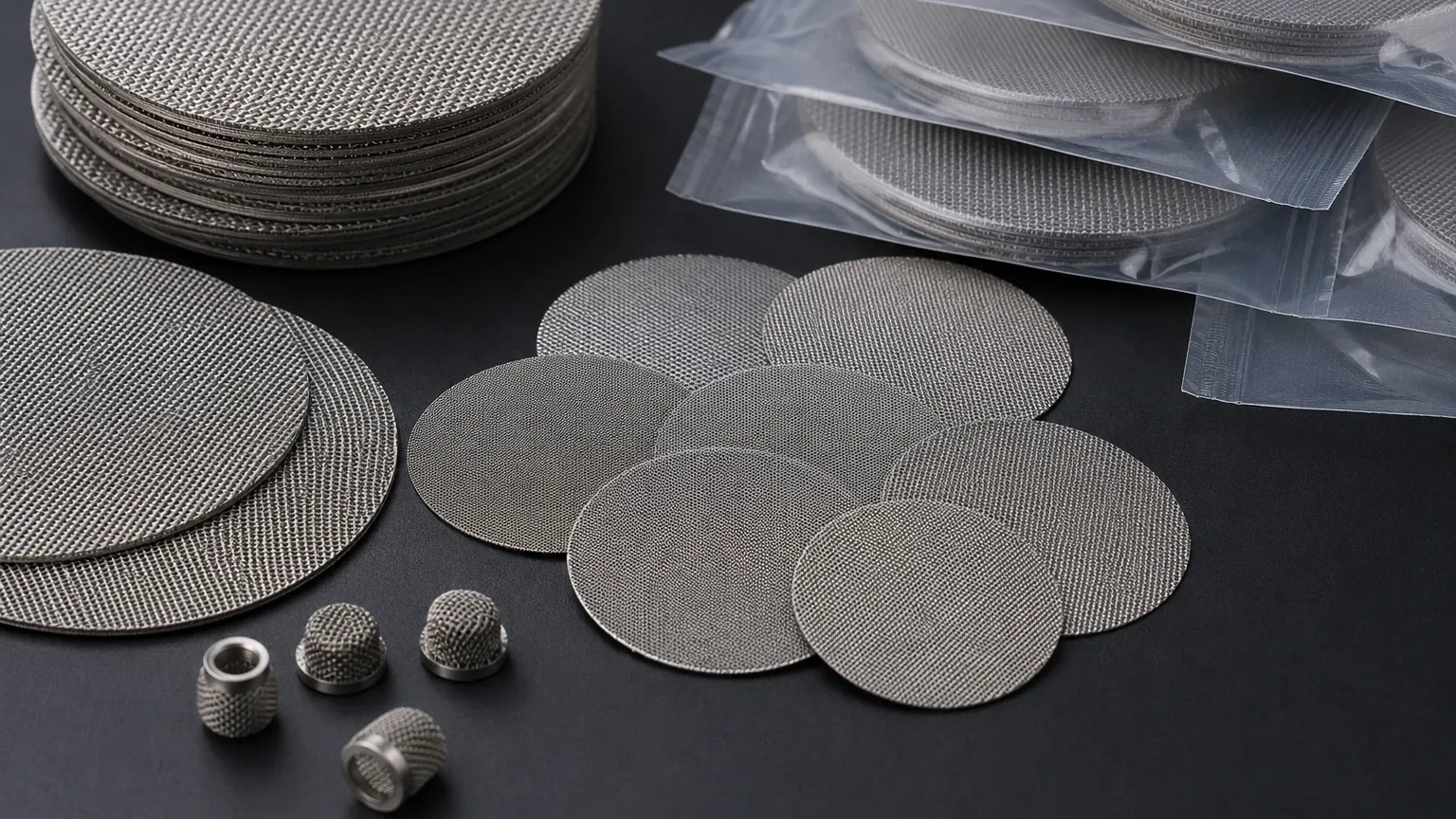
As a specialized manufacturer of stainless steel filtration solutions, Kaifil produces Filter Discs & Packs designed to meet the rigorous demands of industrial environments. Understanding the technical nuances of these components, from material selection to mesh geometry, is vital for engineers and procurement teams tasked with maintaining system integrity and operational efficiency.
Technical Specifications and Material Composition
The performance of a disk filter 3 4 is fundamentally determined by the material used in its construction. In most industrial applications, stainless steel is the preferred medium due to its mechanical strength and resistance to thermal and chemical degradation.
Stainless Steel Grades
Most 3/4-inch filter discs are fabricated from either Grade 304 or Grade 316L stainless steel.
* Grade 304: This is the standard industrial grade, offering excellent durability and resistance to oxidation. It is suitable for most water treatment, food processing, and general industrial applications where extreme chemical corrosion is not a primary concern.
* Grade 316L: Containing molybdenum, 316L provides superior resistance to chlorides and acidic environments. In pharmaceutical and chemical processing, where the filter may be exposed to aggressive solvents or saline solutions, 316L is the mandatory choice to prevent pitting and stress corrosion cracking.
Weave Types and Filtration Characteristics
The "mesh" of the disk determines its micron rating and flow characteristics. Common weave patterns for a disk filter 3 4 include:
* Plain Weave: The most common pattern where each warp wire crosses alternately over and under each weft wire. It provides high flow rates but is generally limited to coarser filtration levels.
* Dutch Weave: This pattern uses a larger diameter warp wire and a smaller diameter weft wire, resulting in a dense, strong mesh. Dutch weave is ideal for high-pressure applications where fine filtration (down to 5-10 microns) is required without sacrificing the structural integrity of the disc.
* Twill Weave: Used for finer meshes, where wires pass over and under two wires at a time, allowing for a heavier wire to be used for a given mesh count.
Engineering Considerations for 3/4-Inch Filter Discs
When integrating a disk filter 3 4 into a system, engineers must evaluate several physical and operational variables to ensure the component does not become a point of failure.
Dimensional Tolerance
In precision machinery, a 3/4-inch disc must fit perfectly within a recessed seat or a filter housing. Even a variance of 0.1mm can lead to "bypass," where the fluid flows around the edges of the filter rather than through the mesh. Manufacturers like Kaifil use precision die-cutting and laser-cutting technologies to ensure that the outer diameter (OD) remains within strict tolerances, ensuring a leak-proof fit.
Pressure Drop (Delta P)
Every filter introduces a degree of resistance to the flow. The pressure drop across a disk filter 3 4 is influenced by the mesh count, the wire diameter, and the viscosity of the fluid. Engineers must calculate the initial pressure drop to ensure the pump system can handle the load as the filter begins to accumulate debris. A high-quality mesh ensures a uniform distribution of pores, which helps in maintaining a predictable and manageable pressure drop over the life of the filter.
Structural Reinforcement
Single-layer mesh discs are often sufficient for low-pressure applications. However, in hydraulic systems or polymer melt filtration, the disc may be subjected to significant differential pressure. In these cases, multi-layer Filter Discs & Packs are utilized. These consist of a fine filtration layer sandwiched between coarser support layers, which prevent the fine mesh from deforming or "bursting" under pressure.
Manufacturing Processes and Quality Control
The reliability of a disk filter 3 4 is a direct result of the manufacturing processes employed during its fabrication. At Kaifil, the transition from raw wire mesh to a finished filtration component involves several critical steps.
Precision Cutting
To prevent fraying at the edges—which could introduce metallic contaminants into the fluid stream—discs are cut using specialized tooling. For 3/4-inch sizes, high-speed punching or laser cutting is used to create a clean, sealed edge. This is particularly important for "rimless" discs used in tight-tolerance assemblies.
Edge Binding and Framing
For applications requiring extra rigidity or a more robust seal, the disk filter 3 4 can be finished with a metal rim. Common materials for the rim include aluminum, stainless steel, or copper. The rim is compressed around the circumference of the mesh, providing a flat sealing surface and preventing any loose wires from escaping the assembly. This is a common requirement in the plastics and rubber extrusion industries.
Cleaning and Degreasing
Industrial filters must be free of residual oils, lubricants, or metal dust from the manufacturing process. Ultrasonic cleaning is the standard method for ensuring that the discs are "chemically clean" before they are packaged. This is a critical step for filters destined for the food, beverage, or pharmaceutical sectors, where purity is non-negotiable.
Applications of the Disk Filter 3 4
The 3/4-inch specification is a versatile size used across a variety of specialized industries. Its compact size makes it ideal for point-of-use filtration and protection of sensitive components.
Polymer and Plastic Extrusion
In the production of synthetic fibers and plastic films, "screen packs" consisting of multiple 3/4-inch discs are used to remove un-melted resin and impurities from the polymer melt. These discs must withstand temperatures exceeding 300°C and pressures up to 5000 PSI. The precision of the mesh ensures that the final product is free of visual defects and structural weaknesses.
Hydraulic and Pneumatic Systems
Small filter discs are often placed in hydraulic lines to protect valves and actuators from metal shavings or seal wear particles. A disk filter 3 4 is frequently found in the aerospace and automotive sectors, where it serves as a last-chance filter to prevent catastrophic component failure.
Laboratory and Chemical Analysis
In pilot plants and laboratory settings, 3/4-inch discs are used in specialized filtration funnels and pressure vessels. They allow researchers to process small batches of chemicals while maintaining strict control over particulate size. The use of 316L stainless steel ensures that the filter does not react with the chemicals being tested.
Selection Guide: Choosing the Right Filter Disc
Selecting the appropriate disk filter 3 4 requires a balance between filtration efficiency and mechanical durability. Engineers should confirm the following data points before finalizing a purchase order:
1. Micron Rating: Determine the smallest particle size that must be removed. Over-filtering (choosing a micron rating smaller than necessary) can lead to frequent clogging and unnecessary downtime.
2. Operating Temperature: Ensure the material and any binding agents (like solder or adhesives, though Kaifil typically uses mechanical binding) can withstand the system's thermal peaks.
3. Chemical Compatibility: Verify that the fluid will not corrode the stainless steel grade selected. For instance, high-salinity water requires 316L or even exotic alloys.
4. Flow Volume: Ensure the effective filtration area of a 3/4-inch disc is sufficient for the required flow rate without causing excessive backpressure.
Maintenance, Cleaning, and Replacement Cycles
While stainless steel Filter Discs & Packs are durable, they are not infinite. The lifespan of a disk filter 3 4 is dictated by the "dirt holding capacity" of the mesh.
Cleaning Procedures
One of the primary advantages of stainless steel filters is their cleanability. Depending on the contaminant, discs can be cleaned using:
* Backwashing: Reversing the flow of fluid to dislodge particles from the mesh surface.
* Solvent Cleaning: Dissolving chemical or polymer residues.
* Burn-off / Pyrolysis: Heating the discs in a controlled environment to carbonize organic contaminants, followed by ultrasonic cleaning to remove the ash.
When to Replace
Despite cleaning, over time, some particles may become permanently lodged in the mesh (pore blinding), or the mesh may suffer from mechanical fatigue. If the pressure drop remains high even after a thorough cleaning cycle, or if there is any visible distortion or broken wires in the mesh, the disc must be replaced to avoid the risk of bypass or downstream contamination.
Conclusion
The disk filter 3 4 is a small but indispensable component in the landscape of industrial filtration. Its ability to provide precise, high-pressure filtration in a compact form factor makes it a staple in sectors ranging from polymer science to hydraulic engineering. By focusing on high-quality materials like 304 and 316L stainless steel and employing rigorous manufacturing standards, Kaifil ensures that these filtration components deliver the reliability and performance demanded by global industries.
For engineers and purchasing managers, the key to successful filtration lies in understanding the technical requirements of the application and selecting a partner capable of delivering precise, customized solutions. Whether for a standard extrusion line or a specialized chemical reactor, the right Filter Discs & Packs are the foundation of a clean, efficient, and safe industrial process.
