


Syphon Filter 3 Discs
In industrial liquid separation, the efficiency of a gravity-fed or vacuum-assisted system often hinges on the configuration of the media used to capture particulates. Syphon filtration, a process that leverages pressure differentials to move fluid through a medium, requires precise engineering to maintain flow rates while ensuring high-purity output. A common and highly effective configuration in these systems is the use of Filter Discs & Packs, specifically arranged in multi-layer stacks. The syphon filter 3 discs configuration is a standard engineering approach used to balance structural integrity, filtration precision, and permeability.
For engineers and procurement specialists, understanding the technical nuances of these three-layer disc packs is essential for optimizing system uptime and reducing the total cost of ownership. This guide examines the mechanical principles, material considerations, and application-specific selection criteria for syphon-based disc filtration.
The Mechanics of Syphon Filtration
Syphon filtration operates on the principle of hydrostatic pressure. Unlike pressurized pump systems that force liquid through a membrane at high bars, syphon systems rely on the weight of the liquid column or a downstream vacuum to pull fluid through the filter media. Because the driving force is relatively low compared to high-pressure hydraulic systems, the resistance offered by the filter media—known as the pressure drop—must be meticulously managed.
When utilizing a syphon filter 3 discs setup, the goal is to create a gradient of filtration. If a single, ultra-fine mesh layer were used, it would likely blind (clog) rapidly or deform under the weight of the fluid. By utilizing a triple-layer pack, the system can distribute the mechanical load and the particulate cake more effectively. The physics of the syphon requires that the "bubble point" of the filter—the pressure at which air can be pushed through a wetted pore—is compatible with the system’s operating vacuum to prevent air locks and ensure continuous flow.
Structural Composition of the 3-Disc Pack
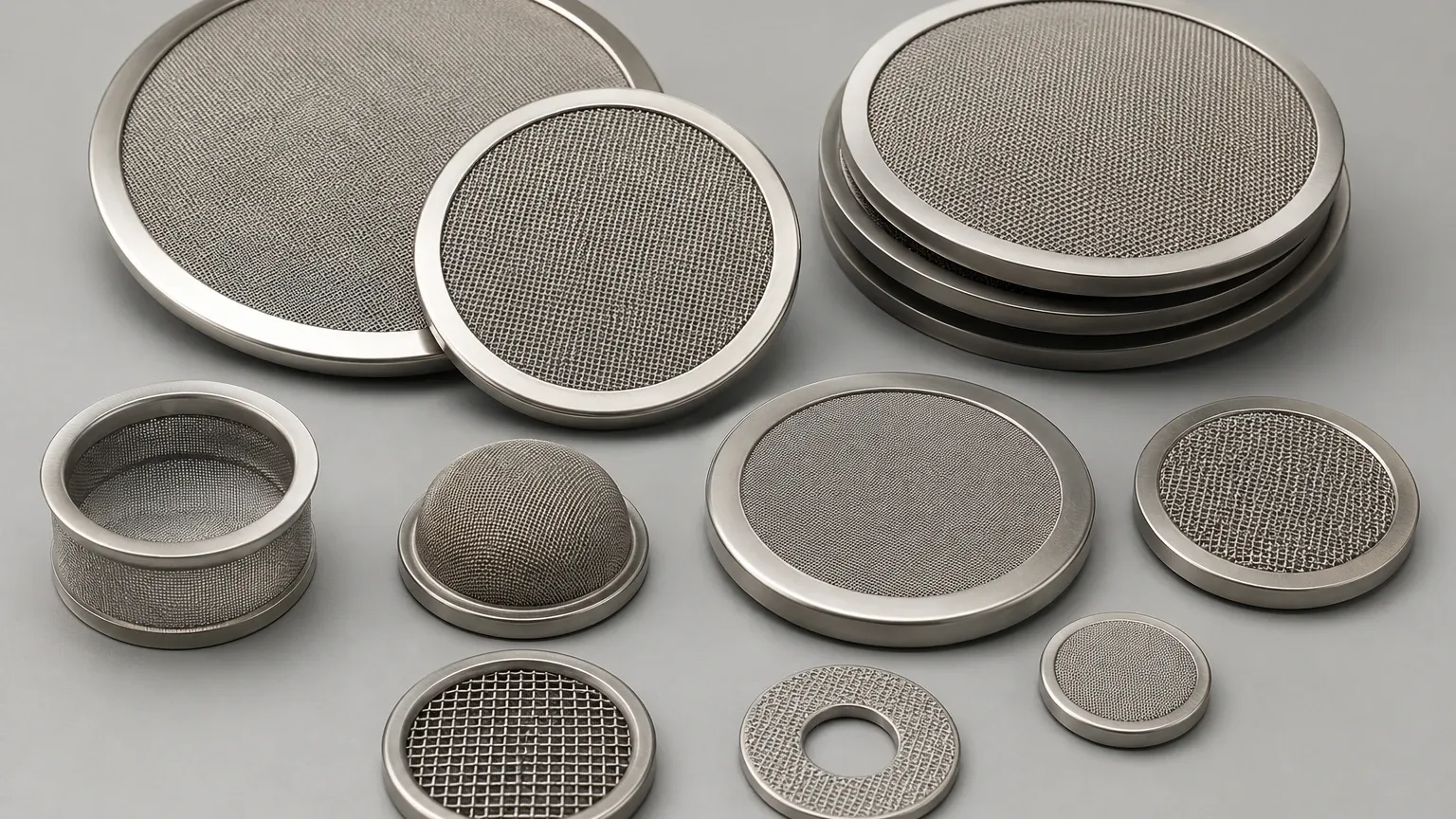
The term "syphon filter 3 discs" refers to a specific composite structure where three distinct layers of stainless steel wire mesh are joined to perform a singular filtration task. Each layer serves a unique functional purpose within the assembly:
1. The Pre-Filtration Layer (Upstream)
The first disc encountered by the influent is typically a coarser mesh. Its primary role is to capture large contaminants that would otherwise prematurely clog the fine filtration layer. By removing the bulk of the particulate load, this layer protects the integrity of the secondary disc and extends the overall service interval of the pack.
2. The Functional Filtration Layer (Core)
This is the middle disc, engineered with a specific micron rating tailored to the application’s requirements. Whether the process requires 5-micron precision for pharmaceutical grade fluids or 50-micron separation for industrial lubricants, this layer performs the critical separation. It is often a Dutch weave or a fine square mesh, depending on the required flow-to-retention ratio.
3. The Support and Drainage Layer (Downstream)
The third disc provides the necessary rigidity to the entire pack. In syphon systems, even low pressure can cause a fine mesh to sag or distort, which alters the pore size and compromises filtration accuracy. The support layer is a heavy-duty, high-permeability mesh that reinforces the functional layer and ensures that the filtered effluent can drain away from the pack without creating backpressure.
Material Engineering and Chemical Compatibility
Because syphon filters are frequently employed in chemical processing, food and beverage production, and water treatment, the material of construction is paramount. Stainless steel is the industry standard due to its durability and resistance to corrosion. At Kaifil, we focus on high-grade alloys to meet demanding industrial environments.
* AISI 304 Stainless Steel: Suitable for general industrial applications where moisture is present but highly corrosive chemicals are not. It offers excellent mechanical strength and cost-effectiveness.
* AISI 316L Stainless Steel: The preferred choice for pharmaceutical and food-grade syphon filters. The addition of molybdenum provides superior resistance to chlorides and organic acids. The "L" (low carbon) designation ensures that the discs remain resistant to intergranular corrosion after welding or rimming processes.
* Specialty Alloys: For extreme environments involving high temperatures or highly acidic/alkaline solutions, alloys such as Monel or Inconel may be utilized in the disc pack construction to prevent premature failure.
Weave Types and Their Impact on Performance
The performance of a syphon filter 3 discs assembly is largely determined by the weave pattern of the wire mesh. Engineers must select the weave based on the nature of the solids being removed and the viscosity of the fluid.
* Plain Square Weave: Provides a straight-through flow path and is easy to clean. It is ideal for the support and pre-filtration layers in a 3-disc pack.
* Plain Dutch Weave (PDW): Features a higher density of wires in one direction, creating a tortuous path for particles. This is excellent for fine filtration in syphon systems because it offers high mechanical strength and precise micron ratings.
* Twill Dutch Weave (TDW): Used for the finest filtration requirements (sub-20 micron). The overlapping wires allow for a very dense mesh that can withstand the constant draw of a syphon system without pore migration.
Engineering Considerations for Selection
When specifying Filter Discs & Packs for a syphon-based application, several technical factors must be confirmed to ensure the component performs as intended.
Micron Rating and Efficiency
It is important to distinguish between "nominal" and "absolute" micron ratings. A nominal rating indicates the ability of the disc to retain a majority of particles of a certain size, while an absolute rating (often achieved through multi-layer 3-disc packs) guarantees that no particle larger than the specified size will pass through. In syphon systems, where flow is slower, an absolute rating is often more achievable and reliable.
Edge Treatment and Sealing
To prevent bypass—where unfiltered fluid leaks around the edges of the disc—the perimeter of the 3-disc pack must be properly finished. Options include:
* Spot Welding: The three layers are welded at several points along the circumference. This is cost-effective but requires a tight-fitting housing to prevent bypass.
* Aluminum or Stainless Steel Rimming: The edges are encased in a metal U-section rim. This provides a superior seal and makes the disc easier to handle during maintenance.
* Sintering: In high-performance applications, the three layers are sintered together in a vacuum furnace, bonding the wires at every contact point. This creates a monolithic structure that cannot delaminate or migrate.
Flow Rate vs. Surface Area
Because syphon systems are limited by gravity, the available surface area of the filter disc is the primary variable in determining flow rate. If the flow is too slow, increasing the diameter of the disc or moving to a pleated disc pack (which increases surface area within the same footprint) may be necessary. For a standard syphon filter 3 discs setup, calculating the Effective Filtration Area (EFA) is the first step in sizing the system.
Common Applications for 3-Disc Syphon Filters
The versatility of the three-layer configuration allows it to be used across a broad spectrum of industries:
* Chemical Processing: Filtering catalysts or removing impurities from reagents where the flow must be steady and controlled.
* Food & Beverage: Syphon filters are often used in the clarification of syrups, oils, and juices. The 3-disc pack ensures that fine sediments are removed without stripping the fluid of its essential characteristics.
* Laboratory and Pilot Plants: Small-scale syphon systems use these discs for batch filtration where mechanical pumps might introduce unwanted heat or shear forces to sensitive fluids.
* Hydraulic and Lubrication Systems: Removing wear particles from oils in gravity-return lines to prevent component damage.
* Water Treatment: Used in specialized desalination or purification stages where low-energy, gravity-based separation is preferred.
Maintenance and Replacement Cycles
One of the primary advantages of stainless steel syphon filter 3 discs is their cleanability. Unlike disposable paper or polymer filters, metal disc packs can be regenerated multiple times. However, the cleaning method must be compatible with the mesh type.
* Ultrasonic Cleaning: The most effective method for multi-layer packs. High-frequency sound waves create cavitation bubbles that dislodge deeply embedded particles from the functional middle layer.
* Backwashing: If the system design allows, reversing the flow can clear the surface of the pre-filtration layer. This is most effective for coarse contaminants.
* Chemical Cleaning: Using mild acids or bases to dissolve organic or mineral buildup, provided the stainless steel grade (e.g., 316L) is resistant to the cleaning agent.
Engineers should monitor the pressure differential across the disc pack. A significant drop in downstream flow indicates that the pack has reached its dirt-holding capacity and requires cleaning or replacement. Over-cleaning can eventually lead to wire fatigue or pore enlargement, so periodic inspection under magnification is recommended.
Conclusion
The syphon filter 3 discs configuration represents a sophisticated balance of engineering principles designed to meet the rigors of industrial filtration. By combining a protective pre-filter, a precision functional layer, and a robust support mesh, these packs provide a reliable solution for gravity-driven and vacuum-assisted processes. Selecting the right material, weave, and edge treatment is essential for ensuring the longevity and efficiency of the filtration system.
At Kaifil, we specialize in the custom manufacture of stainless steel filtration components tailored to specific industrial requirements. Whether you are designing a new syphon-based system or looking to optimize an existing process, our technical team can assist in selecting the optimal Filter Discs & Packs for your application. By focusing on precision manufacturing and high-quality materials, we help engineers achieve consistent, high-performance filtration results in even the most demanding environments.
