


6 Dust Filter
In industrial filtration, the term "6 dust filter" typically refers to a specific dimensional or structural requirement, most commonly a 6-inch diameter filter disc or a 6-layer sintered mesh pack designed for high-efficiency particulate removal. For engineers and procurement specialists, selecting the right Filter Discs & Packs is a critical decision that impacts the longevity of downstream equipment, the purity of the final product, and the overall operational cost of the filtration system.
Stainless steel filtration components, such as those manufactured by Kaifil, offer significant advantages over synthetic or paper-based media, particularly in demanding environments involving high temperatures, corrosive chemicals, or high-pressure differentials. This guide explores the technical considerations, application logic, and engineering specifications of 6-inch dust filtration components to help technical teams optimize their processes.
Understanding the Engineering of 6 Dust Filter Components
The performance of a 6-inch dust filter is fundamentally determined by its construction and the quality of the wire mesh used. In industrial settings, these filters are rarely single-layer components. Instead, they are often engineered as multi-layer packs to balance filtration precision with mechanical strength.
Material Selection: SS 304 vs. SS 316L
The choice of material is the first boundary in filter engineering. Stainless steel 304 is the standard for general industrial dust collection where basic corrosion resistance is sufficient. However, for applications involving acidic gases, high humidity, or pharmaceutical-grade requirements, SS 316L is preferred due to its superior resistance to pitting and intergranular corrosion. The "L" in 316L denotes low carbon content, which is essential for components that require welding, as it prevents carbide precipitation that could lead to structural failure in the filter pack.
Multi-Layer Construction
A 6-layer dust filter pack is a common configuration for high-pressure applications. The layers are typically arranged in a gradient:
1. Protective Layer: A coarse mesh that protects the finer internal layers from mechanical damage.
2. Control Layer: The primary filtration mesh that determines the micron rating.
3. Dispersion Layer: Ensures even flow across the filter surface.
4. Support Layers: Multiple layers of heavier mesh that provide the structural rigidity needed to withstand pressure drops without deforming.
Key Applications for 6-Inch Filter Discs & Packs
Standardized 6-inch (approximately 152mm) filter discs are widely used across various sectors due to their compatibility with common industrial housing sizes. Understanding where these components excel helps in identifying the correct specification for a given process.
Polymer and Plastic Extrusion
In plastic recycling and polymer production, dust and degraded gel particles must be removed to ensure the quality of the final product. 6-inch filter packs are often used in screen changers. The stainless steel construction allows the filter to withstand the high temperatures of molten plastic while maintaining precise filtration under extreme pressure.
Chemical Processing and Gas Filtration
Industrial gas streams often carry fine particulate matter that can erode turbine blades or contaminate chemical reactions. A 6-inch dust filter made of sintered wire mesh provides a permanent solution that can be cleaned and reused, unlike disposable cartridges. These are particularly effective in removing catalyst fines from process streams.
Food and Beverage Processing
In the food industry, filtration components must meet strict hygiene standards. Stainless steel filter discs are ideal because they do not shed fibers (a common risk with felt or paper filters) and can withstand Clean-in-Place (CIP) procedures using caustic chemicals and high-temperature steam.
Technical Specifications and Performance Metrics
When evaluating a 6 dust filter, engineers must look beyond the dimensions and focus on the performance data that dictates the filter’s efficiency and service life.
Micron Rating: Absolute vs. Nominal
* Nominal Rating: Refers to the ability of the filter to retain a major percentage (usually 60% to 90%) of particles of a specific size.
* Absolute Rating: The diameter of the largest hard spherical particle that will pass through the filter under specified test conditions. For critical dust filtration, an absolute rating is necessary to ensure process integrity.
Pressure Drop (ΔP)
The initial pressure drop is a measure of the resistance to flow. A well-engineered 6-inch disc will have a high open area percentage to minimize energy consumption in the system. As dust accumulates, the pressure drop increases; knowing the maximum allowable ΔP before the filter deforms or the flow becomes insufficient is vital for setting maintenance triggers.
Mesh Count and Wire Diameter
The mesh count (number of openings per linear inch) and the wire diameter determine the pore size. A higher mesh count results in finer filtration but may require more support layers to maintain structural integrity. For 6-inch dust filters, finding the balance between a fine mesh for dust capture and a thick enough wire for durability is a key engineering challenge.
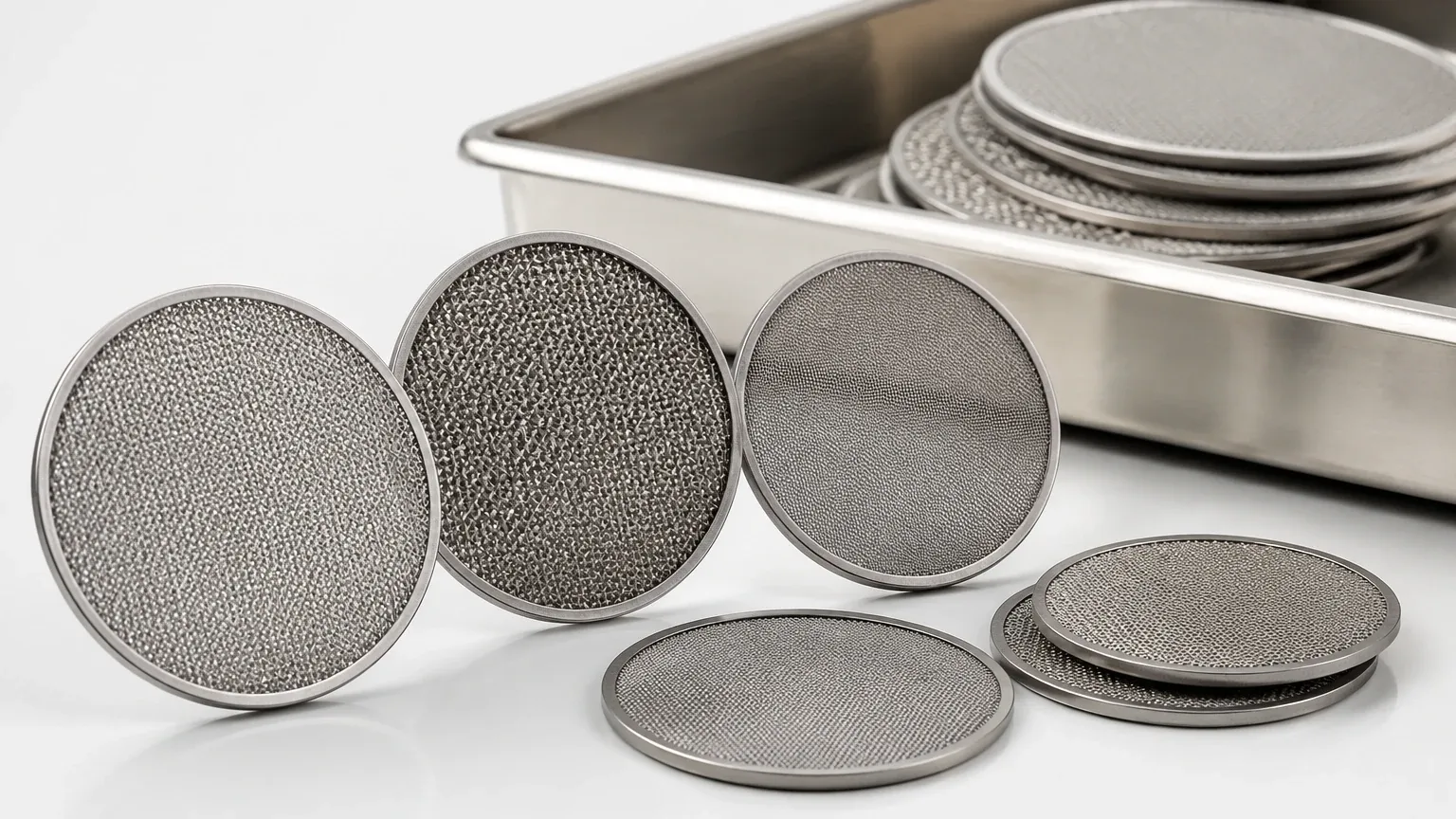
Customization Options for Industrial Dust Filtration
Off-the-shelf solutions rarely meet the specific needs of complex industrial systems. Customization is where manufacturers like Kaifil provide the most value, tailoring the filter to the specific mechanical and chemical environment of the application.
Edging and Framing
To prevent bypass (where unfiltered air or liquid leaks around the edges of the filter), 6-inch discs can be finished with various edging techniques. Aluminum, stainless steel, or copper rims can be crimped onto the edges. This not only prevents leaks but also adds significant structural strength to the disc, making it easier to install and remove from the housing.
Spot Welding and Sintering
For multi-layer packs, the layers must be held together securely. Spot welding at multiple points ensures the layers stay aligned during handling. Sintering, a process of diffusion bonding the wires at their contact points under high heat and pressure, creates a monolithic structure that is incredibly strong and eliminates the risk of wire migration.
Shape and Geometry
While "6-inch" usually implies a circular disc, the same filtration technology can be applied to rectangular packs, cone filters, or pleated cylinders. Custom geometries allow for increased surface area within the same 6-inch footprint, which can significantly extend the time between cleaning cycles.
Maintenance and Longevity: Maximizing Filter Life
One of the primary reasons engineers choose stainless steel Filter Discs & Packs is their cleanability. Unlike synthetic media that must be discarded once clogged, metal filters can be restored to near-original performance levels.
Cleaning Methods
* Ultrasonic Cleaning: Uses high-frequency sound waves to create cavitation bubbles that dislodge fine dust particles from deep within the mesh pores.
* Backwashing: Reversing the flow of the fluid to push contaminants out of the filter media.
* Chemical Cleaning: Using solvents or acids to dissolve specific types of buildup, provided the chemical is compatible with the stainless steel grade.
* Burn-off/Pyrolysis: For polymer applications, heating the filter in a controlled environment to carbonize and remove plastic residues.
0
Monitoring for Replacement
Despite their durability, stainless steel filters eventually reach the end of their service life. Signs that a 6-inch dust filter needs replacement include:
* Permanent Pressure Drop: When the "clean" pressure drop after maintenance is significantly higher than the original spec.
* Mechanical Fatigue: Visible deformation or broken wires in the mesh.
* Pore Enlargement: In high-wear environments, the abrasive nature of dust can gradually enlarge the pores, leading to a loss of filtration accuracy.
Selection Guide: Factors to Confirm Before Purchase
Before placing an order for a 6 dust filter, the following technical parameters should be confirmed with the manufacturer to ensure the component is fit for purpose:
1. Operating Environment: What is the maximum operating temperature? Is the environment oxidizing or reducing? This dictates the grade of stainless steel or the need for specialty alloys like Monel or Inconel.
2. Particulate Characteristics: Is the dust abrasive, sticky, or prone to clumping? This affects the choice of mesh weave (e.g., plain weave vs. dutch weave).
3. Flow Rate and Velocity: High-velocity streams can cause vibration or erosion in the mesh. Support layers must be calculated to handle these dynamic loads.
4. Housing Compatibility: Confirm the exact outer diameter (OD) and thickness. Even a 1mm variance can lead to bypass or installation difficulties in precision housings.
5. Total Cost of Ownership (TCO): While stainless steel discs have a higher upfront cost than disposable filters, their ability to be cleaned and reused usually results in a lower TCO over 12 to 24 months.
By focusing on these technical details, engineering teams can ensure that their 6-inch dust filters provide reliable, long-term service in even the most demanding industrial applications. Whether it is a single-layer disc for a simple vent or a complex 6-layer sintered pack for a high-pressure chemical reactor, the precision of the mesh and the quality of the construction are the ultimate determinants of process success.
