


6 Sintered Disc
In the realm of industrial filtration, the 6 sintered disc represents a critical component for high-precision separation tasks. Whether the "6" refers to a nominal six-inch diameter or a specific six-layer structural configuration, these components are engineered to withstand extreme environments where standard wire mesh would fail. As a specialized manufacturer, Kaifil provides these Filter Discs & Packs to industries ranging from petrochemical processing to pharmaceutical manufacturing, where mechanical integrity and filtration accuracy are non-negotiable.
Understanding the technical nuances of a 6 sintered disc requires a deep dive into the metallurgy, the sintering process, and the fluid dynamics involved in porous media. This article serves as a technical guide for engineers and procurement professionals to evaluate, specify, and maintain these essential filtration elements.
Engineering Fundamentals of Sintered Metal Discs
The primary advantage of a sintered disc over a traditional single-layer wire mesh is its structural rigidity and predictable pore size. Sintering is a thermal process where multiple layers of stainless steel wire mesh are bonded together through diffusion. This occurs in a high-temperature vacuum furnace, where the temperature is raised just below the melting point of the alloy.
During this process, molecular diffusion occurs at the contact points of the wire strands, creating a permanent, monolithic structure. Unlike woven mesh that can shift under pressure—leading to "pore migration"—a sintered disc maintains its geometric stability. For a 6 sintered disc, this means that the specified micron rating remains constant even under high differential pressures or significant mechanical vibration.
The Sintering Process and Diffusion Bonding
Diffusion bonding eliminates the need for binders or adhesive resins, which is critical for B2B applications in the food, beverage, and medical sectors. The absence of foreign materials ensures that there is no risk of media migration or chemical leaching into the filtrate. The resulting 6 sintered disc exhibits high mechanical strength, excellent permeability, and the ability to be cleaned and reused multiple times, significantly lowering the total cost of ownership compared to disposable polymer filters.
Structural Configurations: The Role of Multi-Layer Design
When specifying a 6 sintered disc, engineers must consider the layering strategy. A common configuration for heavy-duty industrial use is the multi-layer sintered mesh. While 5-layer structures are standard, a 6-layer design often adds an extra support or drainage layer to handle higher flow velocities or to provide additional protection for the fine filtration mesh.
1. Protection Layer: The outermost layer that protects the delicate filter media from large particles and mechanical damage.
2. Filter Layer: The core layer that determines the micron rating. This is where the actual separation occurs.
3. Drainage Layer: Positioned behind the filter layer to facilitate the smooth flow of filtrate away from the mesh.
4. Support Layers: Multiple layers of coarser mesh that provide the structural backbone, allowing the disc to resist deformation under high pressure.
In a 6-inch diameter format, these discs are often used in polymer melt filtration, hydraulic systems, and gas-solid separation. The diameter must be precise to ensure a proper seal within the filter housing, preventing bypass—a common failure point in poorly manufactured discs.
Material Selection for Demanding Environments
The performance of a 6 sintered disc is largely dictated by the alloy used in its construction. Kaifil utilizes a variety of high-performance materials to meet specific chemical and thermal requirements.
Stainless Steel 316L
316L is the industry standard for most filtration applications due to its excellent corrosion resistance and mechanical properties. The "L" denotes low carbon content, which is essential for preventing carbide precipitation during the sintering process, thereby maintaining the alloy's resistance to intergranular corrosion.
Specialized Alloys: Hastelloy and Inconel
For applications involving highly acidic or alkaline environments, or temperatures exceeding 500°C, specialized alloys like Hastelloy C-276 or Inconel 600 are employed. These materials are frequently used in the chemical processing industry where 316L might suffer from pitting or stress corrosion cracking. Choosing the right material for a 6 sintered disc ensures that the filter does not become a point of failure in a continuous production line.
Technical Performance Metrics
When evaluating Filter Discs & Packs, engineers focus on several key performance indicators (KPIs) that define the efficiency of the filtration system.
Micron Rating and Pore Size Distribution
The micron rating of a 6 sintered disc can range from 0.5 microns to over 200 microns. However, the absolute rating is more critical than the nominal rating. An absolute rating implies that 99.9% of particles larger than the specified size will be captured. Sintered discs provide a very narrow pore size distribution, which is essential for processes requiring high-purity outputs.
Permeability and Pressure Drop
Permeability refers to the ease with which a fluid passes through the porous medium. A high-quality 6 sintered disc is designed to maximize flow area while maintaining structural strength. Engineers must calculate the clean pressure drop ($ΔP$) to ensure the system's pump capacity is sufficient. A high initial pressure drop often indicates a disc that is too thick or has an inefficient layer configuration, leading to shortened service life.
Mechanical Strength and Bubble Point
The bubble point test is a non-destructive method used to verify the integrity of the sintered disc. By submerging the disc in a liquid and increasing air pressure until the first bubble appears, technicians can confirm that the pore size matches the specification and that there are no defects in the diffusion bonding.
Customization and Edge Treatment
A 6 sintered disc is rarely a standalone component; it is usually part of a larger assembly. Customization options are vital for seamless integration into existing industrial hardware.
Edge Sealing and Framing
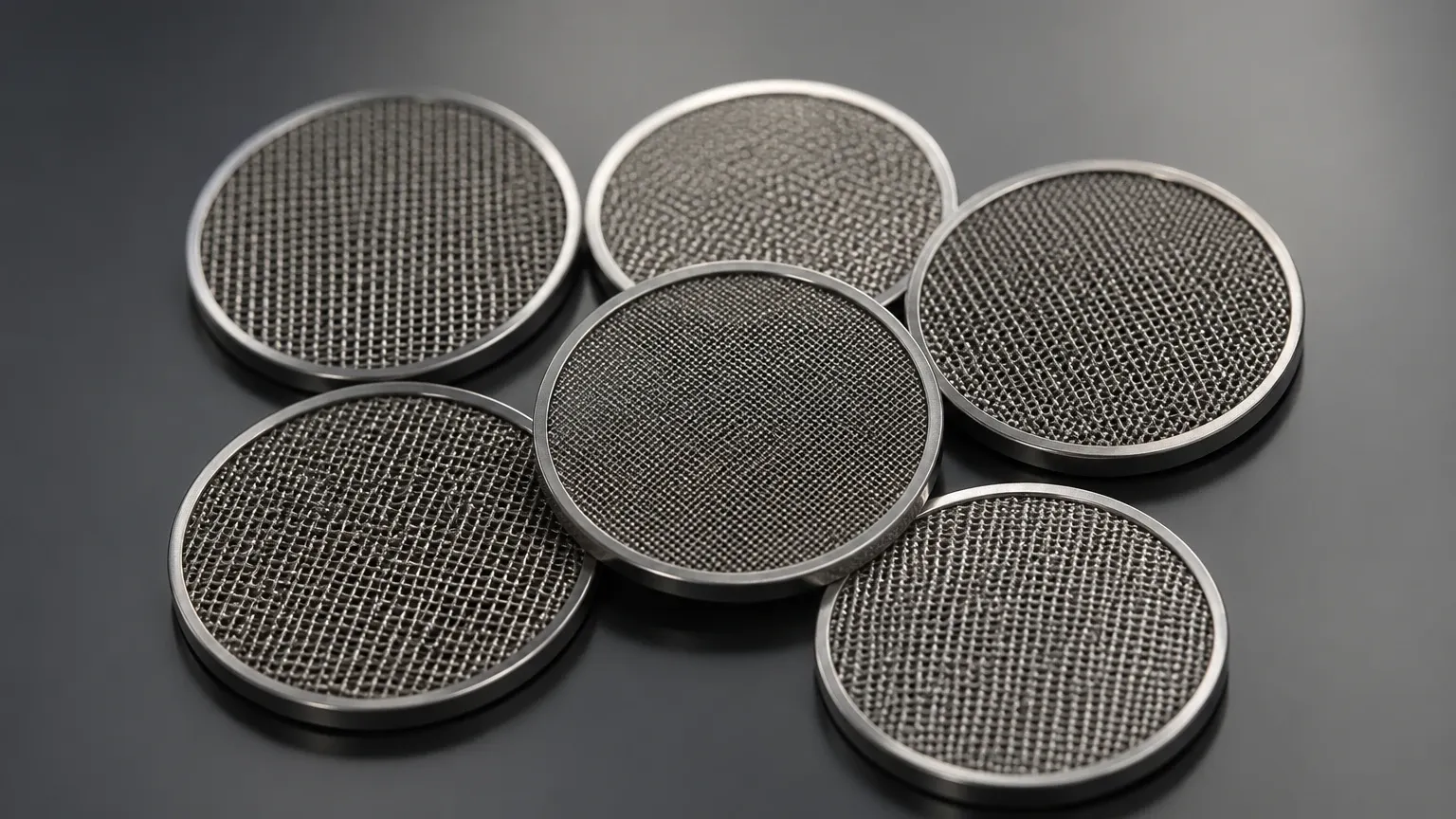
To prevent bypass and provide a surface for gaskets, sintered discs can be finished with various edge treatments. Common options include:
* Welded Edges: The layers are TIG welded or plasma welded to create a solid border.
* Aluminum or Stainless Steel Rims: A metal U-channel is crimped around the circumference of the disc.
* Sintered Solid Edges: During the sintering process, the edges are compressed more densely to create a semi-solid border.
Shape and Geometry
While circular discs are the most common, Kaifil can manufacture these components in various geometries, including oval, rectangular, or custom-contoured shapes to fit specific machinery. The precision of the outer diameter (OD) is critical, especially in high-pressure hydraulic applications where even a 0.1mm deviation can lead to seal failure.
Industrial Applications of 6 Sintered Discs
The versatility of the 6 sintered disc makes it a staple in several high-stakes industries.
Pharmaceutical and Biotechnology
In the production of Active Pharmaceutical Ingredients (APIs), filtration must be absolute and the equipment must be easy to sterilize. Sintered discs are ideal because they can withstand CIP (Clean-in-Place) and SIP (Steam-in-Place) procedures without degrading. Their smooth surface also prevents particle entrapment, making them easier to clean than traditional felt or paper filters.
Polymer and Fiber Production
The extrusion of polymers requires the removal of "gels" and degraded material that can ruin the quality of the final product. A 6 sintered disc, often used in a "spin pack" assembly, provides the necessary resistance to the high pressures (up to 30,000 PSI) and temperatures (up to 400°C) found in polymer melt filtration.
Food and Beverage Processing
From carbonating soft drinks to filtering steam used in food processing, sintered discs provide a hygienic solution. They are used to remove bacteria and particulates from gases and liquids, ensuring that the final product meets safety standards while maintaining the desired flavor profile.
Maintenance, Cleaning, and Longevity
One of the most significant B2B advantages of a 6 sintered disc is its cleanability. Unlike disposable filters that contribute to waste and recurring costs, sintered metal can be restored to near-original performance levels through several cleaning methods.
Ultrasonic Cleaning
This is the most effective method for removing fine particles lodged deep within the pores. High-frequency sound waves create cavitation bubbles that physically dislodge contaminants without damaging the metal structure.
Chemical Cleaning
Depending on the nature of the contaminant, discs can be soaked in caustic solutions, acids, or organic solvents. Because the discs are made of 316L or other high-grade alloys, they are resistant to most industrial cleaning chemicals.
Backwashing and Thermal Cleaning
In some systems, backwashing (reversing the flow) can be used for routine maintenance. For organic contaminants like polymers, thermal cleaning (pyrolysis) in a controlled-atmosphere furnace can burn off the residue, leaving the metal disc clean and ready for reuse.
Conclusion: Selecting the Right Filter Component
Choosing a 6 sintered disc involves more than just selecting a diameter and a micron rating. It requires an understanding of the fluid's viscosity, the chemical environment, the expected pressure loads, and the required cleanliness levels. By focusing on high-quality diffusion bonding and precise material selection, engineers can ensure that their filtration systems operate at peak efficiency with minimal downtime.
As a dedicated manufacturer, Kaifil provides the technical expertise and manufacturing precision necessary to produce reliable Filter Discs & Packs. Whether you are designing a new system or looking to optimize an existing process, confirming the material grade, layer structure, and edge treatment is the first step toward achieving superior filtration performance.
