


8 Inch Dust Filter
In industrial environments, the management of airborne particulates is a critical factor in maintaining equipment longevity, ensuring product purity, and complying with environmental safety standards. The 8 inch dust filter represents a specific, widely utilized dimensional standard in filtration systems, particularly where circular housing or pneumatic conveying lines require precise fitment. While the term "dust filter" often evokes images of fabric bags or pleated paper, high-performance industrial applications increasingly rely on stainless steel Filter Discs & Packs to handle extreme temperatures, corrosive gases, and high-pressure differentials.
Selecting the correct filtration component requires a deep understanding of the mechanical properties of the media, the nature of the dust being captured, and the operational constraints of the system. For engineers and procurement teams, the transition from disposable media to permanent, cleanable metal filtration solutions offers significant advantages in terms of total cost of ownership and process stability.
Understanding the Role of 8 Inch Dust Filters in Industrial Systems
An 8 inch dust filter is typically defined by its outer diameter, designed to fit into standard 8-inch piping, hopper vents, or specialized dust collection housings. These filters serve as the primary barrier against particulate matter in gas streams. In pneumatic conveying, for instance, they prevent fine powders from escaping into the atmosphere or entering vacuum pumps. In chemical processing, they protect downstream equipment from catalyst fines or process-generated debris.
Unlike standard HVAC filters, industrial dust filters must often operate in demanding conditions. The 8-inch circular format is particularly common in modular filtration units where multiple discs or packs are stacked to increase the total surface area without expanding the footprint of the machinery. This design allows for a compact filtration solution that can handle significant volumetric flow rates.
Material Engineering: Why Stainless Steel is the Standard
When evaluating an 8 inch dust filter for industrial use, material selection is the most critical engineering decision. While synthetic fibers or ceramic elements have their place, stainless steel wire mesh and sintered metal remain the gold standard for several reasons:
Corrosion and Chemical Resistance
Industrial dust often contains chemically active components or is carried in a corrosive gas stream. Using 304 or 316L stainless steel ensures that the filter does not degrade when exposed to moisture, acidic vapors, or alkaline environments. This is particularly vital in the pharmaceutical and food and beverage sectors, where material integrity is non-negotiable.
Thermal Stability
Many industrial processes, such as plastic extrusion or metal smelting, generate dust at temperatures exceeding 200°C. Synthetic filters will melt or lose structural integrity at these levels. Stainless steel Filter Discs & Packs can operate continuously at high temperatures, maintaining their pore structure and filtration efficiency.
Mechanical Strength
Dust filtration often involves high pressure drops, especially as the filter cake builds up. A metal filter provides the structural rigidity necessary to resist deformation or "blow-through" under pressure. This durability allows for high-pressure pulse cleaning or backwashing, which would destroy less robust media.
Key Performance Metrics: Micron Rating and Airflow Efficiency
To specify an 8 inch dust filter effectively, engineers must balance filtration accuracy with airflow requirements. The performance of the filter is governed by several technical parameters:
1. Absolute vs. Nominal Micron Rating: In dust filtration, the micron rating determines the smallest particle size the filter can reliably capture. For critical applications, an absolute rating is preferred, ensuring that 99.9% of particles above a certain size are retained. For general dust collection, a nominal rating may suffice.
2. Permeability and Pressure Drop: Every filter introduces resistance to the airflow, known as pressure drop (ΔP). An ideal 8 inch dust filter maximizes the open area of the mesh to allow for high flow rates while maintaining the required filtration level. A high initial pressure drop can lead to increased energy consumption by fans and blowers.
3. Dust Holding Capacity: This refers to the amount of particulate the filter can collect before the pressure drop reaches a critical limit. In metal Filter Discs & Packs, the weave type—such as plain weave, twill weave, or dutch weave—significantly influences how dust is trapped on the surface versus within the depth of the media.
Applications Across Critical Industries
The 8 inch dust filter is a versatile component found in numerous specialized industrial sectors. Its application is rarely just about "cleaning the air"; it is often about protecting the integrity of a complex mechanical process.
Chemical and Petrochemical Processing
In these environments, filters are used to recover expensive catalysts or to remove impurities from gas vents. The 8-inch size is frequently used in vent filters for storage tanks, where it must allow the tank to "breathe" while preventing environmental contamination.
Pharmaceutical Manufacturing
Precision is paramount in pharmaceutical dust collection. Filters used here must be made of high-grade stainless steel to prevent batch contamination. They are often used in fluid bed dryers and tablet coating machines where they capture fine medicinal dust.
Food and Beverage Production
During the processing of flour, sugar, or spices, fine dust is both a waste product and a potential explosion hazard. Metal 8 inch dust filters are used in dust extraction systems to mitigate these risks while ensuring that no foreign materials (like fibers from a fabric filter) enter the food chain.
Hydraulic and Industrial Machinery
In large-scale hydraulic systems, air breathers are used to prevent dust from entering the oil reservoir as fluid levels fluctuate. An 8-inch metal filter pack provides a high-flow, durable solution that can withstand the oily, high-temperature air found in heavy industrial machinery.
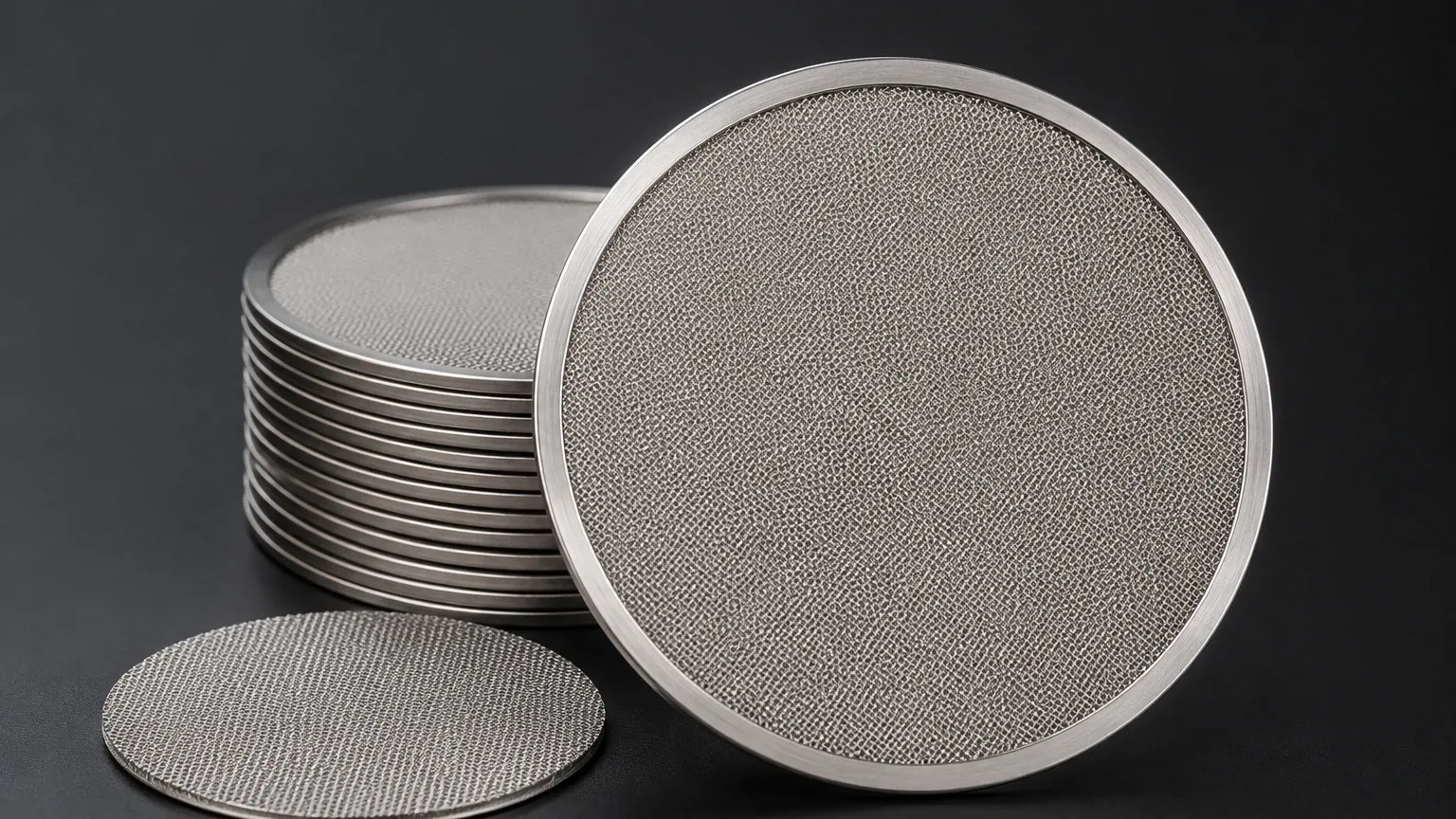
Customization Options for Filter Discs & Packs
Standard off-the-shelf filters rarely meet the specific needs of specialized industrial equipment. Customization is often required to ensure the 8 inch dust filter integrates perfectly with existing hardware. Customization options typically include:
* Layering and Sintering: Multiple layers of wire mesh can be sintered together to combine high filtration accuracy with extreme mechanical strength. A fine inner layer provides the filtration, while coarser outer layers provide support.
* Edge Treatments: For an 8-inch disc, the edge must be finished to prevent fraying and to ensure a gas-tight seal within the housing. Options include spot welding, aluminum or stainless steel binding, or specialized gaskets.
* Shape Variations: While the 8-inch diameter is standard, the "pack" might require a specific thickness or a center hole for mounting on a spindle. Custom Filter Discs & Packs can be engineered to these exact geometric tolerances.
Maintenance and Longevity: Optimizing the Lifecycle of Metal Filters
One of the primary reasons engineers specify stainless steel 8 inch dust filters is their cleanability. Unlike disposable filters that must be replaced and discarded, metal filters can be restored to near-original performance through several cleaning methods:
* Ultrasonic Cleaning: This is the most effective method for removing fine particulates trapped deep within the mesh. High-frequency sound waves create cavitation bubbles that dislodge contaminants without damaging the wire structure.
* Backwashing and Pulse Jetting: In automated systems, a reverse flow of air or liquid can be used to blow the dust cake off the surface of the filter, extending the time between deep cleanings.
* Chemical Cleaning: If the dust contains resins or oils, specialized solvents can be used to dissolve the contaminants without affecting the stainless steel media.
By implementing a regular cleaning cycle, the total cost of ownership for a metal filter becomes significantly lower than that of frequent disposable filter purchases, especially when considering the labor costs associated with downtime and replacement.
Engineering Checklist: Selecting the Right 8 Inch Dust Filter
Before finalizing a purchase or design specification, engineering and purchasing teams should confirm the following technical details to ensure the filter performs as expected:
1. Operating Temperature: What is the maximum and continuous operating temperature of the gas stream?
2. Particle Characteristics: Is the dust abrasive, sticky, or prone to static buildup? This influences the choice of weave and surface treatment.
3. Flow Rate (CFM/CMH): What is the required volumetric flow rate, and what is the maximum allowable pressure drop across the filter?
4. Housing Interface: Does the 8-inch filter require a specific rim thickness or gasket material to ensure a proper seal?
5. Compliance Standards: Does the application require FDA-compliant materials or specific ISO filtration certifications?
By addressing these factors, facilities can ensure they are utilizing the most efficient Filter Discs & Packs for their specific needs. High-quality metal filtration components, like those manufactured by Kaifil, provide the reliability and precision required for modern industrial operations, turning filtration from a maintenance headache into a optimized process advantage.
