


Wedge Wire Screen Manufacturers
In industrial filtration and separation, the choice of a component often dictates the efficiency, uptime, and maintenance costs of an entire processing line. Among the various technologies available, wedge wire screens stand out as a premium solution for demanding environments. Selecting the right wedge wire screen manufacturers involves more than just comparing price points; it requires a deep understanding of engineering tolerances, material science, and the specific hydraulic or mechanical stresses of the application.
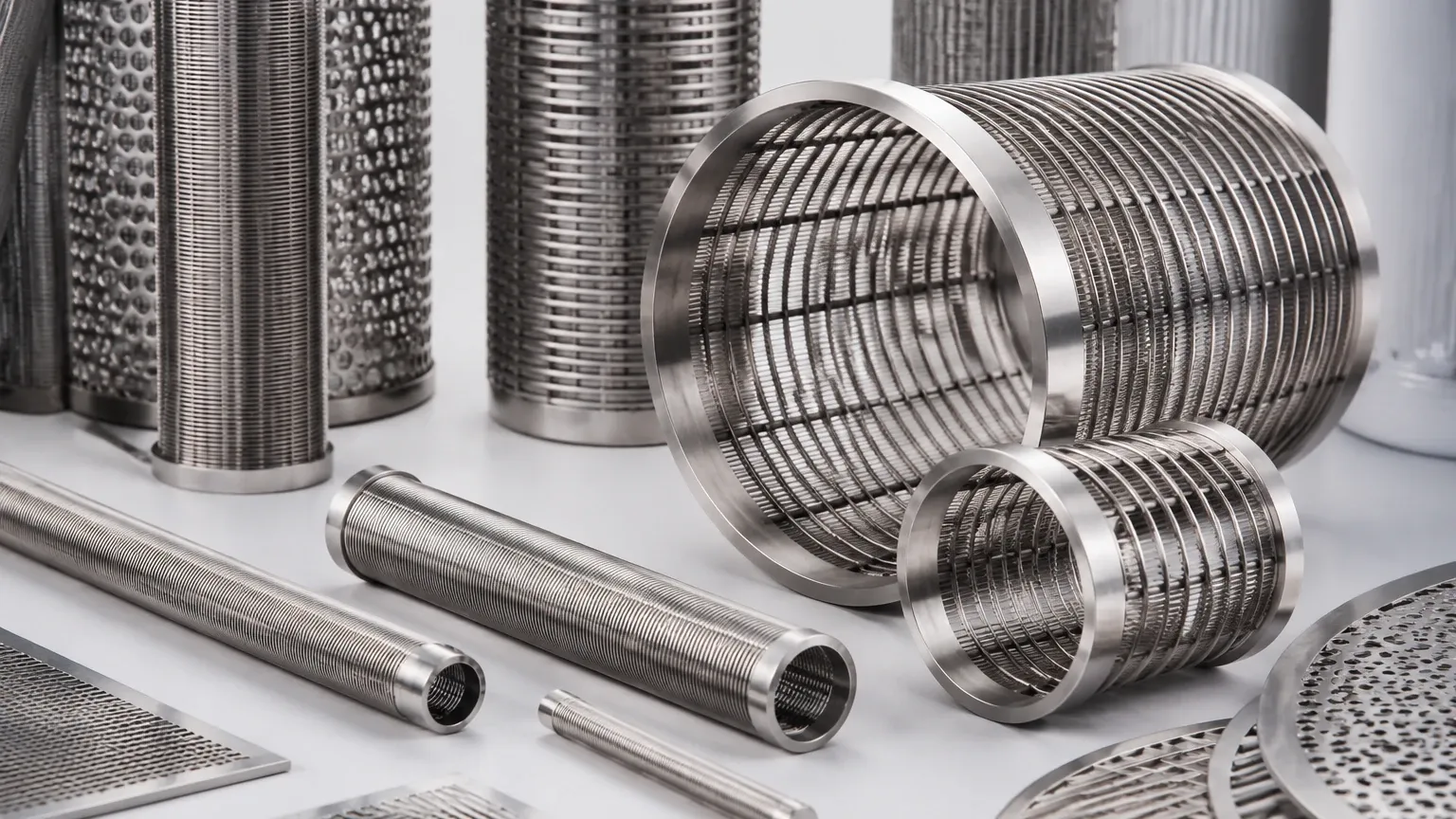
Wedge wire, also known as profile wire, is a specialized filtration medium characterized by its V-shaped profile wires resistance-welded onto support rods. This unique construction creates a continuous slot that widens inwardly, significantly reducing the risk of clogging and blinding. For engineers and procurement teams in the chemical, food and beverage, and water treatment sectors, identifying a manufacturer capable of delivering precise slot widths and robust structural integrity is critical to operational success.
The Technical Advantage of Wedge Wire Screens
To evaluate Wedge Wire Screens effectively, one must first understand the engineering principles that make them superior to woven wire mesh or perforated plate in specific contexts. The primary advantage lies in the "two-point contact" design. Because the V-shaped wire narrows at the surface and widens toward the interior, any particle that passes through the surface opening will continue through the screen without becoming wedged.
This non-clogging characteristic is essential for continuous processes where downtime for manual cleaning is not feasible. Manufacturers provide these screens in various configurations, including flat panels, cylindrical cartridges, and curved sieve bends. The structural strength of wedge wire is also inherently higher than many other media, as the support rods and profile wires are fused at every intersection, creating a rigid, self-supporting structure that can withstand significant pressure differentials.
Essential Criteria for Selecting Wedge Wire Screen Manufacturers
When vetting wedge wire screen manufacturers, technical professionals must look beyond basic catalog offerings. The complexity of industrial filtration requires a partner who understands the nuances of fluid dynamics and mechanical stress. Key evaluation criteria include:
Precision of Slot Openings
The most critical performance metric for any wedge wire product is the accuracy and consistency of the slot size. Even minor deviations in slot width can lead to bypass of oversized particles or premature clogging. High-quality manufacturers use advanced CNC-controlled resistance welding equipment to ensure that slot tolerances are maintained across the entire surface of the screen, often down to 20 microns for high-precision applications.
Welding Integrity and Structural Support
In high-pressure hydraulic systems or heavy-duty mining applications, the mechanical bond between the profile wire and the support rod is under constant stress. Manufacturers must demonstrate mastery of resistance welding techniques that ensure a full-fusion bond without compromising the metallurgical properties of the stainless steel. The spacing and geometry of the support rods must also be engineered to prevent vibration-induced fatigue and structural collapse.
Customization Capabilities
Off-the-shelf solutions rarely meet the specific needs of a custom-built processing plant. A reliable manufacturer should offer extensive OEM capabilities, allowing for the customization of wire profiles, support rod shapes, and overall dimensions. This includes the ability to integrate specialized fittings, flanges, and reinforcement rings directly into the screen design to simplify installation and improve service life.
Material Considerations for Demanding Environments
The longevity of a filtration component is heavily dependent on its resistance to the operating environment. Wedge wire screen manufacturers typically work with various grades of stainless steel and high-performance alloys to combat corrosion, erosion, and thermal degradation.
1. 304 Stainless Steel: The standard choice for general industrial applications where moderate corrosion resistance is required. It is widely used in food processing and water filtration.
2. 316L Stainless Steel: Contains molybdenum, which provides superior resistance to chlorides and pitting. This is the preferred material for pharmaceutical, chemical processing, and marine environments.
3. Duplex Stainless Steels: For applications involving high mechanical stress and highly corrosive media (such as desalination or petrochemical processing), duplex alloys offer nearly double the yield strength of standard austenitic steels and exceptional resistance to stress corrosion cracking.
4. Specialty Alloys: In extreme cases involving high temperatures or highly acidic/alkaline fluids, manufacturers may utilize Monel, Hastelloy, or Inconel.
Engineers should confirm that the manufacturer provides material certifications (MTRs) to ensure the chemical composition of the steel matches the project specifications.
Technical Evaluation of Flow Rates and Open Area
A common challenge in filter selection is balancing filtration fineness with flow capacity. The "open area" of a wedge wire screen is determined by the ratio of the slot width to the total area (slot width plus wire width).
Experienced manufacturers provide detailed calculations to help engineers optimize this ratio. A larger open area reduces the pressure drop across the screen, which in turn lowers energy consumption for pumps and reduces the velocity of the fluid through the slots. Lower velocity is often desirable as it minimizes the risk of particle impingement and erosion on the wire surfaces. When discussing requirements with wedge wire screen manufacturers, it is vital to provide data on flow rates, viscosity, and particle loading to ensure the screen is sized correctly for the intended flux.
Quality Control and Performance Validation
To ensure reliable performance in the field, manufacturers must adhere to rigorous quality control protocols. This is especially important for industries like pharmaceutical manufacturing or food production, where component failure can lead to batch contamination.
* Dimensional Inspection: Using optical comparators or digital calipers to verify slot widths at multiple points across the screen.
* Pressure Testing: Subjecting the screen to simulated operational pressures to ensure structural integrity and check for deformation.
* Surface Finish Treatment: Many applications require specific surface treatments, such as electropolishing or pickling, to remove burrs and improve corrosion resistance. A smooth surface finish is critical for self-cleaning applications, as it prevents particles from adhering to the wire edges.
* Non-Destructive Testing (NDT): For critical applications, manufacturers may perform dye penetrant testing or ultrasonic inspection to verify the integrity of the welds.
Common Application Challenges and Solutions
Wedge wire screens are utilized across a vast spectrum of industries, each with unique challenges that manufacturers must address through design innovation.
Water Treatment and Intake Screens
In municipal and industrial water intake, screens must protect downstream equipment from debris while minimizing the impact on aquatic life. Manufacturers design large-capacity T-intake or drum screens with specific slot sizes to meet environmental regulations regarding approach velocity.
Food and Beverage Processing
Hygiene is the primary concern here. Wedge wire screen manufacturers produce components for mash tuns in brewing, sugar juice filtration, and vegetable processing. These screens must be designed with "clean-in-place" (CIP) capabilities in mind, ensuring there are no dead zones where bacteria can accumulate.
Petrochemical and Refining
In reactor internals and catalyst bed supports, wedge wire must withstand extreme temperatures and corrosive hydrocarbon streams. Manufacturers often use heavier wire profiles and reinforced support structures to ensure the screens do not warp or fail under the weight of the catalyst media.
Total Cost of Ownership and Maintenance
While the initial purchase price of a wedge wire screen may be higher than that of disposable media or simpler mesh designs, the total cost of ownership (TCO) is often significantly lower. The durability of stainless steel wedge wire allows for repeated cleaning and long service cycles.
Maintenance teams should look for manufacturers that provide clear guidance on cleaning protocols. Because of the V-wire geometry, backwashing or mechanical scraping is highly effective. If a screen is properly specified and maintained, it can last for many years, even in abrasive environments. When evaluating wedge wire screen manufacturers, ask about the expected replacement cycles and the availability of repair services for high-value components like large intake screens or centrifuge baskets.
Partnering with the Right Manufacturer
Selecting a manufacturer is a strategic decision that affects the long-term reliability of industrial processes. A professional manufacturer like Kaifil provides not only the physical product but also the engineering expertise required to solve complex filtration problems. Whether you are designing a new system or looking to optimize an existing one, the manufacturer should act as a technical resource, offering advice on material selection, wire profiles, and structural design.
Before finalizing a procurement decision, technical teams should confirm the manufacturer's ability to handle custom designs, their lead times for specialized alloys, and their documentation standards. By focusing on technical proficiency and quality assurance, companies can ensure they receive wedge wire solutions that deliver consistent performance, reduced maintenance, and optimized filtration efficiency.
