


Wedge Wire Screen in Peru
In the industrial landscape of Peru, where mining, water treatment, and food processing form the backbone of the economy, the demand for high-precision filtration components is constant. Among these technologies, wedge wire screens stand out as a critical solution for solid-liquid separation. Engineering teams across the country, from the high-altitude mines of the Andes to the coastal desalination plants, increasingly rely on these components for their durability and efficiency. This guide explores the technical specifications, application-specific requirements, and procurement considerations for selecting a wedge wire screen in Peru.
Technical Fundamentals of Wedge Wire Screens
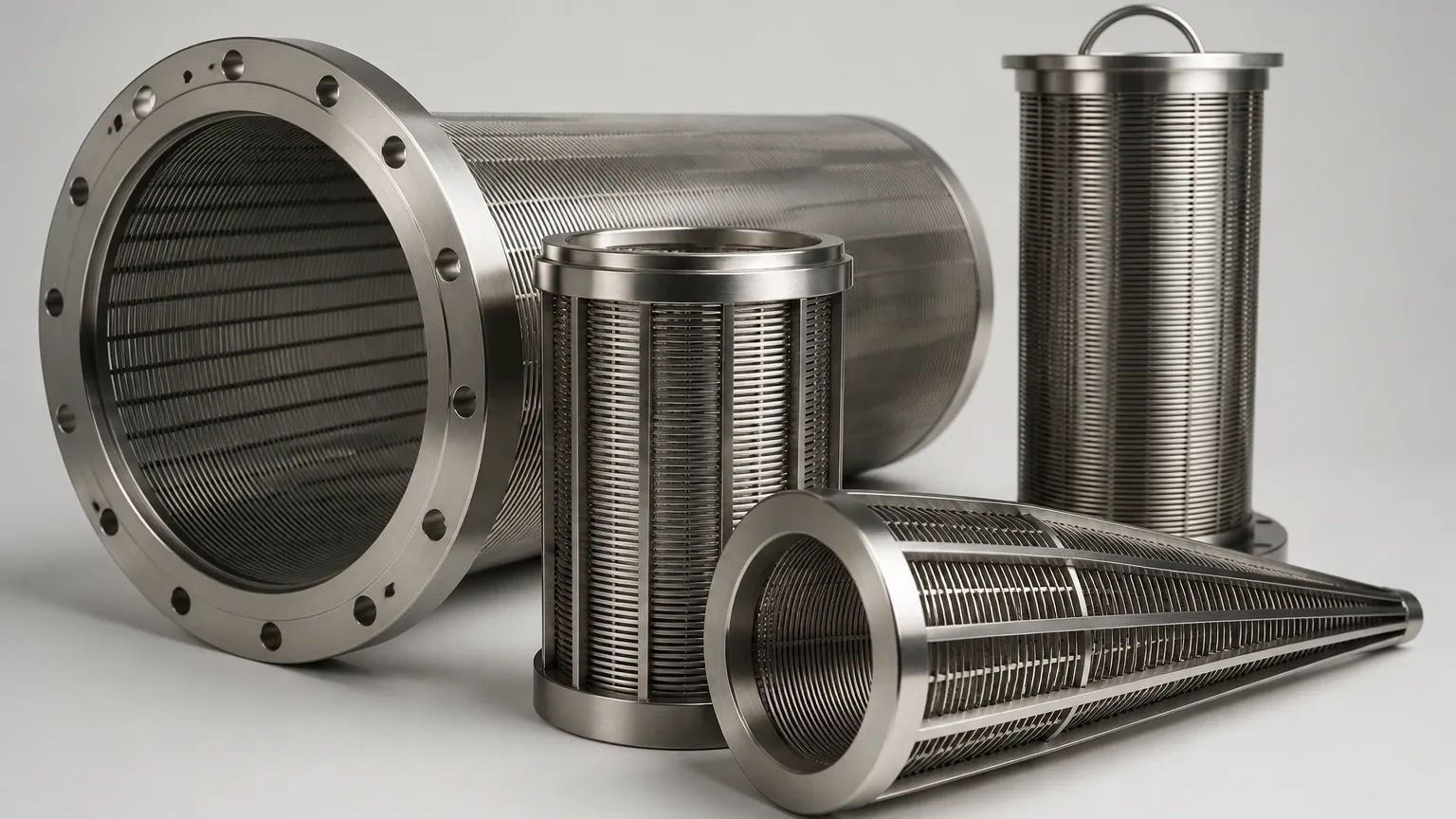
Wedge Wire Screens are specialized filtration surfaces manufactured through the resistance welding of V-shaped profile wires onto support rods. Unlike traditional woven wire mesh, wedge wire offers a unique geometry that provides several mechanical advantages in industrial environments.
The V-Shaped Profile Advantage
The primary characteristic of wedge wire is the "V" or wedge-shaped cross-section of the surface wire. This design creates a slot that widens inwardly. In practice, this means that any particle small enough to pass through the initial aperture will continue through the screen without becoming wedged or clogged. This self-cleaning property is essential for continuous industrial processes where downtime for manual cleaning is costly.
Structural Integrity and Precision
Manufacturing these screens involves precise control over the spacing between the profile wires, known as the slot opening. These openings can be as fine as 20 microns or as large as several millimeters, depending on the application. Because the wires are welded at every intersection with the support rods, the resulting structure is exceptionally rigid and capable of withstanding high pressure differentials and heavy mechanical loads without deforming.
Industrial Applications for Wedge Wire Screen in Peru
The diverse industrial sectors in Peru require filtration solutions that can handle varying levels of abrasion, corrosion, and flow rates. Wedge wire technology is uniquely suited to these challenges.
Mining and Mineral Processing
Peru is a global leader in the production of copper, gold, and zinc. In the mining sector, wedge wire screens are indispensable for dewatering, sizing, and media retention.
* Sieve Bends: Often used for preliminary dewatering, these curved screens utilize the Coanda effect to separate liquids from solids with high efficiency.
* Interstage Screens: In Carbon-in-Pulp (CIP) and Carbon-in-Leach (CIL) circuits, wedge wire cylinders are used to retain activated carbon while allowing the gold-bearing slurry to pass through. The high abrasion resistance of stainless steel wedge wire is critical here to ensure a long service life.
* Vibrating Screen Decks: Heavy-duty wedge wire panels are used in vibrating equipment to classify ores by size, providing a more consistent aperture than traditional polyurethane or woven wire options.
Water Treatment and Desalination
As Peru addresses water scarcity in its coastal regions, desalination and advanced wastewater treatment have become priorities. Wedge wire screens play a vital role in protecting downstream equipment.
* Intake Screens: Passive intake screens placed in oceans or rivers prevent aquatic life and large debris from entering the treatment system. The low-velocity flow through the wedge wire slots minimizes impingement and entrainment.
* Resin Traps: In ion exchange and filtration systems, wedge wire resin traps prevent the loss of expensive treatment media in the event of a lateral failure.
Food and Beverage Production
From the sugar mills in the north to the breweries in Lima, wedge wire is used for clarifying liquids and separating solids. In the fishmeal industry—a major sector for Peru—wedge wire trommels and dewatering screens are used to process raw materials efficiently, ensuring high-quality output and environmental compliance.
Material Selection for Harsh Environments
When specifying a wedge wire screen in Peru, material selection is as important as the mechanical design. The environmental conditions—ranging from high-salinity coastal air to acidic mine drainage—dictate the grade of stainless steel required.
1. Grade 304 Stainless Steel: Suitable for general-purpose applications with low corrosive potential, such as basic water filtration or food processing in non-acidic environments.
2. Grade 316L Stainless Steel: The standard for most industrial applications in Peru. The addition of molybdenum provides superior resistance to chlorides, making it ideal for coastal installations and chemical processing.
3. Duplex Stainless Steels: For extreme environments, such as high-pressure desalination or highly acidic mining slurries, Duplex grades offer double the mechanical strength of standard austenitic steels and exceptional resistance to stress corrosion cracking.
Engineering Specifications and Design Factors
Selecting the right wedge wire screen requires a deep dive into engineering parameters. It is not a "one size fits all" component. Engineers must confirm several factors before finalizing a design.
Slot Size and Tolerance
The slot size determines the filtration rating. However, the tolerance of that slot size is equally important. In precision applications like catalyst recovery, a variation of even a few microns can lead to significant product loss. High-quality manufacturing ensures that the gap between profile wires remains consistent across the entire surface of the screen.
Flow Direction: FOTI vs. FITO
The direction of flow relative to the V-shape of the wire is a critical design choice:
* Flow-Out-To-In (FOTI): The liquid moves from the outside of a cylindrical screen toward the center. The flat side of the wedge wire is usually on the outside.
* Flow-In-To-Out (FITO): The liquid moves from the center toward the outside. This is common in screw press separators and certain types of internal filtration systems.
Support Rod Configuration
The support rods provide the structural skeleton. Depending on the pressure drop and mechanical stress, these rods can be round, rectangular, or even teardrop-shaped. The frequency of the welds (the pitch of the support rods) determines the collapse strength of the screen.
Quality Standards and Performance Evaluation
For procurement teams in Peru, verifying the quality of imported or locally sourced wedge wire is essential to avoid premature failure. Key performance indicators include:
* Weld Integrity: Every intersection must be securely welded. Poor welding leads to "unraveling" under vibration or pressure spikes.
* Surface Smoothness: In food and pharmaceutical applications, the screen must be free of burrs and pits to prevent bacterial growth and ensure ease of cleaning (CIP/SIP).
* Dimensional Accuracy: For screens integrated into complex machinery, such as centrifugal separators, the roundness and straightness of the cylinders must meet tight tolerances to prevent mechanical interference.
Customization and OEM Solutions
Industrial filtration often requires bespoke solutions. Standard catalog items rarely fit the specific needs of a unique mining circuit or a retrofitted water plant. Working with a manufacturer like Kaifil allows for extensive customization, including:
* Reinforcement Rings: To handle extreme internal or external pressures.
* Custom Fittings: Flanges, threaded ends, or specialized mounting brackets welded directly to the screen.
* Variable Slot Openings: Designing a single screen with different slot sizes along its length to facilitate graduated filtration.
Total Cost of Ownership (TCO) in Filtration
While the initial purchase price of a wedge wire screen in Peru is a factor, the Total Cost of Ownership (TCO) provides a more accurate picture of value. Wedge wire screens typically offer a lower TCO than woven mesh or synthetic filters due to:
1. Longevity: Stainless steel construction resists wear and corrosion, lasting years rather than months.
2. Reduced Downtime: The non-clogging nature reduces the frequency of cleaning cycles.
3. Energy Efficiency: A high open area minimizes pressure drop across the screen, reducing the energy required for pumping.
4. Waste Reduction: Permanent screens eliminate the recurring cost and environmental impact of disposing of filter cartridges or bags.
Conclusion: Making Informed Procurement Decisions
For engineers and purchasing managers in Peru, selecting the right wedge wire screen is a balance of material science, mechanical engineering, and application knowledge. By understanding the specific demands of the Peruvian industrial environment—from the abrasive slurries of the mining sector to the corrosive conditions of coastal water treatment—professionals can specify filtration solutions that optimize performance and minimize long-term costs.
When evaluating suppliers, it is vital to confirm technical capabilities, material certifications, and the ability to provide customized engineering support. A well-designed wedge wire system is an investment in the reliability and efficiency of the entire industrial process.
