


Wedge Wire Intake Screens
In industrial water management, the efficiency of an intake system is often the determining factor for the longevity and reliability of downstream equipment. Whether for power generation, desalination, municipal water treatment, or chemical processing, the primary challenge remains the same: extracting large volumes of water while excluding debris and protecting aquatic life. Wedge wire intake screens have emerged as the industry standard for these applications due to their unique hydraulic properties and structural integrity.
As a specialized manufacturer of stainless steel filtration solutions, Kaifil provides precision-engineered Wedge Wire Screens designed to meet the rigorous demands of submerged intake environments. Understanding the technical nuances of these components—from slot geometry to material selection—is essential for engineers and procurement teams tasked with optimizing industrial water intake systems.
The Engineering Fundamentals of Wedge Wire Screens
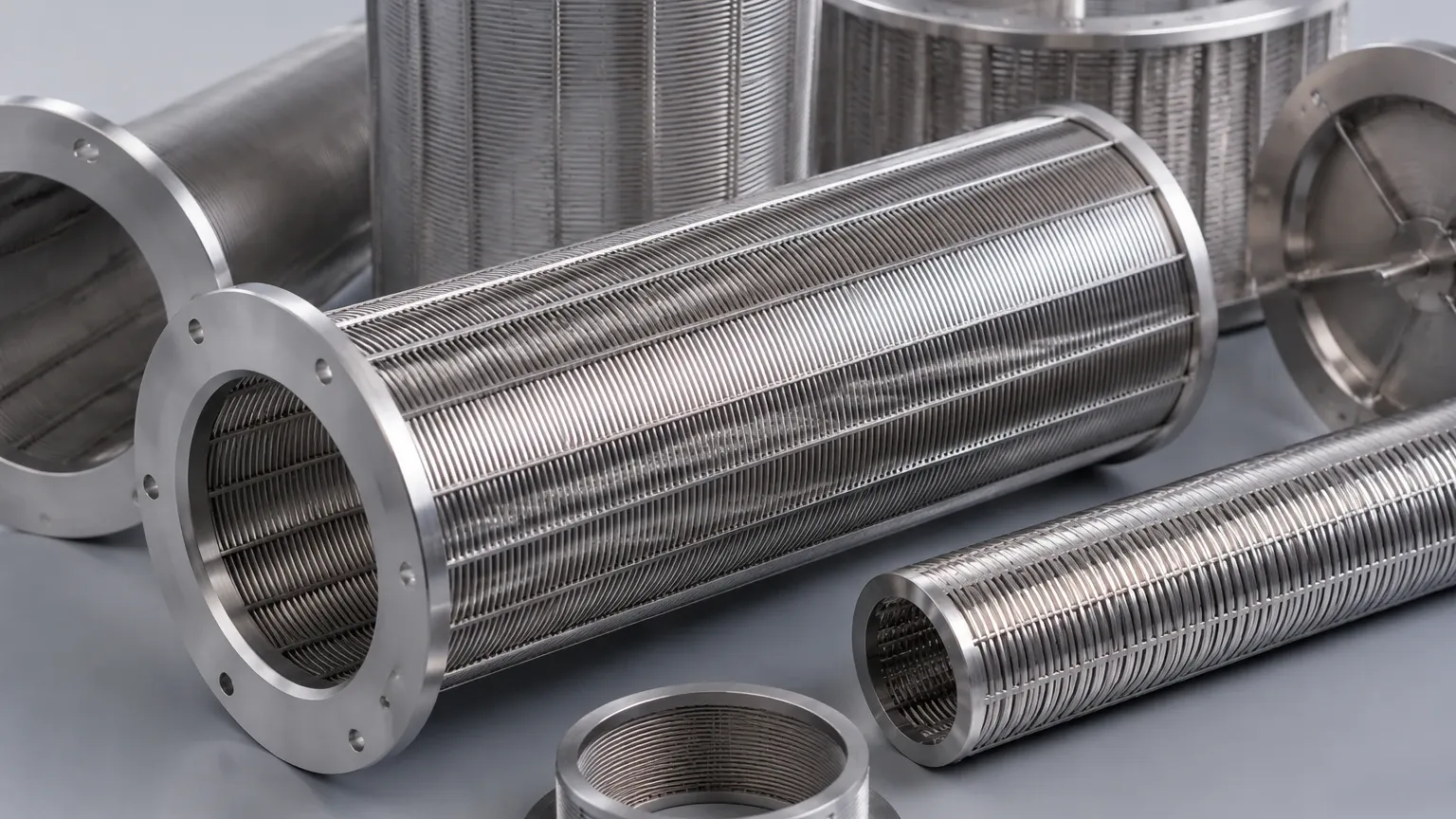
The performance of wedge wire intake screens is rooted in their specific construction. Unlike woven wire mesh or perforated plates, these screens are manufactured through a resistance welding process where V-shaped profile wires are welded onto perpendicular support rods. This creates a continuous slot that widens inwardly.
The V-Wire Advantage
This "V" profile is critical for two reasons. First, it provides a two-point contact for any particles attempting to pass through the screen, which significantly reduces the risk of blinding or clogging. If a particle can pass through the narrowest point at the surface, it will easily clear the widening internal gap. Second, the geometry allows for a high percentage of open area, which is vital for maintaining low pressure drops and managing flow velocities.
Structural Integrity and Precision
In intake applications, the screens are often subjected to significant hydrostatic pressure, current forces, and potential impacts from submerged debris. The resistance welding process ensures a high-strength bond at every intersection of the profile wire and support rod. This creates a rigid, self-supporting structure that maintains precise slot tolerances even under heavy loads. For industrial applications, maintaining a consistent slot width is non-negotiable, as it ensures the exclusion of specific particle sizes and protects sensitive downstream pumps and membranes.
Design Considerations for Wedge Wire Intake Screens
When specifying wedge wire intake screens, several hydraulic and environmental factors must be balanced to ensure long-term performance. The design process is not merely about selecting a diameter and length; it involves a complex calculation of flow dynamics.
Approach Velocity and Through-Slot Velocity
One of the most critical parameters in intake design is the approach velocity—the speed of the water as it nears the screen surface. To protect local ecosystems and prevent the impingement of fish and other aquatic organisms, regulatory bodies often mandate a maximum approach velocity (typically 0.15 meters per second or 0.5 feet per second).
To achieve these low velocities while maintaining high throughput, engineers must maximize the screen's surface area. Wedge wire intake screens are ideal for this because they offer a much higher open area than alternative materials. By distributing the intake volume over a larger area, the through-slot velocity remains uniform, reducing turbulence and minimizing the intake of silt and fine sediments.
Slot Width Selection
The slot width is determined by the nature of the debris in the water source and the requirements of the downstream process. In many industrial cooling water systems, a slot width of 2mm to 10mm may be sufficient. However, for desalination pre-filtration or sensitive municipal intakes, much finer slots—down to 0.5mm—may be required. It is important to note that as slot width decreases, the total surface area of the screen must increase to maintain the same flow capacity and low approach velocity.
Material Science in Submerged Environments
Intake screens are permanently submerged, often in aggressive environments ranging from brackish estuaries to highly corrosive seawater. Material selection is the primary defense against premature failure due to corrosion or erosion.
Stainless Steel Grades
* Grade 304/304L: Suitable for freshwater applications with low chloride levels. It offers excellent mechanical properties and cost-effectiveness for inland river or lake intakes.
* Grade 316L: The standard for most industrial and coastal applications. The addition of molybdenum provides enhanced resistance to pitting and crevice corrosion in chloride-rich environments.
* Duplex and Super Duplex Stainless Steels: For desalination plants or offshore oil and gas platforms where seawater salinity and temperatures are high, Duplex (such as 2205) or Super Duplex (such as 2507) steels are required. These alloys provide superior yield strength and exceptional resistance to stress corrosion cracking.
Biofouling Resistance
In many water bodies, biofouling—the accumulation of algae, zebra mussels, or barnacles—can quickly restrict flow. While stainless steel provides the structural base, certain applications benefit from specialized coatings or the use of copper-nickel alloys for the profile wires to naturally inhibit biological growth. However, for most industrial wedge wire intake screens, the primary defense against biofouling is a robust cleaning system.
Environmental Protection and Regulatory Compliance
Modern industrial intake design is heavily influenced by environmental regulations, such as Section 316(b) of the Clean Water Act in the United States. These regulations aim to minimize the adverse environmental impact of cooling water intake structures by reducing the mortality of aquatic organisms.
Passive Screening Benefits
Wedge wire screens are considered a "Best Technology Available" (BTA) for fish protection. Their passive nature means there are no moving parts that could trap or injure aquatic life. The combination of low approach velocity and the smooth, cylindrical surface of the screen allows fish to swim away from the intake easily. Furthermore, the narrow slot widths effectively exclude eggs and larvae (entrainment) that would otherwise be drawn into the industrial process.
Diverting Debris
The cylindrical shape of the screen, combined with the orientation of the V-wires, helps to deflect debris. In many river applications, the ambient current of the water body provides a natural cleaning action, carrying debris past the screen rather than allowing it to pin against the surface. This "sweeping velocity" is a key component of a successful passive intake installation.
Maintenance Strategies and Biofouling Control
While wedge wire intake screens are designed for low maintenance, they are not "set and forget" components. Over time, even the most efficient screens can accumulate debris or biological growth that impacts hydraulic performance.
Air-Burst Systems
The most common and effective cleaning method for submerged intake screens is the air-burst system. This involves a periodic high-pressure blast of compressed air released from within the screen. The air-burst creates a localized displacement of water that travels outward through the slots, dislodging accumulated debris and biofouling.
Engineers must ensure that the screen's internal piping and distribution headers are designed to deliver a uniform burst across the entire surface area. Kaifil works with engineering teams to ensure that the structural design of the Wedge Wire Screens can withstand the repetitive mechanical stresses of high-pressure air-burst cycles.
Manual and Chemical Cleaning
In extreme cases of scaling or stubborn biofouling, screens may require periodic manual cleaning or chemical treatment. The durability of stainless steel allows for mechanical brushing or the use of mild acid washes to restore the original open area without damaging the profile wires. For systems where retrieval is difficult, designing the intake with redundant screen capacity allows for individual units to be taken offline for maintenance without stopping the entire plant's water supply.
Customization and Specification for Industrial Applications
Every water intake project presents a unique set of variables, from water chemistry and depth to flow requirements and local wildlife. Off-the-shelf solutions rarely provide the optimal balance of performance and longevity. Customization is essential for achieving the best total cost of ownership.
Engineering Collaboration
When partnering with a manufacturer like Kaifil, engineers should be prepared to provide detailed site data, including:
* Required Flow Rate: Both average and peak demand.
* Water Source Characteristics: Freshwater, brackish, or seawater; presence of specific debris (leaves, plastic, silt).
* Regulatory Requirements: Maximum allowable approach velocity.
* Installation Depth: To account for hydrostatic pressure and potential ice loading in cold climates.
* Cleaning Infrastructure: Availability of compressed air for air-burst systems.
Total Cost of Ownership (TCO)
While the initial capital expenditure (CAPEX) of a high-grade stainless steel wedge wire screen may be higher than alternative materials, the long-term operational savings are significant. Reduced pump energy costs (due to lower pressure drops), minimized downtime for cleaning, and the avoidance of regulatory fines for environmental non-compliance all contribute to a lower TCO. Furthermore, the extended service life of a well-engineered stainless steel screen—often spanning decades—ensures that the investment pays for itself over the life of the facility.
Conclusion
Wedge wire intake screens represent a critical intersection of hydraulic engineering, material science, and environmental stewardship. By utilizing the inherent advantages of the V-wire profile and high-quality stainless steel alloys, industrial facilities can ensure a reliable, efficient, and compliant water supply. As global water regulations tighten and industrial processes become more sensitive to water quality, the role of precision-engineered filtration components will only grow in importance. For engineers and procurement professionals, selecting the right partner for the design and manufacture of these screens is the first step toward a resilient and sustainable intake infrastructure.
