


Wedge Wire Screens Uk
In the landscape of industrial filtration and separation, few components offer the structural integrity and precision of wedge wire screens. For engineering and procurement teams sourcing wedge wire screens uk for critical infrastructure, understanding the technical nuances of these components is essential for ensuring long-term operational efficiency. Wedge wire, often referred to as V-wire or profile wire, is a specialized metallic filter medium characterized by its unique geometry and robust construction, making it a preferred choice for demanding applications ranging from municipal water treatment to high-capacity food processing.
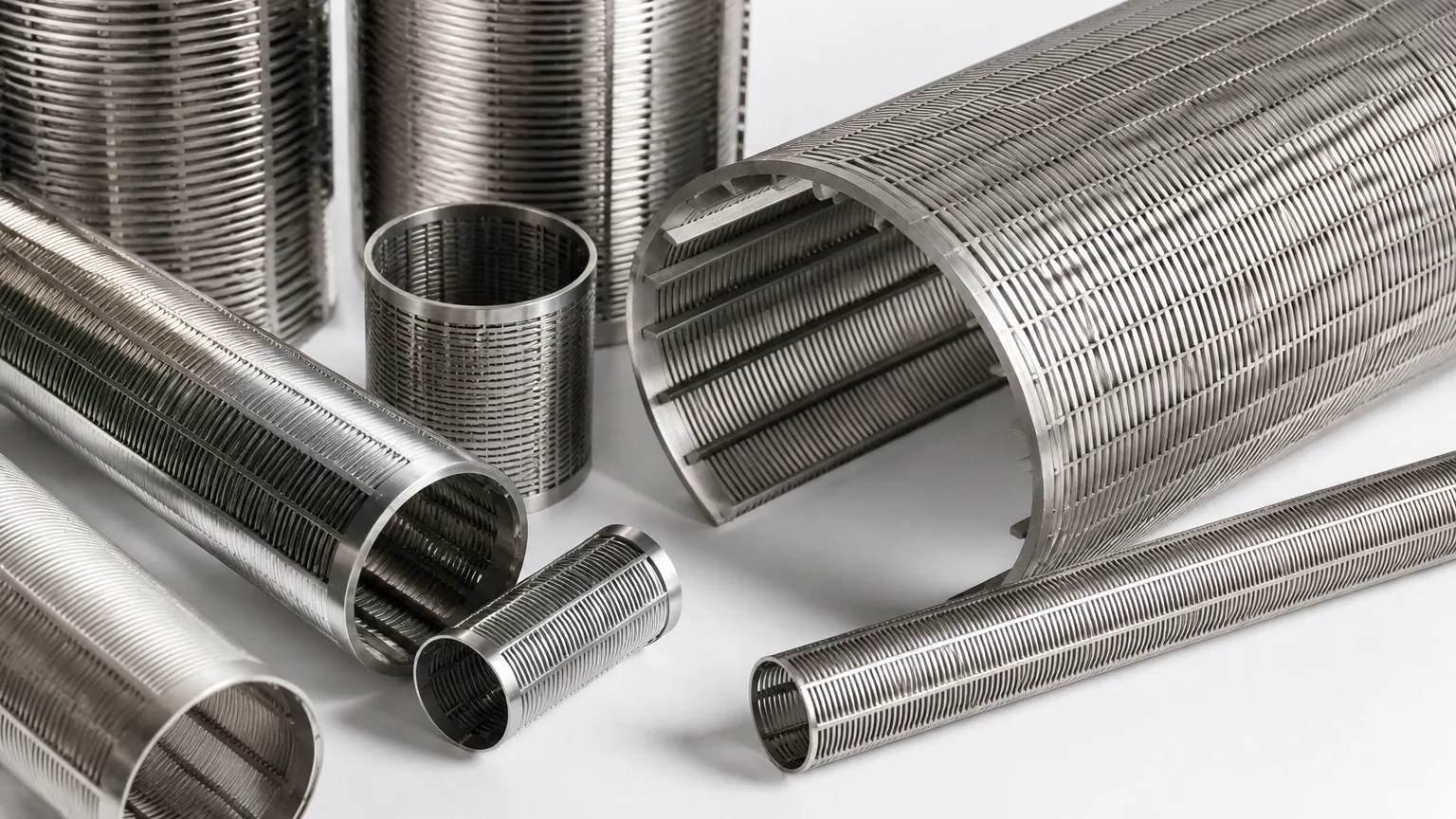
Wedge Wire Screens are engineered to provide a high open area while maintaining superior mechanical strength. Unlike traditional woven wire mesh, which can be prone to shifting or deformation under high pressure, wedge wire is constructed through a resistance welding process that fuses a profile wire onto support rods. This creates a rigid, non-clogging surface that is capable of withstanding significant differential pressures and abrasive environments.
Technical Principles of Wedge Wire Geometry
The fundamental advantage of wedge wire lies in its V-shaped profile. When viewed in cross-section, the wire tapers from a wide outer face to a narrower inner point. This geometry creates a continuous slot that widens inwardly. In a filtration context, this means that any particle small enough to pass through the initial slot opening will continue through the screen without becoming trapped. This "self-cleaning" property is critical for preventing "pegging" or "blinding," which are common failure modes in standard mesh filters.
Slot Precision and Flow Dynamics
For engineers specifying wedge wire screens uk, the precision of the slot width is the most critical variable. Slot openings can be manufactured to tolerances as tight as ±0.05mm, allowing for extremely accurate particle size control. The flow dynamics are also optimized; the smooth surface of the profile wire minimizes friction, allowing for higher flow rates per square meter of surface area compared to other filter media.
When calculating the required surface area for a filtration system, engineers must consider the "open area" percentage. This is determined by the formula:
Open Area % = (Slot Width / (Slot Width + Wire Width)) x 100
By selecting specific wire profiles (such as the 12S, 22S, or 32S series), manufacturers can balance the need for a high open area with the structural requirements of the application. Heavy-duty support rods are typically spaced at intervals that prevent the profile wires from vibrating or bowing under hydraulic load.
Material Selection for the UK Industrial Environment
The longevity of a wedge wire screen is heavily dependent on the alloy selected. In the UK, where many industrial sites are located in coastal areas or deal with corrosive process fluids, material science plays a pivotal role in procurement decisions.
Stainless Steel 304 vs. 316L
* Grade 304: This is the standard grade for general-purpose applications. It offers excellent strength and good corrosion resistance for non-acidic environments. It is frequently used in architectural applications and standard water filtration.
* Grade 316L: Containing molybdenum, 316L provides superior resistance to chlorides and pitting. For UK-based chemical processing plants, pharmaceutical facilities, and marine applications, 316L is generally considered the minimum requirement to prevent premature failure due to stress corrosion cracking.
Specialty Alloys
In more extreme environments, such as North Sea oil and gas operations or highly acidic chemical reactors, specialty alloys like Duplex 2205 or Super Duplex may be specified. These materials offer nearly double the yield strength of standard austenitic stainless steels and exceptional resistance to localized corrosion. For engineers, the total cost of ownership (TCO) often favors these higher-grade materials because they significantly extend the replacement cycle and reduce unplanned downtime.
Key Applications Across UK Industries
The versatility of wedge wire allows it to be integrated into diverse mechanical systems. Its application in the UK market is particularly prominent in sectors where reliability and hygiene are paramount.
Water and Wastewater Treatment
UK water authorities utilize wedge wire in several stages of the treatment process. Intake screens, placed at river or reservoir extraction points, prevent debris and aquatic life from entering the system. The high open area ensures that the intake velocity remains low, complying with environmental regulations regarding fish protection. Additionally, wedge wire is used in activated sludge processes and as underdrain systems in gravity filters, where its ability to support heavy media beds without clogging is indispensable.
Food and Beverage Production
The UK’s robust brewing and distilling heritage relies heavily on wedge wire technology. Lauter tun bottoms in breweries utilize precision-slotted wedge wire plates to support the grain bed while allowing the wort to flow through clearly. The smooth, crevice-free surface of the V-wire is essential for Clean-in-Place (CIP) protocols, as it prevents the buildup of organic matter and bacteria, ensuring compliance with stringent food safety standards.
Mining and Quarrying
In the aggregate and mineral processing sectors, wedge wire screens are used for dewatering, sizing, and media recovery. The high impact resistance of the welded structure allows these screens to handle heavy loads of abrasive materials like sand, gravel, and coal. Sieve bends—curved wedge wire screens—are particularly effective here, using centrifugal force to accelerate the separation of liquids from solids.
Customization and Engineering Considerations
One of the primary reasons engineers seek out specialized manufacturers like Kaifil is the need for bespoke configurations. A standard off-the-shelf solution rarely meets the specific hydraulic or mechanical requirements of a complex industrial system.
Direction of Flow and Slot Orientation
Depending on the equipment design, the flow can be "Out-to-In" (FOTI) or "In-to-Out" (FITO).
* Radial Slots: The profile wires run perpendicular to the axis of the screen cylinder. This is common in screw press separators and rotary screens.
* Axial Slots: The profile wires run parallel to the axis. This configuration is often used in internal collectors or distributors where a specific flow pattern is required to prevent turbulence.
Structural Reinforcement
For high-pressure applications, such as those found in hydraulic systems or deep-well water extraction, the screen must be reinforced. This can include the addition of external shrouds, internal support rings, or thickened end-fittings. When sourcing wedge wire screens uk, it is vital to provide the manufacturer with the maximum expected differential pressure (ΔP) to ensure the collapse strength of the screen is sufficient.
Evaluating Suppliers and Quality Assurance
When procuring industrial filtration components, the choice of partner is as important as the technical specification. Quality assurance in wedge wire manufacturing involves several layers of verification.
1. Dimensional Accuracy: Automated optical inspection systems are often used to verify slot widths across the entire surface of the screen. Even a small percentage of out-of-tolerance slots can lead to "bypass," where oversized particles contaminate the filtrate.
2. Weld Integrity: Since the strength of the screen depends on the resistance welds, manufacturers must perform destructive and non-destructive testing to ensure the bond between the V-wire and the support rod is consistent.
3. Material Certification: Reliable suppliers provide Mill Test Reports (MTRs) that confirm the chemical composition and mechanical properties of the stainless steel used. This is a standard requirement for B2B procurement in the UK to ensure traceability and compliance with ISO standards.
Maintenance and Total Cost of Ownership
While the initial capital expenditure for a stainless steel wedge wire screen may be higher than for plastic or woven mesh alternatives, the long-term economics are compelling. The durability of the welded structure means that these screens can often be cleaned and reused for years, whereas mesh filters may need to be replaced every few months due to tearing or permanent blinding.
Maintenance requirements for wedge wire are minimal. In many systems, a simple back-pulse or mechanical brush system is enough to clear the surface. Because the slots widen inwardly, any trapped debris is easily dislodged during the cleaning cycle. For UK facilities looking to optimize their OPEX, investing in high-quality wedge wire is a strategic move that reduces both labor costs and waste disposal fees.
Conclusion
Selecting the right Wedge Wire Screens requires a deep understanding of the intersection between fluid dynamics, material science, and mechanical engineering. For the UK industrial sector, where precision and reliability are non-negotiable, these components provide a robust solution for the most challenging separation tasks. By focusing on slot precision, material grade, and custom structural design, engineers can ensure their filtration systems operate at peak efficiency for the duration of their service life.
Whether you are designing a new water treatment plant, upgrading a food processing line, or maintaining a chemical reactor, the technical advantages of wedge wire—non-clogging geometry, high structural strength, and exceptional durability—make it an essential component of modern industrial infrastructure. When sourcing wedge wire screens uk, partnering with an experienced manufacturer like Kaifil ensures that every technical requirement, from micron-rated slot widths to specialized alloy selection, is met with engineering rigor and manufacturing excellence.
