


T Wedge
In the landscape of industrial filtration and separation, the geometry of the filtration media determines the efficiency, longevity, and operational cost of the entire system. Among the various profiles used in the construction of Wedge Wire Screens, the t wedge profile stands out as a specialized engineering solution designed for applications requiring high mechanical strength and specific surface characteristics. While standard V-shaped profile wires are common, the T-shaped profile—often referred to in technical specifications as the T-wire or t wedge—provides unique advantages in structural integrity and surface flat-ness that are critical for heavy-duty industrial processes.
For engineers and procurement professionals, understanding the technical nuances of the t wedge profile is essential for optimizing filtration performance. This guide explores the engineering principles, material considerations, and application-specific benefits of T-wedge technology within the broader context of stainless steel filtration solutions.
Understanding T-Wedge Profile Wire Geometry
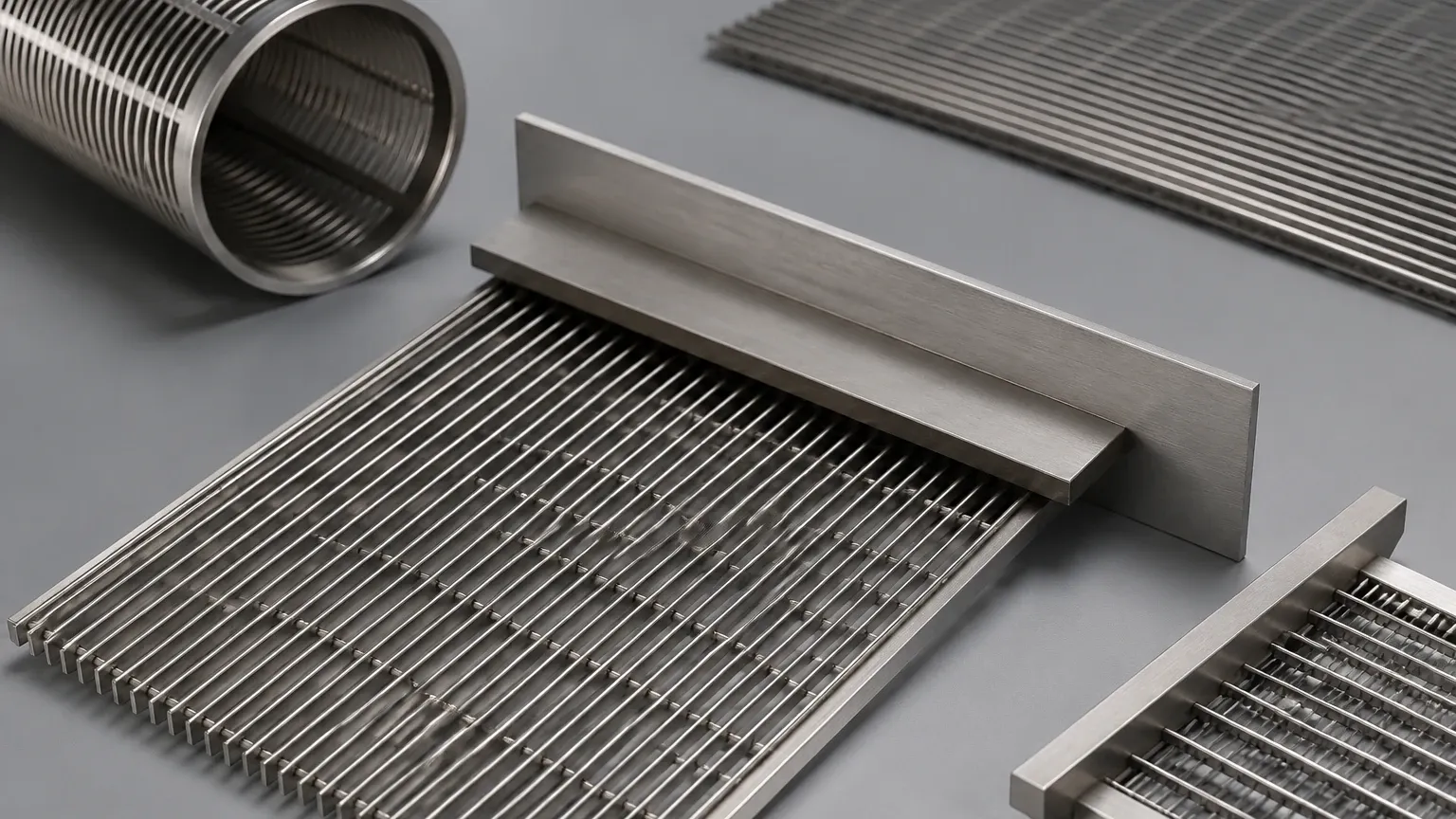
The t wedge profile is characterized by its distinct cross-sectional shape, which resembles the letter "T." Unlike the traditional triangular V-wire, which tapers to a narrow point or a slightly rounded top, the T-wire features a flat, wider top surface (the crossbar of the T) and a vertical stem that is welded to support rods. This geometry is not merely aesthetic; it is a functional design choice that alters the mechanical properties of the screen.
Structural Rigidity
The primary advantage of the t wedge profile is its inherent stiffness. The vertical stem of the T-wire provides a significant second moment of area, which translates to higher resistance against bending and deformation under pressure. In high-flow or high-pressure environments, such as deep-well injection or large-scale hydraulic systems, the structural stability of the filtration surface is paramount. The T-profile ensures that the slot openings remain precise and consistent, even when subjected to significant differential pressures.
Surface Flatness
The flat top of the t wedge creates a more uniform surface compared to the peaked profile of V-wires. This is particularly beneficial in applications involving mechanical cleaning, such as scraper-cleaned filters or screw press separators. A flat surface reduces the wear on scraper blades and ensures a more efficient removal of the filter cake or debris, as there are no valleys between wire peaks where material can become trapped.
Engineering Advantages of T-Wedge Screens
When integrated into a complete screen assembly, the t wedge profile contributes to several performance metrics that are vital for industrial efficiency. These advantages are a direct result of the interaction between the wire shape and the fluid dynamics of the process media.
Non-Clogging Characteristics
Like all wedge wire configurations, the t wedge utilizes a diverging slot design. The gap between the wires is narrowest at the surface and widens toward the interior of the screen. This ensures that any particle capable of passing through the surface opening will continue to flow through the screen without becoming wedged in the gap. The T-profile maintains this critical non-clogging feature while providing a more robust physical barrier at the point of contact.
High Open Area Efficiency
Despite its robust construction, the t wedge can be engineered to maintain a high percentage of open area. By precisely controlling the width of the T-head and the spacing between wires, manufacturers like Kaifil can achieve the necessary filtration accuracy (slot size) without sacrificing flow capacity. This balance is crucial for minimizing pressure drop across the filter, which in turn reduces energy consumption in pumping systems.
Mechanical Durability in Abrasive Environments
In industries such as mining, aggregate processing, and wastewater treatment, filtration media are often exposed to abrasive particles. The wider surface area of the t wedge head distributes the impact and friction of these particles over a larger region compared to the sharp edge of a V-wire. This distribution of wear significantly extends the service life of the screen, reducing the frequency of replacement and the associated maintenance downtime.
Material Selection and Durability
The performance of a t wedge screen is heavily dependent on the material from which it is fabricated. As a specialist in stainless steel filtration, Kaifil emphasizes the selection of alloys that match the chemical and thermal demands of the application.
Stainless Steel Grades
* Grade 304/304L: The standard choice for general industrial applications where moderate corrosion resistance and high strength are required. It is commonly used in food processing and standard water treatment.
* Grade 316/316L: Containing molybdenum, this grade offers superior resistance to chlorides and pitting. It is the preferred material for marine environments, chemical processing, and pharmaceutical applications where hygiene and corrosion resistance are critical.
* Duplex Stainless Steels: For extreme environments involving high stress and highly corrosive media, duplex grades provide nearly double the yield strength of austenitic grades and exceptional resistance to stress corrosion cracking.
Thermal Stability
Industrial processes often operate at elevated temperatures. Stainless steel t wedge screens maintain their mechanical properties and dimensional stability at temperatures where polymer-based filters would fail. This makes them ideal for steam filtration, hot oil processing, and high-temperature chemical reactions.
Customization Options for T-Wedge Filtration Systems
One of the defining features of the t wedge profile is its adaptability. Because these screens are manufactured through a precision welding process, almost every dimension can be customized to meet specific engineering requirements.
Slot Size Precision
The "slot" is the distance between the heads of adjacent T-wires. In t wedge screens, slot sizes can be controlled to tolerances as tight as ±0.05mm. This precision allows for the effective removal of specific particle sizes, which is essential for protecting downstream equipment like high-pressure pumps or sensitive membranes.
Support Rod Configurations
The wires are welded to perpendicular support rods. The shape, size, and spacing of these support rods are determined by the required collapse strength and the total weight the screen must support. For t wedge profiles, support rods are often selected to complement the heavy-duty nature of the wire, ensuring the entire assembly can withstand the rigors of the industrial environment.
Surface Treatments and Finishes
Depending on the application, the t wedge surface can be further enhanced. Electropolishing is frequently used in the pharmaceutical and food industries to create a microscopically smooth surface that inhibits bacterial growth and improves clean-ability. For abrasive applications, specialized coatings or hardening treatments can be applied to further extend the life of the T-wire head.
Industrial Applications of T-Wedge Screens
The unique combination of a flat surface and high structural strength makes the t wedge profile the preferred choice for several specific industrial sectors.
Water Intake and Treatment
In large-scale water intake systems for power plants or municipal water works, screens must withstand the force of flowing water and the impact of large debris. The t wedge profile provides the necessary rigidity to maintain slot integrity over large surface areas. Additionally, the flat surface is easier to clean using automated backwash systems or air bursting.
Food and Beverage Processing
In the production of juices, oils, and dairy products, filtration media must be both precise and easy to sanitize. The t wedge profile, particularly when electropolished, meets the stringent hygiene standards of the industry. Its flat surface is ideal for screw press separators used in dewatering spent grains or extracting oils from seeds.
Chemical and Petrochemical Industries
Chemical reactors and catalyst recovery systems require filters that can handle aggressive solvents and high pressures. The t wedge screen's ability to be fabricated from high-nickel alloys and its robust welded construction make it a reliable component in these demanding environments. It is often used in resin traps and header lateral systems where mechanical failure could lead to catastrophic process contamination.
Pulp and Paper
The processing of wood pulp involves high volumes of water and abrasive fibers. T-wedge screens are used in dewatering and fractionation stages where their resistance to wear and high mechanical strength are significant assets.
Selection Criteria and Total Cost of Ownership
When evaluating the transition to a t wedge profile, engineers must look beyond the initial purchase price and consider the total cost of ownership (TCO). Several factors influence this calculation:
1. Flow Rate and Pressure Drop: A well-engineered t wedge screen optimizes the open area to ensure that the pump energy required to move fluid through the system is minimized.
2. Maintenance Cycles: The durability of the T-profile and its compatibility with mechanical cleaning systems often result in longer intervals between maintenance shutdowns.
3. Replacement Frequency: The increased wear life of stainless steel T-wires compared to thinner profiles or non-metallic media reduces the long-term cost of replacement parts.
4. Process Consistency: The high precision of the slot openings ensures that the quality of the filtrate remains consistent, protecting the value of the end product and the integrity of downstream equipment.
Before finalizing a specification, it is recommended to confirm the exact chemical composition of the process fluid, the maximum expected differential pressure, and the cleaning method to be employed. This information allows manufacturers to tailor the t wedge dimensions and material grade to the specific needs of the facility.
Conclusion
The t wedge profile represents a sophisticated evolution in wedge wire technology, offering a balance of mechanical strength and surface functionality that standard profiles cannot match. By providing a flat, durable, and high-precision filtration surface, t wedge screens enable industrial operators to achieve higher efficiency and greater reliability in their most demanding processes. Whether used in water treatment, chemical processing, or food production, the integration of high-quality Wedge Wire Screens with T-profile geometry is a strategic investment in industrial performance.
As a professional manufacturer of custom stainless steel filtration solutions, Kaifil provides the technical expertise and manufacturing precision required to deliver t wedge screens that meet the exact specifications of global industrial applications. From material selection to final assembly, the focus remains on delivering dependable filtration components that excel in demanding environments.
