


6 Wedge
In the field of industrial filtration and solids-liquid separation, the precision of a screen’s geometry determines the efficiency of the entire process. Among the various configurations used in heavy-duty applications, the "6 wedge" specification—often referring to either a 6-inch nominal diameter screen cylinder or a specific Profile 6 wire dimension—represents a critical standard for engineers managing high-volume flow and rigorous mechanical loads.
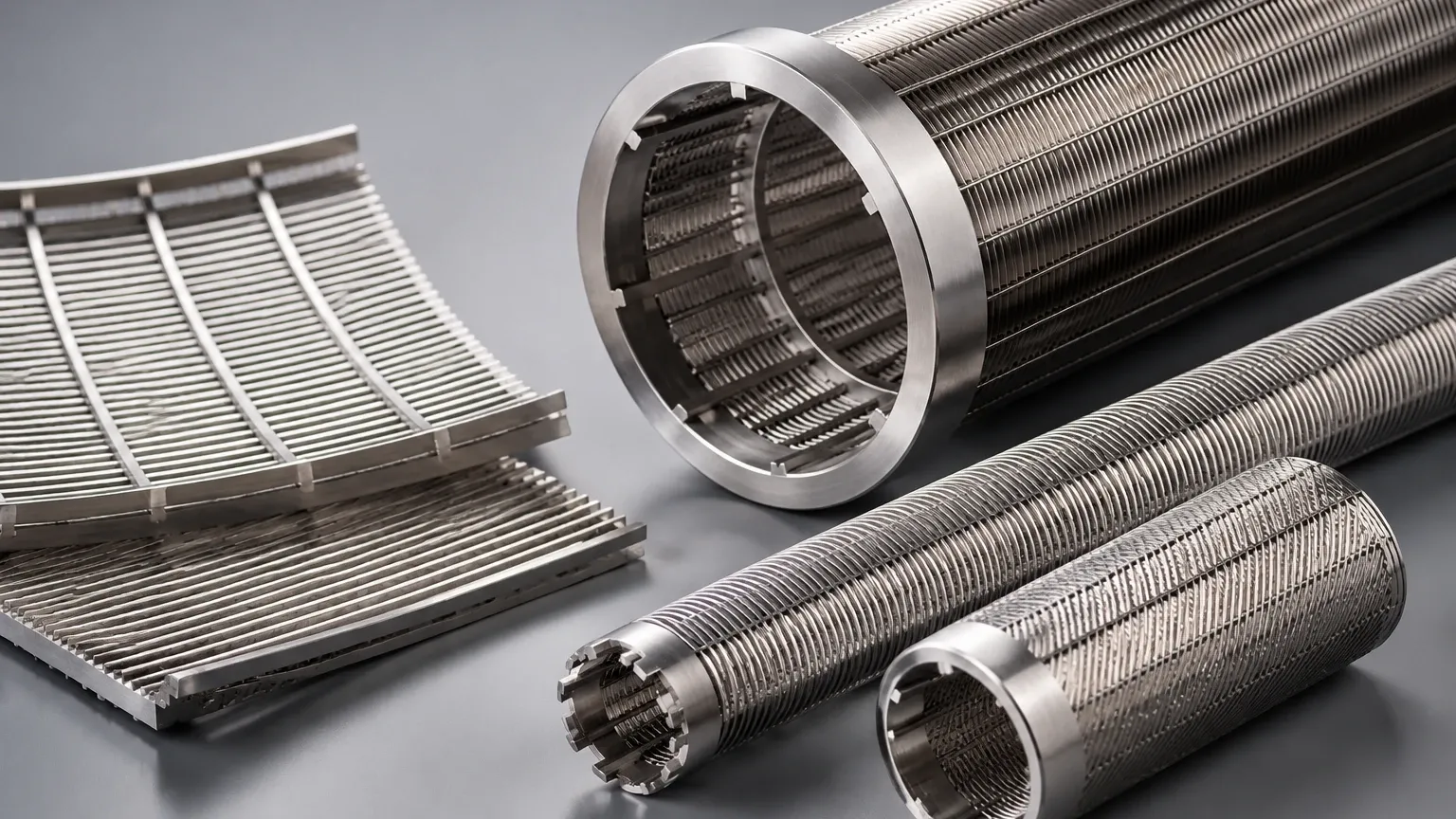
Wedge Wire Screens are engineered components characterized by their V-shaped profile wires and continuous slot openings. This design is fundamentally different from woven wire mesh or perforated plate, offering superior resistance to clogging and significantly higher structural integrity. When selecting a 6 wedge configuration, technical professionals must evaluate the interplay between wire geometry, support rod spacing, and material metallurgy to ensure the component survives the specific stresses of its operating environment.
Understanding the Technical Specifications of 6 Wedge Configurations
The term "6 wedge" typically surfaces in two primary technical contexts within the filtration industry. The first relates to the physical dimensions of the profile wire itself. Profile wires are categorized by their width and height; a "6" designation often refers to a wire width of approximately 6mm, used in applications where high impact resistance and long-term abrasive wear are expected, such as in mining or heavy wastewater primary screening.
The second common interpretation involves the 6-inch diameter screen tube. A 6-inch (nominal) wedge wire cylinder is a staple in water well applications, intake screens, and internal pipe filtration. Because wedge wire is manufactured by wrapping a continuous profile wire around longitudinal support rods and resistance-welding them at every intersection, the 6-inch diameter provides a specific balance between surface area and structural rigidity.
Profile Wire Geometry and Slot Precision
The "wedge" in wedge wire refers to the V-shape of the wire. This geometry is intentional: the widest part of the wire faces the incoming flow, while the tapered sides create a slot that widens inwardly. In a 6 wedge setup, the precision of this slot is paramount. If a particle manages to pass through the narrowest point at the surface, the widening gap ensures it will not become wedged halfway through the screen. This "self-cleaning" property is the primary reason engineers specify wedge wire over alternative media for continuous-run industrial processes.
Engineering Advantages of Wedge Wire Screens in Industrial Applications
When comparing filtration media, engineers must look beyond the initial purchase price and consider the total cost of ownership (TCO). Wedge Wire Screens offer several distinct engineering advantages that justify their selection in demanding B2B environments.
1. High Open Area and Flow Efficiency
Despite the robust nature of the 6mm profile wire or 6-inch assemblies, these screens can be engineered to provide a high percentage of open area. By optimizing the ratio between the wire width and the slot opening, Kaifil can design screens that minimize pressure drop across the system. This is critical in hydraulic systems and cooling water intakes where maintaining flow velocity is essential for system performance.
2. Mechanical Strength and Pressure Resistance
Unlike woven mesh, which can shift under high pressure, the resistance-welded joints of a wedge wire screen are incredibly stable. A 6 wedge profile wire provides a deep cross-section that resists bending and collapsing under high differential pressures. This makes them ideal for backwashing operations, where the screen must withstand pressure from the reverse direction to dislodge accumulated debris.
3. Resistance to Blinding and Clogging
Blinding occurs when near-sized particles become trapped in the screen openings. The V-shaped profile of the wedge wire minimizes the contact points between the particle and the screen. In a 6 wedge configuration designed for wastewater or pulp and paper processing, this geometry ensures that the screen remains operational for longer periods between cleaning cycles, reducing downtime and manual intervention.
Material Selection and Durability for High-Performance Filtration
The performance of a 6 wedge screen is heavily dependent on its material composition. Industrial environments often involve corrosive chemicals, abrasive slurries, or extreme temperatures. Kaifil specializes in manufacturing these components from high-grade stainless steel and specialized alloys to meet these challenges.
Stainless Steel 304 and 316L
For most food and beverage or general industrial applications, Stainless Steel 304 provides adequate corrosion resistance and mechanical strength. However, in pharmaceutical or chemical processing—or any environment involving chlorides—316L stainless steel is the preferred choice. The "L" denotes low carbon content, which prevents carbide precipitation during the welding process, ensuring the 6 wedge screen remains resistant to intergranular corrosion at the weld points.
Duplex and Super Duplex Alloys
In offshore oil and gas or highly acidic chemical environments, standard stainless steels may fail. In these cases, Duplex stainless steels are used. These materials offer nearly double the yield strength of austenitic stainless steels and superior resistance to stress corrosion cracking. When a 6 wedge screen is deployed as a sand control screen or a subsea intake, the material integrity is the first line of defense against catastrophic system failure.
Key Evaluation Criteria for 6-Inch Wedge Wire Cylinders
For engineers and purchasing teams, selecting a 6 wedge component requires a detailed analysis of the application's specific parameters. A "one-size-fits-all" approach often leads to premature failure or inefficient filtration.
Slot Opening Accuracy
The slot opening (the distance between the profile wires) must be calculated based on the particle size distribution of the solids to be removed. For a 6 wedge screen used in a centrifuge basket, the slot might be as narrow as 0.05mm. In a primary wastewater screen, it might be 6mm. Kaifil’s manufacturing process ensures that these tolerances are held strictly across the entire surface of the screen.
Support Rod Configuration
The support rods are the internal "ribs" of the screen. Their shape (round, rectangular, or teardrop) and spacing determine the collapse strength of the cylinder. For a 6-inch diameter screen, the support rod frequency must be high enough to prevent the profile wires from bowing under pressure but not so high that they significantly impede flow or create dead zones where bacteria can grow.
Surface Finish and Treatment
In the food and pharmaceutical industries, the surface finish of the 6 wedge screen is a critical safety factor. Electropolishing is often required to remove microscopic burrs and create a smooth, passive layer that prevents product adhesion and facilitates CIP (Clean-in-Place) procedures.
Maintenance and Operational Life Cycles
One of the primary B2B concerns regarding industrial filters is the frequency of replacement. Wedge Wire Screens are designed for longevity, but their life cycle depends on proper maintenance and operational practices.
Cleaning Mechanisms
Because of their rigid structure, 6 wedge screens are compatible with various mechanical cleaning methods. This includes:
* Backwashing: Using pressurized fluid to push particles out of the slots.
* Scrapers: Mechanical blades that traverse the surface of the screen to remove cake buildup.
* Ultrasonic Cleaning: Using high-frequency sound waves in a cleaning bath to dislodge fine particles from the slots.
Monitoring Wear and Erosion
In abrasive applications, such as mineral processing, the leading edges of the profile wires will eventually wear down. This wear can increase the slot width, leading to a loss of filtration accuracy. Engineers should implement a regular inspection schedule for 6 wedge components to measure slot dimensions and check for weld integrity. Early detection of erosion allows for planned replacements rather than emergency shutdowns.
Customization Options for Specialized Industrial Needs
Kaifil understands that every industrial process has unique requirements. A standard 6 wedge screen may need modifications to fit into existing infrastructure or to handle specific fluid dynamics.
Flow Direction: FOTI vs. FITO
Depending on the system design, the flow may move from the outside to the inside (FOTI) or from the inside to the outside (FITO). The orientation of the V-shaped profile wire must be reversed accordingly. For a 6-inch cylinder, this means the flat side of the wedge wire can be on the exterior or the interior, depending on where the solids are being collected.
End Fittings and Reinforcements
To integrate a 6 wedge screen into a pipeline or vessel, custom end fittings are often required. These can include NPT threads, flanges, weld rings, or custom-machined caps. Furthermore, if the screen is subject to extreme mechanical vibration or torque, additional reinforcement bands can be welded to the exterior to ensure the assembly remains true.
Conclusion: Making an Informed Selection
Specifying a 6 wedge screen is a technical decision that impacts the reliability and efficiency of industrial operations. By focusing on the profile wire geometry, material science, and structural design, engineers can ensure they are implementing a solution that minimizes maintenance and maximizes throughput.
Whether you are designing a new filtration system or replacing a legacy component, understanding the nuances of wedge wire technology is essential. For detailed technical specifications, CAD drawings, or material compatibility consultations, technical teams should Review product options and application support to ensure the selected 6 wedge configuration aligns with their specific operational goals. Kaifil’s commitment to precision manufacturing and engineering expertise provides the foundation for reliable filtration in the most demanding B2B environments.
