


Sintered Metal Filter Sheet
In industrial filtration, the requirement for materials that can withstand extreme temperatures, corrosive environments, and high mechanical stress is paramount. The sintered metal filter sheet represents a critical component in advanced filtration systems, offering a combination of structural rigidity and precise porous control that polymer or paper-based media cannot match. As a specialized manufacturer, Kaifil produces these components to meet the rigorous demands of chemical processing, pharmaceutical manufacturing, and heavy industrial applications.
Understanding the technical nuances of Sintered Metal Filters is essential for engineers and procurement teams who must balance filtration efficiency with long-term operational costs. This guide examines the manufacturing principles, material properties, and engineering considerations necessary for selecting the appropriate sintered metal filter sheet for industrial use.
Fundamentals of Sintered Metal Filter Sheets
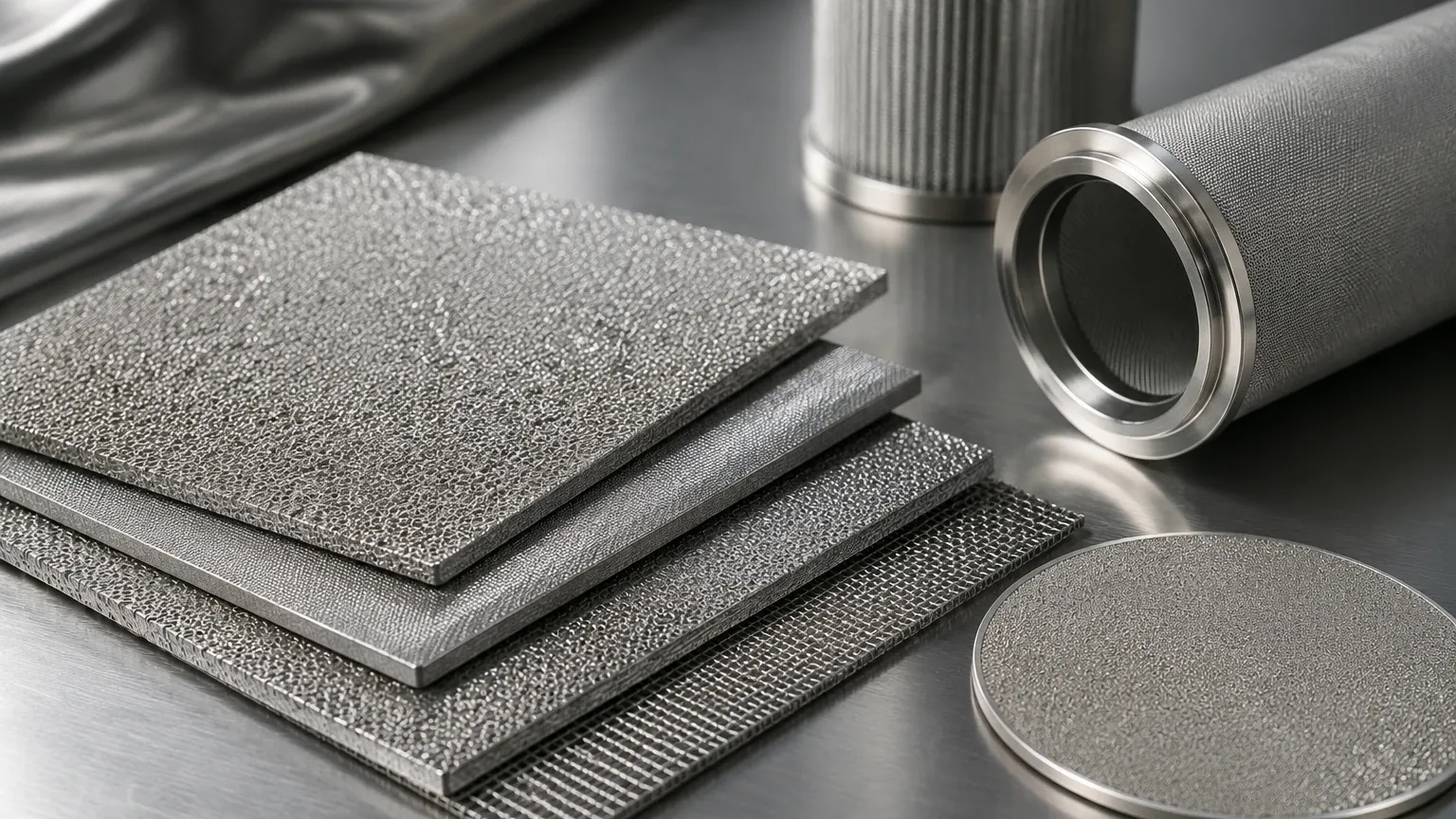
A sintered metal filter sheet is produced through a process called sintering, which involves the diffusion bonding of metal particles or wire mesh layers at temperatures below their melting point. This metallurgical process creates a porous structure where the individual elements are fused at their contact points, resulting in a stable, integrated matrix.
The Sintering Process
Industrial production typically utilizes either metal powders (powder metallurgy) or multiple layers of woven wire mesh. In powder sintering, spherical or irregular metal powders are compacted and then heated in a controlled-atmosphere furnace. The resulting sheet possesses a tortuous path of interconnected pores, which provides excellent depth filtration capabilities.
In mesh sintering, several layers of stainless steel wire mesh are laminated and sintered together. This approach allows for the creation of a filter medium with highly predictable pore sizes and superior mechanical strength, as the structural layers provide support for the fine filtration layers. The choice between powder and mesh sheets often depends on the specific balance required between flow rate, dirt-holding capacity, and mechanical durability.
Material Science and Structural Integrity
The performance of a sintered metal filter sheet is fundamentally tied to its metallurgy. Because these filters are often deployed in aggressive environments, the selection of the base alloy is the first critical decision in the engineering process.
Stainless Steel Alloys
Stainless steel is the most common material for sintered sheets due to its versatility and cost-effectiveness.
* 316L Stainless Steel: This is the industry standard for most filtration applications. The "L" denotes low carbon content, which minimizes carbide precipitation during the sintering process and enhances corrosion resistance, particularly in acidic or chloride-rich environments.
* 304 Stainless Steel: Suitable for less demanding applications where high-level corrosion resistance is not the primary concern, such as in certain food and beverage processes or general industrial water treatment.
Specialized Alloys
For environments where stainless steel may fail, high-performance alloys are utilized:
* Hastelloy (C-276, C-22): Excellent resistance to strong oxidizing and reducing agents, making it ideal for aggressive chemical processing.
* Inconel (600, 625): Used primarily in high-temperature applications where oxidation resistance and mechanical strength must be maintained at temperatures exceeding 600°C.
* Monel (400): Frequently selected for applications involving hydrofluoric acid or marine environments due to its exceptional resistance to salt-water corrosion.
Performance Characteristics: Filtration Rating and Permeability
When evaluating a sintered metal filter sheet, engineers must focus on two primary metrics: the micron rating (filtration efficiency) and permeability (flow resistance).
Micron Rating and Pore Distribution
Sintered sheets are classified by their ability to remove particles of a specific size. This is typically expressed as either a nominal or absolute rating.
* Nominal Rating: Indicates the ability of the filter to retain a majority percentage (usually 60% to 90%) of particles at a given micron size.
* Absolute Rating: Refers to the pore size at which 99.9% or more of particles are retained. For critical applications in the pharmaceutical or semiconductor industries, absolute ratings are mandatory to ensure process purity.
Because the sintering process allows for precise control over particle size and compaction density, manufacturers can produce sheets with highly uniform pore distributions. This uniformity prevents "channeling," where fluid takes the path of least resistance through larger pores, thereby bypassing the intended filtration level.
Permeability and Pressure Drop
Permeability is a measure of how easily a fluid can pass through the porous medium. In industrial systems, maintaining a low initial pressure drop ($ΔP$) is vital for energy efficiency. A sintered metal filter sheet with high porosity will offer lower resistance to flow, but there is an engineering trade-off: higher porosity often results in lower mechanical strength. Engineers must calculate the required surface area to ensure that the flux (flow rate per unit area) does not exceed the structural limits of the sheet or lead to premature clogging.
Common Industrial Applications and Use Cases
The unique properties of sintered metal media allow them to solve filtration challenges that other materials cannot handle. Their use spans several high-stakes industries.
Chemical and Petrochemical Processing
In chemical manufacturing, filters are often exposed to solvents, catalysts, and high-pressure gas streams. Sintered metal sheets are used for catalyst recovery, where the filter must capture expensive catalyst particles from a reaction stream and then release them during a backwash cycle. Their ability to resist chemical degradation ensures that the filter medium does not leach contaminants into the chemical product.
Pharmaceutical and Biotechnology
Sterile filtration and gas sparging are common applications in the biotech sector. Sintered metal filter sheets are used to create fine bubbles for oxygenation in bioreactors (sparging) and for the filtration of steam (SIP – Sterilization in Place). Because these sheets can be cleaned and sterilized repeatedly, they are more sustainable and reliable than single-use plastic components in many pharmaceutical utility systems.
Food and Beverage Production
In the production of oils, beverages, and dairy products, filtration is used to remove impurities and ensure clarity. Sintered stainless steel is preferred here because it is biologically inert, easy to clean, and complies with food safety standards. It is often used in steam filtration to protect sensitive equipment from pipe scale and other particulates.
Engineering Considerations for System Integration
Integrating a sintered metal filter sheet into an existing or new industrial system requires more than just selecting a micron rating. Several mechanical factors must be addressed to ensure the filter performs reliably over its intended service life.
Mechanical Strength and Support
While sintered sheets are rigid, they are not indestructible. Under high differential pressures, a sheet may deform or rupture. Engineers often specify a "support layer" or use a pleated design to increase the effective surface area and structural integrity. When designing a filter housing, the method of securing the sheet—whether through welding, mechanical clamping, or epoxy bonding—must be compatible with the operating temperature and chemical environment.
Thermal Expansion
In high-temperature applications, the thermal expansion coefficient of the sintered metal must be matched with the housing material. If the filter sheet expands at a different rate than its frame, it can lead to mechanical stress, warping, or the failure of seals. This is particularly important in gas filtration systems where temperatures can fluctuate rapidly.
Customization and Geometry
One of the primary advantages of working with a manufacturer like Kaifil is the ability to customize the geometry of the filter. Sintered metal can be produced in flat sheets, discs, tubes, or complex conical shapes. Custom thickness is also a variable; a thicker sheet provides better depth filtration and more "re-cleans," while a thinner sheet minimizes pressure drop and weight.
Maintenance, Cleaning, and Longevity
One of the most significant advantages of a sintered metal filter sheet over disposable media is its cleanability. When properly maintained, these filters can last for years, significantly reducing the total cost of ownership.
Cleaning Methodologies
Depending on the nature of the contaminant, several cleaning methods can be employed:
* Backwashing/Backpulsing: Reversing the flow of fluid through the filter to dislodge accumulated cake. This is common in continuous process systems.
* Ultrasonic Cleaning: Using high-frequency sound waves in a cleaning solvent to remove fine particles trapped deep within the porous matrix.
* Chemical Cleaning: Using acids, alkalis, or specialized solvents to dissolve organic or inorganic deposits. Because the sheets are made of robust alloys like 316L or Hastelloy, they can withstand aggressive cleaning agents that would destroy other filters.
* Thermal Burn-off: In cases where organic polymers or carbonaceous deposits clog the filter, the sheet can be heated in a controlled oven to oxidize and remove the contaminants.
Determining Replacement Cycles
While cleanable, a sintered metal filter sheet will eventually reach a point of "permanent fouling," where the baseline pressure drop after cleaning is significantly higher than the original state. Monitoring the rate of pressure increase over several cleaning cycles allows maintenance teams to predict the end-of-life and schedule replacements during planned shutdowns, avoiding emergency downtime.
Procurement and Technical Specification Checklist
For purchasing departments and engineers, providing a detailed specification to the manufacturer is the best way to ensure the product meets the application requirements. When requesting a quote for a sintered metal filter sheet, the following data points should be confirmed:
1. Material Grade: (e.g., 316L Stainless Steel, Hastelloy C-276).
2. Micron Rating: Specify whether this is absolute or nominal.
3. Operating Environment: Include maximum temperature, operating pressure, and a list of chemicals present.
4. Dimensions: Length, width, and thickness (including tolerances).
5. Flow Requirements: Target flow rate and maximum allowable pressure drop.
6. End Connections/Framing: How the sheet will be integrated into the housing.
By focusing on these technical boundaries, industrial operators can leverage the durability and precision of Sintered Metal Filters to optimize their processes. Kaifil remains committed to providing high-performance, customized filtration solutions that address the complex needs of modern industry, ensuring that every sintered metal filter sheet delivered meets the highest standards of quality and engineering excellence.
