


Ccp320 Pool Filter Cartridges
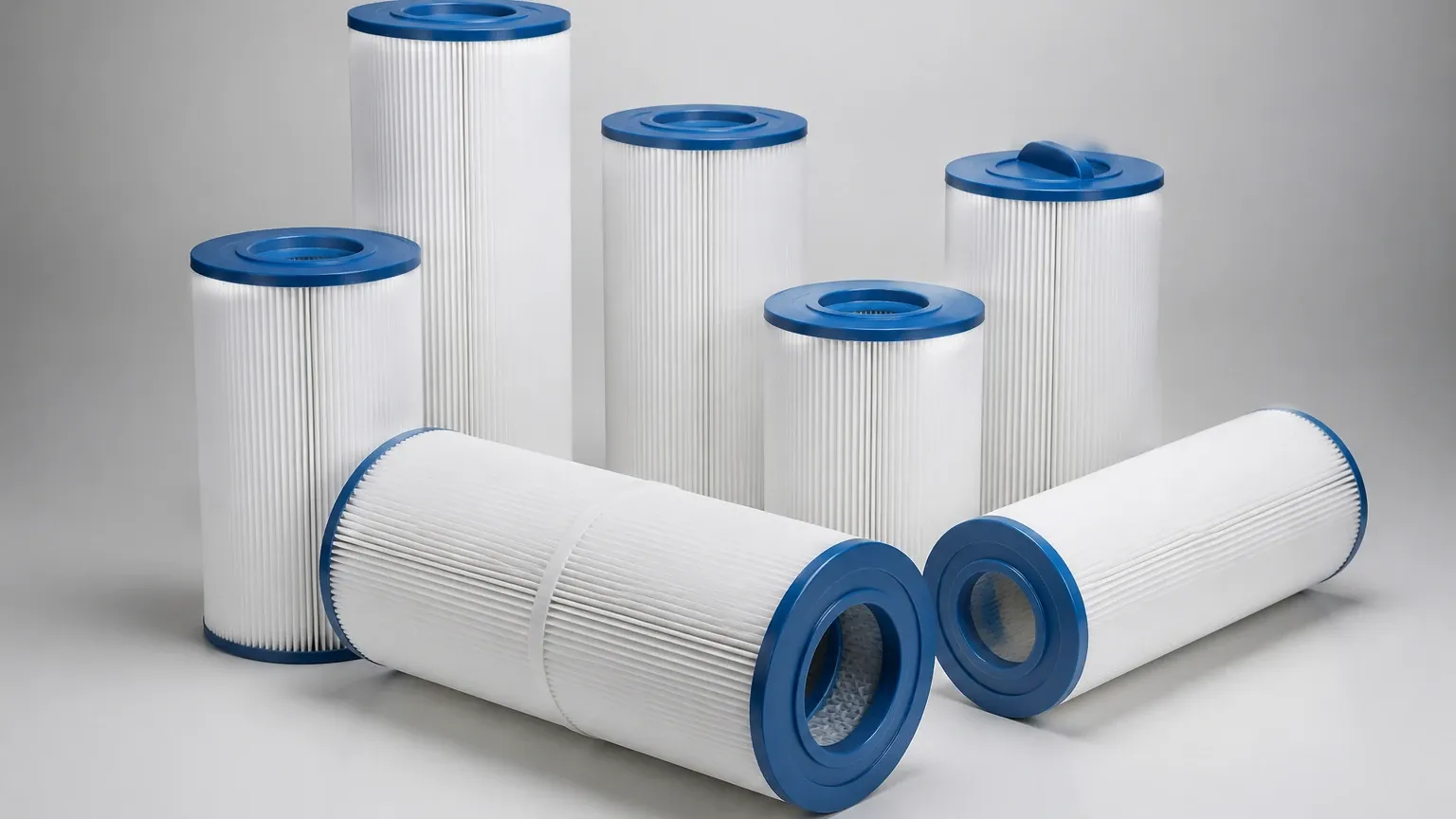
In the realm of high-capacity water management, the CCP320 (Clean & Clear Plus 320) system represents a standard for large-scale residential and light commercial filtration. Achieving optimal water clarity and system longevity requires a deep understanding of the technical specifications and material science behind the filtration media. While many operators view ccp320 pool filter cartridges as simple consumables, engineers and facility managers must evaluate these components through the lens of hydraulic efficiency, structural integrity, and material compatibility.
Industrial filtration environments often demand higher performance than standard consumer-grade products can provide. By examining the engineering principles of the CCP320 series and comparing them with industrial-grade Filter Cartridges, professionals can make informed decisions that reduce the total cost of ownership (TCO) and improve filtration precision.
Engineering Specifications of CCP320 Filtration Systems
The CCP320 system is designed to handle a total filtration area of 320 square feet, typically divided among four individual cartridges, each providing 80 square feet of surface area. This multi-cartridge configuration is engineered to maximize the "Effective Filtration Area" (EFA) while maintaining a manageable footprint.
From a hydraulic perspective, the CCP320 housing is built to accommodate high flow rates, often exceeding 120 gallons per minute (GPM). To maintain these flow rates without excessive pressure drop (delta P), the cartridges must feature high pleat counts and uniform spacing. When the pleats collapse or bridge due to poor construction, the flow is restricted to a smaller portion of the media, leading to rapid fouling and increased energy consumption by the circulation pumps.
Key technical parameters for these cartridges include:
* Outside Diameter (OD): Typically 7 inches.
* Length: Approximately 20 inches.
* Media Type: Spun-bond polyester (standard) or stainless steel wire mesh (industrial/specialty).
* Core Material: Reinforced polypropylene or stainless steel for high-pressure applications.
Material Science: Synthetic vs. Metal Mesh Alternatives
Standard ccp320 pool filter cartridges utilize pleated polyester media. This material is effective for general particulate removal in the 20-30 micron range. However, in industrial or demanding commercial applications—such as those involving high temperatures, aggressive chemical treatments, or fine abrasive particles—synthetic media often reaches its physical limits.
The Case for Stainless Steel Filter Cartridges
In industrial water treatment and specialized filtration, stainless steel wire mesh cartridges offer several engineering advantages over polyester:
1. Chemical Resistance: Stainless steel (SUS304 or SUS316L) is inert to most pool chemicals, ozone treatments, and industrial cleaning agents that can degrade synthetic fibers over time.
2. Thermal Stability: While polyester media can soften or deform at elevated temperatures, stainless steel maintains its structural integrity, making it suitable for heated process water or high-temperature sterilization cycles.
3. Cleanability and Longevity: Unlike synthetic cartridges, which trap debris within the fiber matrix (depth filtration), stainless steel mesh provides surface filtration. This allows for more effective backwashing and chemical cleaning, extending the service life from months to years.
4. Micron Precision: Industrial wire mesh can be manufactured to precise micron ratings (from 1 micron to 500+ microns), ensuring that specific particulate sizes are consistently removed without the risk of media migration.
Key Evaluation Criteria for Industrial-Grade Filtration
When selecting or specifying replacement cartridges for a CCP320-style housing, engineers should look beyond the basic dimensions. The following criteria are critical for ensuring performance in demanding environments:
Structural Integrity and Core Strength
The internal core of the cartridge is the backbone of the filtration element. In high-flow systems, the pressure differential between the outside and the inside of the cartridge can cause the core to collapse. For industrial applications, a perforated stainless steel core or a heavy-duty reinforced polymer core is essential to prevent structural failure.
End Cap Sealing
Bypass is the primary enemy of filtration efficiency. If the end caps do not form a perfect seal with the housing manifold, unfiltered water will bypass the media entirely. High-quality Filter Cartridges utilize thermally bonded end caps or precision-machined metal caps with high-grade gaskets (such as EPDM or Viton) to ensure zero-bypass performance.
Pleat Geometry and Support
Uniform pleat spacing is necessary to ensure that the entire surface area is utilized. In standard cartridges, pleats may bunch together under pressure, reducing the EFA. Industrial designs often incorporate external mesh supports or bands to keep pleats open and stable, even under fluctuating flow conditions.
Common Risks and Failure Modes in Cartridge Systems
Understanding why ccp320 pool filter cartridges fail can help in selecting more robust alternatives. The most common failure modes include:
* Media Blinding: This occurs when oils, minerals, or fine silts become permanently lodged in the pores of the polyester. In industrial settings, this is often mitigated by using stainless steel mesh which can be ultrasonically cleaned.
* Pleat Collapse: Caused by excessive differential pressure. If the pump continues to operate against a fouled filter, the pressure can exceed the burst strength of the media or the collapse strength of the core.
* Fiber Migration: In lower-quality synthetic filters, individual fibers can break loose and enter the downstream flow, potentially contaminating sensitive equipment or processes. Metal mesh filters eliminate this risk entirely.
* Chemical Degradation: Exposure to high levels of chlorine, bromine, or low pH can embrittle plastic components and synthetic fibers, leading to premature cracking and failure.
Maintenance and Replacement Cycles: A Technical Approach
For facility managers, the replacement cycle of ccp320 pool filter cartridges is a significant operational expense. A data-driven maintenance schedule is preferable to a calendar-based one.
1. Monitoring Differential Pressure: The industry standard for cleaning or replacing a filter is when the pressure gauge shows an increase of 8-10 PSI over the "clean" starting pressure. Operating beyond this point significantly increases energy costs due to pump strain.
2. Cleaning Protocols: Synthetic cartridges should be cleaned using a specialized filter cleaner to break down oils and calcium deposits. However, each cleaning cycle slightly degrades the fiber structure.
3. Total Cost of Ownership (TCO) Analysis: While a stainless steel cartridge has a higher initial purchase price than a standard CCP320 element, its ability to be cleaned hundreds of times and its resistance to damage often result in a lower TCO over a 3-to-5-year period.
Customization and OEM Solutions for Filtration Challenges
Not every filtration challenge can be solved with off-the-shelf products. In many industrial water treatment scenarios, the standard CCP320 housing may need to be fitted with custom-engineered internals.
Customization options often include:
* Variable Micron Ratings: Layering different mesh sizes to create a graduated density filter.
* Alternative Materials: Utilizing Titanium or Hastelloy for extremely corrosive environments.
* Reinforced Construction: Adding outer cages or internal supports for high-pressure surge environments.
By working with a manufacturer that specializes in custom stainless steel filtration, engineers can adapt existing CCP320 footprints to meet much more rigorous industrial standards. This is particularly relevant in food and beverage processing, pharmaceutical water pre-filtration, and industrial cooling towers where standard pool-grade equipment would fail.
Conclusion: Selecting the Right Filtration Path
Whether maintaining a commercial aquatic facility or an industrial process water loop, the choice of Filter Cartridges is a critical engineering decision. While standard ccp320 pool filter cartridges are suitable for basic residential use, they often fall short in environments where durability, chemical resistance, and precise filtration are paramount.
By evaluating the hydraulic demands of the system and the chemical nature of the fluid, professionals can determine if synthetic media is sufficient or if the transition to high-performance stainless steel filtration is required. Investing in superior cartridge construction not only ensures cleaner water but also protects the broader mechanical infrastructure of the system, from pumps to heat exchangers, ensuring efficient operation for years to come.
