


Filter Cartridge Dust Collector
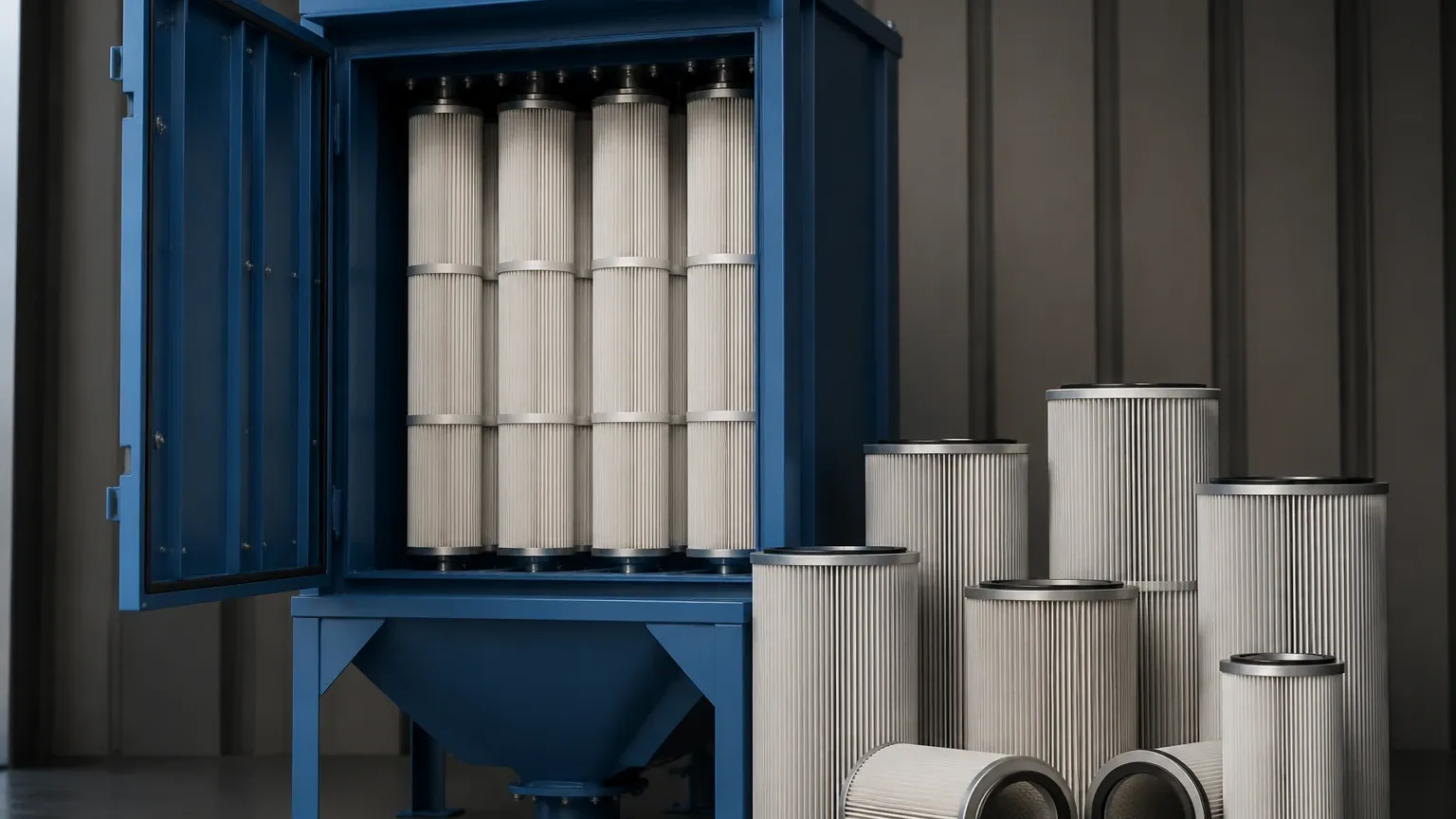
In industrial environments, maintaining air quality and managing particulate matter is a critical engineering challenge. A filter cartridge dust collector serves as a specialized filtration system designed to capture dry dust, fumes, and smoke from industrial processes. Unlike traditional baghouses that utilize long fabric bags, these systems employ pleated Filter Cartridges to provide a significantly larger filtration surface area within a smaller physical footprint.
For engineers and facility managers, selecting and maintaining a filter cartridge dust collector requires a deep understanding of airflow dynamics, media characteristics, and the specific physical properties of the dust being handled. This guide explores the technical foundations of cartridge-based dust collection, focusing on engineering considerations that drive efficiency, durability, and long-term cost-effectiveness.
Principles of Operation in a Filter Cartridge Dust Collector
The fundamental operation of a filter cartridge dust collector relies on the movement of contaminated air through a pleated filter medium. Dust-laden air enters the collector through an inlet, where heavy particles often drop out of the airstream due to a decrease in velocity or centrifugal force. The remaining fine particulate is drawn toward the filter cartridges.
As the air passes through the media, the dust is captured on the exterior surface of the cartridge. The cleaned air then travels through the center of the cartridge and is exhausted out of the system. To prevent the media from becoming blinded—a condition where pores are completely blocked—most modern systems utilize a pulse-jet cleaning mechanism. This involves a high-pressure blast of compressed air directed down the center of the cartridge, momentarily reversing the airflow and dislodging the dust cake, which then falls into a collection hopper.
The efficiency of this process is governed by the air-to-media ratio, which is the volume of air (CFM) divided by the total square footage of the filter surface. Maintaining a low air-to-media ratio is essential for preventing premature filter failure and ensuring that the pulse-jet cleaning system can effectively clear the media.
Engineering Advantages of Cartridge Systems
When compared to traditional baghouse collectors, cartridge-based systems offer several distinct engineering advantages that make them the preferred choice for many modern industrial applications.
High Filtration Efficiency
Cartridge collectors are exceptionally efficient at capturing sub-micron particles. While baghouses are often limited to 5-10 micron efficiency without specialized coatings, high-quality cartridges can achieve efficiencies exceeding 99.9% for particles as small as 0.5 microns. This makes them ideal for processes involving hazardous fumes, fine powders, or metallurgical smoke.
Compact Footprint
The pleated design of the filter media allows for a massive amount of surface area to be packed into a relatively small cylindrical or conical shape. This high surface-area-to-volume ratio means that a filter cartridge dust collector can handle the same airflow as a baghouse while occupying only a fraction of the floor space. This is a critical consideration in facilities where space is at a premium.
Simplified Maintenance
Replacing filters in a cartridge collector is generally faster and safer than in a baghouse. Most systems are designed for "clean side" filter removal, meaning maintenance personnel do not have to enter the dirty plenum of the collector. This reduces downtime and minimizes technician exposure to potentially harmful dust.
Selecting Media for Industrial Environments
The performance of a filter cartridge dust collector is primarily determined by the material and construction of the Filter Cartridges used. While cellulose and polyester are common for standard ambient applications, demanding industrial processes often require more robust solutions.
Stainless Steel Wire Mesh
In applications involving high temperatures, corrosive chemicals, or the need for repeated ultrasonic cleaning, stainless steel wire mesh cartridges are the gold standard. Unlike synthetic media, stainless steel does not degrade when exposed to high heat or volatile organic compounds (VOCs). It provides exceptional structural integrity and can be engineered with specific weave patterns to achieve precise filtration ratings.
Specialty Coatings and Treatments
For applications involving moisture or oil, oleophobic or hydrophobic treatments are applied to the media to prevent "mudding" or sticking. In processes where static electricity could lead to dust explosions, such as in flour milling or chemical powder handling, antistatic (conductive) media is utilized to safely dissipate electrical charges.
Pleat Geometry
The engineering of the pleats themselves is a factor often overlooked. If pleats are packed too tightly, the dust cannot be effectively pulsed off, leading to high pressure drop and shortened filter life. Advanced designs utilize pleat spacers or specialized embossing to ensure uniform spacing, allowing the entire surface area of the media to participate in the filtration process.
Performance Metrics: Pressure Drop and Airflow
Engineers must monitor several key metrics to ensure a filter cartridge dust collector is operating within its design parameters. The most critical of these is differential pressure (delta P), which measures the resistance to airflow across the filter media.
As the dust cake builds up, the differential pressure increases. A well-designed system will operate within a stable range, typically between 2 and 5 inches of water gauge (w.g.). If the pressure drop rises too high, it indicates that the cleaning system is failing to remove the dust cake or that the filters have reached the end of their service life. High differential pressure leads to increased energy consumption by the system's fan and can eventually cause the filter media to collapse or tear.
Another vital metric is the interstitial velocity—the speed of the air moving between the cartridges. If this velocity is too high, dislodged dust from the pulse-jet cleaning will be re-entrained onto the neighboring filters rather than falling into the hopper. Proper spacing and system sizing are required to mitigate this effect.
Customization and OEM Integration
No two industrial processes are identical, and off-the-shelf filtration components often fall short in specialized environments. Customization is frequently necessary to address specific challenges such as non-standard housing dimensions, extreme chemical exposure, or unique particulate shapes.
Customized Filter Cartridges allow engineers to specify:
* End Cap Materials: Options ranging from galvanized steel to 316L stainless steel or specialized polymers to ensure chemical compatibility.
* Gasket Specifications: Selection of EPDM, Silicone, or Viton gaskets to maintain a leak-proof seal under varying thermal conditions.
* Structural Support: Inner and outer cores (cages) engineered to withstand high collapse pressures in heavy-duty vacuum applications.
By working with a manufacturer capable of OEM customization, engineering teams can ensure that the filtration component is perfectly matched to the dust collector's mechanical design and the application's operational demands.
Maintenance Best Practices for Extended Service Life
To maximize the return on investment for a filter cartridge dust collector, a proactive maintenance strategy is essential. Beyond simply reacting to high-pressure alarms, facility managers should focus on the following areas:
1. Compressed Air Quality: The pulse-jet cleaning system requires clean, dry air. Moisture or oil in the compressed air lines can contaminate the filter media, leading to premature blinding and corrosion of the pulse valves.
2. Pulse Sequence Optimization: Adjusting the frequency and duration of the cleaning pulses based on actual dust load can significantly extend filter life. Over-pulsing can wear out the media fibers, while under-pulsing leads to excessive dust buildup.
3. Diaphragm Valve Inspection: The valves responsible for delivering the air pulse are wear items. A leaking or sluggish valve will result in ineffective cleaning of the associated filters.
4. Hopper Management: Dust should never be allowed to accumulate in the hopper to the point where it reaches the bottom of the cartridges. This can lead to immediate filter damage and represents a significant fire/explosion risk in certain industries.
Total Cost of Ownership Considerations
When evaluating a filter cartridge dust collector, the initial purchase price is only one component of the total cost of ownership (TCO). A comprehensive analysis must include:
* Energy Consumption: Systems that maintain a lower average differential pressure require less fan power, leading to significant utility savings over time.
* Filter Replacement Frequency: High-quality stainless steel or specialized synthetic cartridges may have a higher upfront cost but offer a much longer service life, reducing both material costs and labor-intensive change-outs.
* Compressed Air Usage: Efficient cleaning systems minimize the volume of compressed air required, which is often one of the most expensive utilities in a plant.
* Disposal Costs: In industries handling hazardous materials, the volume and weight of spent filters contribute to disposal fees. Durable, cleanable cartridges can help mitigate these recurring expenses.
By focusing on high-performance components and sound engineering principles, industrial operators can achieve a balance between regulatory compliance, operational efficiency, and cost management. Whether dealing with fine chemical powders or high-temperature metal fumes, the selection of the right Filter Cartridges remains the most critical factor in the success of any dust collection strategy.
