


Filter Cartridge Diesel
In industrial engine systems, power generation, and heavy-duty machinery, the quality of diesel fuel is a primary determinant of equipment longevity and operational efficiency. Contaminants such as particulate matter, water, and microbial growth can lead to catastrophic injector failure, fuel pump wear, and increased emissions. Selecting the correct filter cartridge diesel solution is not merely a maintenance task; it is a critical engineering decision that impacts the total cost of ownership (TCO) and system reliability.
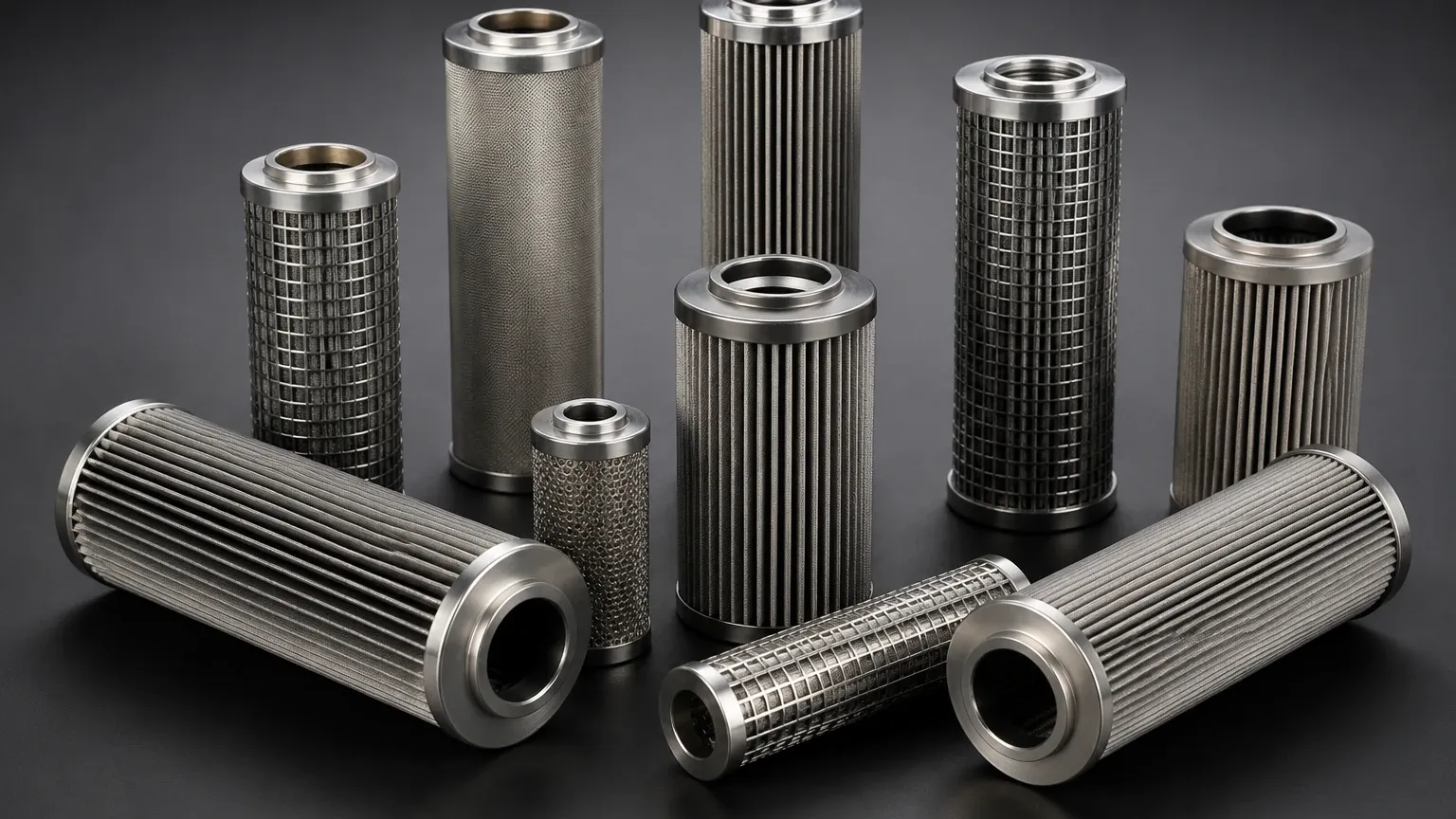
Stainless steel Filter Cartridges have emerged as a superior choice for demanding industrial diesel applications. Unlike disposable cellulose or synthetic media, metal-based filtration components offer the structural integrity and chemical resistance required to withstand high-pressure fuel systems and aggressive environmental conditions. This guide examines the technical specifications, material considerations, and engineering factors involved in selecting high-performance diesel filtration components.
Understanding Diesel Contaminants and Filtration Challenges
Diesel fuel is inherently susceptible to various forms of contamination during transport, storage, and handling. To protect modern high-pressure common rail (HPCR) systems, which operate at pressures exceeding 2,000 bar, filtration must be precise and consistent.
Particulate Matter
Hard particles, such as silica, rust, and metal shavings, are the most common cause of abrasive wear in fuel injectors. Even particles as small as 2 to 5 microns can cause significant damage to the tight tolerances of injection components. Industrial diesel filtration requires a high beta ratio—a measure of filtration efficiency—to ensure that the majority of these harmful particles are captured before reaching the engine.
Water Contamination
Water enters diesel systems through condensation in storage tanks or poor fuel handling. It exists in three states: dissolved, emulsified, and free water. Water is highly detrimental because it promotes corrosion, reduces the lubricity of the fuel, and facilitates microbial growth (often referred to as "diesel bug"). A robust filter cartridge diesel system must often incorporate coalescing or hydrophobic properties to effectively separate water from the fuel stream.
Asphaltenes and Gums
Asphaltenes are heavy components of crude oil that can remain in diesel fuel. Under high pressure and temperature, these can agglomerate and form black, slimy deposits that quickly plug standard filters. Stainless steel mesh filters are particularly effective in these scenarios because they can be engineered with specific surface characteristics to manage heavy organic loads without premature blinding.
The Role of Stainless Steel in Diesel Filter Cartridges
For industrial applications, the material of the filter media determines its performance under stress. While paper and glass fiber are common in light-duty applications, stainless steel (typically AISI 304 or 316L) is the standard for high-performance industrial diesel filtration.
Structural Integrity and Pressure Resistance
Diesel systems, especially in hydraulic and heavy industrial environments, can experience significant pressure spikes and flow fluctuations. Stainless steel filter cartridges maintain their pore structure and shape even under high differential pressure. This prevents "media migration"—where bits of the filter material itself break off and enter the fuel stream—and ensures that the micron rating remains constant throughout the service life.
Chemical and Thermal Stability
Industrial diesel may contain additives, or the system might operate in high-temperature environments. Stainless steel is chemically inert to diesel fuel and its various additives. Furthermore, it can operate at temperatures that would cause synthetic or cellulose filters to degrade or lose their structural bonding.
Reusability and Sustainability
One of the primary advantages of stainless steel wire mesh or sintered metal filters is their cleanability. In many industrial settings, the ability to clean and reuse a filter cartridge significantly reduces waste and long-term procurement costs. Ultrasonic cleaning or back-flushing can restore the filter's performance, making it a sustainable choice for large-scale operations.
Technical Specifications for Filter Selection
When specifying a filter cartridge diesel solution, engineers must evaluate several key technical parameters to ensure the component meets the application's demands.
Micron Rating: Absolute vs. Nominal
It is essential to distinguish between nominal and absolute micron ratings. A nominal rating is an indicative value, often representing about 50-80% efficiency at a given particle size. For critical diesel components, an absolute rating (typically 98% or 99.9% efficiency) is required. Industrial diesel systems usually require primary filtration at 25-30 microns and secondary/final filtration at 2-10 microns.
Flow Rate and Pressure Drop (Delta P)
The filter must be sized to handle the maximum flow rate of the fuel system without creating an excessive initial pressure drop. A high initial pressure drop reduces the available "dirt-holding capacity" before the filter reaches its terminal pressure drop and requires cleaning or replacement. Engineering the filter with a pleated design increases the surface area, which lowers the flux (flow per unit area) and extends the service interval.
Seal and End Cap Compatibility
The gaskets and seals (O-rings) used in the filter cartridge must be compatible with diesel fuel and any bio-diesel blends (such as B20 or B100). Common materials include Viton (FKM) or Nitrile (Buna-N), which provide excellent resistance to swelling and degradation in hydrocarbon environments.
Engineering Considerations for Custom Diesel Filtration
Off-the-shelf filters often fail to meet the specific spatial or performance requirements of specialized industrial equipment. Custom-engineered Filter Cartridges allow for optimization based on the unique operating environment.
Pleated vs. Cylindrical Designs
Pleated stainless steel wire mesh provides significantly more surface area than a simple cylindrical sleeve. This is advantageous in diesel systems where space is limited but high dirt-holding capacity is required. For high-viscosity fuels or very high-pressure applications, a reinforced cylindrical sintered mesh might be preferred for its extreme mechanical strength.
Multi-layer Sintered Mesh
For advanced diesel filtration, multiple layers of wire mesh can be sintered together. This structure might include a fine filtration layer protected by coarser drainage and support layers. This composite structure provides the precision of fine mesh with the durability of a heavy-duty plate, making it ideal for high-vibration environments like locomotive or marine diesel engines.
Integration with Water Separators
In many diesel systems, the filter cartridge is part of a larger Fuel Water Separator (FWS) assembly. The metal mesh can be treated with hydrophobic coatings to assist in the repelling of water droplets, which then collect in a bowl for drainage. This dual-functionality is critical for protecting fuel injectors from water-induced corrosion.
Evaluating Total Cost of Ownership (TCO)
While the initial purchase price of a stainless steel filter cartridge diesel is higher than that of a disposable element, the TCO is often lower in industrial contexts.
1. Reduced Downtime: High-quality metal filters typically have a higher dirt-holding capacity and more consistent performance, leading to fewer unscheduled maintenance events.
2. Extended Component Life: By providing superior protection to injectors and pumps, high-efficiency filters prevent expensive engine overhauls.
3. Cleaning vs. Replacement: The ability to clean a stainless steel cartridge multiple times eliminates the recurring cost of purchasing, shipping, and disposing of single-use filters.
4. Waste Management: In many jurisdictions, used oil-soaked filters are classified as hazardous waste. Reducing the volume of discarded filters simplifies environmental compliance and reduces disposal fees.
Maintenance and Performance Monitoring
To maximize the effectiveness of a diesel filtration system, a proactive maintenance strategy is required. Monitoring the differential pressure (the difference in pressure between the inlet and outlet of the filter) is the most reliable way to determine when a filter needs attention.
As contaminants build up on the surface of the filter cartridge diesel, the resistance to flow increases. Most industrial systems are equipped with a differential pressure gauge or switch. It is important to clean or replace the cartridge before the bypass valve opens (if equipped), as a bypass event allows unfiltered fuel to reach the engine, negating the purpose of the filtration system.
Regular fuel sampling and laboratory analysis can also provide insights into the health of the filtration system. If fuel analysis shows high particle counts (ISO 4406 codes) despite a clean filter, it may indicate that the micron rating is too coarse for the application or that there is a seal failure within the filter housing.
Conclusion
Effective diesel filtration is a cornerstone of industrial reliability. Whether for backup power generators, marine propulsion, or heavy construction equipment, the choice of filter media and design directly impacts engine performance and maintenance costs. Stainless steel Filter Cartridges provide the durability, precision, and reusability required to meet the challenges of modern diesel fuel systems.
By focusing on high-quality materials, absolute micron ratings, and robust engineering, operators can ensure their diesel engines remain protected against the damaging effects of particulates and water. For OEMs and engineering teams, partnering with a manufacturer capable of providing customized, high-performance filtration solutions is essential for developing equipment that can withstand the rigors of the field.
