


Filter Cartridge Doe
In the field of industrial liquid and gas filtration, the mechanical interface between the filter element and the housing is a critical factor in ensuring process integrity. One of the most prevalent configurations used in high-volume industrial applications is the Double Open End (DOE) design. A filter cartridge doe refers to a cylindrical filter element that is open at both ends, requiring a compression-based sealing mechanism at both the top and bottom to prevent fluid bypass.
For engineers and procurement professionals, understanding the technical nuances of the DOE configuration is essential for maintaining system efficiency, particularly when dealing with stainless steel filtration media. Unlike Single Open End (SOE) cartridges, which often utilize O-ring plug-in styles, DOE cartridges rely on flat gaskets and mechanical pressure. This article provides a technical deep dive into the engineering considerations, sealing requirements, and application-specific advantages of DOE filter cartridges.
Understanding the DOE Configuration in Industrial Filtration
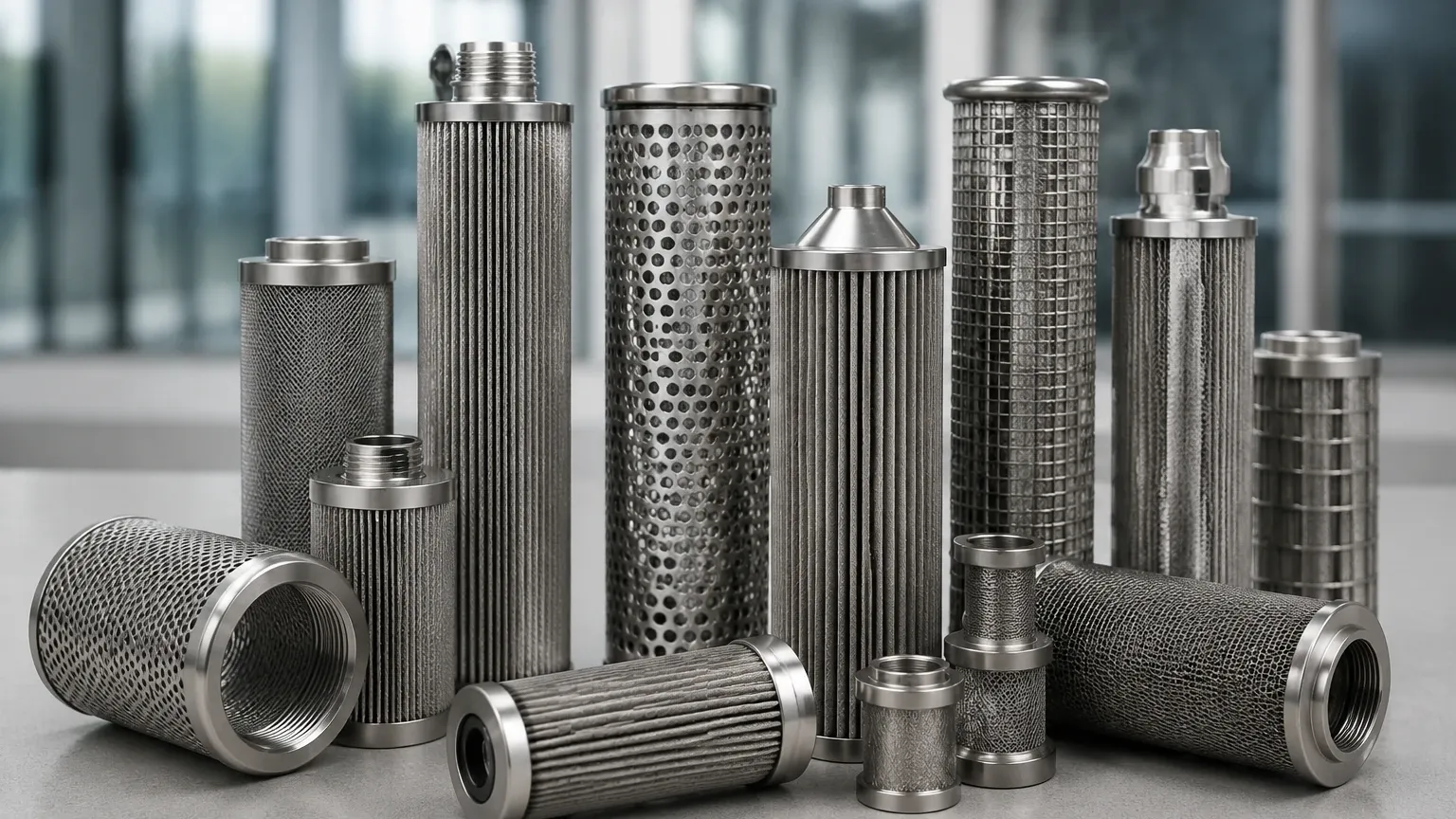
The Double Open End (DOE) configuration is characterized by its symmetrical design. The filter media—whether it is pleated stainless steel wire mesh, sintered metal fiber, or wedge wire—is encapsulated between two end caps that both feature a central opening. This design allows fluid to flow from the outside of the cartridge through the media and into the center core, exiting through either or both ends depending on the housing design.
In most industrial housings, the filter cartridge doe is installed over a central tie-rod or seated between a base plate and a top compression plate. The seal is achieved by compressing the cartridge longitudinally. This compression forces the gaskets at each end against the flat surfaces of the housing's internal hardware. Because there are no locking keys or complex O-ring grooves, DOE cartridges are often considered the industry standard for general-purpose filtration due to their simplicity and lower manufacturing complexity compared to high-purity SOE formats.
Sealing Mechanisms and Gasket Selection
The performance of a DOE filter is entirely dependent on the quality of the seal at the end caps. Because the cartridge is held in place by mechanical compression, the choice of gasket material is paramount. A failure in the seal leads to "bypass," where unfiltered fluid enters the downstream flow, potentially contaminating the final product or damaging sensitive equipment.
Gasket Materials and Compatibility
When specifying Filter Cartridges, engineers must match the gasket material to the chemical and thermal profile of the process fluid. Common materials include:
* EPDM (Ethylene Propylene Diene Monomer): Excellent for water-based applications and dilute acids, with a temperature range typically up to 150°C.
* Viton (FKM): Preferred for high-temperature applications and aggressive chemicals, including oils and fuels.
* PTFE (Polytetrafluoroethylene): Offers the broadest chemical resistance but lacks the elasticity of elastomers, requiring higher compression forces to achieve a reliable seal.
* Silicone: Commonly used in food and beverage or pharmaceutical applications due to its inert nature and compliance with FDA standards.
Compression and Alignment
Unlike SOE cartridges with 222 or 226 O-ring codes that "click" into place, DOE cartridges require careful manual alignment. If the cartridge is slightly tilted during installation, the gasket may not sit flush against the seat, leading to a leak path. In multi-round housings, where dozens of cartridges are installed simultaneously, the use of a heavy-duty top plate and spring-loaded nuts is often necessary to ensure uniform pressure across all elements.
Comparison: DOE vs. SOE (Single Open End) Cartridges
When designing a filtration system, the choice between DOE and SOE configurations often comes down to the required filtration efficiency and the risk tolerance for bypass.
| Feature | DOE (Double Open End) | SOE (Single Open End) |
| :— | :— | :— |
| Sealing Method | Compression of flat gaskets | O-ring piston seal (e.g., 222/226) |
| Bypass Risk | Moderate (depends on alignment) | Low (positive O-ring engagement) |
| Installation | Requires tie-rods/compression plates | Push-and-turn or bayonet lock |
| Cost | Generally lower | Higher due to complex end caps |
| Applications | General industrial, pre-filtration | Critical pharma, high-purity chemicals |
For many heavy industrial applications, such as hydraulic oil filtration or cooling water loops, the DOE format is preferred because the cartridges are robust and cost-effective. However, in applications where 99.99% retention of sub-micron particles is mandatory, SOE configurations are often mandated to eliminate the risk of gasket bypass.
Engineering Considerations for Stainless Steel DOE Filter Cartridges
Kaifil specializes in stainless steel filtration solutions, where the DOE configuration is frequently paired with pleated wire mesh or sintered metal media. Stainless steel DOE cartridges offer several engineering advantages over disposable polymer versions:
Structural Integrity
In high-pressure or high-viscosity applications, the filter element is subject to significant differential pressure ($ΔP$). Stainless steel DOE cartridges are engineered with internal support cores and outer cages to prevent media collapse. The end caps are typically welded (TIG or plasma) to the media, ensuring that the structural integrity is maintained even under thermal cycling.
Thermal and Chemical Resistance
Polymer-based DOE filters (such as melt-blown polypropylene) have strict temperature limits. In contrast, a stainless steel filter cartridge doe can operate in environments exceeding 300°C, provided the gasket material is appropriately selected (or if metal-to-metal seals are employed in specialized high-temp housings). This makes them indispensable in steam filtration and chemical processing.
Cleanability and Reuse
One of the primary drivers for selecting stainless steel DOE filters is the ability to clean and reuse the elements. Because the DOE design is simple, it is easier to perform backwashing or ultrasonic cleaning. Engineers must consider the "Total Cost of Ownership" (TCO) rather than just the initial purchase price; a reusable stainless steel cartridge often offsets its higher initial cost within a few cleaning cycles compared to frequent replacements of disposable DOE filters.
Common Applications and Industry Use Cases
The versatility of the DOE format allows it to be used across a wide spectrum of industries. At Kaifil, we see these components deployed in several key sectors:
1. Chemical Processing: Used for the filtration of aggressive solvents, polymers, and catalysts. The ability to use 316L stainless steel ensures corrosion resistance against a variety of acidic and alkaline fluids.
2. Food and Beverage: Employed in the filtration of edible oils, syrups, and beverages. The DOE configuration is often used in pre-filtration stages to remove larger particulates before the fluid reaches more expensive membrane filters.
3. Hydraulic and Lubrication Systems: High-strength stainless steel DOE filters protect sensitive valves and pumps from metal shavings and environmental contaminants in heavy machinery.
4. Water Treatment: Used in industrial RO (Reverse Osmosis) pre-treatment and wastewater recovery systems where high flow rates and durability are required.
Installation, Maintenance, and Troubleshooting Bypass Risks
To maximize the lifespan and effectiveness of a filter cartridge doe, proper maintenance protocols must be followed. The most common issue encountered in the field is fluid bypass due to improper seating.
Installation Best Practices
* Inspect Gaskets: Before installation, ensure gaskets are securely attached to the end caps and free of cuts or debris.
* Centering: Ensure the cartridge is perfectly centered on the bottom seat or tie-rod. Any deviation will prevent an airtight seal.
* Uniform Torque: When tightening the top compression plate, use a torque wrench if specified by the housing manufacturer. Over-tightening can deform the gaskets or even crush the cartridge core, while under-tightening leads to bypass.
Monitoring Performance
Engineers should monitor the differential pressure across the filter bank. A sudden drop in $ΔP$ without a change in flow rate often indicates that a seal has failed or a cartridge has shifted, allowing fluid to bypass the media. Conversely, a rapid increase in $ΔP$ indicates the media is performing its job but may require cleaning or replacement.
Replacement Cycles
While stainless steel cartridges are durable, they are not infinite. Over time, repeated cleaning cycles can lead to "media migration" or permanent blinding of the pores. Regular bubble point testing or microscopic inspection can help determine when a DOE cartridge has reached the end of its functional life.
Selecting the Right Filter Cartridges for Your System
Choosing the correct Filter Cartridges involves more than just selecting a micron rating. Technical buyers must evaluate the entire operating environment, including flow velocity, viscosity, temperature, and the physical nature of the contaminants (e.g., deformable vs. hard particles).
When specifying a DOE cartridge, confirm the following technical details with your manufacturer:
* Exact Dimensions: DOE cartridges come in standard lengths (10", 20", 30", 40"), but the actual "cut length" can vary slightly between manufacturers. Ensure the cartridge fits your housing's compression range.
* Micron Rating: Distinguish between nominal and absolute ratings. For critical applications, an absolute-rated stainless steel mesh is often required.
* Material Certification: Ensure the stainless steel (304, 316, or 316L) is certified for your specific industry requirements, especially for food-grade or pharmaceutical applications.
Conclusion
The Double Open End (DOE) filter cartridge remains a cornerstone of industrial filtration due to its straightforward design, cost-efficiency, and adaptability. While it requires more attention during installation than SOE alternatives, the DOE format—especially when constructed from high-quality stainless steel—provides a robust solution for demanding industrial environments. By focusing on proper gasket selection, mechanical alignment, and structural integrity, engineering teams can achieve reliable filtration performance and long-term operational savings. For those seeking customized or OEM filtration components, partnering with a manufacturer that understands the mechanical stresses of the DOE configuration is the first step toward process optimization.
