


Filter Element Engine Oil
In the context of industrial power generation, marine propulsion, and heavy-duty hydraulic systems, the lubrication system serves as the critical infrastructure for mechanical longevity. At the heart of this system is the filter element engine oil, a precision-engineered component designed to maintain fluid cleanliness by removing particulate contaminants that would otherwise lead to accelerated wear, component failure, and unplanned downtime. For engineers and procurement specialists, selecting the appropriate filtration technology requires a deep understanding of fluid dynamics, material science, and the specific operational demands of the machinery.
Industrial engine oil filtration is not merely a matter of trapping debris; it is about managing the balance between filtration efficiency, flow resistance, and the structural integrity of the filter media under varying thermal and mechanical loads. As engines evolve to meet higher efficiency standards and tighter tolerances, the role of the filter element engine oil becomes increasingly sophisticated, moving away from simple disposable media toward high-performance, often cleanable, metallic solutions.
The Role of the Filter Element in Engine Oil Systems
The primary function of a filter element engine oil is to intercept and retain contaminants that enter the lubrication circuit. These contaminants typically fall into two categories: hard particles and soft contaminants. Hard particles include metallic wear debris from pistons and bearings, as well as atmospheric dust (silica) that enters through the air intake or seals. Soft contaminants consist of carbon soot from the combustion process, oxidized oil products, and varnish.
In a full-flow filtration system, the entire volume of oil pumped by the engine must pass through the filter element before reaching the critical moving parts. This necessitates a filter design that can handle high flow rates without creating an excessive pressure drop. If the filter element engine oil becomes restricted, the resulting increase in differential pressure ($ΔP$) can trigger a bypass valve, allowing unfiltered oil to circulate to prevent oil starvation. While this protects the engine from immediate seizure, it exposes sensitive components to the very contaminants the filter was meant to remove. Therefore, the engineering of the filter media must ensure a high dirt-holding capacity and stable flow characteristics throughout the service interval.
Material Selection for High-Performance Oil Filtration
Traditional engine oil filters often utilize cellulose (paper) or synthetic fiberglass media. While cost-effective for light-duty applications, these materials face significant limitations in demanding industrial environments. High temperatures can cause cellulose fibers to become brittle and eventually break down, potentially introducing new contaminants into the system. Furthermore, these materials are susceptible to chemical degradation from acidic combustion byproducts.
For critical industrial applications, stainless steel Filter Cartridges have become the preferred choice for engineers seeking durability and reliability. Stainless steel wire mesh and sintered metal media offer several technical advantages:
1. Thermal Stability: Stainless steel maintains its structural integrity at temperatures far exceeding the operating limits of synthetic or organic fibers. This is essential for heavy-duty engines where oil temperatures can fluctuate significantly.
2. Chemical Resistance: Grade 304 or 316L stainless steel provides excellent resistance to corrosion and chemical attack from additives and contaminants within the oil.
3. Mechanical Strength: Metallic filter elements can withstand high differential pressures without collapsing or "media migration," where parts of the filter material itself enter the oil stream.
4. Reusability: Unlike disposable cartridges, stainless steel filter elements can often be cleaned using ultrasonic baths or chemical solvents and returned to service, reducing the total cost of ownership and environmental impact.
Engineering Considerations: Micron Ratings and Beta Ratios
When specifying a filter element engine oil, the most critical performance metric is its filtration accuracy, usually expressed in microns (μm). However, a simple micron rating can be misleading. Engineers must distinguish between "nominal" and "absolute" ratings. A nominal rating indicates the filter can trap a certain percentage of particles of a given size, whereas an absolute rating (often defined as Beta ≥ 1000 or 99.9% efficiency) indicates the largest particle that can pass through the media.
In industrial engine applications, the choice of micron rating is a trade-off. A very fine filter (e.g., 5-10 μm) provides superior protection for precision bearings but may result in a higher initial pressure drop and shorter service life. Conversely, a coarser filter (e.g., 25-40 μm) allows for higher flow and longer intervals but may allow smaller, abrasive particles to circulate. The optimal filter element engine oil configuration often involves a multi-stage approach or the use of high-efficiency depth filtration media that can capture a wide range of particle sizes without significantly impeding flow.
The Beta ratio ($β$), determined through ISO 16889 multi-pass testing, provides a more accurate picture of a filter's performance. It compares the number of particles of a specific size upstream of the filter to the number downstream. For critical engine components, a high Beta ratio ensures that the oil film between moving parts remains free of particles larger than the film thickness, which is often in the 1-5 μm range.
Structural Integrity and Pressure Management
An industrial filter element engine oil must be designed to survive the harsh realities of engine operation, which include cold starts and pressure surges. During a cold start, engine oil viscosity is high, leading to a temporary but significant increase in differential pressure across the filter media. If the filter element is not structurally reinforced, this pressure can cause the media to pleat-bunch or even rupture.
High-quality metallic filter elements utilize a reinforced core and outer support mesh to maintain the geometry of the pleats. Pleating is used to maximize the surface area within a given volume, which directly correlates to the dirt-holding capacity and the time between maintenance cycles. By increasing the effective filtration area, the velocity of the oil passing through the media is reduced, which improves the efficiency of particle capture and lowers the overall pressure drop.
Furthermore, the integration of bypass valves within the filter housing or the element itself must be carefully calibrated. The valve must remain closed during normal operation, including moderate pressure fluctuations, but open reliably if the filter element engine oil becomes fully loaded with contaminants to prevent catastrophic oil starvation.
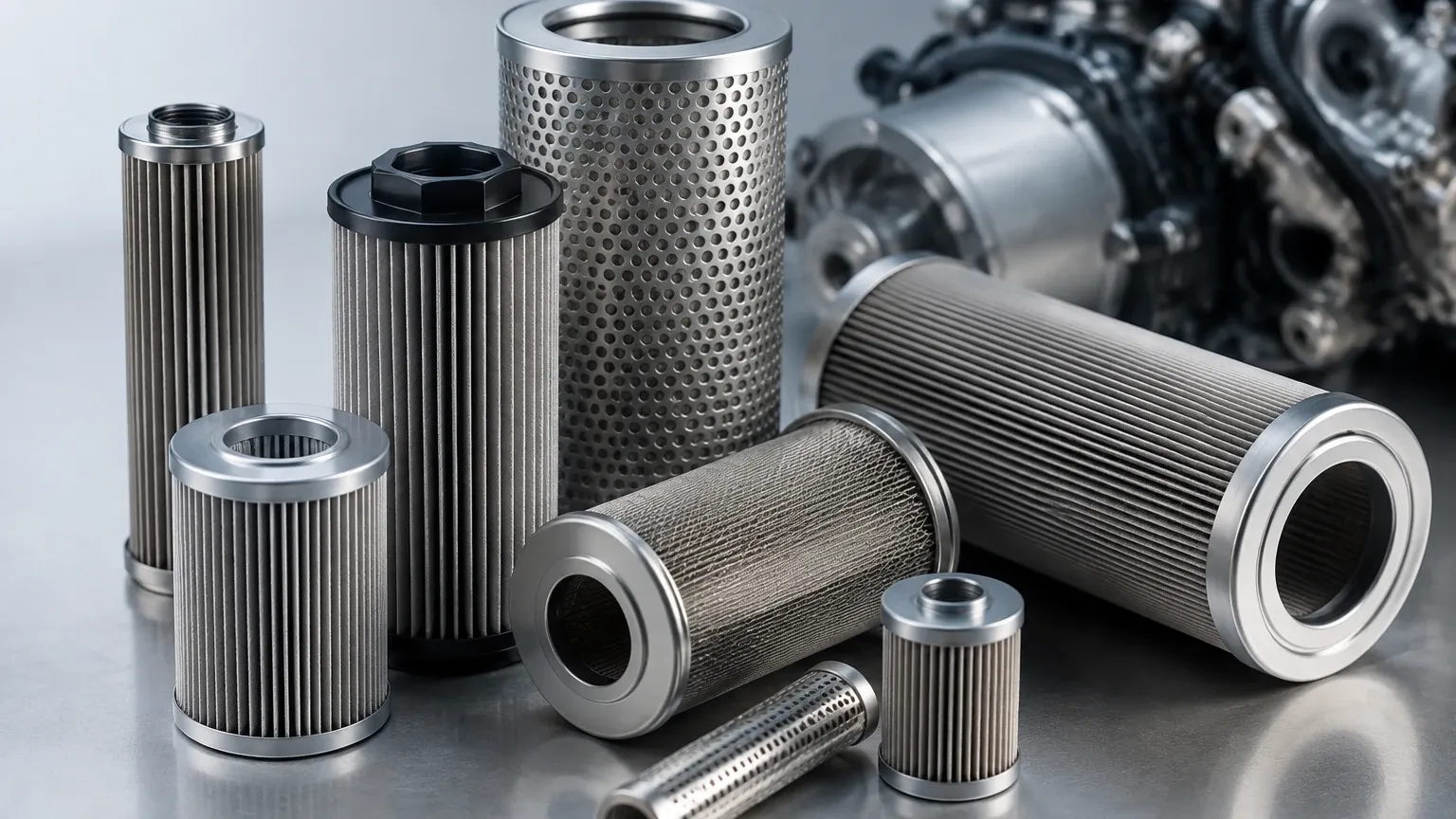
Comparing Surface vs. Depth Filtration for Engine Oil
Filter elements generally employ one of two filtration mechanisms: surface filtration or depth filtration.
* Surface Filtration: Typically achieved with wire mesh, this mechanism traps particles on the upstream surface of the media. It is characterized by a very precise pore size and is easy to clean. Surface filters are ideal for removing large, metallic debris and are often used as "last chance" filters or in systems where regular cleaning is feasible.
* Depth Filtration: This involves a thicker media, such as sintered metal fibers or multi-layered mesh, where particles are trapped within the tortuous path of the material's internal structure. Depth filtration offers a much higher dirt-holding capacity because it utilizes the entire volume of the media, not just the surface. For engine oil applications where soot and fine particulates are prevalent, depth-style Filter Cartridges are often more effective at extending service intervals.
Engineers must evaluate the specific contaminant profile of their engine to determine which mechanism is most appropriate. In many cases, a hybrid approach using a pleated wire mesh with a specific weave pattern (such as Dutch weave) can provide a balance of both surface precision and depth-like capacity.
Total Cost of Ownership and Maintenance Cycles
While the initial purchase price of a filter element engine oil is a factor, the total cost of ownership (TCO) is a more relevant metric for industrial operations. TCO includes the cost of the element, the labor required for replacement, the cost of oil lost during changes, and the potential cost of engine wear caused by sub-standard filtration.
Stainless steel filters, while requiring a higher initial investment than disposable paper elements, often yield a lower TCO over the life of the equipment. Their ability to be cleaned and reused eliminates the recurring cost of purchasing new cartridges and the logistical burden of disposing of oil-soaked hazardous waste. Furthermore, the superior protection offered by high-efficiency metal media can extend the intervals between major engine overhauls, providing significant long-term savings.
Maintenance cycles for a filter element engine oil are typically determined by monitoring the differential pressure. Modern industrial engines are equipped with sensors that alert operators when the $ΔP$ reaches a predetermined limit. It is critical to perform maintenance at these intervals, as operating a filter in bypass mode significantly increases the risk of component wear. When cleaning reusable elements, it is essential to follow manufacturer-approved protocols, such as ultrasonic cleaning, to ensure that all trapped particulates are removed without damaging the precision mesh.
Customization and OEM Solutions for Engine Filtration
No two industrial engine applications are identical. Factors such as oil viscosity, flow rate, operating temperature, and environmental conditions vary widely between a marine diesel engine and a stationary gas turbine. Consequently, off-the-shelf filtration solutions may not always provide the optimal balance of performance and protection.
Customized filter element engine oil solutions allow engineers to specify exact dimensions, mounting interfaces, and media properties. Manufacturers like Kaifil specialize in developing these tailored components, utilizing advanced manufacturing techniques to produce filter cartridges that meet stringent OEM specifications. Customization may include:
* Specific Alloy Selection: Choosing between 304, 316L, or even specialized alloys for highly corrosive environments.
* Tailored Micron Ratings: Engineering the media to target specific particle sizes known to be problematic in a particular engine model.
* Structural Reinforcement: Adding internal supports or heavy-duty end caps to withstand extreme pressure pulsations or vibration.
* Integration of Features: Incorporating bypass valves, magnets (for capturing ferrous particles), or specialized seals directly into the filter element design.
By working closely with a specialized manufacturer, purchasing teams can ensure that the filter element engine oil they procure is perfectly matched to their equipment's requirements, ensuring maximum uptime and operational efficiency.
Conclusion
The filter element engine oil is a vital component in the protection of industrial machinery. Its ability to remove harmful contaminants while maintaining consistent flow is fundamental to the reliability of the entire lubrication system. By moving toward high-performance materials like stainless steel and understanding the technical nuances of micron ratings, Beta ratios, and structural design, engineers can significantly improve engine longevity and reduce operational costs. Whether for standard maintenance or specialized OEM applications, selecting the right filtration technology is a strategic decision that impacts the bottom line of any industrial operation.
